15 Account-Based Prospecting Platform for Better Targeting
Adam Hossain
Published June 11, 2026
19 min
Complete Agentic Email Outreach
AI agents find and enrich prospects, personalize emails, follow up, and handle replies with your meeting link.
Start Your 7-Day Free Trial
Most B2B sales teams are still wasting hours chasing accounts that were never going to buy.
They build massive lead lists, send mass emails, and hope something sticks. It rarely does.
That's exactly the problem an account-based prospecting platform is built to solve — it helps you stop guessing and start targeting the right companies with precision.
In this guide, you'll get a clear breakdown of:
- What to look for in an account-based prospecting platform
- A comparison of 15 top tools available in 2026
- How to choose the right platform for your team's needs
Key Features to Look for in an Account-Based Prospecting Platform
Not every prospecting tool is built the same. Some give you a big database but little control. Others automate without accuracy.
Before you commit to any account-based prospecting platform, here are the core features that actually move the needle.
Advanced Account Targeting and Filtering
The whole point of account-based prospecting is precision — reaching the right companies, not just any company.
A strong platform lets you filter accounts by criteria that actually reflect your ideal customer profile. Things like industry, company size, revenue range, geography, funding stage, and even employee growth rate.
The more granular the filters, the less time your team spends weeding out irrelevant accounts later in the pipeline.
Verified Contact Discovery and Data Accuracy
Finding the right company is only half the job. You still need to reach the right person inside it.
Look for platforms that provide verified emails, direct dials, job titles, and seniority levels — not just a name pulled from a stale database.
Poor contact data leads to bounced emails, wasted outreach, and a damaged sender reputation.
The best tools use real-time verification and multi-source enrichment to keep data as accurate as possible. That accuracy directly impacts your deliverability and response rates.
Suggested Reading:
Catch-All Email Verification: What is it & How It WorksAI-Based Account Intelligence and Recommendations
Manual research can only take you so far. AI-driven account intelligence is what separates good platforms from great ones.
A solid AI layer analyzes signals like buyer behavior, company activity, and firmographic patterns to surface accounts most likely to convert.
Instead of you guessing who to prioritize, the platform tells you.
This is especially useful when you're working with large account lists and need to focus limited bandwidth on high-intent opportunities.
Sales Automation and Workflow Integration
Even the best targeting falls apart if your team has to handle everything manually after that.
A strong account-based prospecting platform should automate the repetitive work — lead enrichment, follow-up sequencing, CRM updates, and campaign scheduling.
More importantly, it should integrate cleanly with your existing tools so data flows without friction.
When automation handles the operational load, your team can focus on the conversations that actually close deals.
Suggested Reading:
How to Set Up Sales Outreach Automation That Actually ConvertsBuyer Intent Signals and Engagement Insights
Timing your outreach is just as important as targeting the right account.
Intent signals tell you which companies are actively researching solutions like yours right now — based on content consumption, job postings, funding activity, and web behavior.
Without this layer, you're reaching out blind.
With it, you're entering a conversation that's already started on their end.
That shift alone dramatically improves your chances of getting a response.
Suggested Reading:
15 Buyer Intent Signals B2B Sales Teams Should Watch15 Best Account-Based Prospecting Platform Tools Compared
Now that you know what to look for, the next step is finding the right fit.
The market is packed with account-based prospecting platform tools — each claiming to do it all. But they differ significantly in data quality, automation depth, AI capabilities, and pricing.
Below is a breakdown of 15 platforms worth evaluating, so you can compare what actually matters before making a decision.
1. Oppora.ai – AI-Powered Account-Based Prospecting Platform
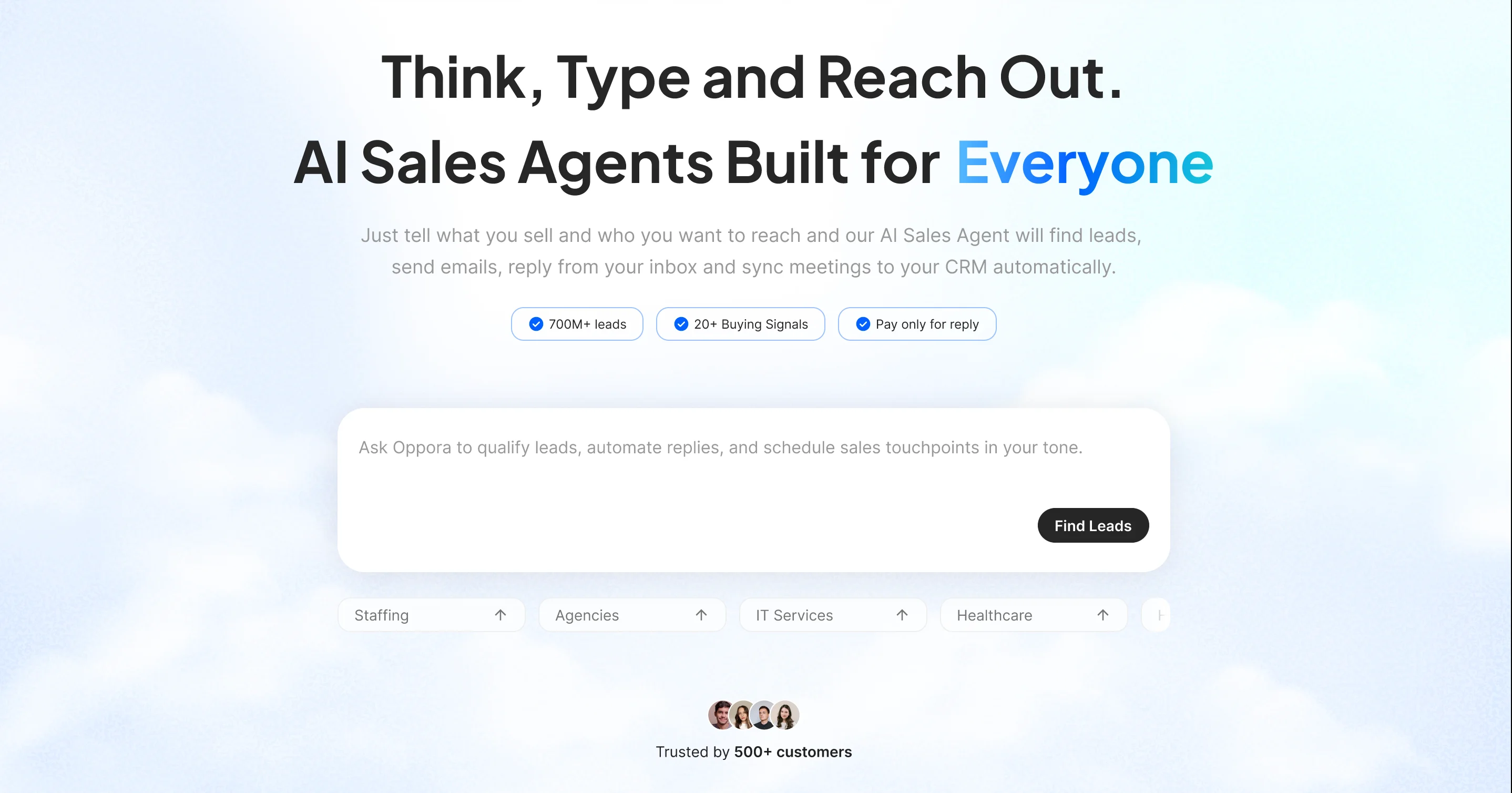
Most prospecting tools make you do the work — find leads, enrich data, write emails, follow up, and log everything manually. Oppora is built differently.
It replaces that entire manual process with 8 AI Sales Agents that work together inside one automated workflow. You set it up once, and it keeps running.
Key Features:
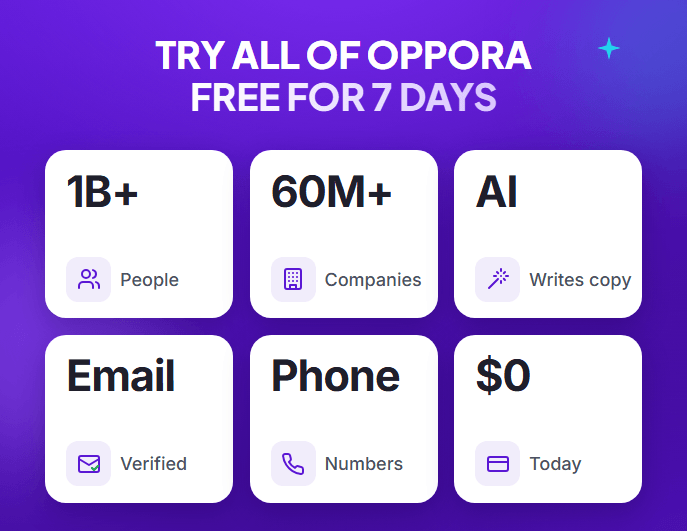
- 1B+ leads and 60M+ companies with verified emails and phone numbers
- Smart filtering to find high-intent, actively hiring companies
- Real-time LinkedIn and public database lead search
- Waterfall enrichment with real-time email verification
- 25+ buying signal filters and AI lead scoring
- AI-generated cold emails and follow-ups
- Unified inbox with auto lead status tagging
- LinkedIn + email multichannel outreach in one workflow
- Mailbox rotation and automated warm-up
- AI replies to emails — qualify and route automatically
- Agentic workflows to automate entire outreach end-to-end
- CRM sync with HubSpot, Salesforce, and Pipedrive
How It Supports Account-Based Prospecting
Oppora makes account-based prospecting straightforward with a simple workflow: find target companies, add them to a list, and identify key decision-makers within your preferred departments.
Instead of switching between multiple tools, sales teams can manage account selection and stakeholder discovery from a single workspace.
This streamlined experience helps teams build targeted account lists faster and engage the right people with greater precision.
Pricing
- Free Plan available (50 data credits, 10 AI credits, 1 phone credit)
- Pro: $34/month (10,000 data credits, 500 AI credits, 200 phone credits)
- Max: $79/month (25,000 data credits, 1,000 AI credits, 600 phone credits)
- Enterprise: Custom pricing (for needs above 50,000 contacts per month)
2. Apollo.io
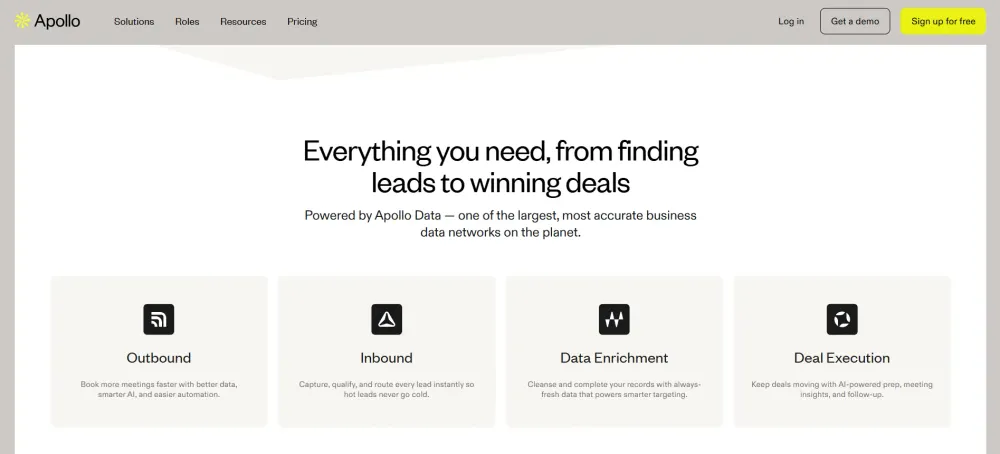
Apollo.io is one of the most widely used sales intelligence platforms in the B2B space.
It combines a large contact database with built-in outreach tools, making it a popular choice for teams that want prospecting and sequencing under one roof.
Key Features:
- Large B2B contact and company database
- Email sequencing and outreach automation
- CRM integration with HubSpot, Salesforce, and others
- Engagement tracking and analytics
- Chrome extension for LinkedIn prospecting
How It Supports Account-Based Prospecting
Apollo lets you build targeted account lists using filters like job title, industry, and company size, then move directly into outreach from the same platform.
It works well for teams running high-volume outbound campaigns who need a straightforward setup without heavy technical lift.
Pricing
Free plan available. Paid tiers start based on credits and feature access. Pricing scales with team size and usage volume.
Suggested Reading:
5 Best Apollo.io Alternatives for B2B Lead Generation3. LinkedIn Sales Navigator
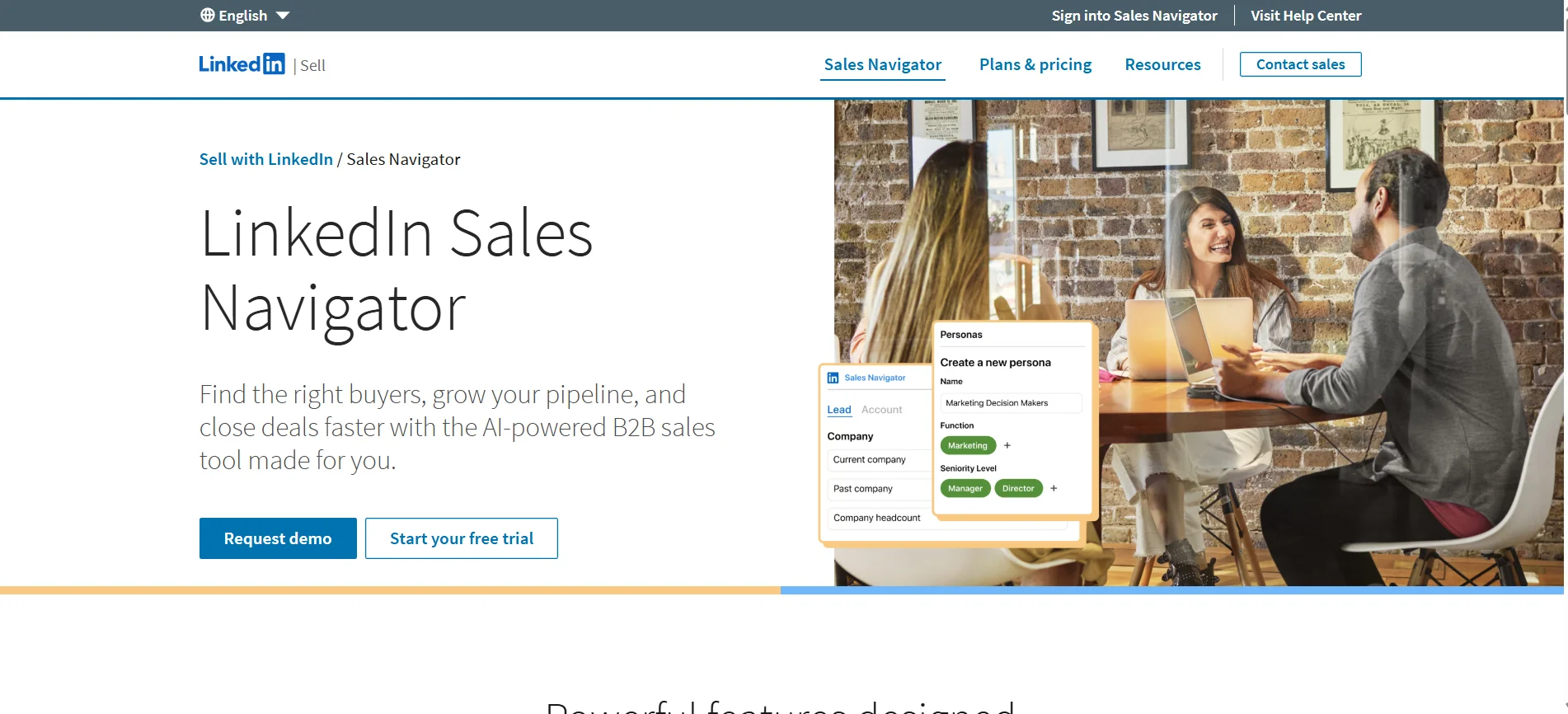
If your target accounts live on LinkedIn — and most B2B decision-makers do — Sales Navigator gives you a level of search depth that generic databases simply can't match.
It's built directly on LinkedIn's network, which means you're working with real, regularly updated professional data rather than scraped or stale contact lists.
Key Features:
- Advanced LinkedIn search with 40+ filters
- Lead and account recommendations based on saved preferences
- Real-time alerts on job changes and company activity
- InMail messaging for direct outreach
- CRM sync with Salesforce and HubSpot
How It Supports Account-Based Prospecting
Sales Navigator lets you pinpoint decision-makers inside target accounts with precision — by seniority, department, company size, and more.
It's especially powerful for relationship-led sales where knowing the right person matters more than reaching thousands.
Pricing
Monthly subscription-based plans. No free plan — trial available on request.
4. ZoomInfo
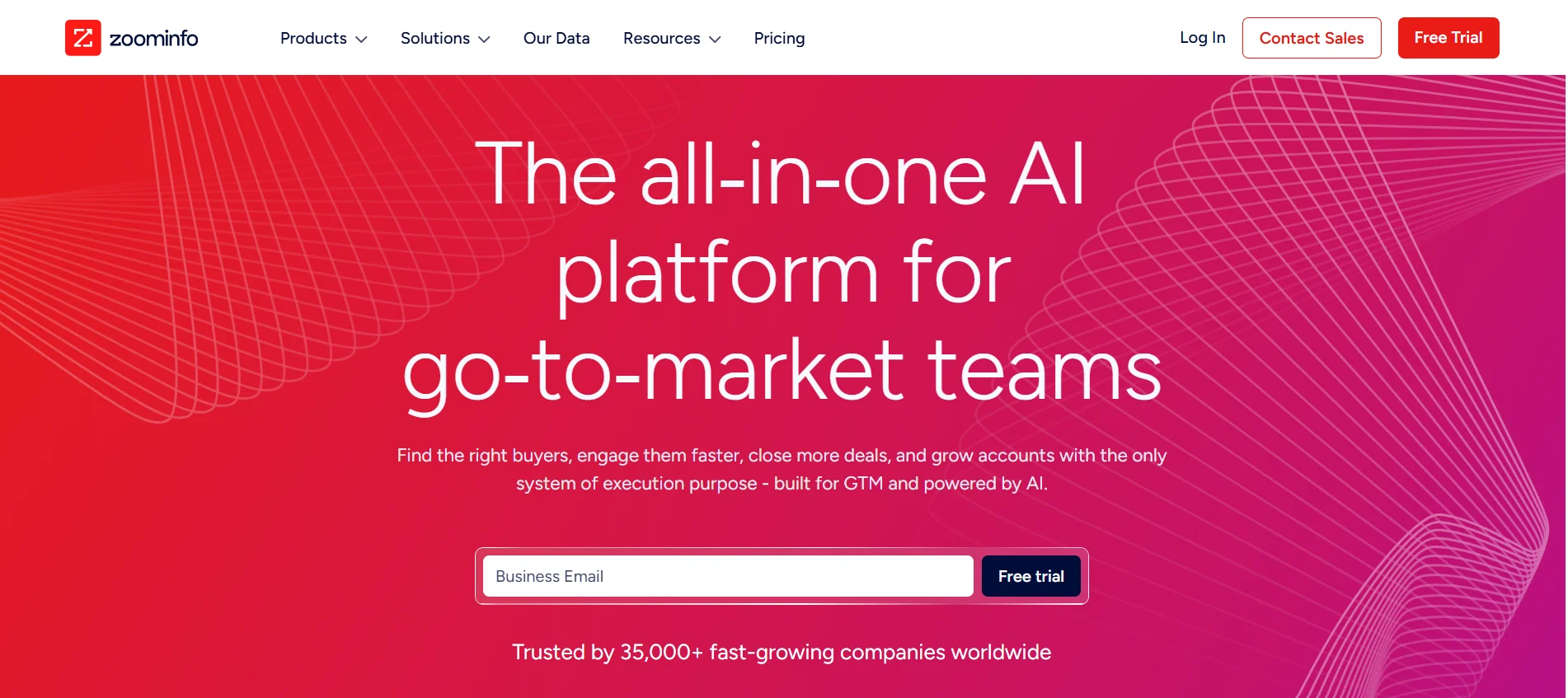
ZoomInfo has been one of the most recognized names in B2B data for years.
It's built for enterprise sales teams that need deep company intelligence, org charts, and buying signals all in one place.
If data depth and coverage are your top priorities, ZoomInfo is hard to overlook — though that depth comes at a price.
Key Features:
- Extensive B2B contact and company database
- Buyer intent signals and purchase trigger alerts
- Org charts for mapping decision-maker hierarchies
- Data enrichment and CRM integration
- Website visitor tracking and engagement insights
How It Supports Account-Based Prospecting
ZoomInfo helps sales teams go beyond basic firmographic filters by layering in intent data and organizational context.
You can identify not just which companies to target, but who inside those companies is most likely involved in the buying decision.
Pricing
Enterprise pricing model. Custom quotes based on team size and data needs.
5. Cognism
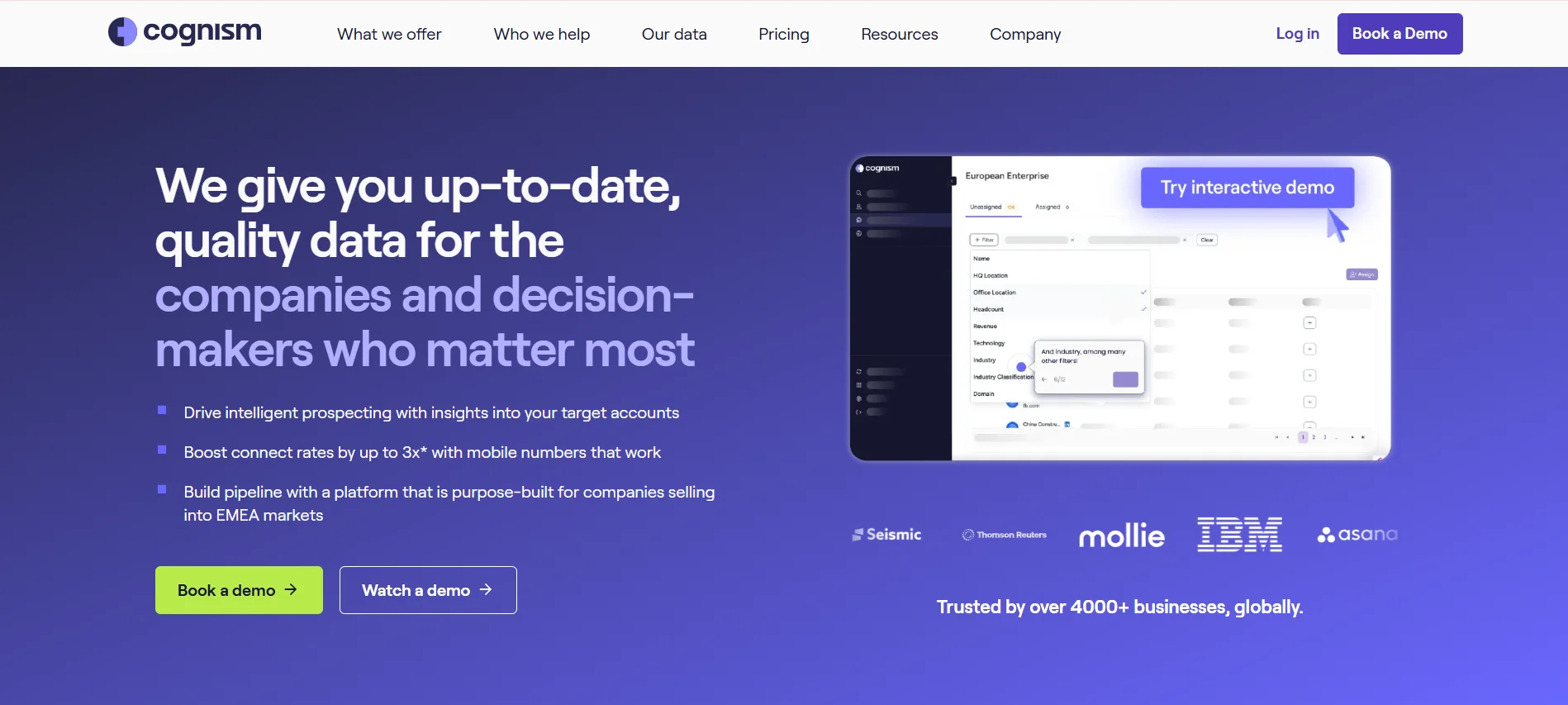
For teams selling into European markets, Cognism stands out for one important reason — compliance.
While most B2B databases struggle with GDPR requirements, Cognism is built around it, making it a go-to choice for sales teams that can't afford data privacy risks.
Beyond compliance, it also delivers strong contact accuracy, particularly for mobile numbers.
Key Features:
- GDPR and CCPA-compliant B2B contact database
- Verified mobile numbers with high connect rates
- Global contact coverage with strong European data
- Buyer intent signals for prospect prioritization
- CRM and sales tool integrations
How It Supports Account-Based Prospecting
Cognism helps you reach verified decision-makers inside target accounts without compliance concerns slowing you down.
Its intent data layer adds another dimension — letting you prioritize accounts already showing active buying signals rather than reaching out cold.
Pricing
Enterprise pricing only. Custom quotes based on team size and usage.
6. LeadIQ
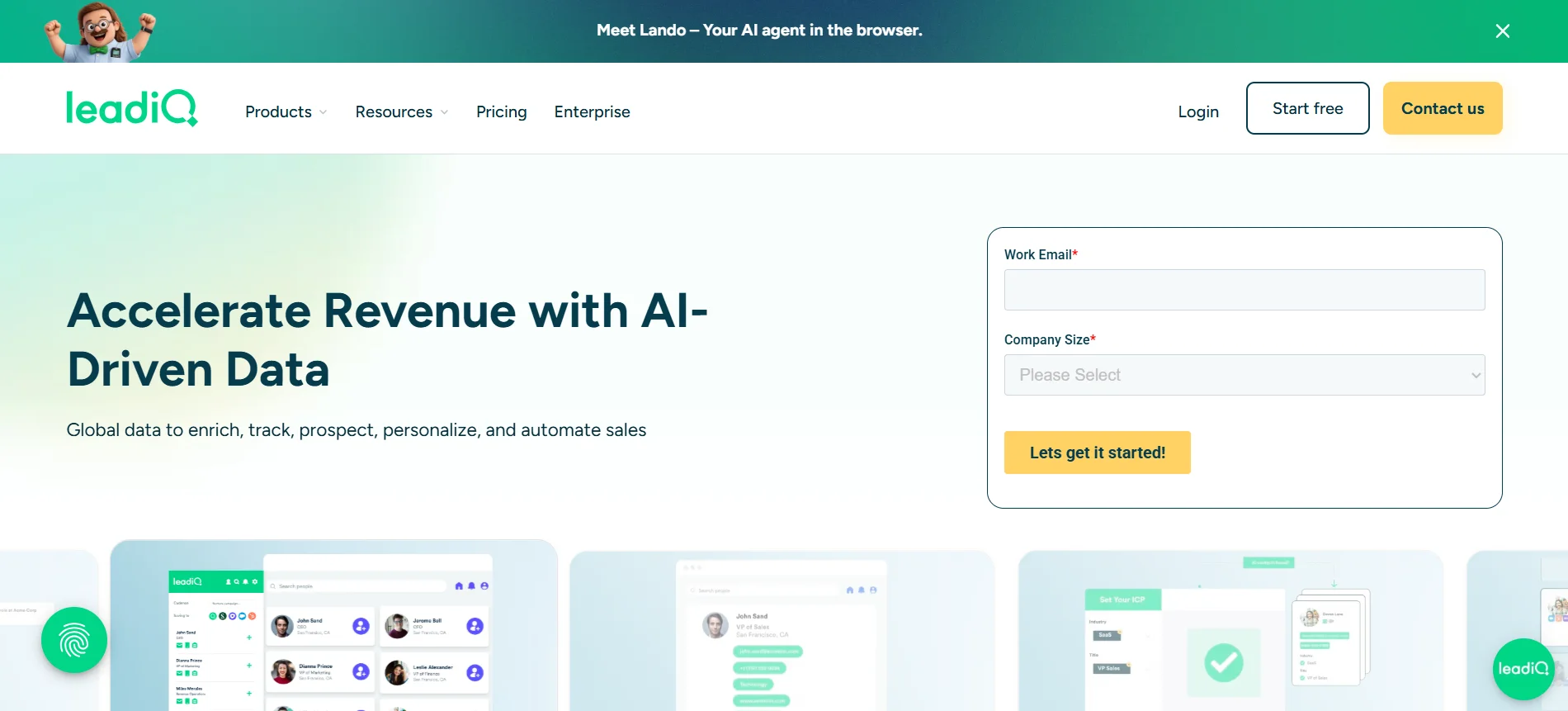
If your sales team spends a lot of time prospecting directly on LinkedIn, LeadIQ is designed to make that process significantly faster.
Rather than manually copying contact details and pasting them into your CRM, LeadIQ captures everything in one click.
It's less of a full prospecting platform and more of a smart capture and sync tool that fits neatly into an existing workflow.
Key Features:
- One-click prospect capture directly from LinkedIn
- Real-time email verification at point of capture
- Automatic CRM syncing with Salesforce, HubSpot, and others
- Buying signal alerts like job changes and company news
- Sequence integration with outreach tools
How It Supports Account-Based Prospecting
LeadIQ removes the friction between finding a decision-maker and reaching out to them.
You identify the right contact inside a target account and move them into your pipeline without ever leaving your browser.
Pricing
Free plan available. Paid tiers for team access and advanced automation features.
7. Clay
Clay sits in a different category from most prospecting tools.
It's less of a database and more of a data orchestration platform — one that lets you pull from multiple sources, enrich accounts with custom logic, and build prospecting workflows tailored exactly to your needs.
If you have a technical mindset or a RevOps team behind you, Clay gives you a level of customization that off-the-shelf tools simply can't match.
Key Features:
- Data enrichment from 50+ integrated data providers
- AI-powered research and workflow automation
- Spreadsheet-style interface with deep customization
- Waterfall enrichment logic for higher data accuracy
- Integrations with outreach tools and CRMs
How It Supports Account-Based Prospecting
Clay lets you build highly specific account lists by combining multiple data sources into one enriched view. Instead of working with what a single database gives you, you define exactly what signals matter and build around them.
Pricing
Tiered pricing based on workflow usage and enrichment credit volume.
Suggested Reading:
10 Best Clay Alternative & Competitors for AI Outreach & Lead Enrichment8. Lusha
Lusha is built for speed.
When your sales team needs to find a direct dial or verified email for a decision-maker quickly, Lusha delivers that without requiring you to navigate a complex platform or burn through a long setup process.
It's a straightforward contact intelligence tool that works best when your accounts are already identified and you just need accurate contact data fast.
Key Features:
- Direct dial and mobile number finder
- Verified email lookup with high accuracy
- Chrome extension for quick LinkedIn prospecting
- B2B contact and company database
- CRM integration with major platforms
How It Supports Account-Based Prospecting
Once you've identified your target accounts, Lusha helps you cut through the noise and reach the right person directly.
It reduces the time your team spends hunting for contact details and gets them into actual conversations faster.
Pricing
Free credits available on signup. Paid plans for higher usage volume and team access.
Suggested Reading:
11 Lusha Alternatives for 2026: Better Data, Pricing & Accuracy9. 6sense
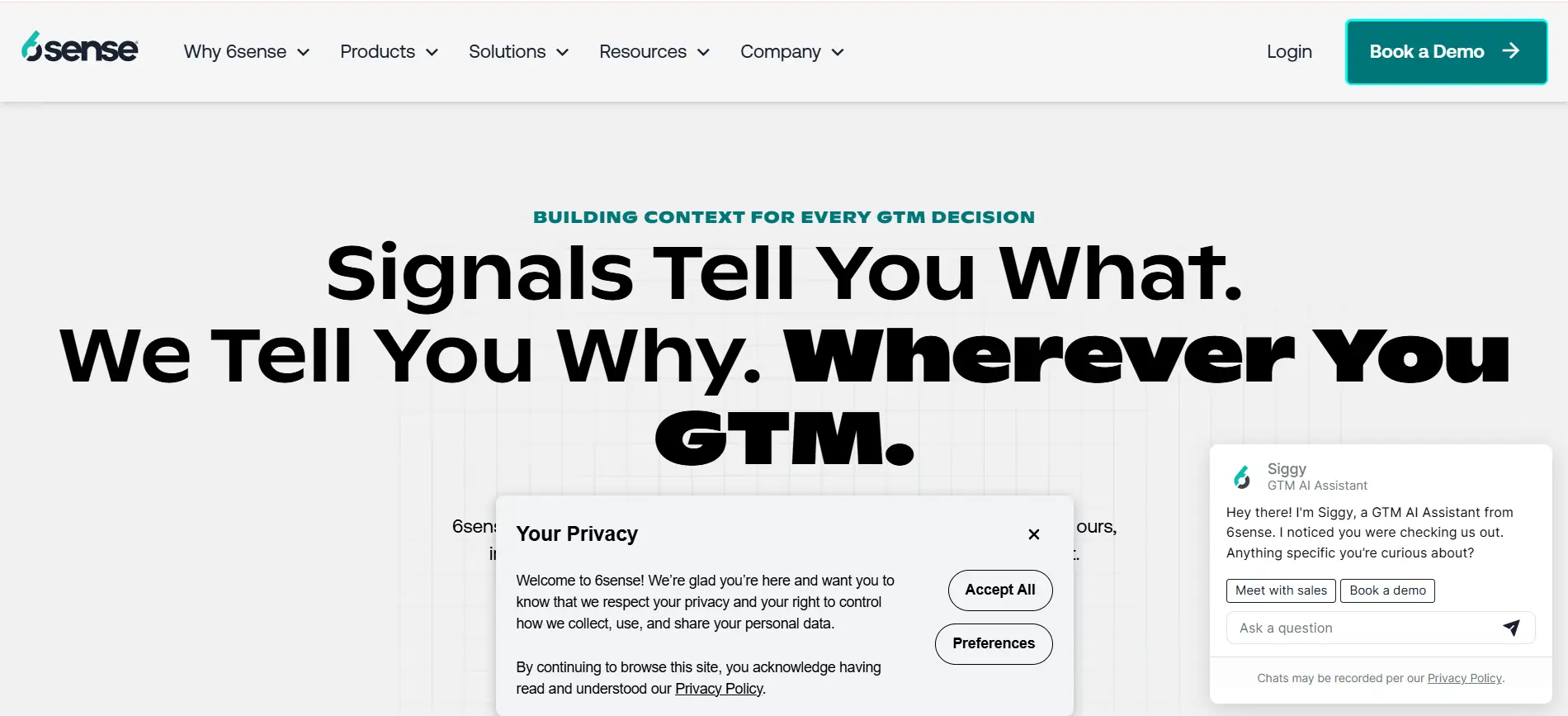
Most prospecting tools tell you who to reach. 6sense goes a step further — it tells you when to reach them and where they are in their buying journey.
It's built around predictive intelligence, using AI to surface accounts that are actively in-market before they ever fill out a form or raise their hand.
Key Features:
- AI-driven buyer intent data and predictive scoring
- Buying stage identification across the full funnel
- Account-level engagement tracking and insights
- Advertising integration for multi-channel targeting
- CRM and marketing automation integrations
How It Supports Account-Based Prospecting
6sense helps sales teams stop guessing which accounts are worth pursuing right now.
By identifying companies already researching relevant solutions, it lets you prioritize outreach based on real purchase intent rather than assumptions — improving both timing and conversion rates significantly.
Pricing
Enterprise-level pricing only. No self-serve plans available. Custom quotes required.
10. Demandbase
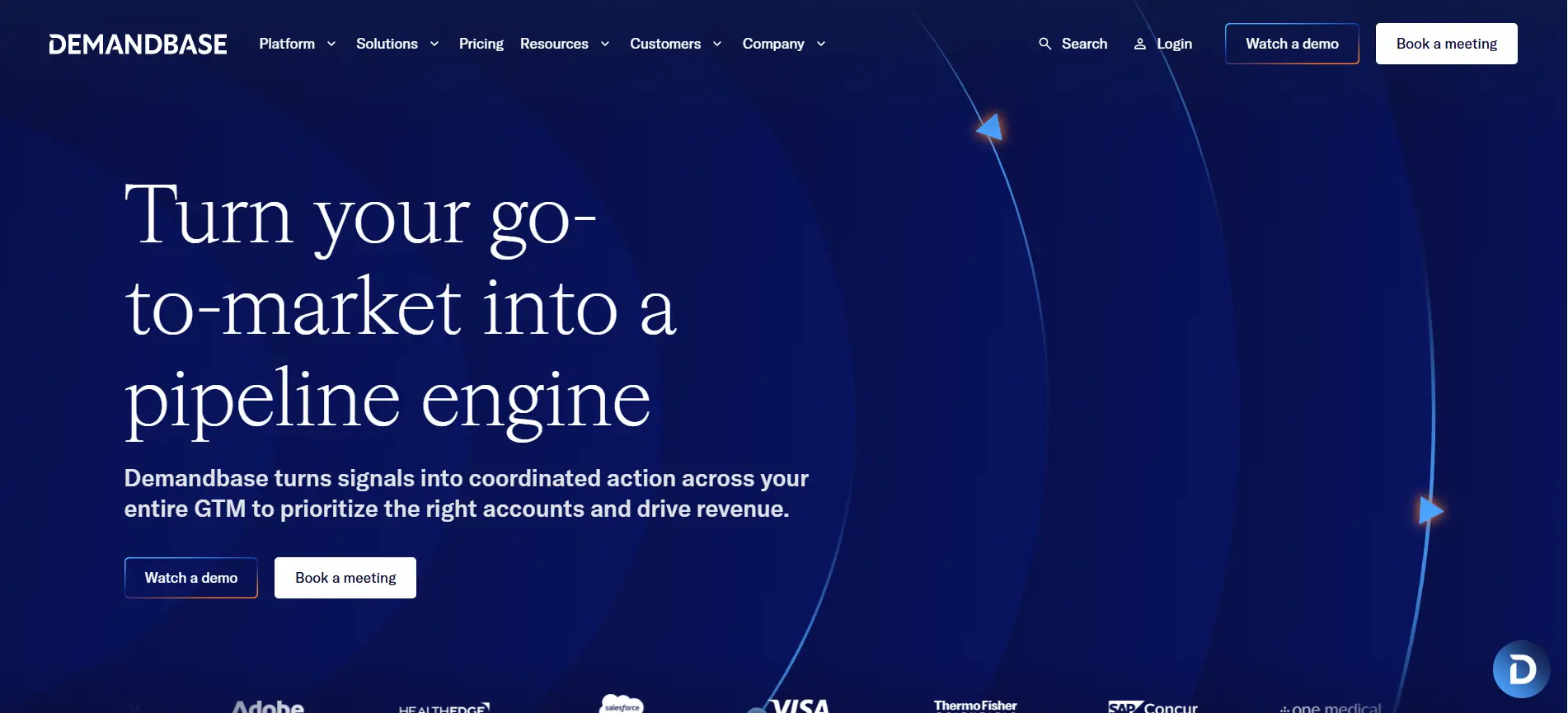
Demandbase is one of the few platforms that genuinely bridges the gap between marketing and sales in an account-based motion.
While most tools focus purely on outbound prospecting, Demandbase brings advertising, account intelligence, and sales engagement into a single connected system.
It's built for teams where marketing and sales need to work from the same account data and targeting logic.
Key Features:
- Full ABM platform with account intelligence
- Advertising integration for targeted account-based campaigns
- Engagement tracking across web, email, and ads
- Predictive account scoring and intent data
- CRM and marketing automation integrations
How It Supports Account-Based Prospecting
Demandbase gives sales and marketing teams a unified view of target accounts — who's engaging, where they are in the funnel, and which accounts deserve priority attention.
That alignment reduces wasted effort and improves conversion across the entire account-based motion.
Pricing
Custom enterprise pricing only. No standard self-serve plans available.
11. Clearbit
Clearbit's strength lies in enrichment.
Where most platforms focus on helping you find new accounts, Clearbit is particularly powerful at making the accounts you already have — inbound leads, website visitors, or existing contacts — significantly more useful.
It fills in the gaps so your team has full context before they ever pick up the phone or send an email.
Key Features:
- Real-time data enrichment for inbound and outbound leads
- Company and contact intelligence via API
- Website visitor identification and tracking
- Lead scoring based on enriched firmographic data
- Integrations with major CRMs and marketing tools
How It Supports Account-Based Prospecting
Clearbit helps you understand target accounts at a deeper level before outreach begins.
By enriching contact and company data in real time, your team goes into every conversation with better context — improving personalization, relevance, and overall response rates.
Pricing
Usage-based pricing. Costs vary depending on enrichment volume and API usage.
12. Seamless.AI
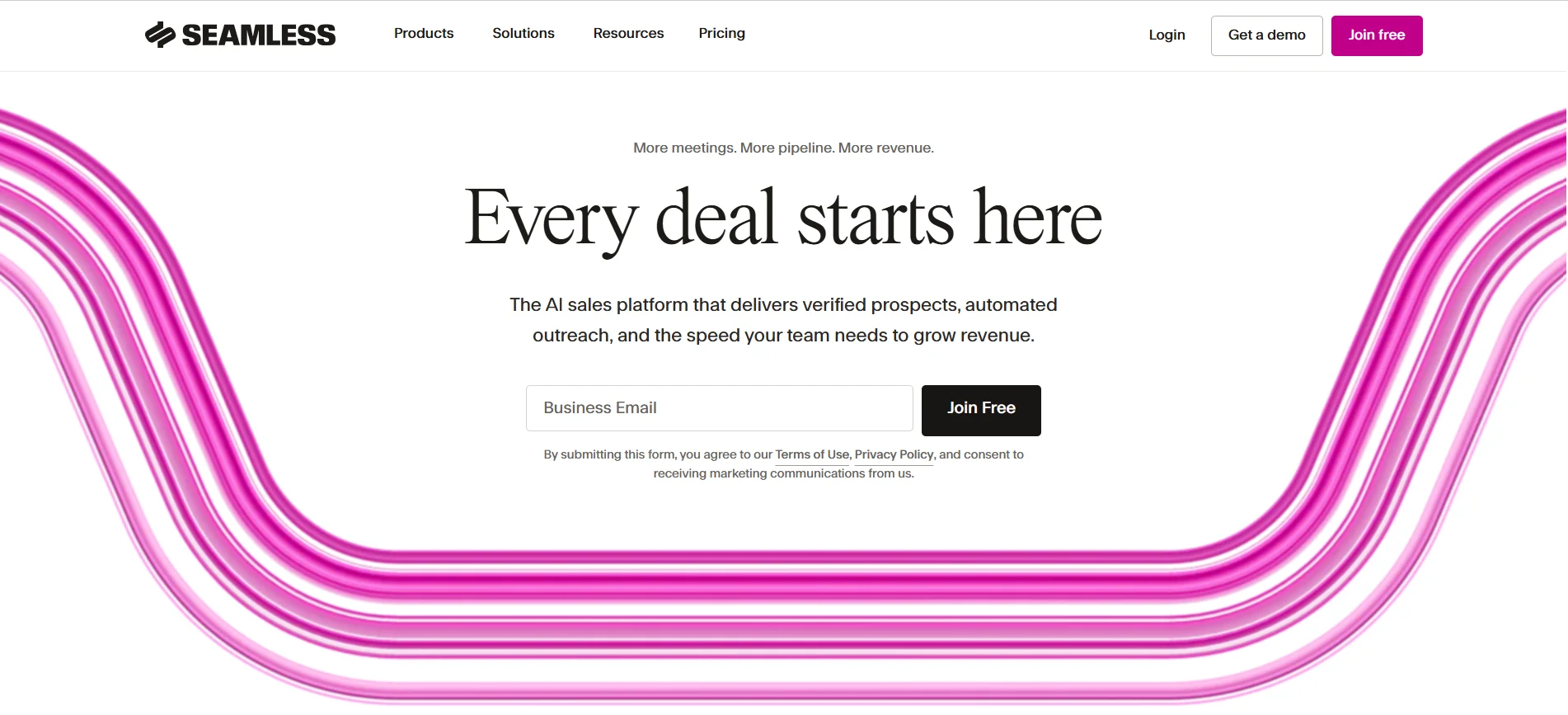
Seamless.AI positions itself around one core promise — real-time contact search.
Rather than pulling from a static database, it claims to build contact information on demand, which in theory means fresher data and fewer bounced emails.
It's a straightforward tool aimed at sales teams that need volume and speed in their prospecting process.
Key Features:
- Real-time contact search and AI-powered lead generation
- Verified email and phone number lookup
- Chrome extension for LinkedIn and web prospecting
- CRM integration with Salesforce, HubSpot, and others
- Buyer intent data and company insights
How It Supports Account-Based Prospecting
Seamless.AI helps teams quickly build contact lists inside target accounts without spending hours on manual research.
Its real-time search approach reduces the risk of reaching out with outdated contact information, keeping your outbound efforts accurate and efficient.
Pricing
Free plan available. Paid plans unlock advanced features and higher search volume.
13. UpLead
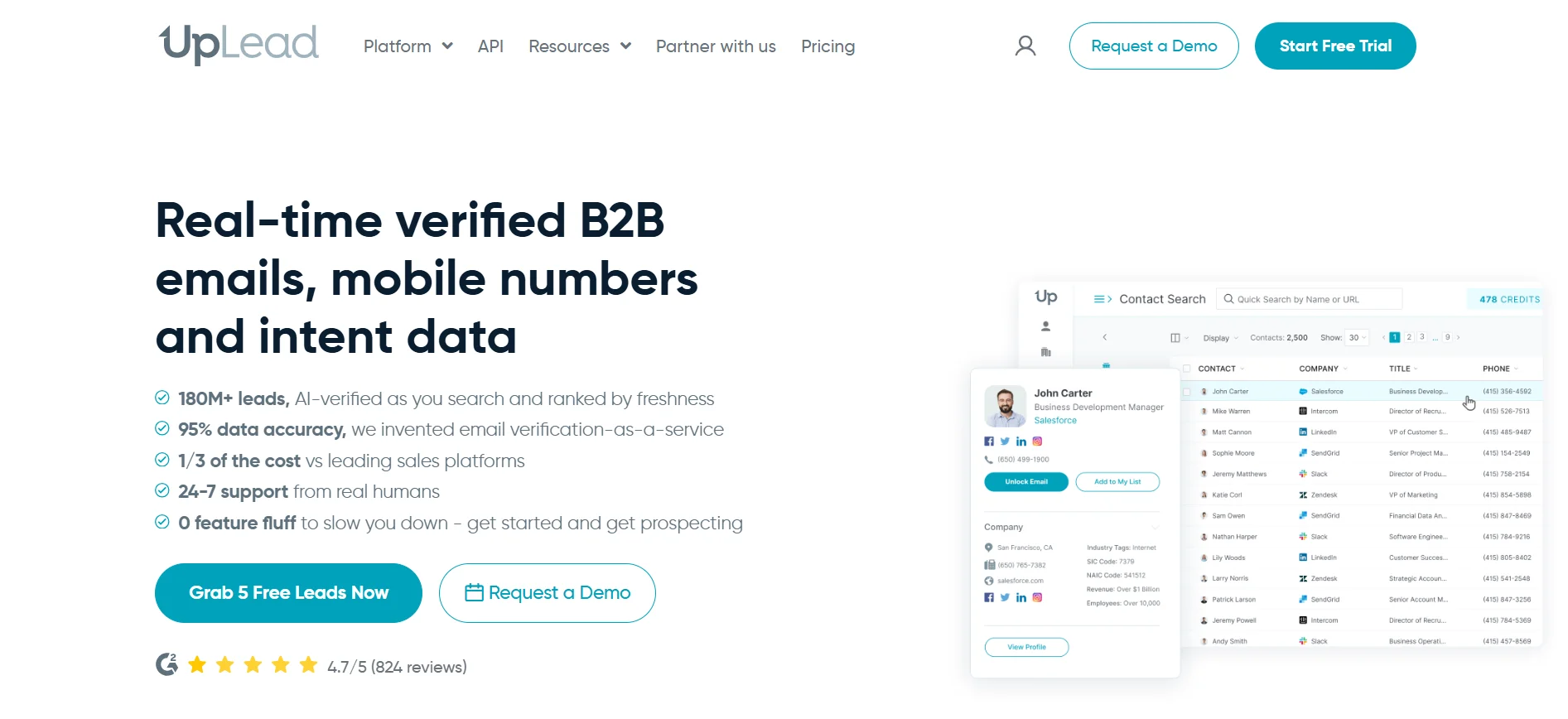
UpLead builds its entire value proposition around one thing — data accuracy.
It offers a 95% data accuracy guarantee, which is a bold claim in an industry where bad contact data is one of the most common complaints sales teams have.
For teams that have been burned by bounced emails and wasted outreach before, that promise carries real weight.
Key Features:
- Verified B2B emails with real-time data validation
- 50+ search filters for precise account targeting
- Intent data filters for high-conversion prospect identification
- CRM integration with major platforms
- Technology stack filtering for better ICP matching
How It Supports Account-Based Prospecting
UpLead helps you build account lists with confidence.
The real-time verification means contacts are checked at the point of export — not weeks earlier — reducing bounce rates and improving the overall quality of your outreach pipeline.
Pricing
Monthly subscription plans available. Free trial offered for new users.
14. Bombora
Bombora doesn't give you a contact database.
What it gives you is something arguably more valuable — the ability to know which companies are actively researching topics relevant to your product right now.
It sits in a specialized layer of the prospecting stack focused entirely on intent data, making it a powerful add-on for teams that already have targeting in place but need better timing.
Key Features:
- B2B intent data powered by content consumption tracking
- Company Surge scoring to identify high-intent accounts
- Topic-level research tracking across thousands of categories
- CRM and marketing platform integrations
- Account-level engagement insights over time
How It Supports Account-Based Prospecting
Bombora tells you which target accounts are in active research mode, so your team reaches out when interest is highest rather than guessing.
That timing advantage directly improves response rates and shortens sales cycles.
Pricing
Enterprise pricing only. Custom contracts based on data needs and usage.
15. SalesIntel
SalesIntel takes a different approach to data quality — human verification.
While most platforms rely solely on automated data processes, SalesIntel has a team of researchers who manually verify contact information, adding a layer of accuracy that purely algorithmic tools often miss.
For teams where data quality directly impacts pipeline health, that distinction matters.
Key Features:
- Human-verified B2B contact data with high accuracy rates
- Technographic data for technology stack-based targeting
- Buyer intent data powered by Bombora integration
- CRM enrichment and data hygiene tools
- Research-on-demand for custom contact verification
How It Supports Account-Based Prospecting
SalesIntel helps you build target account lists with greater confidence by combining verified contact data, technographics, and intent signals.
The human-checked layer reduces the risk of wasted outreach and ensures your team is working with information that has actually been validated.
Pricing
Custom enterprise pricing based on data needs and team size.
How to Choose the Right Account-Based Prospecting Platform for Your Business
Picking a platform based on a feature list alone is one of the fastest ways to end up with a tool your team stops using after 30 days.
The right choice depends on how your sales team actually works — and what gaps are costing you the most right now.
Data Quality and Contact Accuracy
Everything else falls apart if the underlying data is poor.
Bounced emails, wrong phone numbers, and outdated job titles don't just waste time — they damage your sender reputation and erode trust in your pipeline.
Before committing to any platform, ask how they verify contacts, how frequently data is refreshed, and what their accuracy guarantee looks like in practice.
A smaller database with cleaner data will almost always outperform a larger one full of stale records.
Automation and CRM Integration
The best targeting in the world means nothing if your team still has to handle everything manually after that first touchpoint.
Look for platforms that automate the repetitive work — enrichment, follow-up sequencing, CRM updates — without requiring a technical setup every time.
More importantly, check how cleanly it integrates with your existing stack. A tool that doesn't talk to your CRM creates more friction than it removes.
AI Insights and Intent Data Capabilities
This is where good platforms separate themselves from great ones.
AI-driven insights help you answer the question your team is always asking — which accounts should we focus on right now?
Platforms with predictive scoring and intent signals give you that answer based on real behavioral data, not guesswork.
When timing and targeting work together, conversion rates improve significantly.
Why Oppora Is a Leading Account-Based Prospecting Platform
Most platforms solve one piece of the prospecting puzzle. They either give you data, or automation, or outreach — but rarely all three working together seamlessly.
Oppora is built differently.
It's an account-based prospecting platform designed to handle the entire sales workflow end-to-end, so your team spends less time on operations and more time on conversations that actually convert.
Access to a 700M+ Verified Prospect Database
Scale matters when you're doing account-based prospecting, but only if the underlying data is clean.
Oppora gives you access to a database of over 700 million leads and 42 million companies — enriched through waterfall sourcing across multiple data providers.
That means instead of relying on a single source that goes stale, you're working with contact data that's continuously cross-verified for accuracy.
You can find virtually any target account your ICP points to, and trust that the data you're working with is actually usable.
AI-Powered Lead Scoring and Smart Recommendations
A large database is only useful if you know where to focus first.
Oppora's AI layer analyzes firmographic data, behavioral signals, and account activity to score and rank your leads automatically.
It surfaces the accounts most likely to convert — so instead of manually reviewing hundreds of prospects, your team gets a prioritized list that reflects real intent and fit.
Less guesswork. Faster pipeline decisions.
End-to-End Sales Workflow Automation
This is where Oppora genuinely stands apart from most tools in the market.
Rather than automating a single step, Oppora's 8 AI Sales Agents cover the entire prospecting workflow — working together inside one system without you having to coordinate between separate tools. Once you set up a workflow, it keeps running automatically. The agents handle:
- Lead discovery and enrichment
- Email verification and contact cleaning
- Personalized email sequence generation
- Follow-ups and reply handling
- Meeting booking and CRM syncing
You build it once. Oppora runs it continuously.
Built-In Multi-Channel Outreach System
Reaching prospects through a single channel in 2026 isn't enough.
Oppora combines email and LinkedIn outreach inside one unified workflow — automatically sending connection requests, follow-up messages, and email sequences in a coordinated flow.
It also rotates up to 50 inboxes, warms domains automatically, and matches sender identity for better deliverability.
The result is higher engagement without the operational complexity of managing multiple tools.
Suggested Reading:
How to Combine LinkedIn Outreach with Email CampaignsFaster Account Targeting with Smart Filtering System
Getting to the right accounts quickly is what separates efficient teams from overwhelmed ones.
Oppora's filtering system lets you narrow down your target account list using criteria like industry, job title, company size, revenue range, funding stage, employee growth, and geography — all in one place.
Instead of building lists manually across different sources, you define your ICP once and Oppora surfaces the accounts that match it instantly.
Conclusion
Choosing the right account-based prospecting platform isn't about finding the tool with the longest feature list. It's about finding the one that fits how your team actually works — and removes the friction that slows you down.
The 15 platforms covered in this guide each bring something different to the table.
But if you're looking for a single system that handles data, AI scoring, automation, and outreach without stitching multiple tools together, Oppora is worth a closer look.
You can start for free and see how it fits your workflow before committing to anything.
Frequently Asked Questions (FAQs)
What is the difference between account-based prospecting and traditional lead generation?
Traditional lead generation casts a wide net hoping for responses. Account-based prospecting flips that — you identify specific high-value companies first, then find the right contacts inside them. It's a more targeted, intentional approach that typically results in higher conversion rates and shorter sales cycles.
How many accounts should a sales rep typically manage in an account-based prospecting strategy?
There's no universal number, but most sales reps effectively manage between 50 to 150 target accounts at a time. Too few limits pipeline growth; too many dilutes focus. The right number depends on your deal complexity, sales cycle length, and available automation support.
Can small businesses or startups benefit from account-based prospecting platforms?
Absolutely. Account-based prospecting isn't exclusively for enterprise teams. Startups and small businesses can benefit significantly by focusing limited resources on high-fit accounts rather than broad outreach. Many platforms, including Oppora, offer free or affordable plans specifically accessible for smaller teams getting started.
How long does it typically take to see results from an account-based prospecting platform?
Most teams start seeing meaningful pipeline activity within four to eight weeks of consistent use. The timeline depends on your ICP clarity, data quality, and outreach consistency. Platforms with built-in automation and AI scoring generally help teams reach that first result faster.
Is intent data reliable enough to base prospecting decisions on?
Intent data is a strong signal, not a guarantee. It tells you a company is actively researching relevant topics — but not that they're ready to buy immediately. Use it as a prioritization layer alongside firmographic fit, not as your sole prospecting criteria.
Summarize with AI
Share