10 Best Account Management Software for B2B Customer Growth
Adam Hossain
Published October 1, 2026
23 min

Complete Agentic Email Outreach
AI agents find and enrich prospects, personalize emails, follow up, handle replies, and book meetings automatically.
Claim Your FREE Credits
Your customer data lives in one tool. Renewal dates sit in a spreadsheet.
And stakeholder notes are buried in someone's inbox.
That's how accounts slip. A usage drop goes unnoticed, or an expansion opportunity never gets followed up.
Account management software brings contacts, relationships, renewals, and growth into one place.
So your sales and customer success teams work from the same picture.
In this guide, you'll learn:
- How account management software supports the account growth cycle
- The key benefits for B2B customer growth
- 10 platforms compared by their strongest use case
- How to choose the right one for your team
How Account Management Software Supports the Account Growth Cycle
Account growth rarely comes from one big move. It comes from a repeatable cycle of knowing the account, spotting changes, and acting on time.
Say a CSM notices product usage drop 30% in a month. The health score turns amber, a task is created, and the account manager calls the customer before renewal is at risk.
Profile and Organize Account Data
Good account management software starts every step with a complete account record.
That means company details, contract value, product usage, past conversations, and key contacts in one place. So before you reach out, you already know what the customer bought, how they use it, and what's been discussed.
Suggested Reading:
10 Best Account-Based Marketing Tools for Smarter TargetingMap Stakeholders and Decision-Makers
One contact is a single point of failure. If your champion leaves, the account can go quiet overnight.
Gartner found that complex B2B purchases typically involve 6–10 decision-makers. So map the decision-makers, influencers, and daily users who shape renewal and expansion.
Suggested Reading:
10 Proven Tactics to Find More New Clients on LinkedIn in 30 DaysIdentify Account Risks and Growth Opportunities
Once you know the account and its people, the next step is watching for change. Common signals include:
- Declining usage: fewer logins or active seats
- Upcoming renewals: contracts ending within 90 days
- Disengagement: unanswered emails or skipped meetings
- Product gaps: teams using one product but not a related one
Health scores and whitespace analysis turn these signals into tasks your team can act on.
Build Account Plans and Next Steps
Signals only matter if they lead somewhere. An account plan links goals, owners, opportunities, risks, and actions.
For a strategic customer, you might set a Q3 goal to expand into their marketing team. Then assign one rep to reach the CMO and another to schedule a product workshop.
Act, Track, and Review Account Progress
This is where plans often break down. Salesforce's State of Sales report found reps spend 70% of their time on non-selling tasks, so follow-ups slip.
Automation handles reminders, activity logging, and renewal alerts. QBRs and account reviews then show whether your actions moved retention or expansion, keeping sales, CS, and leadership aligned.
Key Benefits of Account Management Software for B2B Growth
Now that you've seen how the cycle works, here's what it means for your numbers.
The real value isn't storing customer data. It's turning that data into revenue, retention, and time saved.
Increase Revenue From Existing Customers
Your next deal often sits inside an account you already have.
When you map more stakeholders and track expansion goals, you spot upsell and cross-sell openings that one contact would never reveal. Tools like Oppora help here by finding the decision-makers missing from your CRM.
Benchmarkit's 2025 SaaS benchmarks show expansion made up 40% of total new ARR at the median B2B SaaS company. Your mix will vary, but existing customers are a major growth lever.
Improve Retention and Renewal Visibility
Renewals rarely fail overnight. They fail slowly, while no one is watching.
With account history and health signals in one view, you see renewal issues months ahead instead of weeks.
Bain & Company's research found a 5% lift in retention can raise profits by 25% to 95%. The exact impact depends on your margins and industry, but the direction is hard to ignore.
Catch Account Risks Earlier
Timing changes everything in account management.
Spot a usage decline 120 days before renewal, and you have time to run a training session, involve a new stakeholder, and fix the issue.
Spot it 15 days out, and you're negotiating a discount.
Reduce Manual Account Management Work
Account management software automates the routine work. A few common triggers:
- Renewal in 90 days: a review task is assigned to the account owner
- Engagement drops: a check-in reminder goes to the CSM
- Meeting ends: activity is logged and summarized automatically
That leaves more time for customer conversations.
Create One Shared Account View
Handoffs are where context gets lost. A new CSM shouldn't have to ask the customer what sales already promised.
When sales, CS, and leadership work from the same account record, renewals, expansions, and QBR prep start from shared facts instead of scattered notes.
How We Evaluated These Account Management Tools
Feature counts don't tell you much. A tool with 200 features can still leave your team blind to renewal risk.
So we judged each platform on how well it handles real account work. And since these tools span CRM, customer success, strategic account management, and account growth, we assessed each one against the job its category is built for.
Account and Contact Management
We looked at how each tool organizes records, contacts, activities, and opportunities.
The key question: does the account view stay complete and usable as relationships grow from 3 contacts to 30?
Stakeholder and Relationship Coverage
One champion is a fragile foundation. LinkedIn analyzed over 600,000 sales opportunities and found multi-threaded deals had a 34% higher win rate than single-threaded ones.
So we checked contact discovery, relationship mapping, and how clearly each tool shows who holds which role.
Expansion and Revenue Opportunities
Next, we examined how each platform surfaces upsell, cross-sell, and renewal openings.
We looked for account signals, usage data, and opportunity tracking that turn insight into a clear revenue action.
Automation and Workflow
McKinsey estimates about a third of sales tasks can be automated with today's technology.
We compared automation for follow-ups, alerts, outreach, and renewals, while checking that your team still controls key customer conversations.
Suggested Reading:
How to Build Email Automation Workflows [+7 Workflow Examples]Usability and Implementation
Some tools are ready in days. Others need months of structured setup and a dedicated admin.
We weighed learning curve, interface, integrations, and how quickly a typical team can adopt each platform.
Pricing and Accessibility
Finally, we compared free plans, trials, and pricing transparency. Pricing models fell into three groups:
- Free plans or free tiers: easy to test, ideal for small teams
- Transparent per-seat pricing: simple to budget as you grow
- Quote-based pricing: common for enterprise platforms, often with implementation fees
We also noted which key features sit behind higher tiers, since that shapes the true cost for growing teams.
Quick Comparison of the Best Account Management Software
You now know what these tools should help you do. Here's how the 10 options compare at a glance before we get into each review.
Keep in mind that per-seat pricing grows with your team. Key features like sequences or advanced automation often sit on higher tiers than the starting plan.
10 Best Account Management Software for B2B Customer Growth
The table shows the big picture.
Each review follows the same structure, so you can compare tools easily.
Just remember, these platforms don't solve the same account problem. So each review focuses on where that tool helps account growth most.
1. Oppora

If you’re looking for account management software that helps you find and engage more stakeholders, Oppora takes a different approach from a traditional CRM.
Oppora is an AI prospecting and outreach platform that helps you find, enrich, verify, and engage B2B contacts.
You can identify additional decision-makers within existing accounts, score them against your ICP, and reach them through email and LinkedIn outreach.
Your CRM can continue managing account records, opportunities, and renewals while Oppora focuses on finding and engaging the people who can create new account-growth opportunities.
Best For
Oppora suits sales and account teams that need more decision-makers to create expansion opportunities.
Say your only contact at a key account is an operations manager. Oppora helps you find finance leaders, IT decision-makers, and department heads you haven’t reached yet.
Key Account Growth Features
Most complex B2B purchases involve multiple stakeholders, so relying on one contact can leave important relationships uncovered. Oppora helps you expand that coverage and turn new contacts into conversations.
- Stakeholder discovery: Find relevant B2B contacts by role, department, seniority, and other targeting criteria.
- Enrichment and verification: Enrich contact information and verify email addresses before you start outreach.
- ICP scoring: Score leads against your ideal customer profile to prioritize relevant contacts.
- Email + LinkedIn sequences: Combine email and LinkedIn outreach, including connection requests, follow-ups, and LinkedIn engagement, within your outreach workflow.
- AI Reply Agent: Respond to interested prospects, handle questions, qualify replies, and help book meetings from your inbox.
Pricing
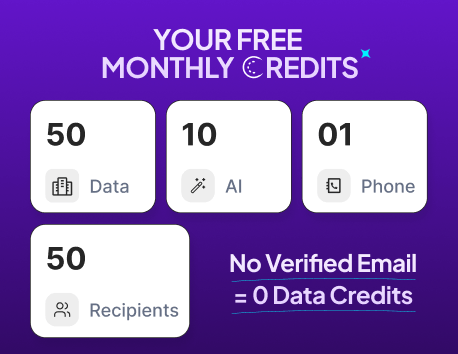
Oppora offers a free plan, with paid plans starting at $34/month. Its pricing uses separate credits for different data and prospecting activities, while paid plans provide additional outreach and contact capacity.
- Free: $0
- Pro: $34/month
- Max: $79/month
- Enterprise: Starts at $499/month
Credit add-ons are also available when you need additional capacity without moving to a higher plan. Check the current pricing page before publishing for the latest credit and recipient limits.
Pros and Cons
Oppora currently has a 4.5/5 rating on G2, with reviewers highlighting its ease of use, lead discovery, LinkedIn integration, campaign management, and time savings.
Pros:
- Combines prospect discovery, enrichment, and outreach in one workflow.
- Helps you discover and engage additional stakeholders without switching between multiple prospecting tools.
- Users highlight its clean interface, ease of use, and time-saving automation.
Cons:
- It is not a CRM or dedicated customer-health platform, so you may still need another system for account records, renewals, and health tracking.
- Credit usage can become an important consideration as your prospecting volume increases.
- Teams with more complex workflows may need time to configure their automation effectively.
Use It If / Skip It If
Use Oppora if account expansion depends on finding and engaging new stakeholders inside existing accounts.
Skip it if your primary need is to store account records, manage renewals, or monitor customer health rather than discover and engage new contacts.
2. HubSpot Sales Hub

HubSpot Sales Hub is a CRM-based sales platform built on HubSpot's Smart CRM.
Each company record pulls contacts, deals, emails, calls, and meetings into one timeline. And because it shares data with Marketing Hub and Service Hub, your account view includes campaign and support activity too.
Best For
It suits SMB and mid-market B2B teams wanting account data tied to their sales process.
If marketing already uses HubSpot, reps see email opens and webinar attendance before renewal calls.
Key Account Growth Features
These features help you see the full account and act on expansion opportunities:
- Company records: contacts, deals, and activity history in one place
- Parent-child company associations: link subsidiaries or regional offices under one parent account
- Deal pipelines: track upsells and renewals separately from new business
- Sequences: automated follow-up emails and tasks (Professional and above)
- Tasks and reminders: keep next steps from slipping after meetings
Pricing
HubSpot starts with a free CRM. Paid Sales Hub plans are priced per seat:
- Starter: from $9/seat/mo (annual) or $15 monthly
- Professional: from $90/seat/mo, plus a one-time onboarding fee
- Enterprise: from $150/seat/mo, plus onboarding
Pros and Cons
On G2, users often praise HubSpot's user-friendly interface, broad toolset, and workflow automation.
Pros:
- Familiar, easy-to-learn CRM workflow
- Large integration marketplace
- Sales, marketing, and service data connected in one ecosystem
Cons:
- Sequences, forecasting, and advanced automation require Professional or higher
- Costs rise quickly as you add seats and features
- Limited native customer-health tracking without Service Hub
Use It If / Skip It If
Use it if you want CRM, sales activity, and account data managed in one broader platform.
Skip it if deep customer-health management is your primary requirement.
3. Salesforce Sales Cloud

Salesforce Sales Cloud, now also listed as Agentforce Sales, is a highly customizable CRM built for complex sales organizations.
It organizes accounts, contacts, opportunities, and account teams in one system. You can shape objects, fields, and workflows around how your business actually sells.
Best For
It suits enterprise sales teams with complex accounts and dedicated Salesforce admins.
When one customer spans several divisions or regions, account hierarchies keep every entity, deal, and owner linked together.
Key Account Growth Features
These features help large teams coordinate selling across one complex account:
- Account hierarchies: map parent companies, subsidiaries, and regional offices
- Account teams: assign roles like account executive, CSM, and sales engineer to each account
- Opportunity management: track upsells, renewals, and new deals across business units
- Collaborative forecasting: roll up forecasts by team, region, or product line
- Agentforce AI: summarizes records, surfaces insights, and suggests next steps
Say a global customer has offices in five countries. Each regional rep owns their deals, while the global account manager sees the full picture.
Pricing
Salesforce prices by edition and per user, billed annually:
- Free Suite: $0 (up to 2 users)
- Starter Suite: $25/user/mo
- Pro Suite: $100/user/mo
- Core and higher editions: from $195/user/mo
Pros and Cons
Sales Cloud holds a 4.4/5 rating on G2. Reviewers praise its flexibility but often mention a steep learning curve.
Pros:
- Deep customization for complex sales processes
- Scales across regions, business units, and large teams
- Huge AppExchange ecosystem and integrations
Cons:
- Implementation and admin work need dedicated resources
- Steep learning curve for new users
- Add-ons and higher editions push costs up quickly
Use It If / Skip It If
Use it if your account structures, workflows, and reporting need heavy customization at enterprise scale.
Skip it if your team needs a simpler CRM with minimal admin work.
4. Planhat

Planhat is a customer success platform built for what happens after the sale.
It brings product usage, CRM data, revenue, and support activity into one customer view. So instead of just recording accounts, your team sees how each one is actually doing.
Best For
It suits B2B SaaS companies focused mainly on retention and account expansion.
Product usage data shows whether customers are getting value, often months before a renewal conversation would reveal it.
Key Account Growth Features
Planhat helps you spot changes in an account and respond fast:
- Custom health scores: combine usage, support tickets, NPS, and engagement into one score
- Revenue tracking: monitor ARR, renewals, and expansion revenue per account
- Product usage insights: see which features and users are active or declining
- Automated playbooks: trigger tasks or workflows when account data changes
- AI summaries: condense account activity and flag risks for CSMs
Here's how it works in practice. When an account's weekly logins fall below a set threshold, its health score drops, and a playbook assigns the CSM a check-in task automatically.
Pricing
Planhat doesn't publish list prices, so you'll need a custom quote after a demo.
Median contracts land around $41,000 per year, priced by customer accounts rather than user seats.
G2 reviewers report an average implementation time of about three months.
Pros and Cons
Planhat holds a 4.5/5 rating on G2. Reviewers praise its intuitive UI and flexibility, while noting a real learning curve.
Pros:
- Strong visibility into customer health and revenue
- Highly customizable workflows, dashboards, and data models
- Responsive onboarding and support teams
Cons:
- Advanced automations may need technical skills
- Implementation takes time and effort
- No public pricing for a quick cost comparison
Use It If / Skip It If
Use it if customer health, product usage, retention, and expansion drive your account workflow.
Skip it if you mainly need a lightweight CRM or an outbound prospecting tool.
5. Gainsight

Gainsight is a customer success platform built for structured, large-scale CS programs.
It combines health scores, success plans, playbooks, and customer activity into one 360-degree account view.
That makes it a strong fit for companies with formal post-sale processes and dedicated CS operations teams.
Best For
It suits larger customer success teams managing many high-value accounts.
When one CSM covers dozens of strategic accounts, structured health monitoring keeps early risks and upcoming renewals from slipping through.
Key Account Growth Features
Gainsight turns account signals into structured actions:
- Health scorecards: weight usage, support, and engagement measures, with AI suggesting refinements
- Success plans: set outcome-based goals with customers and track owners and progress
- CTAs and playbooks: create guided tasks when risk or expansion signals appear
- Renewal workflows: manage upcoming renewals and forecast churn risk
- Timeline: log every call, email, and meeting on the account record
Say an account's scorecard drops from green to yellow. A CTA opens for the CSM with a risk playbook attached, so the response stays consistent across the whole team.
Pricing
Gainsight doesn't publish list prices, so you'll need a custom quote.
Mid-market teams are often quoted $60,000–$120,000 per year, plus setup services. Pricing scales with customer records and modules.
G2 reviewers report an average implementation time of about five months.
Pros and Cons
Gainsight holds a 4.5/5 rating on G2. Reviewers value its health monitoring and centralized data but mention a steep learning curve.
Pros:
- Broad CS functionality in one platform
- Structured workflows that scale across large portfolios
- Strong visibility into account health and risk
Cons:
- Substantial implementation and setup time
- Usually needs a dedicated Gainsight admin
- May be more than a small team needs
Use It If / Skip It If
Use it if customer success is a formal, high-touch function with structured account processes.
Skip it if you need a lightweight tool a small team can set up quickly.
6. Zoho CRM

Zoho CRM is an affordable, highly customizable CRM for teams that want broad functionality without an enterprise-sized rollout.
It organizes accounts, contacts, deals, and activities in one place. And if you already use Zoho Books, Desk, or Campaigns, customer data flows between them.
Best For
It suits budget-conscious small and mid-sized B2B teams.
Its drag-and-drop layouts and workflow rules let you shape the CRM around your specific account process instead of changing how you sell.
Key Account Growth Features
These features keep account activity organized and follow-ups on schedule:
- Account records: link contacts, deals, notes, and files to each company
- Activity history: see every call, email, and meeting on one timeline
- Workflow automation: trigger tasks, emails, and field updates based on rules
- Blueprint: standardize how deals move through each stage
- Zia AI: predicts deal outcomes, flags unusual activity, and suggests the best time to contact
Say a contract renewal is 60 days out. A workflow rule creates a task for the account owner and sends a reminder email automatically.
Pricing
Zoho CRM is free for up to three users.
Paid plans start at $14 per user per month (Standard, billed annually), with Professional at $23.
Pros and Cons
Zoho CRM holds a 4.1/5 rating on G2. Reviewers like its value and customization but note the interface can feel cluttered.
Pros:
- Broad CRM features at a low per-user cost
- Deep customization with drag-and-drop layouts and workflows
- Connects with the wider Zoho ecosystem
Cons:
- Interface can feel cluttered for teams wanting a minimal CRM
- Advanced customization takes time and technical skill
- Some premium features are locked to higher tiers
Use It If / Skip It If
Use it if cost, customization, and broad CRM functionality matter most.
Skip it if your team wants an extremely simple account-management interface.
7. Pipedrive

Pipedrive is a sales-first CRM built around visual deal pipelines.
It links organizations, people, deals, and activities, so every opportunity sits in context. Upsells and renewals can run as their own deals, moving through stages just like new business.
Best For
It suits small sales teams managing deals, renewals, and expansion opportunities.
When account growth comes from tracked deals, a visual pipeline shows exactly which upsells and renewals need attention next.
Key Account Growth Features
These features keep sales-led account growth visible and moving:
- Visual pipelines: drag deals across stages in a Kanban view
- Multiple pipelines: separate new business from upsell and renewal opportunities
- Organization and contact records: see linked deals, activities, and email history per account
- Activity reminders: schedule calls, meetings, and follow-ups so nothing slips
- Workflow automations: create follow-up tasks or emails when a deal changes stage
Say you set up a "Renewals" pipeline with stages like 90 days out, proposal sent, and signed. Each stage change can trigger the next follow-up automatically.
Pricing
Pipedrive has no free plan, but every tier includes a 14-day free trial.
Lite starts at $14 per seat per month billed annually, or $24 monthly.
Workflow automations begin on the Growth plan, so check current plan limits before choosing.
Pros and Cons
Pipedrive holds a 4.3/5 rating on G2. Reviewers praise its simple, visual pipeline, though some say advanced features sit on higher tiers.
Pros:
- Clear, visual pipeline management
- Quick adoption, even for first-time CRM users
- Wide range of integrations
Cons:
- No customer-health scoring or success planning
- Advanced features and automations require higher tiers
- Reporting can feel limited for detailed analysis
Use It If / Skip It If
Use it if account growth mainly comes from tracked sales opportunities.
Skip it if you need deep health scoring or customer-success planning.
8. Freshsales

Freshsales is a CRM from Freshworks with built-in phone, email, and AI tools.
Account and contact records sit alongside deals, calls, emails, and sales activity. So your reps can research, reach out, and log the conversation without switching apps.
Best For
It suits teams wanting a simpler CRM with built-in phone, email, and AI assistance.
If support already runs on Freshdesk, reps see a customer's open tickets before every account call.
Key Account Growth Features
These features help your team follow up at the right moment:
- Account 360: see contacts, deals, and activity for each company in one view
- Contact scoring: Freddy AI ranks contacts by likelihood to engage or buy
- Deal insights: Freddy flags at-risk deals and suggests next steps
- Built-in phone and email: call, email, and track conversations from the record
- Sequences: automate multi-step follow-ups across email and tasks
Say a contact at an existing account visits your pricing page twice. Their score jumps, and the rep gets a timely nudge to follow up.
Pricing
Freshsales is free for up to three users, and paid plans include a 21-day trial.
Growth starts at $9 per user per month, billed annually.
Contact scoring and sequences begin on Pro at $39, so check current plan limits first.
Pros and Cons
Freshsales holds a 4.5/5 rating on G2. Reviewers like its easy setup and interface, but many say reporting could be deeper.
Pros:
- Clean, accessible interface with quick setup
- Built-in phone and email, no extra dialer needed
- Freddy AI scoring and deal insights
Cons:
- Custom reporting feels limited for complex analysis
- Scoring and sequences require the Pro plan
- Fewer marketplace integrations than larger CRMs
Use It If / Skip It If
Use it if you want CRM, calling, email, and AI assistance in one simple platform.
Skip it if advanced account analytics and reporting are your main requirement.
9. Monday CRM

monday CRM is a visual, no-code CRM built on the monday.com work platform.
Accounts, owners, stages, activities, and renewal dates live as columns on customizable boards. You can reshape those boards to match how your team manages accounts, without developer help.
Best For
It suits teams already on monday.com or those who prefer visual workflows.
Sales, CS, and finance can share one account board, so everyone sees the same owners, stages, and renewal dates.
Key Account Growth Features
These features keep account work visible and handoffs clean:
- Account boards: track owners, stages, contract values, and renewal dates in one view
- Automations: assign owners, set reminders, and notify teams when a status changes
- Email integration: sync Gmail or Outlook and track opens from each record
- Activity tracking: log calls, meetings, and notes on the account timeline
- Dashboards: see pipeline, renewals, and team performance in real time
Say a deal is marked "Won." An automation can create the account on your CS board and assign an onboarding owner, so nothing gets lost in the handoff.
Pricing
Monday CRM has no free plan, but offers a 14-day free trial.
Basic starts at $12 per seat per month, billed annually, with a three-seat minimum.
Seats are sold in fixed blocks, so check current pricing and seat tiers first.
Pros and Cons
Monday CRM holds a 4.5/5 rating on G2. Reviewers praise its flexibility and automation but mention a learning curve for advanced setups.
Pros:
- Flexible, visual workflows that are easy to adopt
- Strong customization without developer help
- Simple, block-based automations
Cons:
- No built-in customer-health scoring or churn analytics
- Seat minimums can mean paying for unused seats
- Large boards can feel slow
Use It If / Skip It If
Use it if your team values visual account workflows and already uses monday.com. Skip it if predictive churn analysis or specialized customer-success features are essential.
10. Kapta

Kapta is a key account management platform built for strategic account planning, not pipeline tracking.
It organizes client goals, account plans, opportunities, risks, and action items in one place. Your CRM still holds the deals, while Kapta shapes the long-term relationship strategy.
Best For
It suits teams managing a small number of high-value strategic accounts.
When one client drives a big share of revenue, documented plans keep every stakeholder, risk, and next step aligned.
Key Account Growth Features
These features help you manage strategic relationships over the long term:
- Strategic account plans: set client goals, objectives, and owners, then track progress
- Relationship maps: build org charts showing stakeholders and relationship strength
- Opportunity tracking: log upsell and cross-sell opportunities with probability weighting
- Risk dashboard: flag at-risk revenue and launch mitigation plans
- Business reviews: pull account progress and KPIs into client-ready reports
Say your top client is reorganizing. The relationship map shows which sponsors changed, and the account plan assigns someone to meet each new stakeholder.
Pricing
Kapta doesn't publish pricing, so you'll get a custom quote after a demo.
Reported plans range from about $1,000 to $5,000 per month, depending on features and team size.
Confirm current packages directly, since these third-party figures aren't official.
Pros and Cons
Kapta holds a 4.7/5 rating on G2. Reviewers praise its intuitive interface and support, though some want more custom reporting.
Pros:
- Purpose-built strategic account planning
- Clear relationship maps and org charts
- Responsive onboarding and support
Cons:
- Still needs a CRM for leads and pipeline
- Limited custom reporting options
- CRM sync isn't always real-time and two-way
Use It If / Skip It If
Use it if a few strategic accounts represent a large share of your revenue.
Skip it if you manage many smaller accounts through a pipeline-driven sales process.
How to Choose Account Management Software for Your Team
You've seen what each tool does well. But the best choice depends on your team structure, your account complexity, and your budget.
Use this five-step framework to narrow the list to the one that fits how your team actually works.
Start With Your Team and Account Type
Your team structure decides which category to shortlist first:
- Sales-led teams: a CRM like HubSpot, Pipedrive, or Zoho CRM
- Customer success teams: health-focused platforms like Planhat or Gainsight
- Enterprise account teams: customizable CRMs like Salesforce
- Strategic-account teams: planning tools like Kapta
- Expansion-focused teams: stakeholder discovery and outreach tools like Oppora
A sales team juggling 500 accounts needs fast pipelines and automation. A CS team managing 30 strategic customers needs deep health data and account plans instead.
Identify the Features You Actually Need
Long feature lists make every tool look right.
So separate must-haves, like health scores or stakeholder discovery, from nice-to-haves. More tools aren't always better either. Salesforce's State of Sales research found 66% of sales reps feel overwhelmed by the number of tools they use.
During demos, ask vendors to run your real workflow instead of a scripted tour.
Check Account and Stakeholder Data Coverage
A tool is only as useful as the data inside it. Gartner estimates poor data quality costs organizations an average of $12.9 million a year.
Check whether each platform shows enough contact, company, and account-history detail to act on. If expansion is your goal, test whether it can find and verify new stakeholders, not just store existing CRM records.
Compare Pricing and Total Cost
The starting price rarely matches your final bill. Factor in seats, credits, add-ons, implementation, integrations, and features locked to higher tiers.
And use current vendor pricing, since comparison-site figures often go stale.
Run a 30-Day Pilot
Pick one real workflow, like a renewal or expansion play, and run it end to end.
Then measure adoption, time saved, data completeness, follow-up completion, and new expansion opportunities found. If reps won't use it in 30 days, they won't use it in a year.
Final Thoughts on Account Management Software
Account management software isn't one category. It's four.
CRMs like HubSpot and Salesforce organize records and pipelines. Customer success platforms like Planhat and Gainsight track health and renewals.
Kapta structures plans for your biggest accounts. And account-growth tools help you reach the people you're missing.
So don't pick the tool with the longest feature list. Pick the one that matches your workflow, your data gaps, and how your accounts actually grow.
If growth depends on reaching more decision-makers inside existing accounts, try Oppora free. It finds, verifies, and engages the stakeholders your CRM doesn't have yet, across email and LinkedIn.
Frequently Asked Questions (FAQs)
What's the difference between account management and customer success?
Customer success focuses on helping customers get value from your product, through onboarding, adoption, and renewals. Account management focuses on the commercial relationship, including upsells, cross-sells, and contract growth. Many B2B teams split these roles, so the right software should give both teams the same shared view of each account.
Which metrics should you track to measure account management success?
Start with net revenue retention (NRR), which shows whether existing accounts grow after churn. Add gross revenue retention, expansion revenue, and churn rate. Then track leading indicators like health score trends, stakeholder coverage per account, and follow-up completion, since they warn you about problems months before revenue numbers actually move.
Is account management software worth it for small B2B teams?
Yes, once you manage more accounts than you can track from memory. Even a team of three benefits from shared account records, renewal reminders, and activity history. Start with a free plan or low-cost CRM, then add specialized tools only when a clear gap, like missing stakeholder coverage, actually appears.
How do you move account data from spreadsheets into new software?
Always clean the data first. Remove duplicates, standardize company names, and fill in missing owners and renewal dates. Then map your spreadsheet columns to the software's fields and import a small test batch. Once the test looks right, import everything and verify contact emails before running any new outreach campaigns.
How do you get your team to actually use new account management software?
Involve reps in the pilot so the tool reflects how they already work. Automate data entry wherever possible, since manual logging kills adoption fastest. Then make the software the only source of truth for account reviews and forecasts. When managers run weekly meetings from it, reps naturally keep it updated.
Summarize with AI
Share