7 Best Salesforge Alternatives & Competitors in 2026 (Ranked & Compared)
Manasa Goli
Published October 16, 2026
15 min

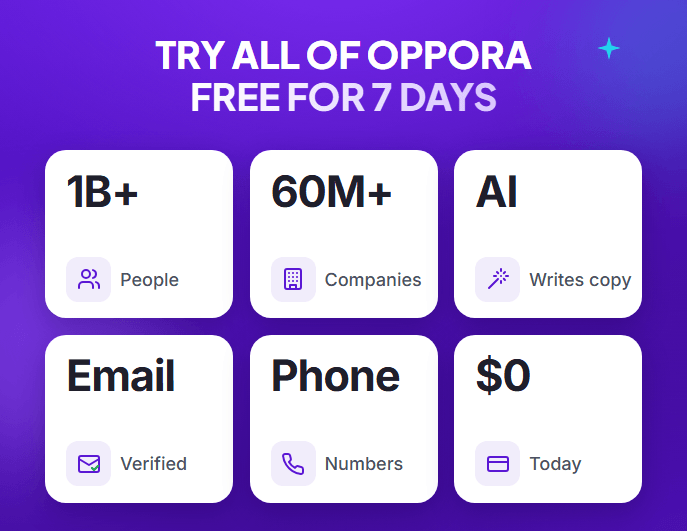
Complete Agentic Email Outreach
AI agents find and enrich prospects, personalize emails, follow up, and handle replies with your meeting link.
Start Your 7-Day Free Trial
Looking for Salesforge alternatives because your outbound campaigns require more than sending personalized emails? You are not alone.
As your sales operation grows, managing prospect research, contact verification, follow-ups, replies, and CRM updates can become a full-time job.
The right platform should help you build a consistent pipeline without adding more tools or manual work to your day.
In this guide, we compare seven Salesforge competitors based on automation, prospecting, outreach capabilities, pricing considerations, and ideal use cases.
- The best Salesforge alternatives for different sales teams
- How their features and workflows compare
- Which platform offers the best value for your outbound strategy
- How to choose the right tool for your business
Suggested Reading:
Email Reputation Monitoring: How to Track and Improve Your Sender ReputationQuick Comparison: The Best Salesforge Alternatives in 2026
Before exploring each platform, it helps to understand that not every Salesforge alternative solves the same problem. Some focus on cold-email infrastructure, while others help you discover leads, coordinate multiple channels, or automate the entire sales development process.
*Figures are drawn from the supplied reference material where available and should be verified against current official pricing pages before publication.
When Should You Consider a Salesforge Alternative?
Salesforge combines AI-powered personalization, cold email outreach, and deliverability tools, making it an option for teams that want to scale outbound campaigns.
However, it may not be the right fit for every sales team. User reviews and competitor comparisons highlight a few areas worth evaluating before you commit to the platform.
1. Multichannel Campaigns Need to Work Reliably
Salesforge supports multichannel outreach, but some users have reported problems with its sequencer.
In a G2 review, one reviewer described issues with live sequences, webhooks, CRM syncing, and limited campaign visibility. These problems can become frustrating if your team regularly changes sequences or relies on automated steps to run without interruption.
If your outbound strategy depends on coordinating email and LinkedIn activities, test the complete workflow before moving your campaigns over. Check whether you can edit active sequences, add contacts after launch, and track each prospect's progress.
2. Managing Multiple Products Can Feel Complicated
Salesforge is part of a broader product ecosystem that includes tools for email infrastructure, mailbox provisioning, warmup, and lead generation.
That setup can be useful when you want more control over your outbound stack. However, it may feel complicated if you simply want to find prospects, launch campaigns, and manage replies from one place.
A Salesforge alternatives comparison by Saleshandy identifies product complexity and onboarding as potential concerns for teams evaluating the platform.
If you prefer a simpler setup, compare how much configuration each tool requires and whether the features you need are included in one subscription.
3. Costs Can Increase When You Need More Automation
Salesforge's entry-level pricing is only part of the total cost to consider. If you need additional infrastructure, higher usage limits, or an AI sales development agent, your overall spend may increase.
For instance, G2's Salesforge listing lists Agent Frank separately, starting at $499. Before choosing a plan, check whether the AI capabilities you need are included or require a separate subscription.
This matters particularly for smaller teams that want prospecting, personalization, outreach, and reply handling without paying for several separate products.
Compare the total monthly cost of your intended workflow rather than relying only on the headline starting price.
4. CRM Integrations and Reporting May Not Cover Every Workflow
Your outbound platform needs to fit the way your sales team tracks prospects and measures campaign performance.
Some Salesforge reviewers on G2 have reported issues with CRM syncing and limited visibility into sequence progress. A separate Saleshandy comparison also identifies CRM integrations and reporting as areas buyers may want to evaluate.
These concerns may not affect every account, so test the integrations your team relies on most. Check whether contact updates sync correctly, whether campaign activity is visible, and whether you can report on the metrics your team uses to assess results.
5. Deliverability Results Don't Always Match Expectations
Salesforge emphasizes email deliverability, but your actual results can still depend on domain health, mailbox configuration, targeting, sending practices, and message quality.
Some reviewers have reported disappointing deliverability or response rates despite using the platform. You can explore this feedback through Salesforge reviews on G2 and customer reviews on Trustpilot.
Treat these reports as signals to investigate rather than a guarantee of poor performance. Before switching, review your bounce rates, spam placement, reply rates, and domain setup to identify whether the problem comes from your outreach strategy, your infrastructure, or the platform itself.
If you decide to evaluate alternatives, compare their deliverability controls, prospecting features, channel support, and total cost against the specific problems you're trying to solve.
7 Best Salesforge Alternatives
1. Oppora

Oppora is an outbound sales platform that brings prospect discovery, contact enrichment, email outreach, LinkedIn automation, and AI-powered workflows into one place.
Instead of finding leads in one tool, verifying their contact details in another, and then moving them into a separate sequencer, you can connect those steps in a single workflow.
That makes Oppora worth considering if you want to reduce the number of tools involved in running outbound campaigns.
Pricing
Oppora offers four pricing levels:
- Free — $0/month: 50 data credits, 10 AI credits, 3 AI workflows, 3 mailboxes, and 50 recipients per month.
- Pro — $34/month: 10,000 data credits, 500 AI credits, 50 workflows, 25 mailboxes, and 5,000 recipients per month.
- Max — $79/month: 25,000 data credits, 1,000 AI credits, unlimited workflows and recipients, and 50 mailboxes.
- Enterprise — from $499/month: For teams that need higher-volume usage and custom requirements.
Oppora uses separate credit pools for data-related tasks, AI activities, and recipient outreach. This helps you track where your usage goes rather than treating every action as the same type of credit.
Key Features
- AI-powered prospecting and sales workflows
- Email finding, verification, and enrichment
- Email and LinkedIn outreach
- Email warmup and mailbox rotation across up to 50 mailboxes
- AI reply handling for prospect conversations
- Four CRM integrations: HubSpot, Salesforce, Pipedrive, and Zoho
Best for
B2B sales teams that want prospecting, enrichment, and outbound outreach in one platform instead of managing several disconnected tools.
Pros
- Combines prospect discovery, enrichment, and outreach in one platform.
- Supports email and LinkedIn outreach.
- Automates prospect replies with AI.
- Offers REST API and MCP access for custom workflows.
Cons
- Higher-volume outreach requires a paid plan.
- Data, AI, and recipient usage have separate credit limits.
- No dedicated cold-calling outreach workflow.
2. Apollo.io

Apollo.io is a sales intelligence and engagement platform that combines B2B prospecting, contact data, enrichment, and outbound sequences.
Compared with Salesforge, Apollo is worth considering if you want to build prospect lists from a large contact database before launching outreach. You can search for companies and decision-makers, enrich records, and manage prospect engagement within the same platform.
Pricing
Apollo offers four main plans:
- Free — $0/month: 900 credits per seat per year, granted monthly.
- Basic — $49/user/month: 30,000 credits per seat per year.
- Professional — $79/user/month: 48,000 credits per seat per year.
- Organization — $119/user/month: 72,000 credits per seat per year, with a three-seat minimum.
Key Features
- 230M+ contacts and 65M+ companies
- B2B prospect and company search
- Contact enrichment and data management
- Email sequencing and sales engagement
- AI research and lead scoring
- API access for prospecting and enrichment workflows
Best for
Sales teams that need a large B2B database alongside prospecting, enrichment, and outbound sequencing.
Pros
- Combines prospecting and outreach in one platform.
- Provides access to a large B2B contact database.
- Includes enrichment and intent-data capabilities.
- Supports AI research and lead scoring.
Cons
- Credit usage can be difficult to forecast.
- Higher-tier plans can become expensive for larger teams.
- Some features may be unnecessary for email-only outreach.
3. Instantly

Instantly is built around cold email campaigns, email account management, and deliverability. It is a strong Salesforge alternative if your primary goal is to run high-volume email outreach across multiple sending accounts.
You can connect multiple mailboxes, warm them up, launch campaigns, and add lead discovery or AI capabilities as your workflow expands. This makes Instantly particularly relevant if you already have a prospecting process and need a platform to manage sending.
Pricing
Instantly's Email Outreach plans start at $47/month, with the Hyper Growth plan at $97/month. Higher-volume options are also available.
Lead database access and additional AI capabilities may involve separate plans or credit limits, so compare the full cost of your intended workflow rather than only the starting price.
Key Features
- 450M+ B2B leads
- Unlimited email accounts
- Unlimited email warmup
- 13 lead-search filters
- 5+ providers for waterfall work-email enrichment
- AI workflows with access to 5 major large language models
Best for
Teams that prioritize high-volume cold email campaigns, mailbox management, and deliverability.
Pros
- Supports unlimited email accounts.
- Includes email warmup tools.
- Provides access to a large B2B lead database.
- Supports high-volume cold email campaigns.
Cons
- Lead generation and AI features may require additional plans or credits.
- Multiple usage limits require careful monitoring.
- Advanced multichannel needs may require additional tools.
4. Smartlead

Smartlead is designed for teams that need to manage cold email campaigns across multiple mailboxes. It is especially relevant for agencies and outbound teams that run campaigns for multiple clients or manage large numbers of sending accounts.
Rather than focusing primarily on prospect discovery, Smartlead puts more emphasis on email infrastructure, campaign delivery, and scaling outbound operations. You may still need a separate prospecting or enrichment platform to complete your workflow.
Pricing
Smartlead offers four main pricing tiers:
- Base — $39/month
- Pro — $94/month
- Unlimited Smart — $174/month
- Unlimited Prime — $379/month
Compare each plan's contact allowance, email volume, and additional features before choosing a tier.
Key Features
- Unlimited email accounts
- Email warmup and sender rotation
- API and webhook access
- CRM capabilities
- Email verification options
- Campaign management across multiple mailboxes
Best for
Agencies and sales teams managing high-volume cold email campaigns across multiple mailboxes.
Pros
- Supports campaigns across multiple sending accounts.
- Includes warmup and sender rotation.
- Offers API and webhook access for automation.
- Provides multiple pricing tiers for different outreach volumes.
Cons
- May require more technical setup than simpler platforms.
- Prospect discovery is less central to the product.
- Additional tools may be needed for lead sourcing and enrichment.
5. Lemlist

Lemlist is a multichannel sales engagement platform that focuses on personalized outreach. It can be a suitable Salesforge alternative if you want to combine email campaigns with LinkedIn activity, calls, and other channels.
Instead of relying entirely on email sequences, you can build outreach workflows around multiple touchpoints. This is useful when your team needs to personalize messages and engage prospects through more than one channel.
Pricing
Lemlist's main plans include:
- Email — from $55/user/month, billed annually.
- Multichannel — from $87/user/month, billed annually.
The available sending capacity and features depend on your chosen plan, so check the limits for the channels you intend to use.
Key Features
- 650M+ leads
- Email, LinkedIn, phone, and SMS outreach
- Email and phone-number finder
- LinkedIn automation
- Built-in call dialer and AI agents
- CRM integrations, API, and MCP access
Best for
Sales teams that want personalized multichannel outreach rather than email-only sequencing.
Pros
- Supports personalized multichannel outreach.
- Provides access to a large prospect database.
- Includes AI agents and deliverability tools.
- Connects outreach with CRM and API-based workflows.
Cons
- Multichannel plans cost more than basic email tools.
- Additional channels can increase the overall cost.
- Some features may be unnecessary for email-only campaigns.
Suggested Reading:
12 LinkedIn Account Based Marketing Strategies to Win Key Accounts6. Reply.io

Reply.io is a sales engagement platform for teams that want to coordinate outreach across email, LinkedIn, calls, and SMS. It can be a good alternative to Salesforge if you need structured multichannel sequences and sales engagement features.
Its main advantage is the ability to coordinate different outreach activities within a sequence. However, the right plan depends on whether you need email-only outreach or a broader multichannel workflow.
Pricing
Reply.io's main plans include:
- Email Volume — from $49/user/month, billed annually, for 1,000 active contacts.
- Multichannel — from $89/user/month, billed annually.
Pricing and capacity depend on the selected plan, contact volume, and channels.
Key Features
- 1B+ B2B contacts available through live data
- Email, LinkedIn, calls, and SMS outreach
- Unlimited emails
- Unlimited email mailboxes, subject to fair-use conditions
- Up to 200 website-visitor reveals per month
- AI-assisted sales engagement and email warmup
Best for
Sales teams that want to coordinate email and other outreach channels within structured sales sequences.
Pros
- Supports multichannel sales engagement.
- Provides access to a large B2B contact-data source.
- Includes AI and automation features.
- Supports multiple mailboxes for outbound campaigns.
Cons
- Add-ons can increase the total cost.
- Multichannel workflows can be more complex than email-only campaigns.
- Pricing depends on contact volume and selected channels.
7. 11x
11x focuses on AI-powered sales development, using AI agents to automate parts of prospecting and outreach. It is worth evaluating if your goal is to reduce manual work across outbound sales rather than simply replace one email sequencer with another.
Unlike tools that primarily give you campaign-building features, 11x positions its offering around autonomous AI sales work. Before choosing it, clarify which tasks you want the AI to handle and how those tasks fit into your existing sales process.
Pricing
11x pricing is not confirmed in the supplied reference material. Contact the vendor for a current quote and clarify whether pricing depends on usage, team size, selected capabilities, or implementation requirements.
Key Features
- AI-powered sales development
- Automated prospecting workflows
- AI-led outbound engagement
- Automation of repetitive sales development tasks
- AI-driven prospect communication
- Autonomous sales workflow capabilities
The exact channel availability, database size, mailbox limits, and current plan inclusions should be confirmed with 11x before publication. The supplied reference does not establish comparable numeric limits for these items.
Best for
Businesses exploring autonomous AI sales development and looking to automate more of their outbound workflow.
Pros
- Focuses on automating sales development tasks.
- Can reduce manual work across outbound processes.
- Offers an alternative to manually managed outreach sequences.
- May suit teams looking to expand outbound capacity.
Cons
- Pricing is not confirmed in the supplied reference material.
- Database size and mailbox limits are not confirmed.
- Implementation requirements should be evaluated before committing.
- Exact channel availability and integrations need confirmation from the vendor.
How to Calculate the ROI of Switching Salesforge Alternatives
Switching platforms makes sense only when the expected benefits justify the costs and effort involved.
Instead of focusing exclusively on the subscription price, evaluate how much time you can save and whether your team can improve the quality and consistency of its outbound process.
Start with the hours your team spends on manual work
Suppose a sales representative spends 10 hours per week on repetitive outbound administration, including researching prospects, preparing messages, coordinating follow-ups, and updating records.
If a new platform reduces that workload by 40%, it saves four hours per week.
Over four weeks, that amounts to approximately 16 hours of recovered time.
If you value that time at $25 per hour, the modeled labor value is $400 per month.
These are hypothetical inputs, not a claim about the results any particular platform will deliver. You should measure your own baseline and repeat the calculation after implementation.
Measure the outcomes that matter
Track these metrics before and after switching:
- Time spent preparing and maintaining campaigns.
- Percentage of contacts with verified email addresses.
- Email bounce rate and deliverability indicators.
- Positive reply rate and qualified conversations.
- Meetings booked from outbound activity.
- Cost per qualified meeting.
- Hours required to manage replies and update the CRM.
An increase in sending volume alone does not demonstrate success. A better outcome is a more efficient process that generates relevant conversations while maintaining healthy sending practices.
Run a controlled pilot before migrating everything
Start with one target audience and one campaign.
Use the same offer, comparable prospect criteria, and a consistent measurement period wherever possible. Compare the results with your existing workflow before moving the rest of your outbound operation.
This approach helps you identify which automation features create measurable value and which ones still require manual oversight.
What to Test Before Moving Away From Salesforge
Even if a competitor looks better on paper, test the workflow you intend to use before committing to a full migration.
1. Test contact quality
Import a representative sample of prospects and review the accuracy of the company information, job titles, and email addresses.
Verify how the platform handles missing data, duplicates, and invalid contacts.
2. Test personalization quality
Generate messages for prospects with different roles, industries, and business contexts.
Check whether the copy reflects relevant information or merely inserts names and company details into a generic template.
3. Test reply handling
Send test messages and simulate common responses, such as requests for pricing, objections, meeting requests, and unsubscribe requests.
Confirm which replies the AI can handle, which require human review, and how conversations are routed.
4. Test CRM synchronization
Check whether contact records, replies, meeting information, and relevant activity are recorded correctly in your CRM.
A workflow that saves time during outreach but creates duplicate records or incomplete reporting may simply move the administrative burden elsewhere.
5. Check deliverability safeguards
Review mailbox setup, authentication, warmup, sending limits, and domain monitoring.
No tool can guarantee that your emails will always reach the inbox. You should maintain sensible sending volumes, accurate contact data, relevant messages, and appropriate opt-out handling.
6. Confirm the real cost at your expected volume
Ask the vendor to demonstrate the exact plan you need for your expected number of recipients, mailboxes, and data operations.
Include add-ons, annual commitments, onboarding requirements, and the cost of any external tools that remain necessary.
Conclusion
The best Salesforge alternative is not necessarily the tool with the most features or the lowest starting price. It is the one that removes the right bottlenecks from your sales process while fitting your budget and operating model.
If email infrastructure is your main concern, Instantly or Smartlead may be worth evaluating. If prospecting is your priority, consider Apollo. If you want more connected, AI-led outbound execution, Oppora deserves a closer look.
Start with one campaign, measure the time saved and qualified conversations generated, and compare the complete operating cost. When you choose a platform around your actual workflow rather than a feature checklist, you give your team a better foundation for consistent outbound growth.
Frequently Asked Questions
What is the best Salesforge alternative in 2026?
The best alternative depends on your requirements. Oppora is a strong candidate if you want configurable AI workflows spanning prospecting, enrichment, email outreach, reply handling, and CRM synchronization. Apollo is worth evaluating for prospecting, while Instantly and Smartlead are relevant for email-focused operations.
Is there a free Salesforge alternative?
Oppora offers a free plan, while other vendors may offer free trials or limited entry-level options. The exact allowances differ, so compare the number of contacts, emails, data credits, and automation features available before deciding.
Which Salesforge alternative is best for agencies?
Smartlead and Instantly are worth considering for agencies focused on email infrastructure and high-volume campaign management. Oppora is relevant when the agency also wants to automate prospect discovery, personalization, replies, and CRM updates within connected workflows.
Which tool is best for AI-powered sales automation?
The answer depends on how much autonomy you need. Oppora emphasizes configurable workflows that connect eight AI agents across the outbound process. 11x offers AI digital workers, while Reply.io and other sales engagement platforms provide their own forms of AI-assisted execution. Compare the exact tasks each product can perform without human intervention.
Is Salesforge only for cold email?
No. Salesforge's offering includes email outreach, LinkedIn-related capabilities, deliverability tools, and Agent Frank, its AI SDR option. Its suitability depends on the workflow you need and the features included in your selected plan.
How do you choose between an AI SDR and a sales engagement platform?
A sales engagement platform generally helps you organize and execute outreach, while an AI SDR is designed to take responsibility for a broader set of sales development activities. These categories overlap, so examine the actual workflow rather than relying only on product labels.
Summarize with AI
Share