11 Best Technographic Data Providers in 2026 for Sales & Marketing Teams
Manasa Goli
Published September 10, 2026
17 min

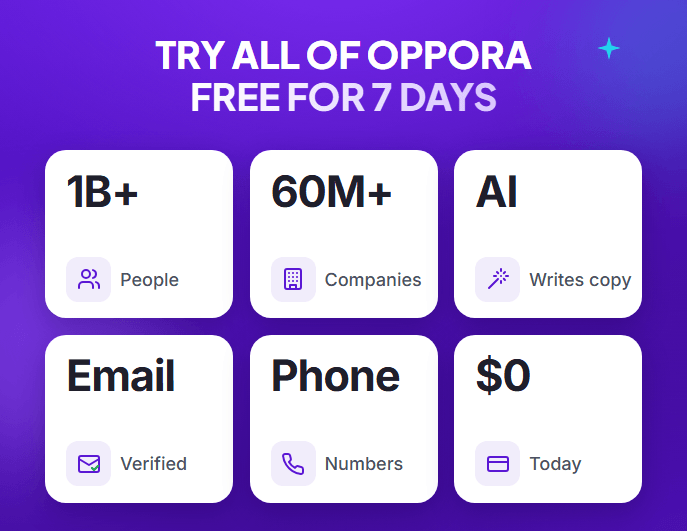
Complete Agentic Email Outreach
AI agents find and enrich prospects, personalize emails, follow up, and handle replies with your meeting link.
Start Your 7-Day Free Trial
Choosing a technographic data provider can get confusing quickly. Most promise accurate data and broad technology coverage, but the differences become clear when you actually use that data.
42% of B2B marketers use technographic data for audience targeting, yet only 1 in 10 are very confident their data reaches the right people.
In this guide, you’ll compare the best technographic data providers based on pricing, coverage, data quality, integrations, and use cases. You’ll also learn:
- How technographic data is collected and evaluated
- Which providers fit different sales and marketing needs
- How to turn technology signals into actionable outbound
Best Technographic Data Providers at a Glance
Pricing and coverage are based on publicly available 2026 information and can vary by plan, usage, contract, or API access. BuiltWith and Wappalyzer publish self-serve pricing, while several enterprise providers require a quote.
How We Evaluated These Technographic Data Providers
Not every technographic database works the same way. A large technology database can look impressive, but what matters is whether the data is accurate, fresh, and useful for your specific targeting needs.
We compared providers across these factors:
- Technology coverage: How many technologies and categories they track
- Data accuracy: How reliably they identify a company's technology stack
- Data freshness: How quickly technology changes are reflected
- Company coverage: How broad their database is across industries and markets
- Data depth: Whether they provide current, historical, or technology-change data
- Integrations: API, CRM, enrichment, and other ways to access the data
- Pricing: Starting cost, credits, usage limits, and pricing model
- Use cases: Whether the platform is better suited for sales, marketing, ABM, research, or data teams
This gives you a more practical way to compare technographic data providers instead of judging them by database size alone.
11 Best Technographic Data Providers in 2026
Now that you know what to look for, it’s time to compare the providers themselves.
Each platform takes a slightly different approach to technographic data, so the best option depends on how you plan to use the data.
1. Oppora — Best for AI-Powered Outbound and Technographic Targeting

Oppora is a strong option if you want to use technographic signals as part of a broader AI-powered outbound workflow. Instead of keeping lead data, enrichment, outreach, and follow-ups in separate tools, Oppora connects these steps through 8 AI Sales Agents that work together.
You can use technology-related signals alongside company data, enrichment, and other prospecting signals to build targeted workflows. Once configured, Oppora can find prospects, enrich and verify them, run outreach, handle replies, and sync activity with your CRM.
Key features include:
- 120M+ verified contacts with waterfall data sources
- Connect your own data provider through API
- Company and lead search for targeted prospecting
- Enrichment and real-time email verification
- 8 AI Sales Agents working across the outbound workflow
- Automated email and LinkedIn outreach
- AI-powered email replies and meeting booking
- CRM integrations with HubSpot, Salesforce, and Pipedrive
- Unlimited campaigns and email sending
- Separate credits for email search, verification, and enrichment
Oppora is particularly useful when you want to move beyond “Which companies use this technology?” and turn those signals into an automated prospecting and outreach workflow.
Pricing: Free plan available, with paid plans starting at $34/month. Max Plan starts at $79/month. Enterprise plans start at $499/month. Mini credit packs are also available for specific tasks.
Best for: Founders, SDR teams, agencies, marketers, and B2B teams that want prospecting, enrichment, and outbound automation in one platform.
What stands out: Its agentic workflow connects data discovery with enrichment, outreach, AI replies, and CRM syncing instead of treating technographic data as a standalone feature.
Watch out for: If you only need a simple technographic database without prospecting or outbound automation, Oppora's broader workflow capabilities may be more than you need.
2. ZoomInfo — Best for B2B Sales Intelligence

ZoomInfo is a strong option if you want technographic data alongside the rest of your B2B sales intelligence. Its database covers 30,000+ technologies across 100M+ companies, giving sales and marketing teams a broad pool of accounts to filter and research.
The bigger advantage is that technographics don't sit alone. You can combine technology data with company attributes, contact information, intent signals, and other buying signals to identify accounts that fit your ICP and may be ready for outreach.
Key features include:
- 30,000+ technologies tracked across 100M+ companies
- Technology adoption and install-date signals
- Technographic filtering for account targeting
- Contact and company intelligence in the same platform
- Intent and behavioral signals for account prioritization
- CRM and sales-stack integrations
- Data that can support competitive displacement and technology-based segmentation
ZoomInfo is particularly useful when your sales team wants to answer more than “Which companies use this technology?” You can combine that information with firmographic and behavioral signals to decide which accounts to prioritize, who to contact, and when to reach out.
Pricing: Quote-based / consumption-credit model. ZoomInfo does not publish a standard public list price for its full platform.
Best for: Mid-market and enterprise sales teams that want technographic data connected to a broader B2B intelligence platform.
What stands out: Its breadth makes it useful for competitive displacement, ICP segmentation, and account prioritization without requiring a separate data layer.
Watch out for: If you only need basic website technology detection, ZoomInfo's broader sales intelligence capabilities may be more than you need.
3. BuiltWith — Best for Website Technology Research

BuiltWith is a strong choice when your sales or research workflow depends on knowing which technologies are visible on a company's website. It currently analyzes data from 491.9 million domains, with billions of webpages updated weekly.
You can use it to find companies using specific technologies, research technology adoption, build prospect lists, and analyze technology markets. Its Pro plan also removes the technology and keyword limits found in the Basic plan.
Key features include:
- 491.9M+ domains in its dataset
- Billions of webpages updated weekly
- Technology and keyword-based company lists
- CRM integration
- Technology market-share reports
- Domain upload and analysis
- Historical technology research
Pricing: Basic starts at $295/month, Pro at $495/month, and Team at $995/month. The Basic plan includes 2 technologies, while Pro and Team offer unlimited technologies.
Best for: Sales and marketing teams doing technology-based prospecting, competitive research, and market analysis.
What stands out: The sheer scale of its web data makes BuiltWith useful when you want to identify large groups of companies using a particular technology.
Watch out for: BuiltWith is primarily focused on publicly detectable web technologies, so it shouldn't be treated as a complete view of a company's entire internal technology stack.
4. Wappalyzer — Best for Technology Detection and API Workflows

Wappalyzer is built around identifying the technologies behind websites and turning those signals into usable prospecting and enrichment data. Its platform can identify technologies across areas such as CMS, ecommerce, analytics, marketing, frameworks, and infrastructure.
Its current plans are particularly useful for comparing the cost of different usage levels. The free plan gives you 50 technology lookups per month, while the Pro plan provides 5,000 lookups for $250/month. Business increases that to 20,000 lookups and 20,000 API credits for $450/month.
Key features include:
- 50 free technology lookups/month
- 5,000 lookups/month on Pro
- 20,000 lookups + 20,000 API credits/month on Business
- Technology-based lead lists
- CRM enrichment
- API access
- Live website technology analysis
- Company and contact information alongside technology results
Its API can also return company details, verified emails, phone numbers, social profiles, and other enrichment fields. The standard lookup costs 1 credit per URL, while certain live recursive lookups cost 5 credits per URL.
Pricing: Free; Pro $250/month; Business $450/month; Enterprise $850+/month.
Best for: Teams that want technology detection combined with lead generation, enrichment, or API-based workflows.
What stands out: The combination of technology detection and API access makes it easier to move technographic signals into other systems.
Watch out for: Its pricing becomes more significant as your lookup and API volume grows, so high-volume teams should compare credit economics carefully.
5. Intricately — Best for Cloud Technology Intelligence
Intricately takes a more specialized approach to technographic intelligence. Instead of focusing mainly on website technologies, it maps the cloud footprint of companies, helping you understand what infrastructure they use, where it is deployed, and how much they may be spending.
Its platform currently covers 2.4 million companies across North America, representing an estimated $78 billion in monthly cloud spend.
That makes it particularly interesting for companies selling cloud infrastructure, cybersecurity, hosting, data, and other technical products where a prospect's infrastructure environment can be a strong buying signal.
Key features include:
- Cloud technology intelligence
- Infrastructure and hosting detection
- Estimated technology spend
- Technology deployment information
- Real-time cloud footprint monitoring
- Signals around technology and infrastructure changes
- Account research for cloud-focused sales teams
Intricately's data can help answer questions that a basic technographics tool may not: What infrastructure does this company use? Where is it deployed? And roughly how much might it be spending?
Pricing: Not publicly listed; contact-based/custom pricing.
Best for: Cloud, infrastructure, cybersecurity, hosting, and technical B2B sales teams.
What stands out: Its focus on cloud infrastructure and estimated spend gives sales teams a deeper signal than simply knowing that a company uses a particular technology.
Watch out for: It is more specialized than general-purpose technographic platforms, so it may not be the right choice if you need broad coverage across CRM, marketing, ecommerce, and other business applications.
6. Coresignal — Best for Large-Scale Company and Data Enrichment

Coresignal is a good fit when technographic information is part of a much larger data workflow. Its datasets cover 70M+ companies, 907M+ employee profiles, and 475M+ job postings, giving data teams additional company and workforce context alongside technology-related signals.
Rather than treating technographic data as a standalone lookup, Coresignal is designed for teams that want to pull business data into their own applications, enrichment pipelines, or analytics systems.
Key features include:
- 70M+ company records
- 907M+ employee profiles
- 475M+ job postings
- Database APIs
- Company and contact enrichment
- Historical data
- JSON, JSONL, CSV, and Parquet delivery
- Data from 15+ web sources
- Real-time API options
- Up to 5 years of historical data, depending on the dataset
For teams building their own data infrastructure, that breadth can be more useful than a simple technographics dashboard. You can combine company, employee, job, and technology-related information to build richer account profiles.
Pricing: Database API plans start at $49/month. The Mini plan includes 2,500 credits/month, while higher plans go up to 10 million credits/month. Dataset pricing starts at $1,000 per dataset and varies by dataset and contract.
Best for: Data teams, sales intelligence platforms, enrichment workflows, and companies building custom datasets.
What stands out: Its combination of company, employee, job, and historical datasets makes it useful when technographics are only one part of your account intelligence model.
Watch out for: Coresignal is more data-infrastructure-oriented than a plug-and-play sales tool, so teams looking for a simple prospecting interface may find it more than they need.
7. 6sense — Best for Technographics + Intent Data

6sense is a strong fit when you want technographic data alongside intent and predictive buying signals. Its platform tracks 30,000+ technologies across 15.8M+ companies, allowing teams to build account segments around the technologies their prospects use.
The bigger advantage is that technographics are part of a broader account-intelligence workflow. You can combine technology usage with intent, firmographics, buyer data, and predictive signals to identify accounts that not only fit your ICP but may also be moving toward a purchase.
Key features include:
- 30,000+ technologies tracked
- 15.8M+ companies tracked
- Technographic account filtering
- Intent and predictive signals
- Company and contact intelligence
- Account scoring and prioritization
- CRM and sales-engagement integrations
- AI-powered account recommendations
6sense is particularly useful for ABM teams that don't want to treat technology usage as an isolated signal. You can layer technographics with intent to understand what an account uses and whether it may be in-market.
Pricing: Custom / quote-based. 6sense does not publish a standard public price for its sales intelligence platform.
Best for: Enterprise sales and marketing teams running ABM and intent-driven account targeting.
What stands out: The combination of technographics, intent, and predictive intelligence makes it more useful for account prioritization than a standalone technology database.
Watch out for: If you only need basic technology lookup or website detection, 6sense can be more platform than you need.
8. Demandbase — Best for Account-Based Marketing

Demandbase is designed for teams that want to use technographic data as part of a broader ABM strategy. Its current database covers 48,000+ front-end and back-end technologies across 136M+ domains.
Beyond identifying technologies, Demandbase lets teams use those signals to build account lists, enrich records, qualify accounts, and understand what technology a company may purchase next.
Key features include:
- 48,000+ technologies tracked
- 136M+ domains tracked
- Front-end and back-end technology coverage
- Technographic account filtering
- Account enrichment
- Technology purchase predictions
- IT spend and revenue-potential insights
- Intent and account engagement signals
- CRM and marketing integrations
- API-based data exports
One useful distinction is that Demandbase doesn't stop at “What technology does this company use?” Its platform is designed to help you connect that information with account engagement, intent, buying groups, and revenue opportunities.
It also supports API exports for accounts, people, opportunities, activities, and buying groups, with configurable fields and scheduled data delivery.
Pricing: Custom / quote-based.
Best for: B2B marketing and revenue teams running account-based marketing programs.
What stands out: Its combination of broad technology coverage and ABM capabilities makes technographics usable across segmentation, personalization, enrichment, and account prioritization.
Watch out for: Demandbase is built for a broader ABM motion, so teams looking only for a simple technographic database may not need its full feature set.
9. Cognism — Best for Technographics + Verified B2B Contact Data

Cognism combines technographic data with company and contact intelligence, making it useful when you want to go from technology-based account selection to finding the people behind those accounts.
Its technographic database covers 20,000+ technologies, including CRM software, cloud services, web analytics, and payment technologies. Cognism also provides technology-usage information that can help identify when a prospect may be approaching a renewal or replacement opportunity.
Key features include:
- 20,000+ technologies in its technographic database
- Company revenue, headcount, and headquarters data
- Emails, mobile numbers, job titles, and work history
- Firmographic and technographic filters
- Hiring, funding, M&A, and job-change signals
- Intent data
- AI-powered account research
- CSV enrichment
- CRM enrichment
- API and bulk data delivery
Cognism is particularly relevant for teams that care about data quality and compliant prospecting, especially when selling across Europe. Its current platform includes Standard and Pro packages, both with 5 seats included, while credits are used to reveal, enrich, or export contacts.
Pricing: Custom / quote-based. Cognism does not publish a universal public list price; pricing depends on the package, team setup, usage, and data-delivery requirements.
Best for: B2B sales teams that want technographic targeting alongside verified contact data, particularly for European markets.
What stands out: Its 20,000+ technology database is combined with phone-verified contact data, enrichment, intent, and compliance-focused prospecting.
Watch out for: If your only requirement is technographic research, paying for a broader contact and sales intelligence platform may not be the most economical option.
10. TheirStack — Best for Technographic Data and API Access

TheirStack is a good option when you need technographic data in a format that can plug directly into your sales, enrichment, or data workflows. Its database covers 49M+ companies and 1,000+ technologies, with technology data available through search and API access.
The platform is especially useful for finding companies based on their technology stack and combining those signals with other company attributes. That makes it practical for building targeted account lists without relying only on broad firmographic filters.
Key features include:
- 49M+ companies in its database
- 1,000+ technologies tracked
- Technology-based company search
- Technographic API access
- Company and contact data
- Technology stack and usage signals
- Filters for building targeted account lists
- Data exports for downstream workflows
TheirStack can be useful when you want to move beyond simply viewing a technology profile. You can use the data to identify target accounts, enrich existing records, and feed technology signals into your own sales or data workflows.
Pricing: Free plan available, with paid plans starting around $49/month depending on usage and data requirements.
Best for: Sales teams, data teams, and developers looking for searchable technographics with API access.
What stands out: Its combination of a large company database and API access makes it easier to incorporate technographic data into existing workflows.
Watch out for: Its technology coverage is narrower than some larger technographic databases, so check whether the specific technologies you care about are supported.
11. Apollo — Best for Technographic Prospecting

Apollo is primarily a B2B sales intelligence and engagement platform, but its technographic filters make it useful for teams that want to find prospects based on the technologies their companies use.
Rather than buying a standalone technographic dataset, you can use Apollo's technology filters alongside company, contact, industry, job-title, and other prospecting criteria. Its database covers 230M+ contacts and 30M+ companies, giving you a large pool of potential accounts to work with.
Key features include:
- 230M+ contacts
- 30M+ companies
- 65+ technographic filters
- Technology-based account searches
- Contact and company enrichment
- Email and phone data
- AI-assisted prospecting
- Email sequencing and sales engagement
- CRM integrations
- Built-in prospecting workflows
The main advantage is the workflow. You can identify companies using a specific technology, find relevant decision-makers within those accounts, and move those prospects into an outbound sequence without switching between multiple platforms.
Pricing: Free plan available. Paid plans start at $49/user/month when billed annually, with higher tiers adding more credits and advanced capabilities.
Best for: Sales teams that want technographic targeting combined with prospect discovery and outbound engagement.
What stands out: Apollo connects technology-based targeting with contact discovery and sales engagement, making it useful when you want to act on technographic signals immediately.
Watch out for: Apollo's technographics are part of a broader sales intelligence platform, so teams looking for deep standalone technology intelligence may prefer a dedicated provider.
Next section should move from the provider list into the practical distinction between provider, database, dataset, and tool, so the article continues naturally instead of jumping straight into another topic.
Technographic Data Providers vs. Technographics Tools
Once you start comparing providers, you’ll notice that terms like technographic database, technographic dataset, and technographics tool are often used interchangeably.
They aren’t always the same thing. The right option depends on whether you want to research accounts, enrich existing data, or build technographic intelligence into your own workflow.
1. Technographic Data Provider
A technographic data provider collects and maintains technology-usage information about companies. You typically access that information through a platform, API, enrichment service, or dataset.
This is useful when you need technology signals at scale rather than researching accounts one by one.
2. Technographic Database
A technographic database is the underlying collection of company and technology records. It may include information such as the technologies a company uses, when they were detected, and other company attributes.
The size of the database matters, but coverage of the technologies and companies you actually target matters more.
3. Technographic Dataset
A technographic dataset is a packaged collection of technology-related records that you can access for analysis, enrichment, or internal applications.
This option is often more suitable for data teams that want to work with the underlying records rather than use a ready-made prospecting interface.
4. Technographics Tool
A technographics tool gives you an interface for searching, filtering, researching, or analyzing technology usage.
For a sales team, that might mean finding companies using a competitor's product. For a data team, it could mean using an API to bring those signals into an existing enrichment workflow.
So when you're evaluating B2B technographic data platforms, don't just ask how much data they have. Ask how easily you can access it and whether it fits the workflow you already use.

How Is Technographic Data Collected?
Before choosing a technographic data provider, it helps to understand where its data comes from.
Different providers use different signals to detect technology adoption, which affects data coverage, freshness, and accuracy.
Website and Technology Detection
A common method is scanning websites for visible technology signals.
This can reveal CMSs, analytics platforms, advertising tools, ecommerce systems, hosting providers, and other technologies used on a website.
The limitation is that many internal tools, cloud services, and enterprise applications aren't visible on public websites.
Public Company and Job Data
Providers can also use public company information and job postings to build technographic profiles.
Job descriptions can reveal technologies a company already uses or plans to adopt, from CRM and cloud platforms to data and security tools.
Third-Party and Proprietary Data
Larger providers often combine public signals with third-party and proprietary data sources.
This can provide deeper insights such as technology adoption, estimated spend, installation dates, usage signals, and historical changes.
Why Multiple Data Sources Matter
No single detection method gives you a complete view of a company's technology stack.
So when comparing B2B technographic data platforms, look at how data is collected, how often it is refreshed, and whether it covers the technologies that matter to your ICP.
How to Choose the Right Technographic Data Provider
Start With Your Use Case
Choose a provider based on what you need the data to do.
- Find competitor users
- Enrich accounts
- Analyze technology adoption
- Feed data into your systems
Check Coverage Against Your ICP
Focus on coverage that matches your target accounts, not just the size of the database.
- Industries
- Regions
- Company sizes
- Relevant technologies
Test Data Freshness
Outdated technology records can make your technographic database less useful.
- Detection methods
- Refresh frequency
- Historical data
- Record freshness
Understand the Pricing Model
Compare pricing based on your actual usage and data needs.
- Monthly plans
- Credits
- API usage
- Enterprise pricing
Check How Easily You Can Activate the Data
Make sure the technographic data fits into your existing workflow.
- APIs
- CRM integrations
- Exports
- Enrichment
What to Do After You Find the Right Accounts
Finding companies that use the right technology is only the first step.
The real value of a technographic dataset comes when you turn those signals into relevant outreach and follow-up.
Turn Technographic Signals Into Outbound With Oppora
Once you know which accounts match your technology criteria, you can use those signals to make your outreach more relevant.
Oppora can fit into this stage by helping you move from account discovery and enrichment to personalized outreach, follow-ups, and CRM updates.
Instead of treating technographic data as another spreadsheet field, you can use it as a trigger for deciding who to contact, what to say, and when to follow up.
The workflow can look like this:
- Identify accounts using a specific technology or competitor
- Enrich and verify the right contacts
- Personalize outreach around the technology signal
- Automate follow-ups across the sales sequence
- Handle replies and move interested prospects toward meetings
This makes your b2b technographic data platform part of a larger workflow rather than a standalone source of account information.
Conclusion
The right technographic data provider depends on what you need the data to do.
If you mainly need website technology detection, tools like BuiltWith and Wappalyzer can be a practical choice. For sales intelligence, ABM, or deeper account signals, platforms like ZoomInfo, 6sense, Demandbase, and Cognism offer a broader approach.
Before you choose, compare technology coverage, ICP coverage, data freshness, pricing, and integrations.
Most importantly, don't stop at collecting technology signals. Use them to identify better accounts, personalize your messaging, and create more relevant sales opportunities.
Frequently Asked Questions
How accurate is technographic data?
Accuracy depends on the provider, technology, detection method, and how recently the data was refreshed.
You should test the provider against accounts in your own ICP before committing to a large dataset or subscription.
What is the difference between technographic and firmographic data?
Firmographic data describes a company through attributes such as industry, company size, revenue, and location.
Technographic data focuses on the technologies that company uses.
Using both together gives you a more complete picture of your target accounts.
Summarize with AI
Share