7 Best Contact Database Software for B2B Sales & Lead Management in 2026
Adam Hossain
Published September 22, 2026
18 min

Complete Agentic Email Outreach
AI agents find and enrich prospects, personalize emails, follow up, handle replies, and book meetings automatically.
Claim Your FREE Credits
Outdated contact records, scattered prospect details, and disconnected sales tools make B2B outreach harder than it should be. The right contact database software helps you find accurate prospects, organize existing relationships, and move qualified leads into your sales workflow without constant manual work.
In this guide, you’ll compare seven contact database software platforms based on:
- Contact data and verification
- Lead management and outreach
- Pricing and practical workflows
- Best-fit use cases for different B2B teams
You’ll also see the clear difference between prospecting databases that provide new contacts and customer contact database software built mainly to manage records you already have.
Contact Database Software: 7 Tools at a Glance
Before comparing features, you need to know what type of contact database you are actually buying.
Tools like Oppora, ZoomInfo, Apollo, Cognism, and UpLead help you discover new B2B prospects. HubSpot CRM and EspoCRM work differently: they primarily help you organize, manage, and maintain contacts you already have.
Here’s how the seven platforms compare at a glance.
The biggest difference is where the contact data comes from. Prospecting platforms give you access to records you can search and add to your pipeline, while CRM-first tools mainly store information collected or imported by your team.
That distinction matters because a strong contact management system does not automatically give you a ready-made source of new B2B prospects.\
7 Best Contact Database Software Tools for B2B Teams
Explore seven contact database software tools for B2B teams, comparing contact discovery, verification, lead management, outreach, pricing, and practical workflows to help you find the right fit for your needs.
1. Oppora AI — For AI-Powered Contact Discovery and Outreach

Oppora AI is an AI-powered B2B sales platform that helps you find, verify, enrich, and engage relevant business contacts from one place.
It combines contact discovery, enrichment, verification, and outreach in a single workflow.
Instead of moving lead lists between separate tools, you can find decision-makers, prepare accurate contact data, qualify prospects, and launch outreach from the same platform.
Contact Data, Verification, and Key Features
You can search companies and leads using job role, location, company size, and other filters, then enrich missing information and verify emails before outreach.
Oppora also supports buying signals and AI agents for prospect research, scoring, email creation, replies, and CRM updates. Qualified contacts can sync with HubSpot, Salesforce, Pipedrive, or Oppora CRM.
Practical Contact-to-Lead Workflow
Suppose you want IT directors at US SaaS companies with 11–50 employees. Apply industry, location, employee-count, and job-title filters to create an initial prospect list.
Next, enrich missing details and verify available emails. Remove contacts outside your ICP, then move qualified prospects into a personalized email campaign and sync engagement back to your CRM.
Pros and Cons
G2 reviews commonly highlight ease of use, accurate prospect data, and the convenience of managing lead generation and outreach together. Users also mention several practical limitations.
Pros
- Combines prospecting, verification, enrichment, and outreach.
- AI agents reduce repetitive research and follow-up work.
- CRM syncing keeps prospect activity connected.
Cons
- Entry-level credits can run out during larger campaigns.
- Workflow setup may require learning for new users.
- Some users want broader integrations and more customization.
Pricing and Best Fit
Oppora uses one pricing structure across prospecting, enrichment, verification, and outreach, which can simplify budgeting when you want these workflows in one platform.
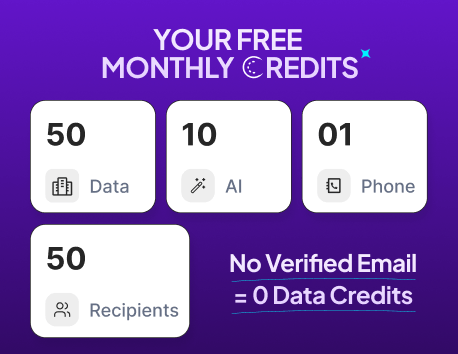
- Free: $0/month for smaller prospecting workflows.
- Pro: $34/month with 5,000 email-search, verification, and enrichment credits, plus 25 mailboxes.
- Max: $79/month with 10,000 credits for each core data task.
- Enterprise: Starts at $499/month for 20,000+ contacts.
- Practical capacity: Pro can support about 1,000 prospects using one search, verification, and enrichment credit per lead, although actual usage varies.
It best fits founders, agencies, SDRs, and B2B teams that want lead discovery and outreach in one workflow.
2. ZoomInfo — For Enterprise B2B Contact Intelligence

ZoomInfo is a B2B sales intelligence platform for teams needing contact data, company information, buying signals, and account context at scale. It is useful when you target account lists and need several decision-makers from each company.
Contact Data, Verification, and Key Features
You can search contacts by role, seniority, department, industry, company size, location, and firmographic criteria. ZoomInfo also supports enrichment, buyer-intent and business signals, and CRM-connected workflows, helping teams keep account data aligned across prospecting and pipeline management.
Its GTM Workspace brings CRM data, ZoomInfo intelligence, engagement history, and signals into one view, while GTM Studio focuses on enrichment, activation, and go-to-market workflows.
Practical Contact-to-Lead Workflow
Suppose your team has 50 target accounts. Start by filtering each company for finance, IT, and operations leaders.
Next, review emails, phone details, job information, and account context. Enrich incomplete CRM records, remove irrelevant contacts, then export or sync the buying group into your CRM so account owners can coordinate outreach by department and seniority.
Pros and Cons
G2 reviews highlight centralized prospecting, contact information, and reduced tool switching.
Pros
- Strong account-level data for multi-stakeholder targeting.
- Useful CRM, intelligence, and engagement consolidation.
- Signals can help teams prioritize accounts before outreach.
Cons
- Pricing is not publicly transparent.
- Deployments can require more setup and process alignment.
- The breadth of tools can add workflow complexity for smaller teams.
Pricing and Best Fit
ZoomInfo uses custom annual contracts, so final pricing depends on seats, credits, and add-ons. Buyer-reported 2026 pricing provides a practical benchmark:
- Professional: Around $14,995/year for core contact and company search with roughly 5,000 annual export credits.
- Advanced: Around $24,995–$30,000/year, adding intent signals, deeper account intelligence, and more credits.
- Elite: Around $39,995+/year for broader data access and advanced capabilities.
A five-person sales team may pay more once extra seats or data packages are added.
ZoomInfo best fits mid-market and enterprise teams needing account targeting, CRM enrichment, and coordinated prospecting workflows.
3. Apollo.io — For Prospecting and Sales Engagement

Apollo.io is a B2B sales intelligence and engagement platform for finding contacts, organizing prospect data, and running outbound sequences from one place.
Contact Data, Verification, and Key Features
You can filter prospects by job title, seniority, industry, company size, location, and other company attributes. Apollo provides emails, phone numbers, enrichment, CRM integrations, and sequences.
Verified contact data uses credits, so teams should consider search volume and outreach needs when building lists.
Practical Contact-to-Lead Workflow
Suppose you need 100 sales leaders at US-based B2B software companies. Filter by location, industry, company size, and titles such as VP Sales, Head of Sales, or CRO.
Review results, reveal usable emails or phone numbers, verify records, and remove poor-fit contacts. Save the final 100 prospects to a list, enroll them in a sequence, and sync engagement back to your CRM.
Pros and Cons
G2 reviews commonly praise Apollo’s combined prospecting and outreach workflow, while users also mention data and usability limitations.
Pros
- Strong search filters and broad B2B contact coverage.
- Prospecting, sequences, enrichment, and CRM integrations stay together.
- Automation reduces manual list-to-campaign work.
Cons
- Some contact or company data can become outdated.
- Credits can run down quickly during higher-volume prospecting.
- The number of features can create a learning curve.
Pricing and Best Fit
Apollo currently offers:
- Free: $0 with 900 credits per year.
- Basic: $49/user/month billed annually with 30,000 credits per year.
- Professional: $79/user/month billed annually with 48,000 credits per year.
- Organization: $119/user/month billed annually, with a three-user minimum and 72,000 credits per user annually.
Additional credits can be purchased, while unused credits expire each billing cycle. Apollo fits SDRs and growing sales teams that want prospecting and outreach in one system.
Suggested Reading:
5 Best Apollo.io Alternatives for B2B Lead Generation4. Cognism — For Phone-Based B2B Prospecting

Cognism is a B2B sales intelligence platform for phone prospecting. It helps you find decision-makers, access emails and mobile numbers, and move contacts into your CRM.
Contact Data, Verification, and Key Features
You can filter contacts by title, seniority, industry, location, company size, technology usage, and signals. Cognism’s Pro package adds premium mobile data, on-demand mobile verification, and intent data.
CRM enrichment, integrations, and API delivery keep prospect records usable beyond search.
Practical Contact-to-Lead Workflow
Suppose you need technology decision-makers at UK companies. Filter UK-based firms, then narrow results to CIOs, CTOs, IT directors, and similar roles.
Review each prospect’s company fit and mobile number. Prioritize phone-verified records, remove mismatched contacts, then export or sync the list into your CRM. SDRs can work from a focused call list instead of researching numbers manually.
Pros and Cons
G2 reviews mention mobile-number quality, European coverage, and CRM usability, while noting data and scaling limitations.
Pros
- Strong phone data for UK and European prospecting.
- Phone verification reduces time spent calling unusable numbers.
- CRM integrations support faster list-to-call workflows.
Cons
- Some phone numbers and company details can be outdated.
- Coverage may be thinner in certain regions or niche markets.
- Export limits and credit usage can slow high-volume prospecting.
Pricing and Best Fit
Cognism uses custom pricing:
- Standard: Five seats included, with 10,000 annual credits per user.
- Pro: Five seats included, with 12,000 annual credits per user, plus mobile verification and intent data.
- CRM Enrichment: Available separately from $12,000/year; extra credits can be purchased.
One credit is used when you reveal a new contact. Cognism fits SDR and sales teams where direct-dial access across the UK and Europe matters more than email-only prospecting.
Suggested Reading:
10 Best Cognism Alternatives (Compared by Pricing & Features)5. UpLead — For Verified B2B Email Data

UpLead is a B2B prospecting platform for finding contacts, verifying emails, and exporting usable records. It works well when your priority is building targeted prospect lists with verified business email data.
Contact Data, Verification, and Key Features
You can search by job title, seniority, industry, location, company size, and revenue. UpLead also provides mobile direct dials, data enrichment, technographic filters, CRM integrations, and real-time email verification.
One credit typically unlocks one contact for download or CRM export.
Practical Contact-to-Lead Workflow
Suppose you need finance executives at US-based companies. Start with location and company-size filters, then narrow results to CFOs, VPs of Finance, finance directors, and similar senior roles.
Review the contacts before unlocking them, verify available business emails, and remove poor-fit prospects. You can then export the qualified list into your CRM or campaign platform for outreach.
Pros and Cons
G2 reviews commonly highlight UpLead’s ease of use, verified contact data, and search functionality, while users also report some coverage limitations.
Pros
- Real-time email verification helps reduce unusable addresses.
- Detailed filters make targeted list building easier.
- CRM exports and enrichment simplify downstream workflows.
Cons
- Smaller or niche companies may have limited coverage.
- Some contact details can become outdated or unavailable.
- Credit limits can restrict higher-volume prospecting.
Pricing and Best Fit
UpLead currently offers:
- Free trial: $0 for 7 days with 5 credits.
- Essentials: $99/month with 170 credits, or $74/month billed annually with 2,040 annual credits.
- Plus: $199/month with 400 credits.
- Professional: Custom annual pricing with custom seats and credits.
Additional credits can be purchased, with pricing varying by plan. UpLead fits sales and marketing teams that prioritize verified email data and targeted list building over full outbound automation.
6. HubSpot CRM — For Customer and Client Contact Management

HubSpot CRM is a customer relationship management platform for organizing contacts your business already collects. Unlike prospecting databases, it does not primarily provide a searchable pool of new B2B contacts.
Contact Management, Database Features, and Integrations
You can import contacts, create custom properties, segment records, assign owners, and track emails, calls, meetings, notes, and deal activity from shared records.
HubSpot connects with sales, marketing, service, and third-party tools, keeping customer information and activity history in one system.
Practical Contact-to-Lead Workflow
Suppose a five-person sales team imports 200 verified contacts from events, referrals, and prospecting tools. Map fields such as name, company, email, job title, lifecycle stage, and lead owner.
Next, assign each rep a contact group and build lists by industry, company size, or lead status. As reps email, call, or meet prospects, HubSpot records those interactions. When a prospect qualifies, move the associated deal through the pipeline instead of maintaining separate spreadsheets.
Pros and Cons
G2 reviews commonly highlight usability, customization, collaboration, and centralized customer data.
- Pros: Shared records improve team visibility; custom properties and segmentation support different processes; automation and integrations reduce repetitive CRM work.
- Cons: Advanced reporting, automation, permissions, and customization may require higher plans; larger setups need stronger governance; external prospecting tools are still needed for new B2B contacts.
Pricing and Best Fit
HubSpot offers a free CRM alongside paid Sales Hub plans for teams needing additional automation and sales features.
- Free CRM: $0 for up to two users, including contact management, imports, deal pipelines, and reporting dashboards.
- Sales Hub Starter: $7/seat/month , billed annually under promotional pricing, with 500 monthly HubSpot Credits.
- Sales Hub Professional: $90/seat/month, billed annually, with a $1,500 onboarding fee.
HubSpot fits teams that already have contact sources and need shared ownership, interaction tracking, segmentation, and pipeline management.
7. EspoCRM — For Open-Source and Self-Managed Contact Databases

EspoCRM is an open-source CRM platform that helps you manage existing customer and business contacts on your own infrastructure. Unlike prospecting databases, it does not provide a pre-populated database of new B2B leads.
Contact Management, Customization, and Key Features
You can import contacts, customize fields, configure sales pipelines, and maintain shared customer records. Role-based permissions help you control which team members can access sensitive information.
EspoCRM also supports workflow automation, task management, REST API integrations, and customizable dashboards. Self-hosting gives your organization greater control over data storage and infrastructure.
Practical Contact-to-Lead Workflow
Suppose your company wants to organize 500 existing customer and prospect records. Install EspoCRM on your server and import the contacts using a CSV file.
Create custom fields for industry, customer type, lead status, and assigned sales representative.
Next, configure user permissions, assign contact owners, and create follow-up tasks. Your team can then track interactions and update lead stages through one shared database.
Pros and Cons
G2 reviews highlight EspoCRM's customization, centralized records, and infrastructure control. Users also mention technical requirements and limitations involving advanced functionality.
Pros
- Self-hosting provides control over customer data and infrastructure.
- Customizable fields, permissions, and workflows support different business processes.
- The free open-source version avoids mandatory per-user licensing fees.
Cons
- Self-hosting requires server maintenance, backups, and security updates.
- Advanced automation and integrations may require paid extensions or technical expertise.
- You need external prospecting sources to discover new B2B contacts.
Pricing and Best Fit
EspoCRM offers the following deployment options:
- Self-hosted: Free software, excluding hosting, maintenance, and optional extensions.
- Cloud Basic: $15/user/month, with a three-user minimum.
- Cloud Enterprise: $25/user/month, with a five-user minimum.
EspoCRM fits businesses with technical resources that need customizable contact management, infrastructure control, and shared customer records rather than built-in prospect discovery.
How to Use Contact Database Software for Prospecting and Outreach
A contact database becomes useful when you turn accurate records into targeted outreach.
Here’s how you can find relevant prospects, prepare contact information, connect your sales tools, and maintain records throughout your campaigns.
Build a Targeted Contact List Using ICP Filters
Start by defining your ideal customer profile using industry, location, employee count, job title, and seniority.
Suppose you need 100 decision-makers at US-based SaaS companies with 11–50 employees.
Apply company filters first, then narrow your search to founders, CEOs, and sales leaders.
Include multiple relevant stakeholders rather than targeting one title. LinkedIn's 2025 research reports that more than 40% of B2B deals stall because of buying-group misalignment.
Save matching prospects to a dedicated list before spending credits on contact verification.
Suggested Reading:
How to Use AI-Powered ICP Fit Scoring to Rank Your Lead ListVerify, Enrich, and Deduplicate Contact Data
Your initial list may contain outdated emails, missing job titles, and duplicate records.
Suppose you collect 100 contacts. After verification, 90 have valid business emails, while 10 require correction or exclusion.
Enrich missing company details, remove duplicates, and exclude previously opted-out contacts before launching outreach.
This prevents unnecessary enrichment costs and keeps unusable records out of your campaigns.
Suggested Reading:
How to Enrich LinkedIn Lists With Verified Work Emails at ScaleConnect Contacts to Your CRM and Outreach Workflow
Once your list is ready, connect qualified prospects to your CRM and campaign workflow.
Map contact name, business email, company, job title, lead status, and assigned owner to their corresponding CRM fields.
With Oppora, you can move enriched prospects into personalized email campaigns and synchronize qualified lead information with your CRM.
Match existing records using email addresses and CRM IDs before importing to prevent duplicates.
Track Engagement and Keep Contact Records Updated
Your database needs regular maintenance after outreach begins.
Use this simple record-maintenance workflow:
- Email bounces: Flag addresses and pause further sending.
- Job changes: Review and update outdated contact information.
- Positive replies: Update lead status and assign follow-up ownership.
- Opt-outs: Suppress contacts from future campaigns and retain their suppression status across synchronized systems.
How to Choose Contact Database Software for Your Team
Choosing the right contact database software starts with understanding how your team finds, manages, and engages business contacts.
You need to identify whether your priority is discovering new prospects, organizing existing customer relationships, or combining both activities. Then, evaluate each platform based on your team's workflow, collaboration needs, and budget.
Choose Between Prospecting Databases and Contact Management Tools
Before comparing features, identify where your contact records will come from.
For instance, an SDR team building outbound lists needs prospecting data, while an account management team may only need a CRM to maintain customer relationships.
Evaluate Ease of Use, Customization, and Team Collaboration
Once you identify the software category, test how easily your team can manage contacts together.
Suppose you have five sales representatives. Your shared contact database software should let you assign record owners, create shared lists, customize lead statuses, and restrict access to sensitive information.
Import sample contacts and ask each representative to update assigned records. Check whether changes appear correctly without creating duplicate entries.
Evaluate Open-Source and Self-Managed Database Options
Your deployment requirements also influence which software you should choose.
Managed cloud platforms handle hosting, while open-source options such as EspoCRM allow you to maintain contact records on your own infrastructure.
However, self-managed software requires you to budget for server hosting, backups, security updates, technical maintenance, and support.
Choose your deployment model based on your available technical resources and infrastructure requirements.
Assess Data Maintenance, Integrations, and Governance
Even accurate contact records can become outdated.
According to Salesforce's 2026 State of Sales report , 74% of sales teams using AI prioritize data hygiene to support their AI initiatives. This highlights the importance of maintaining accurate contact information across your sales tools.
Before purchasing, use this practical checklist:
- Check automatic data refreshes and self-service editing.
- Test CRM synchronization and duplicate detection.
- Review user permissions and access controls.
- Confirm opt-out management and record deletion capabilities.
Remember, self-service editing allows you to update records manually, while automatic refreshes update available information through supported data sources.
How to Test Contact Data Quality and Real Costs Before Buying
A software trial helps you identify which contact database delivers usable prospects without unnecessary spending. Test shortlisted platforms under comparable conditions, focusing on contact accuracy, CRM compatibility, and total operating costs rather than advertised database size.
Run a 100–200 Contact Sample Test
Start with one ideal customer profile and apply identical search filters across providers.
Request 100–200 contacts per platform, targeting the same industry, location, company size, and job titles.
Record email validity, phone availability, employment details, and duplicates in a comparison sheet. Measure contact accuracy and coverage separately.
For CRM-first platforms, test importing, customization, and record management instead of prospect discovery.
Measure Contact Accuracy, Coverage, and Usable Lead Cost
Contact accuracy directly affects your outreach results.
According to Salesforce's 2026 State of Sales research , 46% of sales professionals using AI agents report that data quality issues hurt their sales efforts.
Use these illustrative calculations to evaluate your sample:
These figures are hypothetical, not industry benchmarks. Record verified direct-dial coverage separately when evaluating phone prospecting.
Test CRM Synchronization and Contact Management
Import 50 sample records into a test CRM.
Map contact fields, assign owners, and update selected records. Check whether changes synchronize correctly without creating duplicates or overwriting existing information.
For CRM-first tools, prioritize importing, customization, usability, and record-management performance.
Compare Base Plans, Credit Limits, and Additional Costs
Calculate your monthly expenses using contact volume, verification, enrichment, user seats, and integration fees.
A $100 subscription producing 500 usable contacts costs $0.20 per contact before additional expenses.
Compare equivalent contact volumes across providers, including annual commitments, credit expiration, setup costs, and overages.
Before purchasing, confirm:
- Contact relevance and verified data accuracy.
- Reliable CRM synchronization and record management.
- Total cost per usable contact, including additional charges.
Conclusion
Choosing the right contact database software depends on your team's actual sales needs. Prospecting platforms help you discover new B2B contacts, while CRM tools organize and manage existing relationships.
Before investing, test contact accuracy, integration reliability, and cost per usable contact. These factors matter more than database size or subscription price alone.
If your team needs both prospect discovery and outreach, Oppora AI brings contact search, enrichment, verification, and automated campaigns into one platform. You can start with its free plan to explore how these capabilities fit your outbound workflow and lead management needs.
Frequently Asked Questions (FAQs)
Can contact database software help you identify multiple decision-makers within one company?
Yes. Many B2B contact databases let you search by company and filter contacts by department, job title, and seniority. This helps you identify different stakeholders involved in purchasing decisions, such as finance managers, IT directors, and operations leaders, rather than relying on a single contact.
Can you use contact database software for international B2B prospecting?
Yes, but contact coverage varies by provider and geographic region. Before expanding internationally, check whether your chosen platform supports your target countries, languages, and industries. You should also confirm that your contact collection and outreach practices comply with applicable privacy and marketing regulations.
How often should you update your B2B contact database?
Review contact records before launching major outreach campaigns and whenever you receive new information. Job changes, company restructuring, email bounces, and customer interactions can make existing records outdated. Schedule regular database reviews based on your prospecting volume, contact sources, and available data refresh capabilities.
Can you transfer your contact database when switching software providers?
Most contact management platforms support importing and exporting records through CSV files or integrations. Before switching, check whether you can transfer custom fields, contact ownership, communication history, and consent preferences. Test a small sample first to confirm that important information transfers correctly without creating duplicate records.
What security features should you look for in contact database software?
Look for role-based access controls, encryption, secure authentication, and audit logs. If your team handles sensitive customer information, check whether the provider supports data deletion, access reviews, and appropriate data retention policies. Also review its security documentation and relevant certifications before importing your contact records.
Summarize with AI
Share