10 Best Outbound Lead Generation Tools Tested for Real Results
Adam Hossain
Published April 7, 2026
12 min
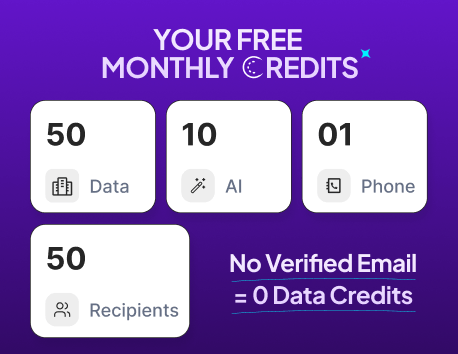
Complete Agentic Email Outreach
AI agents find and enrich prospects, personalize emails, follow up, and handle replies with your meeting link.
Claim Your FREE Credits
If your outbound campaigns feel inconsistent, the problem usually isn’t effort it’s the lack of the right system.
That’s where outbound lead generation tools come in.
But here’s the catch: most tools promise features, not results.
In reality, what matters is how these tools actually help you find the right prospects, reach them effectively, and turn conversations into booked meetings.
In this guide, you’ll learn:
- How outbound lead generation tools work in real campaigns
- What features actually impact results
- The best tools tested for real outbound performance
How Outbound Lead Generation Tools Work in Real Campaigns
Once you understand why outbound struggles, the next step is seeing how it actually works in practice.
Most outbound lead generation tools follow a structured flow that turns cold prospects into booked meetings not by chance, but through repeatable steps.
Step 1: Finding and Targeting the Right Leads
Everything starts with clarity on who you want to reach.
Instead of broad lists, outbound lead generation tools help you filter prospects based on role, industry, and intent signals.
This ensures your outreach focuses on people who are actually relevant, not just available.
Step 2: Enriching and Verifying Lead Data
Once you have a list, accuracy becomes critical.
These tools enrich contacts with verified emails and company insights, reducing bounce rates and improving deliverability so your messages actually reach real inboxes.
Step 3: Automating Outreach Across Channels
Now comes execution.
With outreach automation, you can run email and LinkedIn sequences together while still keeping messages personalized, helping you scale without losing relevance.
Step 4: Managing Replies and Booking Meetings
Finally, it’s about converting interest into conversations.
Tools help organize replies, trigger follow-ups, and schedule meetings efficiently, ensuring no opportunity slips through the cracks.
Key Features to Look for in Outbound Lead Generation Tools
Not all outbound lead generation tools actually improve results.
Some look powerful on the surface but fail when it comes to real execution, where targeting, outreach, and conversion need to work together smoothly.
What really matters is choosing features that directly impact how your campaigns perform day to day.
Accurate Lead Data That Reduces Bounce Rates
If your data is wrong, everything that follows breaks.
High-quality outbound lead generation tools focus on verified contacts and enriched profiles so your emails reach real people instead of bouncing or landing in spam.
- Verified email addresses to reduce bounce rates
- Enriched company and role data for better targeting
- Real-time validation to maintain list quality
Built-in Outreach That Eliminates Tool Switching
Switching between tools slows you down more than you realize.
Platforms that combine prospecting and outreach help you move faster from lead discovery to campaign launch without losing context or consistency.
- Email sequencing and automation in the same platform
- Seamless transition from lead list to campaign
- Centralized messaging and follow-up management
Real AI Personalization That Improves Reply Rates
Personalization today goes beyond just adding a first name.
Advanced tools generate context-aware messages that feel relevant, helping you stand out in crowded inboxes without manual research for every prospect.
- AI-generated messages based on prospect data
- Dynamic personalization across sequences
- Context-driven messaging that improves engagement
Deliverability Features That Protect Inbox Placement
Even the best message fails if it never reaches the inbox.
Strong deliverability features ensure your campaigns scale safely without damaging your sender reputation.
- Email warm-up to build domain trust
- Inbox rotation to distribute sending volume
- Domain and sender reputation management
End-to-End Workflow That Simplifies Execution
Fragmented tools create friction and slow execution.
The best outbound lead generation tools connect every step into one system so you can run campaigns without constant manual coordination.
- Unified workflow from lead generation to outreach
- Built-in tracking and performance insights
- Reduced dependency on multiple disconnected tools
10 Best Outbound Lead Generation Tools Tested for Real Results
Choosing the right tool isn’t about features alone it’s about how well it performs in real campaigns.
In this section, we break down the best outbound lead generation tools based on actual workflow impact, helping you understand which platforms truly support consistent outreach, better replies, and scalable results.
1. Oppora.ai — End-to-End Outbound Workflow Platform
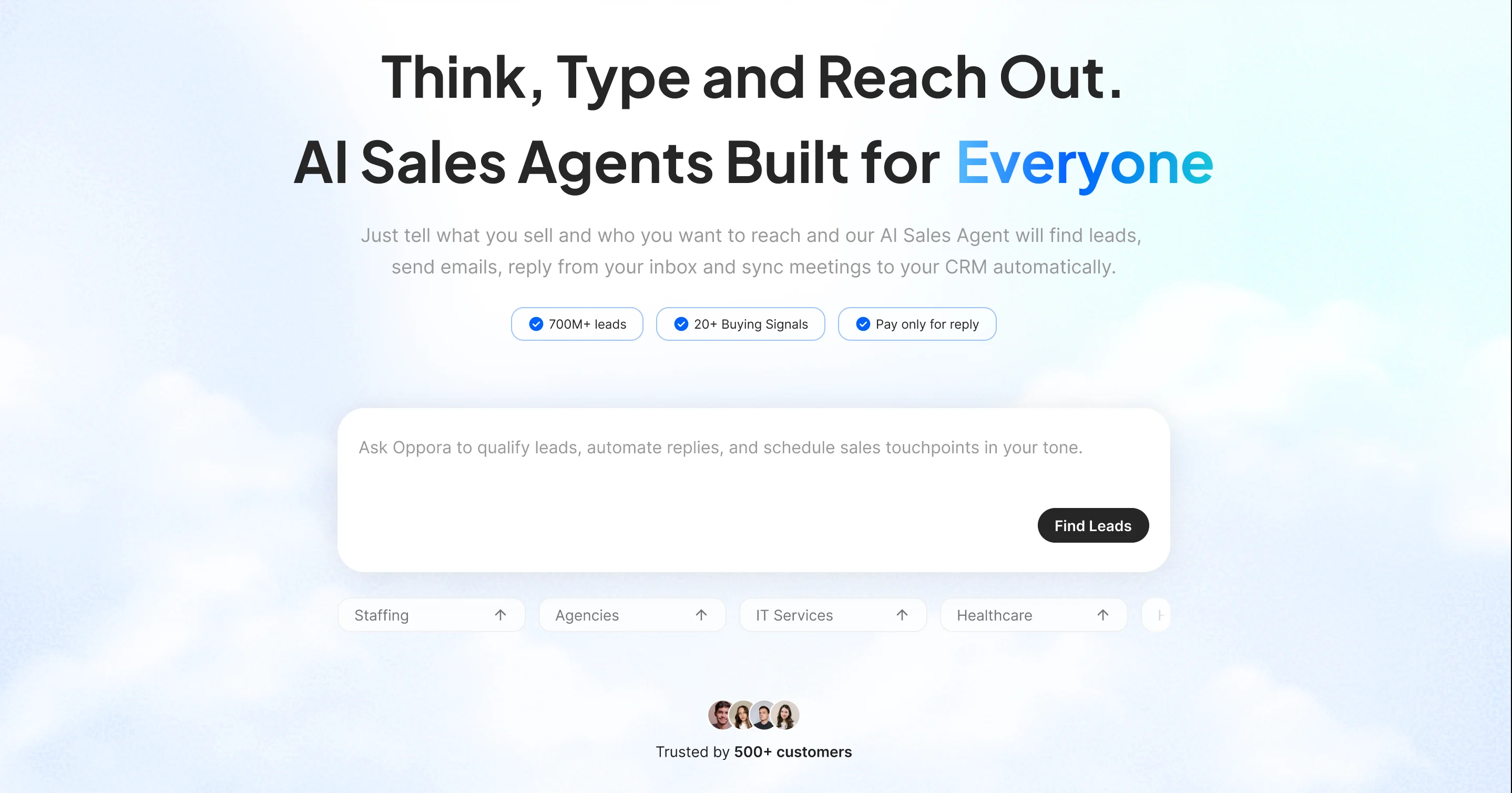
Oppora.ai works as a unified AI outbound system that connects lead data, personalization, and execution into one continuous workflow.
It helps you run prospecting, enrichment, and outreach together, so your campaigns stay consistent, scalable, and easier to manage without relying on multiple disconnected tools or manual coordination.
Core Capabilities
Oppora is built to run outbound as a complete system, not a set of disconnected actions.
- Deliverability & Sending Safety — SMTP verification, warm-up, inbox health, provider matching, and send pattern variation
- 700M+ Leads & Data Engine — Waterfall data with built-in enrichment and pre-validation for accurate prospecting
- End-to-End Automation — Lead discovery, sequencing, sending, replies, and CRM sync in one unified workflow
- AI Email Personalization — Dynamic, context-aware emails that improve reply rates
- AI Reply Handling & Qualification — Auto-reply, qualify leads, and book meetings
- Scaling Infrastructure — Domain & inbox rotation with smart send controls for safe volume scaling
- LinkedIn Lead Import — Pull targeted leads directly from LinkedIn & Sales Navigator
- CRM Sync & Reporting — Track pipeline, performance, and engagement in one place
Real Use Case in Outbound Campaigns
Imagine you set up a workflow that runs every Monday to find companies hiring right now.
It identifies decision-makers, pulls verified contacts, and automatically runs every week from prospecting to outreach without any manual work.
Emails are sent, replies handled, meetings booked, and everything synced to your CRM without manual effort.
Pricing
- Flexible Plans for Every Stage — Start free or upgrade from $34/month with unlimited emails, follow-ups, and up to 5,000 recipients, plus built-in company & email data
- Lightweight Sending Plans — For pure outreach, choose mini plans at $5 (1,000 contacts) or $12 (3,000 contacts) with unlimited sending, follow-ups, and AI reply handling
2 .Apollo.io
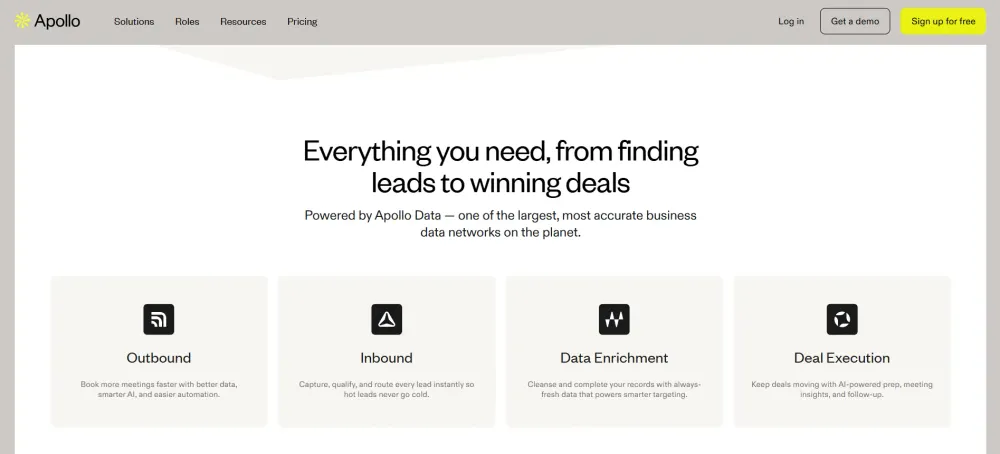
Apollo.io works as a combined lead database and outreach platform designed for teams that want both prospecting and execution in one place.
It helps you find leads, verify data, and launch campaigns within the same system, making outbound workflows faster and easier to manage without relying on multiple disconnected tools.
Core Capabilities
Apollo.io focuses on combining data access with outreach execution.
- Large B2B contact database for prospecting
- Advanced filters for precise lead targeting
- Built-in email sequencing and automation
- Data enrichment and email verification
- CRM integrations for pipeline management
Real Use Case in Outbound Campaigns
If you’re running outbound for a SaaS product, Apollo.io allows you to identify decision-makers, validate their contact details, and start outreach campaigns immediately.
This reduces the gap between research and execution, helping your team stay consistent and move faster.
Pricing
Apollo.io offers flexible pricing depending on usage and scale.
- Free plan available with limited credits
- Paid plans based on contact and usage limits
- Pricing increases as outreach volume grows
It works best for teams looking for a simple all-in-one setup to manage outbound campaigns efficiently.
3. Instantly.ai
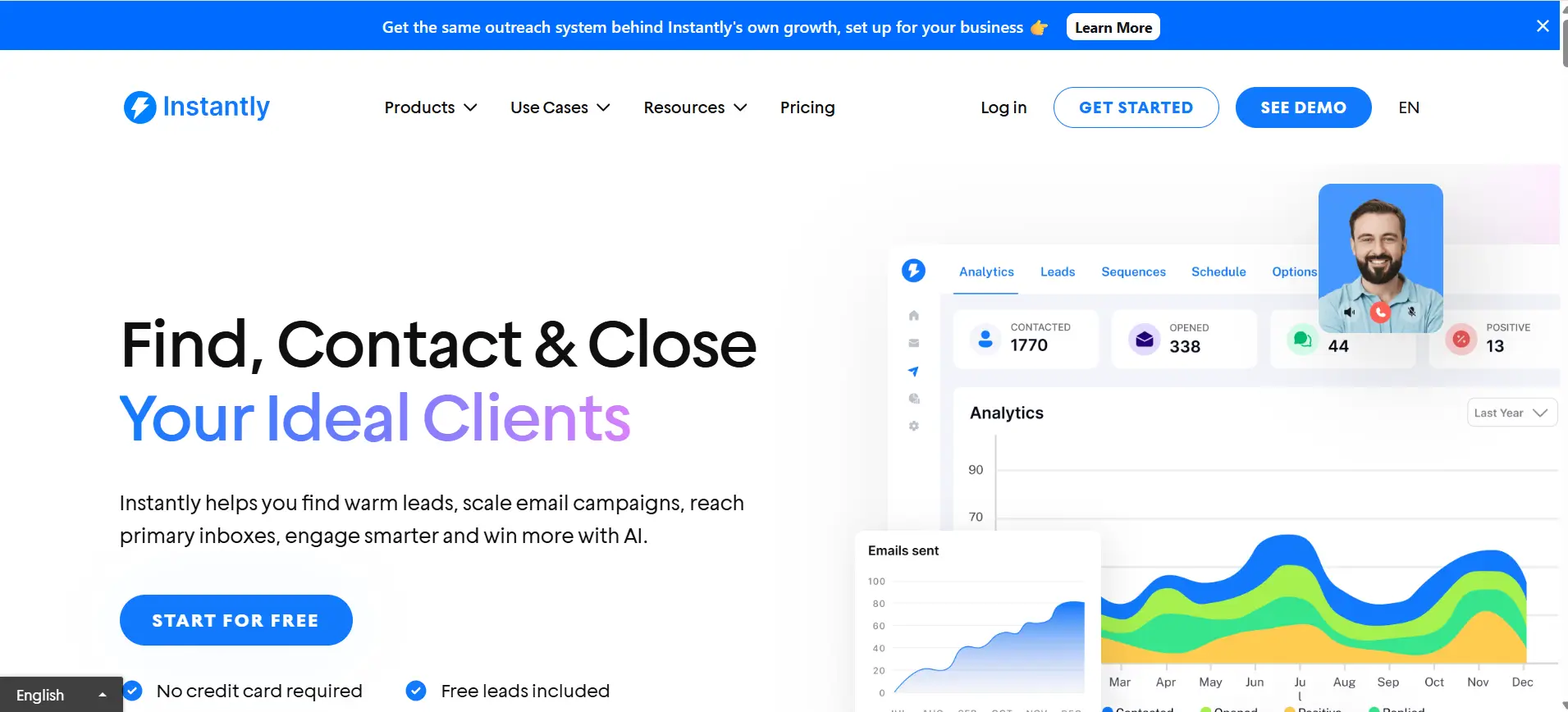
Instantly.ai works as a cold email outreach platform built specifically for teams that want to scale campaigns without worrying about technical deliverability issues.
It focuses on helping you send high-volume campaigns while maintaining inbox placement, making it a strong fit for agencies and growth teams running outbound at scale.
Core Capabilities
Instantly is designed to handle volume and deliverability together.
- Unlimited email account connections
- Automated email sequences and follow-ups
- Inbox rotation to distribute sending volume
- Built-in warm-up features for sender reputation
- Campaign analytics and performance tracking
Real Use Case in Outbound Campaigns
If you’re running outreach for multiple clients, Instantly allows you to connect several inboxes and launch campaigns across them.
This helps you scale sending volume safely while maintaining consistent deliverability and avoiding spam issues.
Pricing
Instantly uses a subscription-based pricing model.
- Monthly plans based on inbox scaling
- Higher tiers unlock advanced features
- Additional costs for enhanced deliverability tools
4. Lemlist
Lemlist works as an outreach platform focused on making your emails stand out through creative personalization.
It is designed for teams that want to go beyond standard text emails and create more engaging, human-feeling outreach that improves reply rates.
Core Capabilities
Lemlist combines automation with creative personalization features.
- Dynamic personalization using images and variables
- Email automation and sequencing
- Multichannel outreach support
- Deliverability tools for inbox placement
- Campaign tracking and engagement insights
Real Use Case in Outbound Campaigns
If you’re targeting high-value prospects, Lemlist allows you to send customized emails with tailored visuals or messages.
This makes your outreach feel more personal and helps increase engagement compared to generic campaigns.
Pricing
Lemlist follows a subscription pricing model.
- Plans based on outreach volume
- Advanced personalization in higher tiers
- Pricing scales with feature access
5. Smartlead.ai
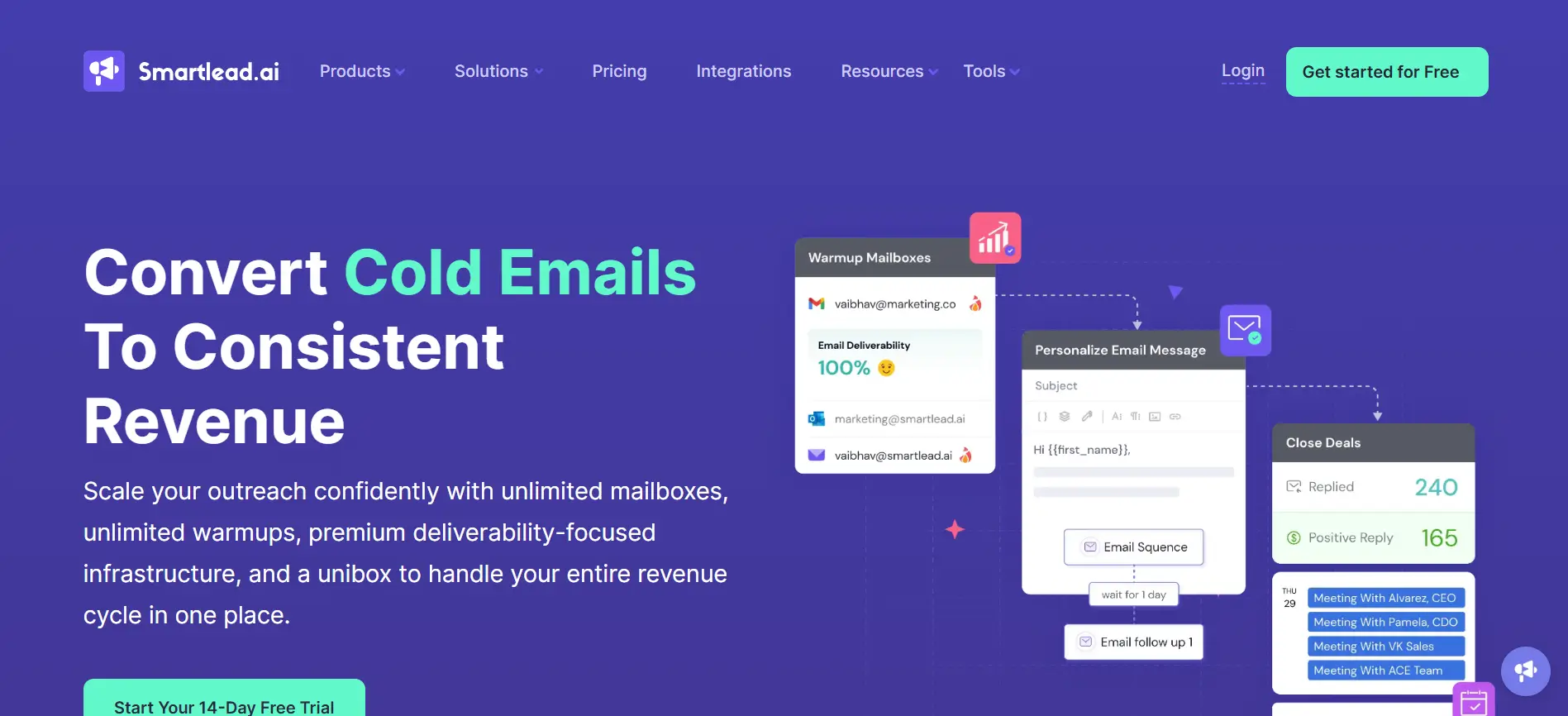
Smartlead.ai works as an outreach automation platform built for teams managing multiple campaigns at once.
It focuses on helping you scale outbound operations while maintaining performance, especially when handling several inboxes and sequences simultaneously.
Core Capabilities
Smartlead is designed for multi-campaign management and automation.
- Multi-inbox management for scaling outreach
- Automated sequences and follow-ups
- Deliverability optimization tools
- Campaign analytics and reporting
- API integrations for flexibility
Real Use Case in Outbound Campaigns
If you’re part of a growth team running multiple campaigns, Smartlead helps you manage them across different inboxes without losing control.
You can automate follow-ups and maintain consistency without manually tracking each campaign.
Pricing
Smartlead uses tiered subscription pricing.
- Plans based on inbox usage
- Pricing increases with campaign scale
- Suitable for growing outbound teams
6. Clay
Clay works as a lead enrichment and workflow automation platform designed for teams that want deeper control over their data before outreach begins.
It focuses on helping you build highly targeted lead lists by pulling and combining data from multiple sources.
Core Capabilities
Clay is centered around data enrichment and workflow flexibility.
- Data enrichment from multiple providers
- Custom workflow automation
- API integrations for advanced use cases
- Spreadsheet-style interface for flexibility
- Lead list building and management tools
Real Use Case in Outbound Campaigns
If your strategy depends on highly targeted outreach, Clay allows you to enrich and prepare detailed lead lists before pushing them into outreach tools.
This improves accuracy and ensures your campaigns start with better data.
Pricing
Clay follows a usage-based pricing model.
- Pay for enrichment credits
- Costs depend on integrations used
- Scales with data usage
7. Snov.io
Snov.io works as an all-in-one platform that combines email discovery, verification, and outreach into a single system.
It is designed for teams that want a simple way to manage outbound campaigns from finding leads to sending emails without switching tools.
Core Capabilities
Snov.io focuses on combining core outbound functions.
- Email finder and domain search
- Email verification tools
- Drip campaigns and automation
- Lead tracking and CRM features
- Integrations with other tools
Real Use Case in Outbound Campaigns
If you’re a small team or startup, Snov.io allows you to find verified emails and launch campaigns from the same platform.
This simplifies your workflow and reduces dependency on multiple tools.
Pricing
Snov.io uses a freemium pricing model.
- Free plan with limited credits
- Paid plans based on usage
- Pricing scales with campaign needs
8. Hunter.io
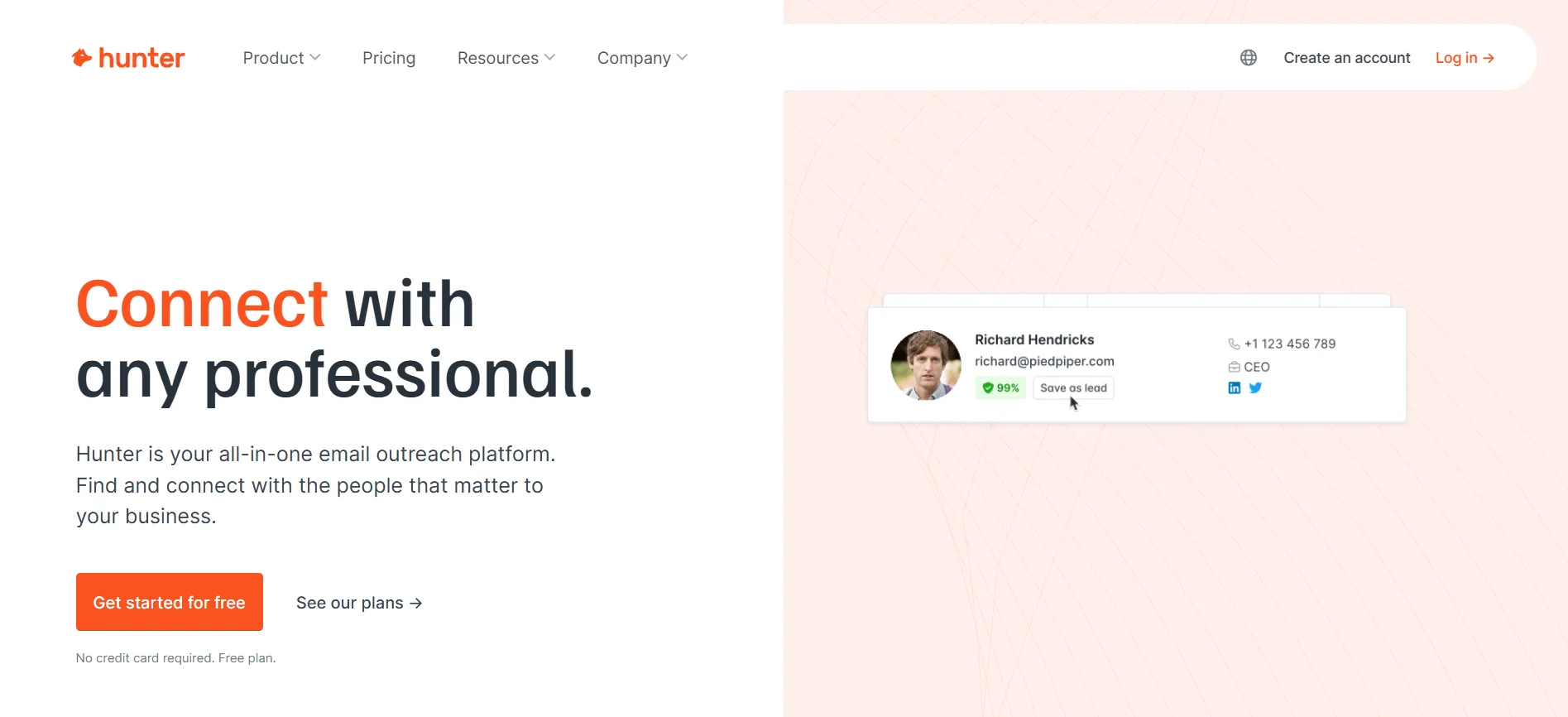
Hunter.io works as a lead discovery tool focused primarily on finding and verifying professional email addresses.
It is widely used for building accurate lead lists before starting outreach campaigns.
Core Capabilities
Hunter is built around email discovery and validation.
- Email finder and domain search
- Email verification tools
- Bulk email search functionality
- Basic outreach features
- Integrations with CRM and tools
Real Use Case in Outbound Campaigns
If your main goal is to build clean lead lists, Hunter.io helps you quickly find and verify emails for target companies.
You can then export this data into your outreach tools for campaign execution.
Pricing
Hunter.io offers flexible pricing options.
- Free plan available
- Paid plans based on search limits
- Pricing increases with usage volume
9. Reply.io
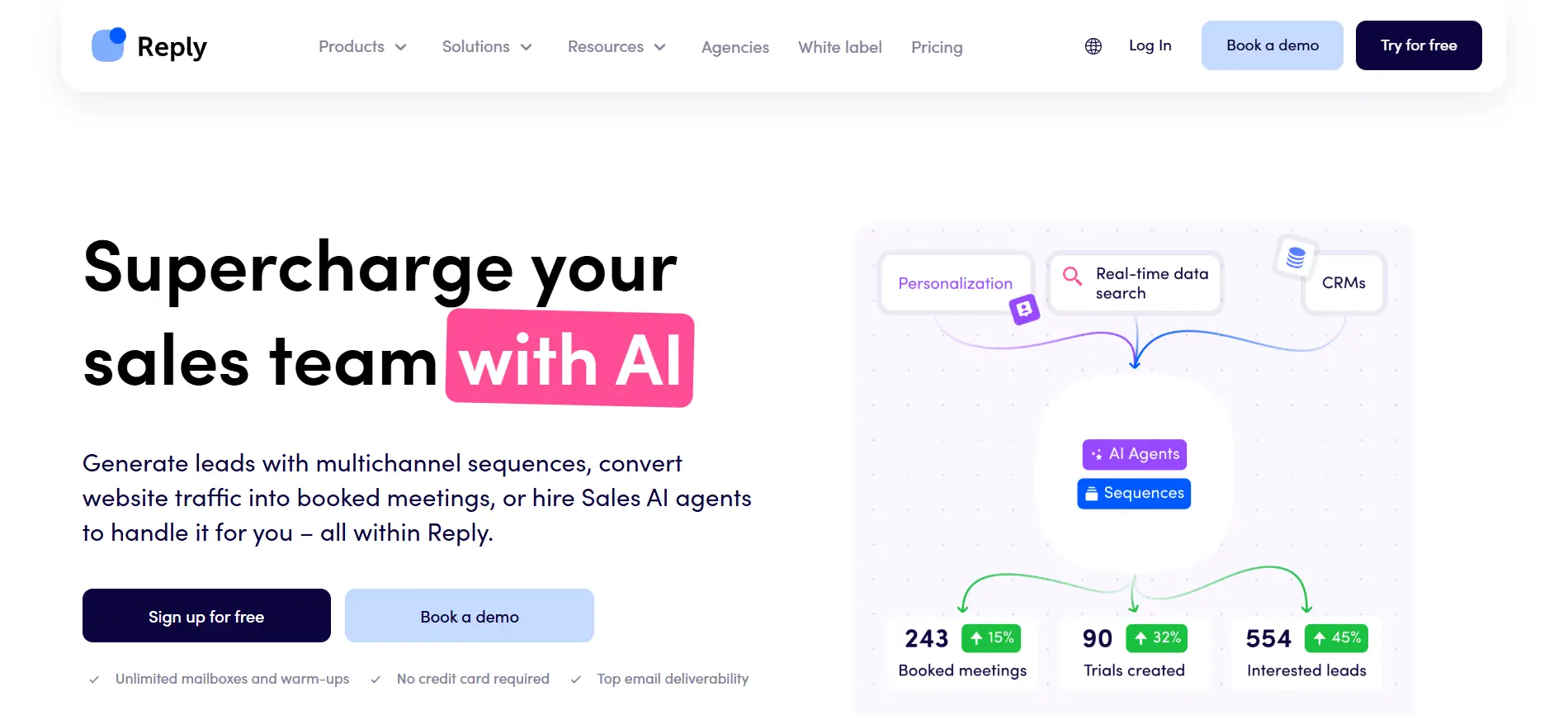
Reply.io works as a sales engagement platform that supports multichannel outreach across email, LinkedIn, and calls.
It is designed for teams that want to manage all communication channels in one place and create more consistent engagement.
Core Capabilities
Reply.io focuses on multichannel outreach and engagement.
- Email automation and sequences
- LinkedIn and call integration
- Multichannel campaign management
- CRM synchronization
- Analytics and reporting
Real Use Case in Outbound Campaigns
If your outreach strategy includes multiple channels, Reply.io allows you to coordinate email, LinkedIn, and calls in one workflow.
This increases touchpoints and improves response rates.
Pricing
Reply.io uses subscription-based pricing.
- Plans based on users and features
- Pricing scales with team size
- Higher tiers unlock advanced capabilities
10. Saleshandy
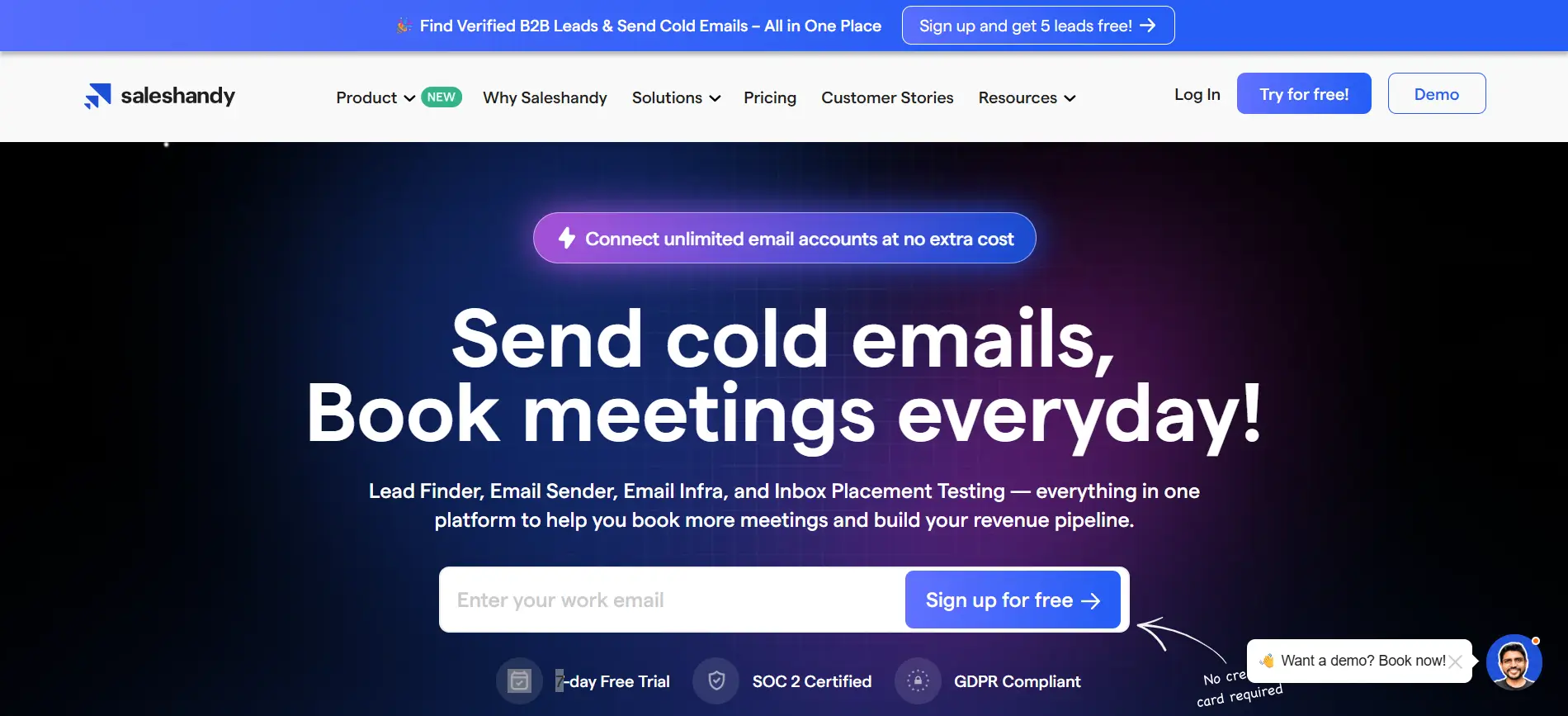
Saleshandy works as an email outreach and tracking platform designed for teams that want simplicity with enough automation to run effective campaigns.
It focuses on helping you create sequences, track engagement, and manage outreach without requiring complex setup or technical expertise.
Core Capabilities
Saleshandy keeps outreach simple and efficient.
- Email sequences and automation
- Personalization features
- Email tracking and analytics
- Deliverability tools
- Campaign performance reporting
Real Use Case in Outbound Campaigns
If you’re a freelancer or small team, Saleshandy allows you to quickly launch campaigns and track results without dealing with complex systems.
This makes it easier to start outbound without a steep learning curve.
Pricing
Saleshandy offers affordable subscription plans.
- Monthly pricing based on outreach volume
- Budget-friendly for small teams
- Scales as your needs grow
How to Choose the Right Tool for Your Outbound Strategy
Now that you’ve seen how different tools work, the real question is how to pick the one that actually fits your workflow.
The right choice depends less on features and more on how well the tool supports your day-to-day execution.
Match the Tool with Your Outbound Workflow
Every team runs outbound differently, so your tool should align with how you already work instead of forcing changes.
- Map your process from lead sourcing to meeting booking
- Choose tools that support your existing workflow
- Avoid tools that add unnecessary complexity
Evaluate Data Quality vs Outreach Capabilities
Some tools are strong in data, while others focus on outreach.
You need the right balance so your campaigns don’t suffer from poor targeting or weak execution.
- Check accuracy of lead data and verification features
- Evaluate outreach automation and sequencing quality
- Avoid relying on multiple disconnected tools
Check Deliverability and Inbox Management Features
Even great campaigns fail if emails don’t reach inboxes.
Deliverability features help you scale safely without damaging sender reputation.
- Look for email warm-up and inbox rotation
- Check domain and sender reputation controls
- Ensure tools support safe scaling of campaigns
Consider Scalability and Pricing Flexibility
Your outbound needs will grow, so your tool should grow with you.
Flexible pricing and scalability prevent frequent tool switching.
- Choose tools with flexible pricing models
- Ensure support for higher outreach volume
- Look for features that scale without added complexity
How Oppora Simplifies Outbound Lead Generation Workflow
Managing outbound often means juggling multiple tools, disconnected data, and constant manual effort.
Oppora simplifies this by turning outbound into a structured system where everything works together, helping you move from targeting to conversion without operational friction.
Build Campaigns from ICP to Outreach in One Place
Instead of switching between platforms, Oppora allows you to define your ICP, find leads, and launch campaigns within one system.
This keeps your workflow connected and ensures your targeting, messaging, and execution stay aligned from the start.
Replace Multiple Tools with One Structured Workflow
Using different tools for each step creates gaps in execution.
Oppora brings everything into one flow so your campaigns run smoothly without constant coordination.
- Combine lead generation, enrichment, and outreach in one system
- Eliminate tool switching and manual data transfer
- Maintain consistency across every stage of outbound
Automate Outreach, Replies, and Follow-Ups
Manual execution slows down scaling.
Oppora automates key parts of outbound so you can focus on strategy instead of repetitive tasks.
- Automated email and LinkedIn sequences
- AI-driven reply handling and response categorization
- Follow-ups triggered based on prospect behavior
Improve Conversion with Better Timing and Targeting
Better data and timing directly impact results.
Oppora uses enriched insights and AI execution to send relevant messages at the right moment, improving engagement quality and helping you convert outreach into more qualified meetings.
Conclusion
Outbound lead generation tools are no longer optional if you want consistent pipeline growth.
The difference comes from choosing tools that actually support your workflow, not just add more features.
When your targeting, outreach, and follow-ups work together, outbound becomes predictable and scalable.
If you want to simplify execution without juggling multiple tools, Oppora is worth exploring.
It helps you turn outbound into a structured system that runs continuously, so you can focus more on closing deals than managing processes.
Frequently Asked Questions (FAQs)
What is the difference between outbound lead generation tools and sales engagement tools?
Outbound lead generation tools focus on finding and preparing leads, while sales engagement tools focus on outreach and communication. Some platforms combine both, allowing you to manage prospecting, messaging, and follow-ups in one system for a more streamlined workflow.
How long does it take to see results from outbound tools?
Results can vary, but most teams start seeing replies within a few days and meetings within a couple of weeks. Success depends on targeting accuracy, message quality, and deliverability setup rather than just the tool itself.
Can small teams benefit from outbound lead generation tools?
Yes, small teams often benefit the most. These tools reduce manual effort, automate repetitive tasks, and help you scale outreach without hiring large sales teams, making outbound more efficient and manageable even with limited resources.
Do outbound lead generation tools work for all industries?
They work best for B2B industries where decision-makers can be clearly identified. Industries like SaaS, agencies, staffing, and consulting see strong results, while effectiveness may vary in markets with less accessible or structured contact data.
How do I measure the success of an outbound campaign?
Focus on metrics like reply rate, meeting bookings, and conversion rate rather than just open rates. These indicators show whether your targeting, messaging, and overall workflow are actually driving meaningful business outcomes instead of just activity.
Summarize with AI
Share