5 Best Apollo.io Alternatives for B2B Lead Generation
Adam Hossain
Published December 26, 2025
18 min

Complete Agentic Email Outreach
AI agents find and enrich prospects, personalize emails, follow up, handle replies, and book meetings automatically.
Claim Your FREE Credits
Most sales teams start with Apollo.io because it bundles data and outreach in one place.
But somewhere along the way, you hit a wall.
Maybe the contact data feels stale, or the credit limits keep throttling your prospecting. Maybe you need deeper automation than Apollo comfortably handles.
Whatever the reason, you're now weighing your options.
In this guide, you'll learn:
- Why teams outgrow Apollo.io
- The 5 best alternatives compared side by side
- How we evaluated each platform
- The best free options available
- How to pick the right fit for your team
Why Look for Apollo.io Alternatives?
Apollo.io combines B2B data with sales engagement, but it may not fit every team's priorities.
Some businesses need more reliable contact verification, simpler credit structures, stronger workflow automation, or tools that integrate better with their existing sales stack.
Looking at Apollo.io alternatives helps you compare data accuracy, prospecting capabilities, outreach automation, pricing, and scalability.
The right alternative depends on whether you prioritize verified data, sales intelligence, or end-to-end outbound automation.
Data Accuracy and Contact Freshness
Some users question how fresh Apollo’s verified contact data is. One Reddit user reported an 80% bounce rate from a small sequence using verified Apollo leads.
Another discussion mentions outdated employment records, where contacts remained associated with previous companies. These are individual experiences, not representative performance benchmarks
Credits, Usage Limits, and Scaling Costs
Cost becomes more noticeable as prospecting volume grows.
In one 2026 Reddit discussion, an SDR team complained about rising per-user costs while exporting roughly 10,000 contacts monthly, prompting them to evaluate alternatives.
Email Deliverability and Outreach Capabilities
Deliverability is another recurring concern. Users have reported:
- Emails landing in junk or being filtered entirely.
- Healthy-looking sending setups producing few or no replies.
- Moving email sending to dedicated outreach platforms while retaining Apollo for prospecting.
For example, in a Reddit discussion about Apollo cold email deliverability, one user reported zero replies from 800 Apollo-sent emails after previously seeing 2–3% reply rates with manual outreach.
Another described corporate Gmail tests landing in junk and Outlook messages being filtered.
These anecdotes don’t prove Apollo itself caused the issues, since domain reputation, targeting, volume, and email content also affect deliverability.
Workflow Automation and Sales Process Requirements
Apollo handles sequencing well, but complex sales processes expose its limits.
One TrustRadius reviewer called its workflow functionality rigid. And a Reddit discussion about Apollo's LinkedIn automation describes an automation feature abruptly stopping and disrupting live campaign flows.
When outreach spans multiple channels and branching logic, those gaps start costing you real momentum.
Integrations and RevOps Requirements
RevOps teams also need to consider how Apollo fits with their CRM. Users have reported Salesforce sync duplication and workflow friction when moving data between systems.
Common concerns include:
- Duplicate CRM records
- Field and deal-stage mapping
- Maintaining clean data across connected tools
A recent Reddit discussion about Apollo and Salesforce integration shows a user encountering sync errors and needing additional configuration before the integration could work correctly.
5 Best Apollo.io Alternatives at a Glance
Before we dig into each tool, here's the quick view.
If you just want to scan the options and spot the right fit, this table lines up all five alternatives across the criteria that actually shape your buying decision.
A few things stand out right away.
Pricing models differ wildly. Oppora, Lusha, and UpLead publish clear numbers, while ZoomInfo and Seamless.AI hide theirs behind sales calls.
Only a couple of these tools bundle data, outreach, and automation into one plan. The rest hand you data and leave the execution to you.
We'll unpack exactly what that means for your team in the sections below.
How We Evaluated These B2B Lead Generation Tools
Picking an Apollo alternative isn't about which tool has the biggest database.
It's about which one actually moves your pipeline for real.
So we judged each platform against the criteria that decide whether your outbound works or quietly stalls out. We looked past headline numbers and focused on what shapes results day to day.
Here's what we weighed most heavily across all five tools.
B2B Contact Data Quality and Coverage
Coverage and accuracy pull in different directions, so we looked at both.
A database can list hundreds of millions of contacts and still leave gaps in your exact market.
We checked how deep each tool goes in specific industries and regions, not just its headline number.
More importantly, we weighed how fresh that data stays. Stale job titles and old emails quietly waste your credits and sink your reply rates.
ICP Targeting and Buyer Signals
Reaching the right person at the right moment matters more than reaching more people.
So we assessed how precisely each tool lets you filter down to your ideal customer profile. Firmographics, technographics, and role-based filters all shape how tight your targeting gets.
Then we looked at buyer signals. Tools that surface intent, like job changes or hiring activity, help you reach prospects while they're actually in-market.
Email Verification and Deliverability
Bad data doesn't just waste your time. It damages your sender reputation.
So we looked closely at how each platform verifies emails and whether that verification holds up in real sends.
Real-time checks and bounce protection are what separate the tools that safeguard your sending domain from the ones that quietly burn it down over time.
Suggested Reading:
10 Best Email Deliverability Tools to Boost Inbox Rates FastSales Engagement and Multichannel Outreach
Finding a contact is only half the job. You still have to reach them.
So we looked at whether each tool can run outreach on its own or just hands you a list to work elsewhere. Some platforms stop at data. Others carry you through email, LinkedIn, and beyond.
Multichannel matters here. Prospects ignore a single email but respond when you show up across a few channels with a connected message.
Suggested Reading:
How to Execute Multichannel Outreach [+7 Strategies]AI and Workflow Automation
This is where the newer tools pull ahead of Apollo.
We assessed how much of the outbound grind each platform can actually take off your plate.
Basic sequencing is common now, so we looked for deeper automation instead.
The real difference comes from tools that string the whole flow together, finding, enriching, scoring, writing, and replying, without you touching each step. That's the gap between a feature and a system.
Suggested Reading:
How Workflow Automation Transforms Sales Efficiency and Frees Reps from Manual TasksPricing, Credits, and Scalability
The sticker price rarely tells the full story.
So we dug into how credits work, what they cover, and how fast costs climb as your sending volume grows. A few things shaped our view here:
- Whether data, enrichment, and outreach sit in one plan or need separate tools
- Whether credits are shared pools or metered per feature
- Whether unused credits roll over or expire each cycle
CRM and Sales Integrations
Your data is only useful if it lands where your team already works.
So we checked how cleanly each tool syncs with CRMs like HubSpot, Salesforce, Pipedrive, and Zoho.
Shallow, one-way connections let data drift until your reps stop trusting it. We favored tools that keep records synced both ways, so your pipeline stays clean without anyone fixing it by hand.
What Are the 5 Best Apollo.io Alternatives for B2B Lead Generation?
With the criteria clear, let's get into the actual lineup.
Each platform below solves a slightly different problem, so the best fit really depends on what your team needs most right now.
We'll break down how each one works, where it wins, what it costs, and who it suits best, so you can match a tool to your situation.
1. Oppora — Best Apollo.io Alternative for AI-Powered Outbound Automation

If Apollo left you stitching tools together, Oppora is built to close that gap.
It runs your entire outbound motion with 8 AI sales agents that find leads, enrich them, write emails, send them, and reply from your inbox, all without daily logins.
Oppora vs Apollo.io: Key Differences
Apollo gives you features. Oppora gives you agents that do the work.
With Apollo, you still run each step yourself, finding, enriching, writing, sending. Oppora chains those steps into a self-running workflow you build once and leave running.
Pricing splits them too. Oppora bundles lead data, enrichment, and outreach into one plan, while Apollo often needs add-ons to match the same flow.
Lead Data, Buying Signals, and AI Prospecting
Oppora draws from 700M+ verified leads and 42M+ companies.
Waterfall enrichment cross-checks each contact across multiple sources, so your data lands cleaner and your credits stretch further.
Its intent signals, 16 on Free and 24 on paid plans, help you reach prospects while they're actually in-market, not months after the moment passed.
AI Outreach and End-to-End Sales Workflow Automation
This is where Oppora pulls furthest ahead of Apollo.
You drop AI agents into a drag-and-drop builder, connect the flow, and let it run like an n8n workflow. Outreach spans email and LinkedIn in one connected sequence, with text and voice on the way.
The AI Reply Agent then handles responses on its own, qualifying interest, booking meetings, and routing warm leads straight from your inbox.
Oppora Pricing
Oppora starts free forever, then scales gently:
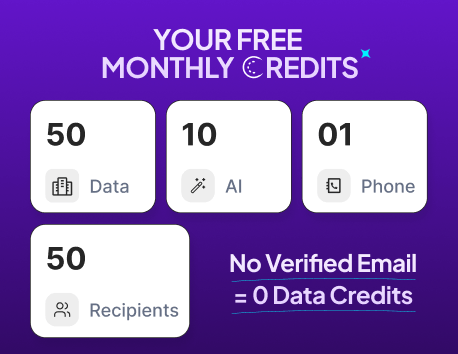
- Free: 50 data credits, 3 workflows, 1 mailbox
- Pro ($34/mo): 10,000 data credits, 50 workflows, 25 mailboxes
- Max ($79/mo): 25,000 data credits, unlimited workflows, 50 mailboxes
- Enterprise (from $499/mo): custom volume and support
Credits are unique per feature and roll over on paid plans, so nothing goes to waste.
Oppora Pros, Cons, and Best Fit
Oppora suits founders, SDRs, and lean teams who want pipeline without the manual grind.
The upside is real end-to-end automation in one tool. The trade-off is that heavy enterprise buyers wanting deep custom data may still lean toward legacy platforms.
2. ZoomInfo — Best Apollo Alternative for Enterprise Sales Intelligence

When your team needs depth over affordability, ZoomInfo is the enterprise standard.
It pairs one of the largest B2B databases with advanced intent data and deep RevOps integrations, built for organizations running complex, large-scale sales motions.
ZoomInfo vs Apollo.io: Key Differences
The gap here comes down to scale and price.
Apollo is affordable and self-serve, aimed at mid-market teams who want data and outreach in one login. ZoomInfo goes deeper on data intelligence, firmographics, and intent, but locks it behind annual enterprise contracts.
Put simply, Apollo is where teams start. ZoomInfo is where large enterprises scale their sales intelligence.
B2B Data Coverage, Firmographics, and Intent Signals
ZoomInfo's database spans 260M+ contacts with rich company-level detail.
Its firmographic depth lets you segment accounts by revenue, headcount, tech stack, and org structure with real precision.
Layered on top is its intent data, which flags accounts researching your category, so your reps reach buyers earlier in the cycle.
Suggested Reading:
10 Firmographic Data Providers Compared: Features, Data & PricingEnterprise Prospecting and Regional Data Coverage
For enterprise teams, coverage across regions and roles matters as much as raw volume.
ZoomInfo holds up well here, with strong data across North America and deep reach into decision-maker hierarchies.
That said, some buyers report thinner coverage in certain international markets, so it's worth testing against your exact target regions before committing.
ZoomInfo Pricing
ZoomInfo doesn't publish standard pricing, and every quote runs through sales:
- Lite: free tier for small teams
- Professional: around $14,995/year (3 seats, 5,000 credits)
- Advanced: roughly $24,995/year
- Elite: $39,995+/year
Extra seats, credits, and add-ons often push real spend into the $30,000–$60,000 range.
ZoomInfo Pros, Cons, and Best Fit
ZoomInfo fits well-funded enterprise and RevOps teams that need best-in-class data intelligence.
The strength is unmatched depth and intent signals. The trade-offs are steep pricing, annual lock-in, and a setup that's overkill for smaller teams.
3. Lusha — Best Apollo Alternative for Simple B2B Contact Prospecting

If Apollo feels heavier than you need, Lusha strips prospecting back to the essentials.
It's built around a fast browser extension that pulls verified emails and direct dials while you browse LinkedIn, making it a favorite for individual reps and lean teams.
Lusha vs Apollo.io: Key Differences
The difference is scope. Apollo is a full platform, while Lusha is a focused data tool.
Apollo bundles sequencing, a dialer, and workflows alongside its data. Lusha skips most of that and does one thing well: surfacing accurate contact details on demand.
So if you want simplicity over a sprawling feature set, Lusha keeps things light and quick.
Contact Data, Email, and Phone Number Accuracy
Lusha's strength is its direct-dial coverage, with a database of 280M+ phone numbers.
It leans especially strong in European and Israeli markets, where its data quality often beats US-centric rivals.
One caveat: independent tests show coverage can be patchy, returning results for a smaller share of lookups than the headline accuracy claim suggests.
LinkedIn Prospecting and Contact Enrichment
The Chrome extension is where Lusha shines.
You browse a LinkedIn profile or company site, click once, and pull verified contact details straight into your workflow or CRM.
It also handles enrichment, filling gaps in your existing lists, though bulk enrichment sits behind higher tiers and batch limits.
Suggested Reading:
15 Best Contact Enrichment Tools for Finding Better Leads in 2026Lusha Pricing and Credit Limits
Lusha runs on a credit-slider model with a free entry point:
- Free: 40 credits/month, single user
- Starter: from ~$37.45/user/month (annual)
- Pro: scales up by credit volume
- Premium & Scale: higher tiers, with Scale custom-priced
Phone reveals cost more credits than emails, and unused credits don't roll over.
Lusha Pros, Cons, and Best Fit
Lusha suits solo reps and small teams who mainly need quick, accurate contacts.
The upside is simplicity and strong dial data. The downside is limited outreach and credits that drain fast.
Suggested Reading:
11 Lusha Alternatives for 2026: Better Data, Pricing & Accuracy4. UpLead — Best Apollo.io Alternative for Verified B2B Contact Data

If bouncing emails pushed you away from Apollo, UpLead answers with verification you can trust.
It's built around real-time email checks and a bounce-refund guarantee, making data accuracy its whole pitch rather than just a feature.
UpLead vs Apollo.io: Key Differences
The split here is data quality versus breadth.
Apollo gives you a bigger database plus outreach tools, but its email accuracy draws frequent complaints. UpLead runs a smaller, tighter database and verifies each contact the moment you export it.
So Apollo covers more ground, while UpLead prioritizes clean, deliverable data over sheer volume.
B2B Contact Data and Real-Time Email Verification
UpLead's database holds roughly 160M+ contacts.
What sets it apart is real-time verification. Instead of trusting a stale "verified" label, it checks each email at the moment you pull it.
And if a contact still bounces, UpLead refunds the credit, so you're not paying for data that fails you.
Prospecting Filters, Technographics, and Data Enrichment
Beyond raw contacts, UpLead helps you target with precision.
You can filter prospects by firmographics, technographics, and buying signals, narrowing your list to accounts that actually fit your ideal profile.
Its enrichment then fills gaps in your existing records, updating stale fields so your CRM data stays usable.
UpLead Pricing and Credits
UpLead uses single-user, credit-based plans with a short trial:
- Free trial: 7 days, 5 credits
- Essentials: $74/month annually (170 credits)
- Plus: $149/month annually (400 credits)
- Professional: custom, team-level pricing
Each credit unlocks a full contact, and unused credits expire monthly rather than rolling over.
UpLead Pros, Cons, and Best Fit
UpLead suits teams that value deliverability over database size and run small, targeted lists.
The strength is genuinely verified data with a bounce refund. The trade-offs are limited outreach, single-user plans, and credits that vanish each month.
5. Seamless.AI — Best Apollo Alternative for Real-Time Lead Discovery

Where most tools pull from a static database, Seamless.AI builds contact data on the fly.
Its search engine researches the web in real time to assemble emails and phone numbers as you prospect, aimed at high-volume teams who want fresh leads on demand.
Seamless.AI vs Apollo.io: Key Differences
The contrast is a live search engine versus a stored database.
Apollo queries a fixed set of contacts it already holds. Seamless.AI hunts for data in the moment, which can surface leads other tools miss, though results vary more from search to search.
So Apollo offers predictability, while Seamless.AI leans into discovery and freshness.
B2B Contact Data and Real-Time Lead Search
Seamless.AI's pitch is finding contacts the instant you need them.
Its engine crawls sources in real time, then stitches together a prospect's email and direct dial on the spot.
The trade-off is consistency. Independent reviews note that a meaningful share of results can be inaccurate or outdated, so verification still matters before you send.
AI Prospecting, Enrichment, and Contact Discovery
Beyond search, Seamless.AI layers on AI-driven tools.
It offers enrichment, buyer intent, and an autopilot feature to surface new contacts that match your profile without manual digging.
Worth noting: several of these, like enrichment and buyer intent, sit behind add-ons even on paid plans.
Seamless.AI Pricing and Credits
Seamless.AI keeps most pricing behind a sales call:
- Free: 50 lifetime credits (one-time, never refresh)
- Pro: quote-based, per user, 5-user minimum
- Enterprise: custom, with API access
One credit returns a contact's phone and email, but credits burn even on failed lookups, and Pro credits expire daily.
Seamless.AI Pros, Cons, and Best Fit
Seamless.AI fits active, high-volume teams that prospect daily and value fresh discovery.
The strength is real-time lead search. The downsides are inconsistent data, credit burn on failures, and opaque, contact-sales pricing.
What Are the Best Free Apollo.io Alternatives?
Not every team is ready to pay on day one, and that's completely fair.
If you're still testing the waters, a few of these tools let you prospect for free before you commit any budget.
But free plans vary widely in what they actually let you do. Some hand you a real taste of the product, while others barely get you started.
Compare Free Credits and Usage Limits
Free doesn't mean equal. The credits behind each plan tell the real story.
Here's how the free tiers stack up:
- Oppora: free forever, 50 data credits, 3 workflows, 1 mailbox
- Lusha: 40 credits/month, single user
- Seamless.AI: 50 lifetime credits that never refresh
- ZoomInfo Lite: free tier with limited access
- UpLead: 7-day trial with 5 credits, not a permanent free plan
The difference between monthly and one-time credits matters most as you keep prospecting.
Understand What You Can Accomplish With a Free Plan
A free plan is for testing, not scaling.
With a handful of credits, you can check data quality against your target market and see whether the emails actually land.
Oppora goes a step further on its free tier, letting you build a working workflow and run real outreach, so you see the automation in action, not just the data.
Know When to Upgrade to a Paid Platform
The signal to upgrade is simple: you've run out of room to grow.
When your credits run dry mid-month, or you're ready to run consistent campaigns instead of one-off tests, a paid plan quickly pays for itself.
That's the point where free stops being enough and starts holding your pipeline back. Once you feel that ceiling, it's time to move up.
How to Choose the Right B2B Lead Generation Platform
With five strong options on the table, the right pick comes down to your specific setup.
The best tool for a solo founder looks nothing like the best tool for an enterprise RevOps team. So instead of chasing the "best" platform, match one to how your team actually works.
Here's how to narrow it down.
Decide Whether You Need Data, Outreach, or Both
Start with the most basic question: what's actually missing from your stack?
Some tools just hand you contact data. Others run the full motion from prospecting to reply.
- If you only need clean contacts, a data-focused tool like UpLead or Lusha fits
- If you already have data but need to reach people, look for outreach depth
- If you want the whole flow in one place, an end-to-end platform like Oppora saves you from stitching tools together
Buying for the wrong gap is the most common mistake here.
Compare Contact Accuracy Instead of Database Size Alone
A huge database means nothing if half the emails bounce.
Headline numbers like "700M+ contacts" look impressive, but coverage in your exact market matters far more than the total.
So focus on how fresh and verified the data actually stays over time.
Real-time verification and bounce protection tell you more about a tool than raw volume ever will.
Calculate Email and Phone Credit Costs
Credits are where budgets quietly blow up on you.
Check what each credit actually unlocks and whether phone reveals cost extra on top of emails.
Then ask if unused credits roll over or vanish at the end of each month, because that one detail alone can quietly double your real cost as your prospecting volume climbs.
Evaluate Buyer Intent and Signal-Based Prospecting
Timing often beats targeting when it comes to outbound.
Reaching a prospect while they're actively researching your category lands far better than a cold message sent at random. So check which signals each tool surfaces, like job changes, hiring activity, or category research.
The more precise those signals, the earlier you catch buyers in their journey.
Compare AI and Workflow Automation
This is where tools separate the most in 2026.
Basic sequencing is standard now, so look deeper. The real advantage comes from platforms that automate the full flow, finding, enriching, writing, sending, and replying, without you managing each step.
That's the difference between a tool that assists you and one that runs outbound for you while you focus elsewhere.
Calculate Total Costs as Your Sales Team Scales
The entry price rarely reflects what you'll actually pay down the line.
Per-seat pricing, credit overages, and add-ons all stack up fast as your team grows. A plan that looks cheap for a single rep can quietly balloon across five.
So model your cost at the size you're scaling toward, not just where your team happens to sit today.
Conclusion
There's no single best Apollo alternative, only the right fit for how you sell.
If you need clean data, UpLead and Lusha deliver. If you need enterprise depth, ZoomInfo leads. If real-time discovery is your thing, Seamless.AI covers it.
But if the real problem is that outbound eats too much of your day, the answer looks different.
That's where an end-to-end platform earns its place. Oppora runs the whole motion, finding, writing, sending, and replying, with 8 AI agents, so your pipeline keeps moving without daily effort.
Start free, build one workflow, and see what hands-off outbound feels like.
Frequently Asked Questions (FAQs)
Can Apollo.io Alternatives Replace Both Prospecting and Sales Engagement Tools?
Some can, but most simply can't. Data-first tools like UpLead and Lusha focus purely on contacts, not outreach. If you want prospecting and sales engagement together in one system, you'll need an end-to-end platform that finds leads and runs multichannel campaigns as one flow, rather than pairing two separate tools.
Do Apollo.io Competitors Provide Verified Business Emails and Phone Numbers?
Most do, though the quality varies widely between them. Verified emails are common across these tools, but phone accuracy is far less consistent overall. Some charge extra credits for phone reveals, and a few bill you even when a lookup fails, so check each tool's verification and refund policy first.
Which Type of Apollo Alternative Is Better for Small Sales Teams?
It depends entirely on your gap. Small teams needing quick contacts do well with either Lusha or UpLead. Teams wanting to run full campaigns without hiring more reps benefit far more from an all-in-one platform that automates prospecting and outreach, keeping costs and manual work low as you steadily grow.
Should You Choose a Data Provider or an End-to-End Outbound Platform?
Choose based on what's actually missing today. If you already have strong outreach tools in place, a data provider fills the gap cheaply. If you're stitching several tools together or lack SDR capacity, an end-to-end platform saves more time by running prospecting, outreach, and replies inside one connected, unified workflow.
What Should You Check Before Migrating From Apollo.io to Another Platform?
Check data portability, contract terms, and integrations first. Confirm you can export your existing contacts, review any cancellation or auto-renewal windows on your current plan, and always test the new tool's data quality against your own target market before moving fully, so you avoid gaps in your active live campaigns.
Summarize with AI
Share