10 B2B Lead Generation Techniques That Deliver Qualified Leads
Divya Mekala
Published June 6, 2026
12 min
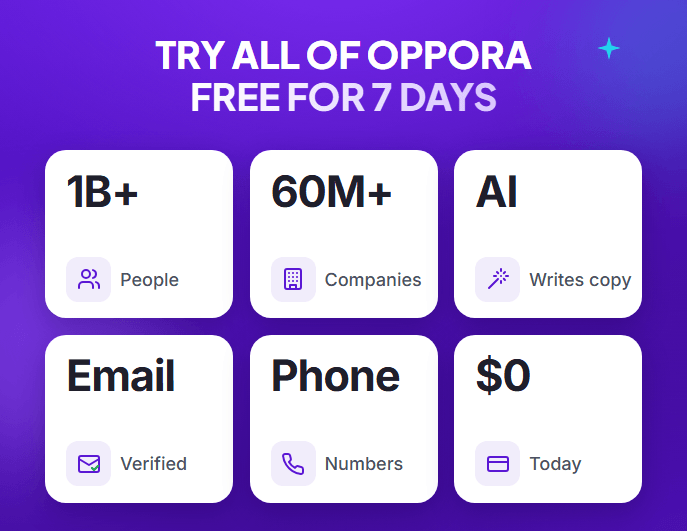
Complete Agentic Email Outreach
AI agents find and enrich prospects, personalize emails, follow up, and handle replies with your meeting link.
Start Your 7-Day Free Trial
Generating more leads is not the problem most B2B businesses face. The real challenge is finding qualified leads that are actually interested in what you offer and have the potential to become customers.
Without the right strategy, your team can spend hours chasing prospects who will never convert.
In this guide, you'll learn:
- 10 proven B2B lead generation techniques
- The fundamentals behind successful lead generation
- Common mistakes that reduce lead quality
- How AI can help you generate and qualify leads faster
Fundamentals Every Lead Generation Strategy Needs
Successful B2B lead generation starts with a strong foundation. Targeting the right audience, using accurate data, and having a clear qualification process are essential for generating high-quality leads.
1. A Clearly Defined Ideal Customer Profile
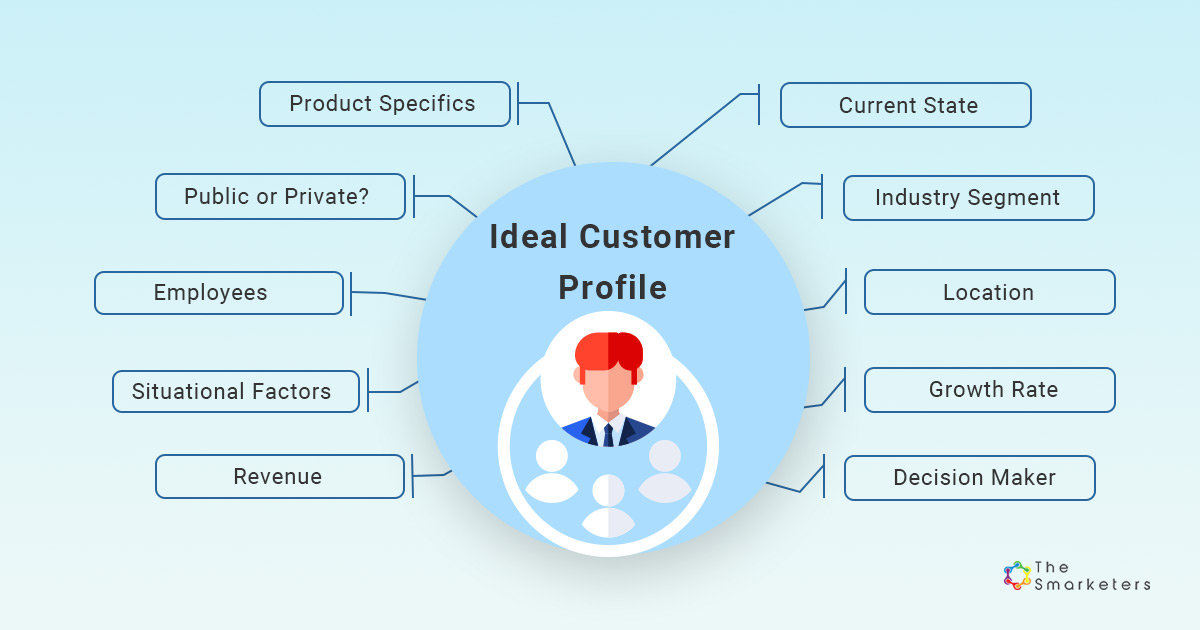
The first step is knowing exactly who you want to reach.
An ideal customer profile (ICP) helps you identify the companies and decision-makers most likely to benefit from your product or service.
Without an ICP, lead generation quickly turns into a numbers game that wastes time and resources.
Your ICP should include factors such as:
- Industry
- Company size
- Revenue range
- Geographic location
- Key decision-makers
- Common business challenges
The more specific your ICP becomes, the easier it is to generate qualified leads consistently.
2. Accurate Contact Data and Enrichment Workflows
Even the most relevant prospect list loses value if the contact information is outdated.
B2B databases change constantly as people switch roles, companies grow, and email addresses become inactive. That's why lead generation requires both accurate data and ongoing enrichment.
A strong enrichment workflow helps you:
- Verify email addresses
- Identify job titles and responsibilities
- Fill missing company information
- Update records automatically
Clean data improves deliverability, increases response rates, and prevents your team from wasting effort on unreachable prospects.
3. Strong Positioning and Value Proposition
Lead generation is not just about finding prospects. It's also about giving them a reason to respond.
Your messaging should clearly communicate who you help, what problem you solve, and why your solution is different from alternatives.
When your positioning is unclear, even highly targeted outreach can fall flat.
A strong value proposition helps prospects quickly understand:
- The outcomes you deliver
- The problems you solve
- Why your approach is unique
The easier you make this decision, the more qualified conversations you'll generate.
4. Multichannel Outreach Capabilities
Modern buyers rarely respond after a single touchpoint.
They may see your email, visit your website, check your LinkedIn profile, and engage with your content before replying.
That's why successful lead generation strategies combine multiple channels, including:
- Email outreach
- LinkedIn prospecting
- Content marketing
- Retargeting campaigns
- Webinars and events
A multichannel approach increases visibility and creates more opportunities to engage potential buyers throughout their decision-making process.
5. Systems for Lead Qualification and Prioritization
Not every lead deserves the same level of attention.
Without a qualification process, sales teams often spend valuable time pursuing low-priority opportunities while high-intent prospects go unnoticed.
Effective qualification systems evaluate factors such as:
- Company fit
- Buying intent
- Engagement level
- Budget and authority
- Recent behavioral signals
By prioritizing leads based on these indicators, your team can focus on prospects that are most likely to convert, improving both sales efficiency and pipeline quality.
B2B Lead Generation Techniques That Deliver Qualified Leads
Once you have the fundamentals in place, the next step is choosing lead generation techniques that consistently bring in qualified leads.
The goal is not to reach more people. The goal is to reach the right people at the right time with the right message.
Here are some of the most effective B2B lead generation techniques used by high-performing sales teams today.
1. Use Oppora.AI to Automate Lead Generation and Qualification
Manual prospecting takes time.
Finding companies, identifying decision-makers, enriching contact data, scoring leads, writing outreach messages, and following up can quickly become overwhelming.
This is where Oppora.ai helps.
Instead of using separate tools for each step, Oppora.ai combines lead generation, qualification, outreach, and follow-up into a single workflow.
You simply define:
- Who you want to target
- What you sell
- Your campaign goals
From there, Oppora's AI agents can:
- Find relevant companies
- Identify decision-makers
- Verify contact information
- Score prospects based on fit and intent
- Personalize outreach messages
- Reply to leads automatically
- Book meetings and sync data to your CRM
This allows your team to spend less time on manual tasks and more time talking to qualified prospects.
And the below video shows how Oppora automates your entire outreach:
2. Build Targeted Account Lists Using ICP-Based Prospecting
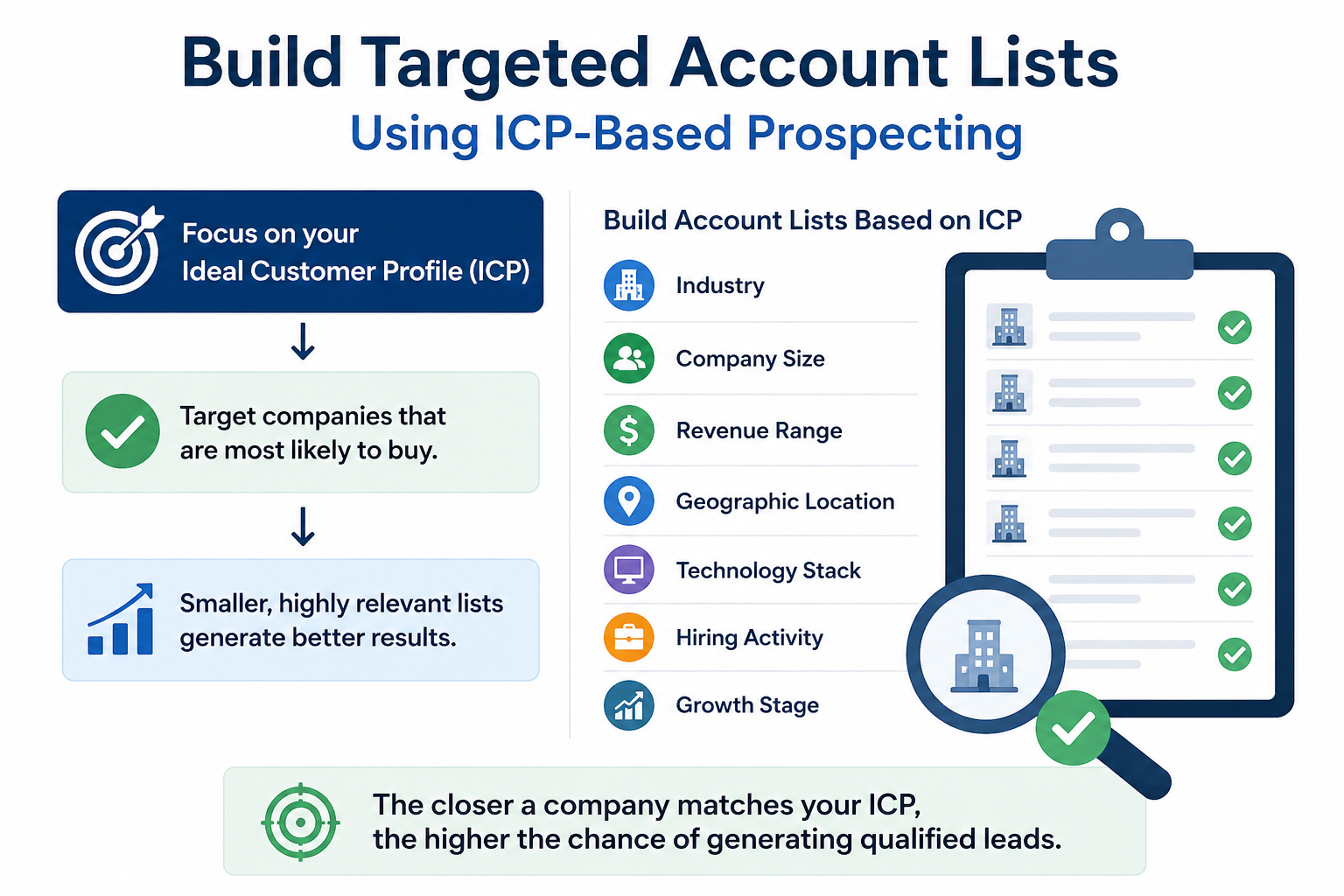
Many lead generation campaigns fail because they start with broad prospect lists.
When your targeting is too wide, you end up reaching companies that are unlikely to buy.
Instead, build account lists based on your ideal customer profile.
Look for companies that match factors such as:
- Industry
- Company size
- Revenue range
- Geographic location
- Technology stack
- Hiring activity
- Growth stage
The closer a company matches your ICP, the higher the chance of generating qualified leads.
A smaller list of highly relevant accounts will almost always outperform a larger list of poorly targeted prospects.
Suggested Reading:
How to Build a Prospect List Without Manual Research3. Leverage LinkedIn for Founder-Led and SDR-Led Outreach
LinkedIn remains one of the most effective channels for B2B lead generation.
Decision-makers actively use the platform to network, learn, and evaluate potential solutions.
Instead of relying only on cold emails, combine LinkedIn outreach with your outbound strategy.
Founders can build credibility by sharing industry insights, engaging with prospects, and starting conversations naturally.
SDRs can support these efforts through:
- Connection requests
- Personalized messages
- Content engagement
- Follow-up conversations
When prospects recognize your name before receiving an email, response rates often improve significantly.
4. Use Intent Data to Prioritize Accounts Already Showing Buying Signals
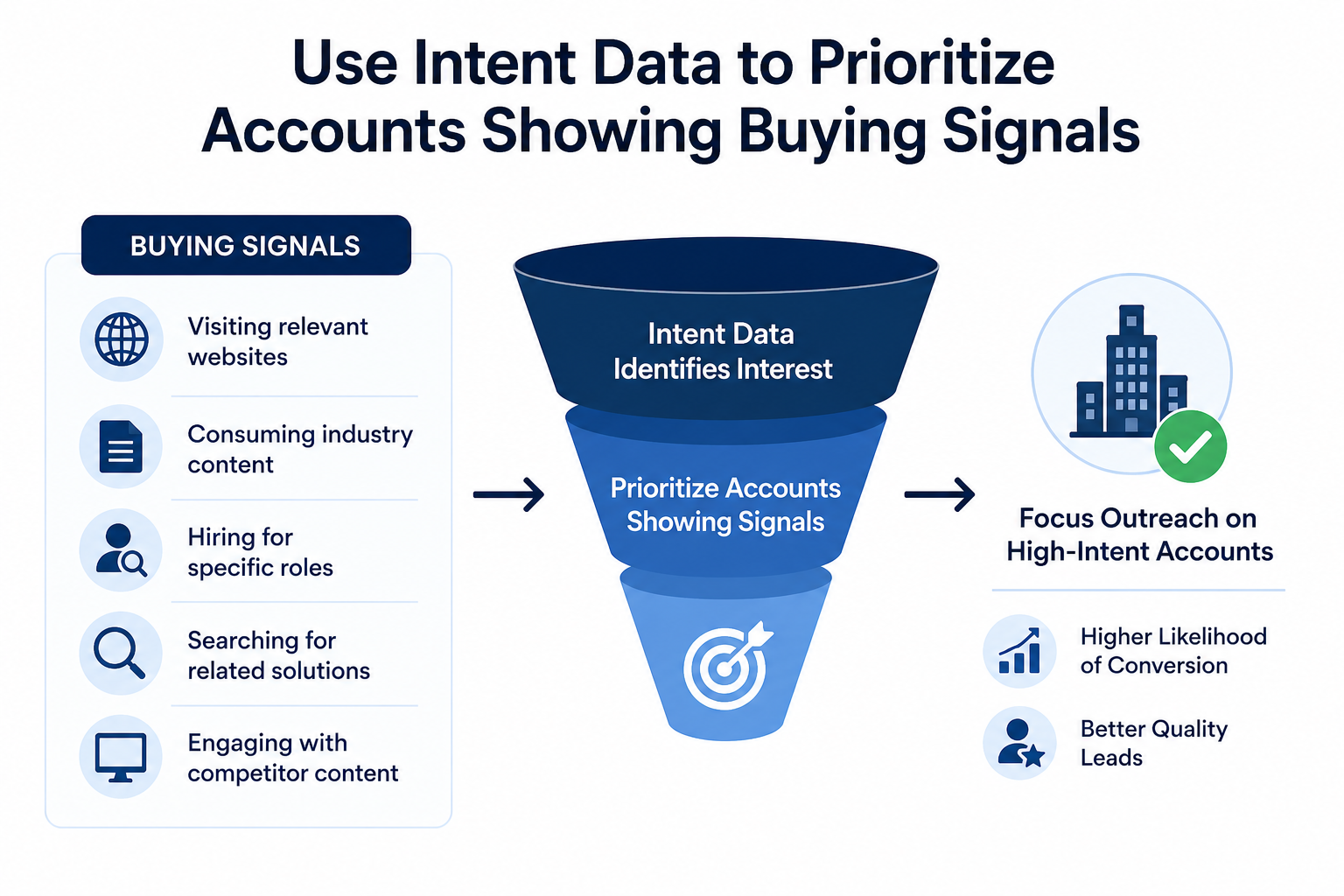
Not every prospect is actively looking for a solution.
Intent data helps identify companies already researching topics related to your product or service.
These buying signals may include:
- Visiting relevant websites
- Consuming industry content
- Hiring for specific roles
- Searching for related solutions
- Engaging with competitor content
By focusing on accounts that are already showing interest, your sales team can prioritize outreach where there is a higher likelihood of conversion.
This improves efficiency while increasing the quality of leads entering your pipeline.
Suggested Reading:
15 Buyer Intent Signals B2B Sales Teams Should Watch5. Turn Website Visitors Into Outbound Opportunities
Most website visitors leave without filling out a form.
That doesn't mean they aren't interested.
Many visitors are researching solutions long before they're ready to speak with sales.
Instead of waiting for inbound conversions, identify companies visiting your website and use that data to start outbound conversations.
When combined with account identification and lead enrichment tools, you can:
- Discover which companies are visiting
- Identify decision-makers within those organizations
- Understand pages they engaged with
- Trigger personalized outreach campaigns
This approach allows you to engage interested prospects earlier in the buying journey and create opportunities that would otherwise remain invisible.
As a result, your website becomes more than a lead capture tool. It becomes an active source of outbound opportunities and qualified pipeline growth.
6. Use Content Marketing to Attract and Qualify Potential Buyers
Not every buyer is ready for a sales conversation the moment they discover your business.
Many prospects spend weeks or even months researching solutions before they engage with a sales team.
This is where content marketing becomes one of the most effective B2B lead generation techniques.
By creating helpful content around your buyers' challenges, you can attract prospects who are already looking for answers.
Common content formats include:
- Blog posts
- Industry reports
- Case studies
- Comparison guides
- Checklists and templates
- Video content
Beyond attracting traffic, content also helps qualify leads.
The topics people consume often reveal their interests, pain points, and stage in the buying journey, allowing sales teams to prioritize outreach more effectively.
7. Run Cold Email Campaigns With Personalized Messaging
Cold email continues to be one of the highest ROI channels for B2B lead generation when done correctly.
The problem is that most cold emails look exactly the same.
Generic templates often get ignored because they fail to show relevance.
Instead of sending mass emails, focus on personalization.
Effective cold email campaigns typically reference:
- Company-specific challenges
- Industry trends
- Recent company updates
- Hiring activity
- Relevant pain points
The goal is to make prospects feel that the message was written specifically for them.
Even small personalization elements can significantly improve open rates, reply rates, and overall campaign performance.
When combined with accurate targeting and strong follow-up sequences, cold email remains a reliable source of qualified leads.
8. Generate Referrals Through Customers and Industry Networks
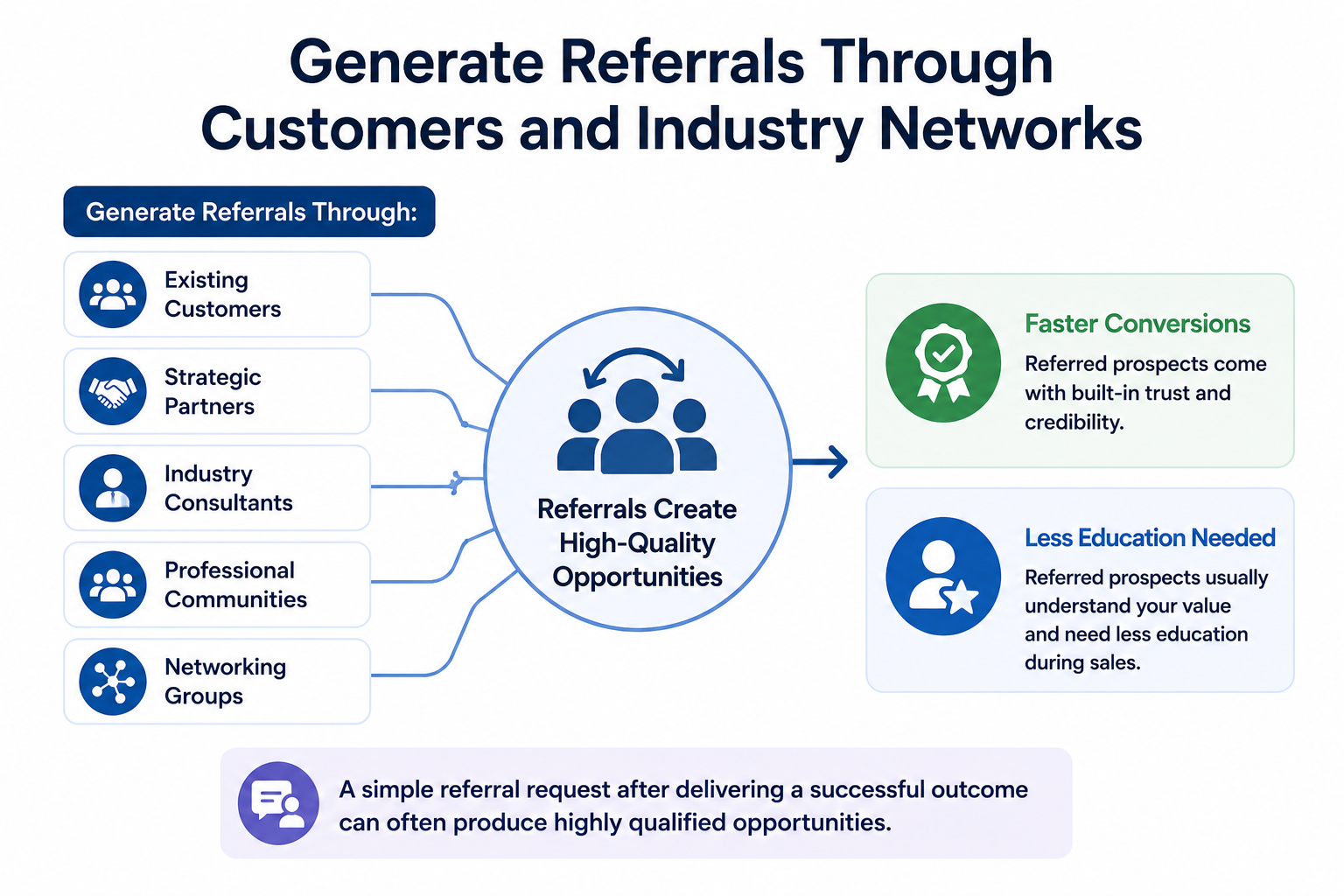
Some of the best leads come from people who already trust your business.
Referrals often convert faster because the prospect enters the conversation with built-in credibility.
Many companies overlook referral generation because they assume it happens naturally.
In reality, successful businesses create systems that encourage referrals consistently.
You can generate referrals through:
- Existing customers
- Strategic partners
- Industry consultants
- Professional communities
- Networking groups
A simple referral request after delivering a successful outcome can often produce highly qualified opportunities.
Since referred prospects usually have a clear understanding of your value, they often require less education during the sales process.
9. Use Webinars and Events to Identify Engaged Prospects
Webinars and industry events do more than build brand awareness.
They also help identify prospects actively interested in the problems your solution solves.
When someone registers for a webinar, attends a session, asks questions, or engages with event content, they are providing valuable intent signals.
These interactions can help your sales team understand:
- What topics prospects care about
- Which companies are showing interest
- How engaged attendees are
- Which leads deserve follow-up
After an event, outreach becomes much more relevant because you already share a common point of conversation.
Instead of reaching out cold, you can reference the webinar, discussion, or event experience, creating a more natural path into a sales conversation.
10. Trigger Outbound Campaigns From Product and Behavioral Signals
The most effective lead generation strategies often rely on timing.
Reaching prospects when they are actively evaluating solutions dramatically increases your chances of getting a response.
Behavioral signals help identify those moments.
These signals may include:
- Repeated website visits
- Pricing page engagement
- Product trial activity
- Feature usage patterns
- Job changes
- New funding announcements
- Expansion into new markets
Rather than running the same outreach for every prospect, behavioral signals allow you to launch campaigns based on specific actions.
This makes your messaging more relevant because it aligns with what the prospect is currently experiencing.
For example, a company repeatedly visiting your pricing page likely requires a different message than someone discovering your content for the first time.
When sales teams combine behavioral signals with personalization and account intelligence, they can create highly targeted outbound campaigns that generate more qualified leads while reducing wasted effort.
How Oppora.Ai Helps Businesses Generate More Qualified Leads
The lead generation techniques above are effective, but managing them manually becomes challenging as your pipeline grows.
Oppora.ai helps businesses identify, qualify, and engage the right prospects while reducing manual effort and improving lead quality.
1. Find the Right Companies and Decision-Makers Automatically
The quality of your pipeline depends heavily on who you target.
Oppora.ai helps you discover companies that match your ideal customer profile and identify the decision-makers most likely to influence purchasing decisions.
Instead of spending hours researching accounts manually, you can quickly build targeted prospect lists and focus your efforts on the right opportunities.
2. Enrich and Verify Lead Data Before Outreach
Poor data leads to wasted outreach.
Missing job titles, inaccurate contact information, and outdated records reduce campaign performance and increase bounce rates.
Oppora.ai automatically enriches lead records with additional company and contact information while verifying email addresses before outreach begins.
This helps ensure your sales team is working with accurate and actionable data.
3. Use AI-Powered Lead Scoring to Prioritize High-Intent Prospects
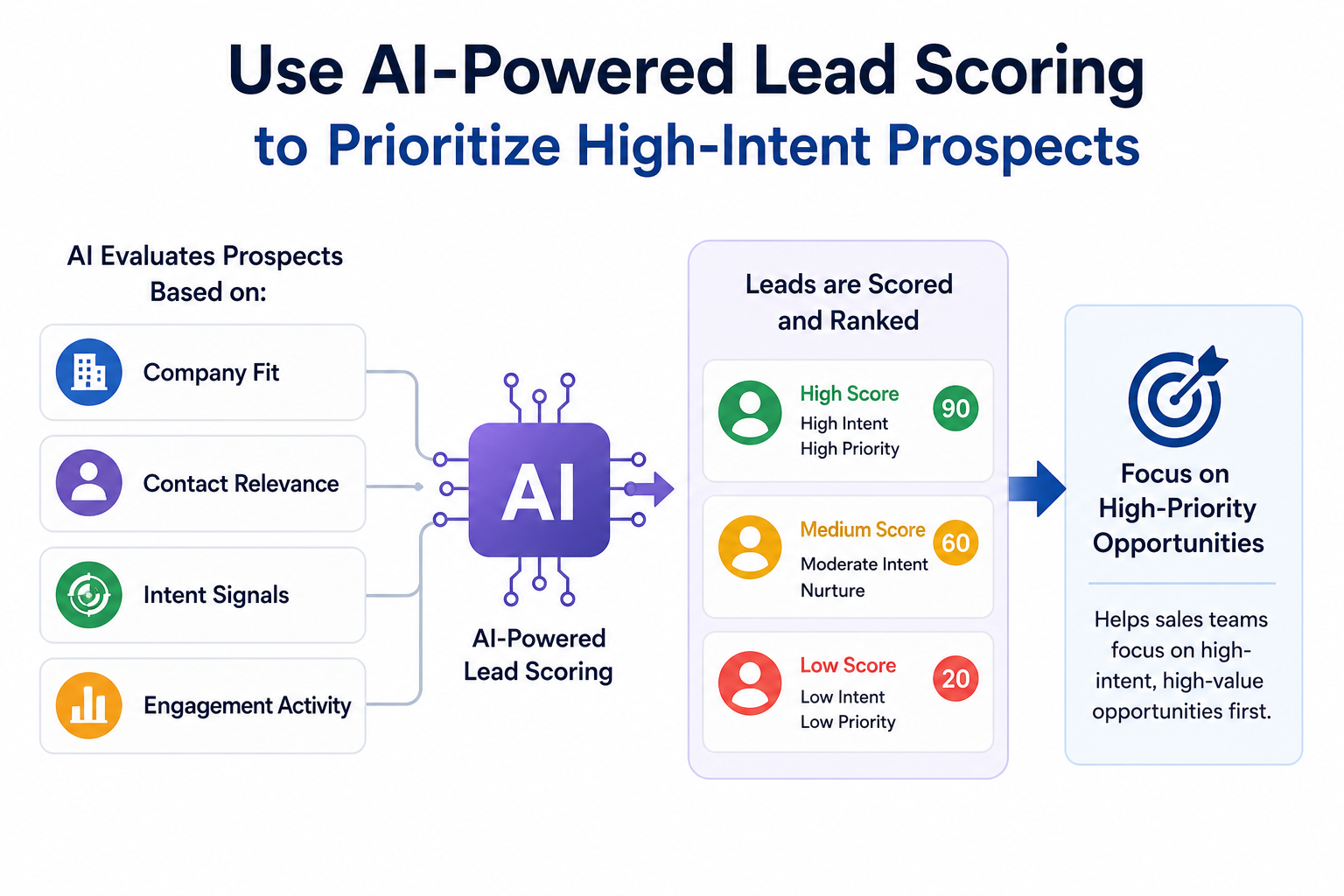
Not every lead should receive the same level of attention.
Some prospects closely match your ICP and show strong buying signals, while others may need more nurturing.
Oppora uses AI-powered lead scoring to evaluate prospects based on factors such as:
- Company fit
- Contact relevance
- Intent signals
- Engagement activity
This helps sales teams focus on high-priority opportunities first.
4. Personalize Outreach at Scale Without Sacrificing Relevance
As outreach volume increases, personalization often decreases.
Many teams end up relying on generic templates that fail to generate meaningful conversations.
Oppora uses AI to create personalized messaging based on prospect and company data.
This allows you to maintain relevance across larger campaigns without spending hours writing individual emails.
5. Combine Email and LinkedIn Outreach in One Workflow
Modern buyers rarely respond through a single channel.
A prospect may ignore an email but engage with a LinkedIn connection request or message.
Oppora.ai allows you to combine email and LinkedIn outreach into one automated workflow.
This creates a more consistent prospect experience while increasing the number of opportunities to start conversations.
6. Automatically Reply to Responses and Book Meetings
Responding quickly can make the difference between winning and losing an opportunity.
However, managing replies manually becomes difficult as outreach volume grows.
Oppora.ai can automatically handle responses, answer common questions, qualify prospects, and help schedule meetings.
This keeps conversations moving without requiring constant monitoring from your team.
7. Keep Your CRM Updated With Every Lead Interaction
One of the biggest challenges in sales operations is maintaining clean CRM data.
Manual updates are time-consuming and often inconsistent.
Oppora.ai automatically syncs lead activity, conversations, meetings, and engagement data with your CRM.
This ensures your pipeline remains accurate while reducing administrative work for sales teams.
8. Connect Claude MCP and External AI Tools Like N8N and Clay
Many businesses already use multiple tools across their sales and marketing workflows.
Oppora.ai is designed to work alongside those systems rather than replace them.
You can connect external platforms and automation tools to create more advanced workflows and data processes.
This flexibility allows teams to build lead generation systems that fit their existing tech stack while benefiting from AI-powered automation
Common Lead Generation Mistakes That Reduce Lead Quality
Even the best lead generation tools and strategies can produce poor results when common mistakes go unchecked.
Understanding these issues can help you improve lead quality and avoid wasting valuable sales resources.
1. Prioritizing Lead Volume Over Qualification
More leads do not automatically mean more revenue.
Many teams focus on generating as many leads as possible without considering whether those prospects are a good fit.
A smaller pipeline filled with qualified leads will usually outperform a larger pipeline filled with low-intent contacts.
2. Targeting Accounts Outside the Ideal Customer Profile
When sales teams move too far outside their ICP, conversion rates often decline.
Prospects may lack the necessary budget, need, authority, or urgency to buy.
Staying focused on companies that closely match your ideal customer profile improves both efficiency and lead quality.
3. Using Outdated or Inaccurate Contact Data
Incorrect contact information creates unnecessary friction throughout the sales process.
Common issues include:
- Invalid email addresses
- Outdated job titles
- Duplicate records
- Missing company information
Regular data enrichment and verification help prevent these problems and improve outreach performance.
4. Failing to Personalize Outreach
Generic messages are easy to ignore.
Buyers expect outreach to reflect their business challenges, industry context, and current priorities.
Even small personalization efforts can significantly improve engagement and response rates.
5. Ignoring Intent and Engagement Signals
Many companies treat every prospect the same regardless of their level of interest.
This often results in missed opportunities.
Intent signals such as content consumption, website activity, webinar attendance, and buying behavior provide valuable insight into prospect readiness.
Sales teams that prioritize outreach based on these signals typically generate more qualified leads and close deals faster.
Conclusion
B2B lead generation works best when you focus on attracting the right prospects instead of simply increasing lead volume.
By combining ICP-based targeting, accurate data, personalized outreach, intent signals, and consistent follow-up, you can generate more qualified leads and improve conversion rates.
As your outreach scales, automation and AI can help eliminate manual work while maintaining relevance.
The businesses that build repeatable lead generation systems today will be the ones creating predictable pipeline growth tomorrow.
Frequently Asked Questions
1. What Is B2B Lead Generation?
B2B lead generation is the process of identifying and attracting potential business customers who may be interested in your products or services.
2. What Makes a B2B Lead Qualified?
A qualified lead matches your ideal customer profile and shows signs of interest or buying intent, making them more likely to become a customer.
3. Which B2B Lead Generation Technique Delivers the Best Results?
There is no single best technique. The strongest results usually come from combining targeted prospecting, personalized outreach, content marketing, and intent-based targeting.
4. How Long Does It Take to Generate Qualified B2B Leads?
The timeline varies by industry, offer, and strategy, but businesses often start seeing initial conversations within a few weeks of consistent outreach.
5. How Can AI Improve B2B Lead Generation Efforts?
AI can automate prospecting, data enrichment, lead scoring, personalization, and follow-ups, helping you generate qualified leads more efficiently and at scale.
Summarize with AI
Share