9 Best Lead Scoring Tools to Find High-Value Prospects
Martin Smith
Published September 25, 2025
26 min
Complete Agentic Email Outreach
AI agents find and enrich prospects, personalize emails, follow up, handle replies, and book meetings automatically.
Claim Your FREE Credits
Introduction
Your sales team may have thousands of leads but still struggle to know which ones deserve attention first.
Manual scoring often relies on fixed rules, incomplete data, and guesswork. As a result, high-intent prospects can easily get overlooked.
AI lead scoring solves this by analyzing engagement, firmographic data, behavior, and buying signals.
It helps you rank leads based on their likelihood to convert, so your team can focus on the strongest opportunities.
In this guide, you will learn:
- How AI lead scoring works
- Which tools stand out in 2026
- How leading platforms compare
- What to consider before choosing one
What Is AI Lead Scoring?
AI lead scoring uses artificial intelligence to evaluate leads and predict which ones are most likely to convert.
It studies patterns across customer data, engagement, company details, and past sales activity.
This helps your team focus on stronger opportunities instead of treating every lead the same.
How AI Lead Scoring Works
AI lead scoring tools collect data from your CRM, website, email campaigns, and enrichment sources.
The system then identifies patterns linked to past conversions.
A lead may receive a higher score based on factors such as job title, company size, email replies, website visits, or recent buying intent.
Scores can also change as new activity happens.
Someone who visits your pricing page or responds to outreach may quickly move higher on your priority list.
AI Lead Scoring vs. Traditional Lead Scoring
Traditional scoring is easier to set up, but AI scoring is more responsive and data-driven.
What Data AI Uses to Score Leads
Most AI lead scoring tools use:
- Company size, industry, and location
- Job title and seniority
- Website and product engagement
- Email opens, clicks, and replies
- CRM history and sales activity
- Buying intent and enrichment signals
- Previous conversion patterns
When these signals are combined, you get a clearer view of which leads deserve immediate attention.
How We Evaluated These AI Lead Scoring Tools
Choosing the right platform requires more than checking which tool has the longest feature list.
We evaluated each option based on how well it helps you identify stronger leads, improve data quality, automate sales actions, and manage costs.
AI Scoring Accuracy
We assessed whether each platform could:
- Analyze historical conversions and engagement patterns
- Update lead scores when new activity appears
- Identify high-intent prospects with fewer manual rules
Tools with clearer scoring logic and more relevant signals ranked higher.
Data Enrichment and Buying Intent
A lead score is only useful when the data behind it is reliable.
We looked for platforms that provide:
- Accurate contact and company information
- Job title, seniority, industry, and company-size data
- Website activity and buying-intent signals
- Real-time email verification and data updates
Better enrichment gives you a more complete view of every prospect.
Automation and Workflow Capabilities
We reviewed whether each tool could turn scores into practical sales actions.
Important capabilities included:
- Routing qualified leads to the right representative
- Triggering email or multichannel outreach
- Updating CRM records automatically
- Creating follow-up tasks and notifications
- Moving leads between workflow stages
Ease of Implementation
We considered how quickly your team could start using the platform.
This included:
- Setup and onboarding time
- Dashboard usability
- Scoring customization
- Native CRM integrations
- Technical knowledge required
Tools with faster setup and simpler controls received stronger ratings.
Pricing and Overall Value
Finally, we compared:
- Starting prices and available plans
- Usage limits and data credits
- Included automation features
- Integration and support options
- Scalability as your team grows
The strongest tools offer a practical balance of scoring accuracy, automation, reliable data, and long-term value.
Best AI Lead Scoring Tools Compared at a Glance
Each platform approaches lead scoring differently.
Some focus on predictive CRM scoring, while others combine enrichment, intent data, and automated sales workflows. Use the table below to match each tool with your sales process.
AI Lead Scoring Tools Comparison Table
Oppora.ai suits teams that want scoring to trigger enrichment, outreach, replies, and CRM updates automatically.
Platforms such as 6sense and Demandbase are better suited to enterprise account-based marketing, while HubSpot and Salesforce Einstein fit teams that want scoring inside their existing CRM.
Best AI Lead Scoring Tools and Platforms in 2026
The right platform should not only rank leads. It should explain why a prospect matters and trigger the next sales action.
These tools cover agentic outbound, CRM scoring, enterprise intent data, and custom AI workflows.
Oppora.ai — Best for AI Lead Scoring With Automated Outreach

Oppora.ai combines lead scoring, enrichment, contact verification, outreach, reply handling, and CRM updates in one platform.
Instead of only assigning scores, it can move qualified leads into automated email and LinkedIn workflows.
Best for: Founders, agencies, SDR teams, and B2B businesses that want to score leads and act on them without switching between multiple tools.
Key AI Lead Scoring Features
- Access to a 1B+ lead and contact database
- Access to a 60M+ company database
- Scores leads using ICP fit, enrichment data, and intent signals
- Uses firmographic and contact data to improve qualification
- Prioritizes prospects based on their likelihood to convert
- Tracks signals such as hiring, funding, and company growth
- Triggers workflows when leads meet selected scoring conditions
- Updates lead records as new engagement data becomes available
- Syncs qualified leads and sales activity with your CRM
Pros
- Connects lead scoring directly with outreach and follow-up
- Provides access to a large lead and company database
- Includes enrichment and verification in the same platform
- Supports email and LinkedIn automation
- Uses separate credits for different sales tasks
- Rolls unused credits over on paid plans
- Supports unlimited team members
Cons
- May offer more functionality than teams needing basic scoring require
- Advanced workflows may need initial testing and refinement
- Has fewer third-party reviews than established enterprise platforms
Oppora.ai Pricing

Here are Oppora.ai’s pricing plans:
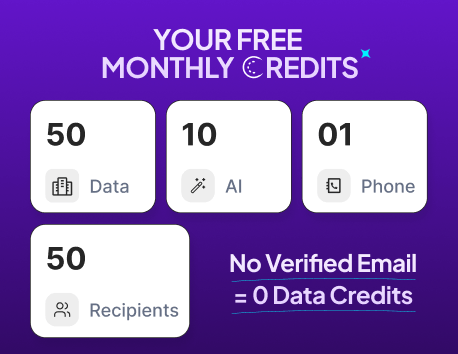
- Free: $0 per month with 50 data credits, 10 AI credits, three AI workflows, three mailboxes, and 50 recipients per month
- Pro: $34 per month with 10,000 data credits, 500 AI credits, 50 AI workflows, 25 mailboxes, and 5,000 recipients per month
- Max: $79 per month with 25,000 data credits, 1,000 AI credits, unlimited workflows, unlimited recipients, and 50 mailboxes
- Enterprise: Starts at $499 per month with custom credits, mailboxes, recipients, and access to all intent signals
All listed plans include unlimited campaigns, emails, and follow-ups.
Oppora.ai G2 Reviews

Here is how users rate Oppora.ai on a third-party review platform:
- G2: 4.4 out of 5 stars based on 19 user reviews
Reviewers highlight its ability to bring lead generation, enrichment, outreach, follow-ups, and meeting booking into one automated workflow.
Overall verdict: Oppora.ai is a strong option when you want AI lead scoring to do more than rank prospects. Its 1B+ contact database, enrichment tools, intent signals, and AI workflows help you find, score, verify, contact, and qualify leads from one platform.
HubSpot — Best for AI Lead Scoring Inside an All-in-One CRM

HubSpot combines lead scoring with CRM data, marketing automation, reporting, email campaigns, and sales workflows.
Because your scores sit directly inside contact and company records, marketing and sales teams can view the same qualification data without moving leads between separate platforms.
Best for: Growing marketing and sales teams that already use HubSpot or want lead scoring inside a connected CRM.
Key AI Lead Scoring Features
- Creates separate fit, engagement, or combined lead scores
- Scores contacts using job title, company size, revenue, and other CRM properties
- Uses actions such as website visits, email opens, form submissions, and CTA clicks
- Supports negative scoring and score decay for inactive prospects
- Displays scores and contributing activities inside CRM records
- Uses AI to recommend contact fit and engagement criteria
- Connects scores with segments, reports, alerts, and automated workflows
AI-assisted scoring recommendations are available with Marketing Hub Enterprise, while custom lead scoring is available in eligible premium plans.
Other Key Features
- Contact and company management through HubSpot Smart CRM
- Email marketing and automated nurture sequences
- Forms, landing pages, live chat, and conversational bots
- Omnichannel marketing automation
- CRM segmentation and audience management
- Campaign tracking and attribution reporting
- A/B testing and email personalization
- Sales pipeline and deal management
- More than 2,000 app and service integrations
- Breeze AI tools and AI-powered sales features
Pros
- Keeps scoring, CRM records, and automation connected
- Supports both demographic fit and behavioral engagement scoring
- Makes score history visible to marketing and sales teams
- Offers flexible workflows for routing and nurturing qualified leads
- Provides free CRM and marketing tools for smaller teams
Cons
- AI-generated scoring recommendations require the Enterprise plan
- The price increases significantly from Starter to Professional
- Marketing contact limits can raise costs as your database grows
- Professional and Enterprise plans include mandatory onboarding fees
- Unused HubSpot Credits do not roll over each month
HubSpot Pricing

Here are HubSpot Marketing Hub’s current starting prices:
- Free: $0 per month for up to two users, with basic lead generation, email marketing, and reporting tools
- Starter: Starts at $7 per month per seat for new customers, with 500 HubSpot Credits and 1,000 marketing contacts
- Professional: Starts at $800 per month with three Core Seats, 3,000 HubSpot Credits, and 2,000 marketing contacts. A one-time $3,000 onboarding fee applies
- Enterprise: Starts at $3,600 per month with five Core Seats, 5,000 HubSpot Credits, and 10,000 marketing contacts. A one-time $7,000 onboarding fee applies
HubSpot G2 Reviews

Here is how users currently rate HubSpot on G2:
- HubSpot overall: 4.4 out of 5 stars from 35,781 reviews
- HubSpot Marketing Hub: 14,869 user reviews
The large review volume reflects HubSpot’s established position across CRM, marketing, sales, and customer-service software.
Overall verdict: HubSpot is a strong choice when you want AI lead scoring connected directly to CRM records, marketing campaigns, sales routing, and reporting.
However, you will need Marketing Hub Enterprise to access its AI scoring recommendations, making it less suitable when you only need an affordable standalone lead scoring tool.
Clay — Best for Custom AI Lead Scoring and Data Enrichment

Clay helps you build custom lead-scoring models using enrichment data, buying signals, AI research, and your own qualification criteria.
Rather than providing one fixed predictive score, Clay lets you decide which fit and intent signals matter to your sales process.
Best for: RevOps, growth, and outbound teams that want flexible lead scoring supported by multiple data providers.
Key AI Lead Scoring Features
- Creates numerical scores, letter grades, or fit-based labels
- Scores leads using firmographic, technographic, and behavioral data
- Combines ICP fit with buying-intent and engagement signals
- Uses Claygent to research prospects and uncover missing data
- Generates a 1–100 AI score with supporting reasoning
- Tracks signals such as job changes, hiring, funding, and company news
- Sends scores back to your CRM for routing and prioritization
- Triggers workflows when a lead reaches a selected score
Clay supports rule-based formulas and AI-assisted scoring. This allows you to use predictable rules for standard leads and AI for less structured cases.
These features allow you to research, enrich, score, and route leads from the same table-based workspace.
Pros
- Lets you create scoring models around your specific ICP
- Combines data from several enrichment providers
- Supports structured formulas and AI-generated qualification
- Provides detailed reasoning behind AI-generated scores
- Connects scores with CRM and outbound workflows
- Offers templates for teams that do not want to start from scratch
Cons
- You must define and test your own scoring criteria
- It does not provide a ready-made predictive model for every business
- The credit and action system can take time to understand
- Complex tables may require technical or RevOps experience
- CRM auto-sync and web-intent signals require higher plans
Clay Pricing

Here are Clay’s current pricing plans:
- Free: $0 per month with 500 actions and 100 data credits monthly. It includes unlimited seats and tables, multi-provider waterfalls, Claygent, up to 200 rows per table, and the Clay sequencer.
- Launch: $167 per month when billed annually, with 180,000 actions and 30,000 data credits per year. It adds phone enrichment, job-change tracking, email campaign integrations, and reusable workflow functions.
- Growth: $446 per month when billed annually, with 480,000 actions and 72,000 data credits per year. It includes CRM auto-sync, HTTP API integrations, webhook automation, web-intent signals, one advertising audience, and priority support.
- Enterprise: Custom pricing with custom actions and credits. It adds unlimited advertising audiences, unlimited search and imports, SSO, role-based access controls, and a dedicated growth strategist.
Clay also provides a 14-day trial for its paid plans.
Clay G2 Reviews

Here is how users currently rate Clay on G2:
- G2: 4.6 out of 5 stars based on 226 user reviews
- Five-star reviews: 83% of submitted reviews
Users commonly praise Clay’s enrichment capabilities, integrations, visual workflows, and ability to combine AI research with outbound automation.
Some reviewers note that enriched results can occasionally miss the mark, making manual checks important before launching outreach.
Overall verdict: Clay is a strong AI lead scoring tool when you want complete control over the data, formulas, and signals used to qualify prospects.
It is especially useful for experienced GTM teams, although smaller teams may find the setup and usage-based pricing more complex than a ready-to-use scoring platform.
6sense — Best for Predictive Account Scoring and Buying Intent

6sense is an enterprise revenue intelligence platform that helps you identify in-market accounts, understand buying-group activity, and prioritize prospects using predictive analytics.
It focuses more on account-level readiness than basic contact scoring, making it useful for complex B2B sales cycles with several decision-makers.
Best for: Enterprise B2B teams running account-based marketing programs with long sales cycles and large target-account lists.
Key AI Lead Scoring Features
- Scores accounts and leads using ICP fit, intent, and engagement
- Predicts the likelihood of an account opening an opportunity
- Places accounts into Target, Awareness, Consideration, Decision, and Purchase stages
- Uses first-party CRM, marketing automation, and website activity
- Analyzes third-party intent and keyword research signals
- Identifies anonymous website visitors at the account level
- Maps contacts to buying groups and decision-making roles
- Creates dynamic audiences based on fit and buying stage
- Recommends which accounts your sales team should prioritize
Its predictive buying stages use scores from 0 to 100 and estimate which accounts may open or progress an opportunity within the next 90 days.
Pros
- Provides detailed account-level intent visibility
- Combines predictive scoring with buying-group intelligence
- Uses both first-party and third-party behavioral data
- Supports coordinated ABM campaigns across multiple channels
- Connects scoring with sales alerts and automated workflows
- Fits enterprise teams with complex buying committees
Cons
- Requires clean CRM and marketing data for reliable results
- Has a steep learning curve for new users
- Implementation may require significant onboarding and training
- Pricing is not publicly transparent
- May be too complex for small teams needing simple contact scoring
- Some reviewers report slow performance and difficult data interpretation
G2 reviewers frequently praise its intent data and targeting capabilities, while learning difficulty and platform complexity are common concerns.
6sense Pricing

6sense does not publish fixed prices for its predictive lead scoring and Revenue Marketing platform.
Its Sales Intelligence options include:
- Sales Intelligence + Data Credits: Adds contact and company data acquisition, buyer discovery, list building, and record exports
- Sales Intelligence + Predictive AI: Adds predictive models, account scores, dashboards, recommended actions, and AI account summaries
- Sales Intelligence + Data Credits + Predictive AI: Combines predictive scoring with contact data, enrichment, buyer discovery, and sales workflows
You need to contact 6sense for a quote based on the products, data credits, users, and predictive capabilities your team requires.
6sense G2 Reviews

Here is how users currently rate 6sense Revenue Marketing on G2:
- G2: 4.3 out of 5 stars based on more than 1,400 reviews
- Average implementation time: Three months
Users frequently highlight buyer-intent visibility, account prioritization, and sales and marketing alignment. However, several reviews mention a demanding setup process, pricing concerns, and a steep learning curve.
Overall verdict: 6sense is a strong choice when you need predictive account scoring supported by deep intent data and buying-group insights.
It is better suited to mature enterprise ABM teams than smaller businesses looking for an affordable, ready-to-use lead scoring tool.
ZoomInfo — Best for B2B Data and Intent-Based Lead Prioritization

ZoomInfo combines B2B contact data, company intelligence, buying signals, enrichment, and AI-assisted account prioritization.
Its GTM Workspace brings CRM records, engagement history, ZoomInfo intelligence, and intent signals into one view. This helps your team identify stronger accounts and decide what action to take next.
Best for: Established B2B sales and marketing teams that need extensive contact data alongside AI-powered account prioritization.
Key AI Lead Scoring Features
- Uses AI-powered scoring to surface accounts more likely to convert
- Prioritizes accounts using the timing, frequency, mix, and relevance of buying signals
- Combines firmographic, technographic, intent, and engagement data
- Adds first-party CRM activity to account-prioritization decisions
- Identifies high-fit companies researching relevant topics
- Shows account-level insights and recommended sales actions
- Supports predictive scoring based on prospect behavior and engagement
- Routes qualified leads using account fit, territory, and buying stage
- Feeds enriched data and buying signals back into connected CRM records
ZoomInfo focuses heavily on account prioritization rather than providing only a simple contact score.
This makes it useful when several people influence a B2B purchase and your team needs to evaluate the entire account.
Pros
- Combines contact intelligence with buying-intent signals
- Provides detailed company and decision-maker information
- Helps you prioritize accounts before beginning outreach
- Connects enrichment, scoring, routing, and sales execution
- Supports complex B2B sales processes and buying groups
- Integrates with widely used CRM and sales-engagement tools
- Offers AI recommendations without requiring teams to build their own scoring agents
Cons
- Pricing is not publicly displayed for paid packages
- Costs can increase based on seats, credits, data access, and selected features
- The platform may be excessive for small teams needing basic lead scoring
- Some contact records may still require verification before outreach
- Its broad feature set can create a learning curve
- Some reviewers report concerns about support, contract terms, data consistency, and credit usage
ZoomInfo Pricing

Here are ZoomInfo’s available pricing options:
- ZoomInfo Lite: Free to start with consumption credits. It has no minimum seat requirement and lets you test data quality and prospecting workflows.
- Sales: Custom pricing with contact and company data, verified emails, direct-dial numbers, company insights, buying-intent signals, and engagement integrations.
- Marketing: Custom pricing with contact intelligence, company insights, digital advertising tools, website chat, form management, and integrations.
- Talent: Custom pricing with candidate search, contact data, candidate alerts, company insights, and engagement tools.
- Advanced paid packages: Pricing depends on your number of users, credit volume, products, integrations, and predictive AI features.
ZoomInfo offers a free trial, but you need to contact its sales team for exact paid pricing.
ZoomInfo G2 Reviews

Here is how users currently rate GTM Workspace powered by ZoomInfo on G2:
- G2: 4.5 out of 5 stars based on approximately 9,100 user reviews
- Five-star reviews: Around 71% of submitted reviews
- Average implementation time: Approximately one month
Users commonly praise its contact database, lead-generation capabilities, account insights, and intent data.
Common concerns include premium pricing, occasional outdated contact information, contract complexity, and customer-support experiences.
Overall verdict: ZoomInfo is a strong choice when data depth is central to your lead scoring process.
It helps you combine account fit, contact information, intent signals, and engagement history to prioritize opportunities. However, its custom pricing and platform complexity make it more suitable for established revenue teams than small businesses seeking a simple scoring tool.
Salesforce Einstein — Best for Predictive Scoring Inside Salesforce CRM

Salesforce Einstein uses machine learning to score leads and opportunities using conversion history already stored in Salesforce.
Because the scores appear inside your CRM records, sales representatives can prioritize prospects without moving data into another platform.
Best for: Mid-market and enterprise teams that already use Salesforce and want predictive scoring connected to their CRM workflows.
Key AI Lead Scoring Features
- Scores leads based on similarities with previously converted prospects
- Analyzes standard fields, custom fields, and activity history
- Builds separate scoring models for different lead segments
- Displays the strongest positive and negative scoring factors
- Updates lead scores as CRM data and activity change
- Uses a global model when your organization lacks sufficient historical data
- Scores opportunities from 1 to 99 based on their likelihood of closing
- Adds scores to records, list views, forecasts, reports, and dashboards
- Supports workflow and routing decisions based on score thresholds
Einstein refreshes lead-scoring models every ten days and updates individual scores at least every six hours when needed.
Pros
- Keeps predictive scores inside your existing Salesforce records
- Learns from your organization’s actual conversion history
- Explains which factors positively or negatively influence scores
- Supports both lead and opportunity scoring
- Connects scoring with reports, routing, automation, and forecasting
- Provides extensive customization for complex sales processes
- Works well for large teams with established CRM data
Cons
- Requires clean and consistent historical Salesforce data
- Advanced configuration may require an administrator or consultant
- Einstein Lead Scoring is not included in entry-level plans
- Costs increase when you add AI, analytics, support, and automation products
- Teams may need at least 1,000 recent leads and 120 conversions for segmented custom models
- The broad Salesforce ecosystem can create a steep learning curve
When your data does not meet Salesforce’s requirements, Einstein may use a global model instead of one trained entirely on your organization’s history.
Salesforce Einstein Pricing

Here are Salesforce’s current Sales Cloud starting prices:
- Free Suite: $0 per user each month with basic CRM and sales features
- Starter Suite: $25 per user each month with lead, account, contact, and opportunity management
- Pro Suite: $100 per user each month with greater automation and customization
- Enterprise: $175 per user each month for advanced sales processes, APIs, reporting, and customization
- Unlimited: $350 per user each month with expanded automation, AI, support, and platform capabilities
- Agentforce 1 Sales: $550 per user each month with Salesforce’s broader AI-agent and data capabilities
Salesforce lists lead scoring as an additional purchasable capability. Exact Einstein Lead Scoring costs depend on your Sales Cloud edition and selected AI package.
Einstein Relationship Insights has separate pricing:
- Starter: $50 per user each month, billed annually, with relationship graphs and research across web and news data
- Growth: $150 per user each month, billed annually, with Salesforce Files research and deeper relationship discovery
Salesforce Einstein G2 Reviews

Here is how users rate the Salesforce sales platform that includes its Einstein and Agentforce capabilities:
- G2: 4.4 out of 5 stars based on 25,763 Agentforce Sales reviews
- Five-star reviews: 64% of submitted reviews
- Four-star reviews: 28% of submitted reviews
Users frequently praise Salesforce for its customization, centralized CRM data, reporting, integrations, and sales automation.
Common concerns include pricing, setup complexity, the learning curve, and the need for mature data before advanced AI features deliver their full value.
Overall verdict: Salesforce Einstein is a strong choice when Salesforce already acts as your central CRM.
It gives you predictive lead and opportunity scores without exporting customer data. However, its licensing, implementation requirements, and administration needs make it better suited to established teams than startups seeking a simple standalone AI lead scoring tool.
Warmly — Best for Scoring and Engaging High-Intent Website Visitors

Warmly identifies anonymous website visitors, enriches them with contact and company data, and prioritizes them using real-time intent signals.
Rather than relying mainly on historical CRM conversions, it helps you qualify prospects based on what they are doing on your website right now.
Best for: B2B sales and marketing teams that want to identify, score, route, and engage high-intent website visitors before they leave.
Key AI Lead Scoring Features
- Identifies visitors at the person and company level
- Tracks visited pages, clicks, conversations, and browsing activity
- Filters visitors based on your ideal customer profile
- Combines CRM, intent, account, and engagement data
- Prioritizes accounts showing stronger buying behavior
- Uses real-time intent signals to trigger sales actions
- Routes qualified leads to the appropriate sales representative
- Sends alerts when high-value prospects visit your website
- Syncs visitor activity and qualification data with your CRM
- Launches email, LinkedIn, advertising, or chat actions based on intent
Warmly is better described as an intent-based lead prioritization platform than a traditional predictive scoring tool.
It helps you act on live buyer behavior rather than waiting for enough historical data to train a conversion model.
Pros
- Helps you identify visitors who never submit a form
- Uses real-time behavior instead of only static CRM data
- Connects scoring with routing, alerts, chat, and follow-up
- Supports both contact-level and account-level identification
- Makes it easier to respond while buyer interest is still active
- Integrates with CRM, Slack, sales engagement, and advertising tools
- Offers a free plan for testing basic visitor identification
Cons
- Focuses more on website intent than complete historical lead scoring
- Visitor identification may not be accurate for every anonymous session
- Paid plans start at a relatively high annual price
- CRM integrations are not included with the Free plan
- It may provide less value if your website receives limited qualified traffic
- Teams may still need another platform for database prospecting and predictive CRM scoring
G2 reviewers frequently praise its real-time visitor insights, setup process, and integrations. Some reviewers report that identification accuracy can vary, especially with anonymous traffic.
Warmly Pricing

Here are Warmly’s current annual pricing plans:
- Free: $0 with identification for up to 500 website visitors per month, real-time Slack alerts, and CSV export
- AI Web-Deanonymization: Starts at $10,000 per year with 10,000 monthly credits, visitor identification, ICP filtering, real-time alerts, lead routing, CRM sync, and multichannel retargeting
- Inbound Chat: Starts at $20,000 per year with everything in Web-Deanonymization, plus an AI chatbot, live-chat handoff, personalized offers, chat reporting, and automated email follow-up
- AI Inbound Autopilot: Starts at $30,000 per year with unlimited AI Studio agents, automated qualification, AI-generated mini demos, personalized follow-up, and self-improving AI chat
Warmly also offers quarterly billing, while annual billing provides a lower effective price.
Warmly G2 Reviews

Here is how users currently rate Warmly on G2:
- G2: 4.5 out of 5 stars based on approximately 250 user reviews
- Notable recognition: Users Love Us, Best Estimated ROI, and High Performer badges
Users commonly value its website visitor visibility, real-time alerts, HubSpot and Slack integrations, and ability to automate timely outreach.
Common concerns include inconsistent visitor identification and the high entry price of its paid plans.
Overall verdict: Warmly is a strong option when website behavior is one of your most valuable lead-scoring signals.
It helps you identify and prioritize active buyers, then engage them through chat, email, routing, and retargeting. However, teams seeking database-wide predictive scoring may need to combine it with a CRM scoring or sales intelligence platform.
Relevance AI — Best for Building Custom AI Lead Scoring Agents

Relevance AI is a low-code platform for building AI agents that research, qualify, score, route, and follow up with leads.
It does not give you one fixed predictive scoring model. Instead, you can create an agent that evaluates prospects using your own ICP, qualification rules, data sources, and sales process.
Best for: Sales operations, RevOps, and technical GTM teams that want to build a customized AI lead qualification and scoring system.
Key AI Lead Scoring Features
- Scores leads using your chosen firmographic, demographic, and behavioral criteria
- Checks job title, seniority, location, company size, and other ICP attributes
- Enriches leads using real-time data from Google, LinkedIn, and connected tools
- Qualifies prospects based on custom prompts, rules, and sales playbooks
- Prioritizes high-fit leads before sending them to your sales team
- Routes qualified prospects to the appropriate representative
- Updates lead status and qualification data inside connected CRMs
- Triggers alerts, follow-ups, or meeting-booking workflows automatically
- Supports multichannel signals from connected email, CRM, chat, and sales applications
- Provides explanations and collected research alongside qualification decisions
Its inbound qualification agent can review demo requests, enrich prospect records, filter low-fit leads, assign qualified prospects, and schedule meetings automatically.
Pros
- Lets you design scoring criteria around your unique sales process
- Connects qualification with enrichment, routing, and follow-up
- Supports lead scoring without requiring a traditional data-science team
- Can automate tasks beyond scoring, including outreach and meeting booking
- Provides unlimited agents and tools across its listed plans
- Supports custom APIs and a wide integration ecosystem
- Offers a free plan for testing basic agents
- Allows paid customers to purchase extra usage without changing plans
Cons
- It is not a ready-made predictive scoring platform
- Your team must create, test, and maintain the qualification logic
- Scoring accuracy depends on the quality of your prompts and connected data
- Complex multi-agent workflows may require technical knowledge
- Action and vendor-credit usage can take time to understand
- Analytics and calling agents require higher-tier plans
- Enterprise governance features are not available on lower plans
- Smaller sales teams may prefer a tool with preconfigured scoring models
Relevance AI works best when your team has a clear definition of a qualified lead. Without strong criteria, the agent may produce inconsistent or overly broad qualification decisions.
Relevance AI Pricing

Here are Relevance AI’s current pricing plans:
- Free: $0 per month with 200 actions, one workforce, one user, one project, unlimited agents and tools, and a one-time allocation of vendor credits
- Pro: Starts at $19 per month when billed annually or $29 monthly. It includes 2,500 monthly actions, unlimited workforces, two build users, scheduled tasks, smart escalations, premium triggers, and bring-your-own LLM support
- Team: Starts at $234 per month when billed annually or $349 monthly. It includes 7,000 monthly actions, five build users, 45 end users, five shared projects, calling and meeting agents, A/B testing, analytics, and priority support
- Enterprise: Custom pricing with custom actions and credits, unlimited users and projects, enterprise triggers, agent evaluations, SSO, role-based controls, audit logs, custom implementation, and a dedicated account manager
Paid plans also let you purchase additional actions and vendor credits without upgrading the full subscription.
Relevance G2 AI Reviews

Here is how users currently rate Relevance AI on G2:
- G2: 4.3 out of 5 stars based on approximately 20 user reviews
Users commonly praise its no-code agent builder, straightforward onboarding, integrations, and ability to manage several agents from one workspace.
Some reviewers want stronger administrative controls and more simplicity when managing complex workflows.
Overall verdict: Relevance AI is a strong option when you want to build a lead-scoring agent around your exact ICP and qualification process.
It gives you more flexibility than a fixed scoring platform. However, you must invest time in defining criteria, testing decisions, and monitoring agent performance before using scores to automate sales actions.
How to Choose the Right AI Lead Scoring Tool
The best AI lead scoring tool is not always the platform with the most features.
You need one that matches your sales process, data quality, team size, and outreach goals.
Define Your Sales and Marketing Goals
Start by deciding what you want the scoring system to improve.
Your goal may be to:
- Prioritize demo requests
- Identify sales-ready accounts
- Find product-qualified leads
- Improve lead routing
- Reduce time spent on low-fit prospects
- Support account-based marketing campaigns
Once your goal is clear, you can avoid paying for features your team will not use.
Look Beyond Lead Scoring to AI Automation
A score is only useful when it leads to action.
Check whether the platform can:
- Assign leads to the right sales representative
- Trigger email or LinkedIn outreach
- Create follow-up tasks
- Notify your team about high-intent activity
- Update lead stages automatically
- Book meetings or manage replies
Tools that connect scoring with execution help you reduce manual work and respond faster.
Evaluate Data Quality and Enrichment
AI scoring depends on the information behind each lead.
Look for accurate firmographic, demographic, technographic, and behavioral data.
You should also check whether the platform offers:
- Email and phone verification
- Company and contact enrichment
- Buying-intent signals
- Website visitor identification
- Job-change, hiring, and funding signals
- Real-time data updates
Poor data can make even an advanced AI model unreliable.
Check CRM and Outbound Integrations
Your scoring tool should fit into your existing sales stack.
Confirm that it integrates with your CRM, marketing automation software, email platform, and sales engagement tools.
Also check whether scores, notes, and activity sync in both directions.
This prevents your team from working with incomplete or outdated records.
Compare Pricing, Scalability, and Support
Do not compare tools using the starting price alone.
Review:
- Contact, credit, and usage limits
- Additional user costs
- Enrichment and intent add-ons
- Workflow and automation restrictions
- Onboarding and implementation fees
- Customer support and training
- Contract length and cancellation terms
Choose a platform that works for your current volume but can also support your team as campaigns, data needs, and lead volumes increase.
AI Lead Scoring Use Cases
AI lead scoring becomes valuable when your team has more prospects than it can review manually.
You can use it across inbound sales, outbound prospecting, product-led growth, and account-based marketing.
Prioritizing Inbound Leads
When several people submit forms or request demos, AI can rank them using company fit, job seniority, website activity, and previous engagement.
You can then send high-scoring leads directly to sales while placing lower-intent contacts into nurturing campaigns.
Identifying Product-Qualified Leads
SaaS companies can combine product activity with firmographic data to identify users most likely to upgrade.
Useful signals may include:
- Feature usage
- Number of active users
- Trial engagement
- Pricing-page visits
- Usage-limit activity
- Company size and industry
MadKudu lists product-qualified lead and account scoring as a core use case, alongside automated outreach and account insights.
Prioritizing Accounts for ABM Campaigns
AI scoring can evaluate complete accounts instead of isolated contacts.
You can combine ICP fit, keyword intent, website visits, product activity, and engagement from several members of the buying group.
One global analytics platform combined 6sense keyword intent, web activity, and internal product engagement to build a propensity model. According to the case study, high-scoring accounts achieved higher close rates and shorter sales cycles.
Triggering Lead Routing and Outreach
A lead score should help you decide what happens next.
Based on a scoring threshold, your system can:
- Assign the lead to an appropriate representative
- Send a real-time sales alert
- Start a personalized email sequence
- Create a CRM task
- Move the contact into a new pipeline stage
- Invite the prospect to schedule a meeting
This reduces the delay between showing interest and receiving a relevant response.
Finding Expansion Opportunities
You can also score existing customers using product adoption, engagement, company growth, renewal timing, and new buying signals.
This helps your team identify accounts that may be ready for an upgrade, cross-sell, or additional user seats. Expansion scoring and automated sales plays are recognized use cases for predictive scoring platforms.
Real-World Lead Scoring Example: Grammarly
Grammarly previously sent around 400 manually selected marketing-qualified leads to sales each month, but many were not ready to convert.
After introducing Salesforce AI-based scoring, it reduced that volume to roughly 200 higher-quality leads per month. Salesforce reports that Grammarly increased MQL conversion by 30%, raised plan upgrades by 80%, and reduced closing time from 60–90 days to 30 days.
Conclusion
AI lead scoring helps you move beyond guesswork and focus on prospects with the strongest fit, intent, and likelihood to convert.
The right tool should do more than assign a number. It should give you reliable data, explain why a lead matters, and help your team take the next action quickly.
For some teams, that may mean predictive scoring inside a CRM. For others, it may mean account-level intent, product-usage scoring, or custom qualification workflows.
Your best choice depends on your sales process, data quality, budget, and how much automation you need.
You should also test any platform using your own lead data before making a long-term decision.
If you want lead scoring to connect directly with enrichment, outreach, follow-ups, and CRM updates, Oppora.ai is worth exploring. Its AI agents can help you turn qualified leads into active sales conversations without adding more manual steps.
Frequently Asked Questions About AI Lead Scoring Tools
What Is an AI Lead Scoring Tool?
An AI lead scoring tool analyzes lead data, engagement, company details, and buying behavior to estimate how likely each prospect is to convert. It then assigns a score or priority level so your team can focus on the strongest opportunities first.
How Is AI Lead Scoring Different From Predictive Lead Scoring?
Predictive lead scoring is one type of AI lead scoring that mainly uses historical conversion data to forecast future outcomes. Broader AI lead scoring can also include real-time intent, website activity, enrichment data, engagement signals, and automated prospect research.
Can AI Lead Scoring Integrate With CRM Platforms?
Yes, most AI lead scoring platforms connect with CRMs such as HubSpot, Salesforce, and Pipedrive. These integrations can update contact records, route qualified leads, trigger workflows, notify sales representatives, and keep pipeline stages current.
Which AI Lead Scoring Platform Is Best for Startups?
The best option depends on your budget, sales process, and automation needs. HubSpot suits CRM-first teams, Clay supports custom enrichment workflows, while Oppora.ai fits startups that want scoring, verification, outreach, follow-ups, and CRM updates in one platform.
Are AI Lead Scoring Tools Worth the Investment?
AI lead scoring tools are worth considering when your team manages more leads than it can review manually. They can reduce wasted outreach, improve response times, and help sales representatives focus on better-fit prospects, but results still depend on clean data and clear qualification criteria.
Summarize with AI
Share