10 Best Woodpecker Alternatives in 2026 for Cold Email & B2B Outreach
Manasa Goli
Published September 17, 2026
12 min

Complete Agentic Email Outreach
AI agents find and enrich prospects, personalize emails, follow up, handle replies, and book meetings automatically.
Claim Your FREE Credits
Finding the right business email for every prospect can be harder than building the list itself.
Old records go stale, contact details are missing, and even a large database can leave you with gaps that slow down your outreach.
In this guide, you’ll compare the best Woodpecker, along with their pricing, match capabilities, verification features, API access, and how they compare with each.
Let's get started,
When Should You Consider a Woodpecker Alternative?
Woodpecker is well known for cold email, but it may not be the right fit for every outbound workflow.
Recent user reviews and Reddit discussions point to a few areas where users have looked for alternatives, especially around the interface, campaign flexibility, pricing, and broader sales engagement capabilities.
1. The interface feels outdated for your workflow
A recent Reddit user who tested several cold email tools said Woodpecker's UI “feels like 2015” and specifically said they were looking for a more modern alternative.
The same discussion also shows that the user was not necessarily unhappy with Woodpecker's underlying email infrastructure. The issue was more about the overall experience and wanting a more modern interface.
If your team spends a lot of time building and managing campaigns, usability can become an important reason to evaluate other tools.
2. Campaign management can feel restrictive
One verified Capterra reviewer complained that changing the order of a sequence required copying and pasting emails instead of simply dragging and dropping them.
“Why can't I just drag and drop?”
For simple sequences, this may not matter much. But if you regularly modify campaigns, test different paths, or manage more complex sequences, these small workflow limitations can add friction.
3. Pricing becomes harder to justify as you grow
Pricing is another reason some users have considered alternatives.
A Capterra reviewer said, “The cost wasn't as good as the alternatives I found,” while another reviewer described the pricing as steep for a small company.
See Woodpecker pricing and reviews

Woodpecker currently starts at $35 per month for 500 prospects contacted, with usage-based pricing.
That makes pricing an important comparison point if you expect your prospect volume to increase.
4. You need more than a dedicated cold email platform
Woodpecker reviewers generally praise its email outreach capabilities, but even a positive Capterra review noted that it “doesn't do everything that a full-featured sales engagement solution does.”
Another reviewer specifically wished for a truly multimodal platform that could automatically connect email with channels such as LinkedIn and SMS.
Read the full Capterra reviews

So if your workflow now includes prospecting, enrichment, LinkedIn outreach, AI personalization, CRM automation, and email in one process, you may start looking beyond a dedicated email sequencer.
10 Best Woodpecker Alternatives at a Glance
*Verify current competitor pricing before publishing, since pricing can change.
1. Oppora.ai

Oppora combines email finding, verification, enrichment, prospecting, and outreach in one B2B sales platform.
With Oppora, you can start with existing records, find missing contact information, verify emails, enrich prospects, and then move those contacts directly into an outbound workflow.
Its current platform supports a large B2B contact database, email discovery, verification, enrichment, AI-powered workflows, email outreach, LinkedIn automation, mailbox rotation, and CRM integrations.
Recent Oppora materials describe access to a 1B+ contact database, although some older product pages still reference 700M+.
Pricing: Oppora currently offers four pricing levels:
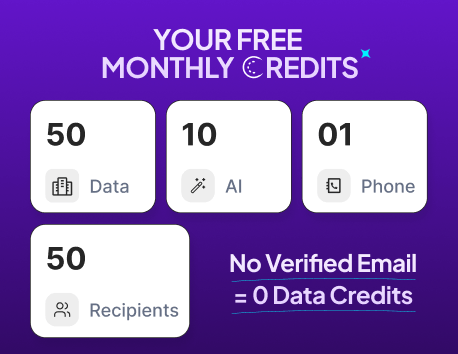
- Free — $0/month: 50 data credits, 10 AI credits, 3 AI workflows, 3 mailboxes, and 50 recipients per month.
- Pro — $34/month: 10,000 data credits, 500 AI credits, 50 workflows, 25 mailboxes, and 5,000 recipients per month.
- Max — $79/month: 25,000 data credits, 1,000 AI credits, unlimited workflows and recipients, and 50 mailboxes.
- Enterprise — starts at $499/month: Designed for larger teams with higher-volume and custom requirements.
Oppora also separates its usage into different credit pools. Data credits cover actions such as finding emails, verifying emails, and enrichment, while AI credits cover activities such as AI personalization, AI replies, scoring, and workflow agents. Recipient credits are used when you contact unique recipients.
Key Features:
- Email finding, verification, and enrichment
- LinkedIn + email outreach in the same platform
- 4 CRM integrations: HubSpot, Salesforce, Pipedrive, and Zoho
- 2 API access options: REST API and MCP
- AI reply handling for automated prospect conversations
- AI-powered prospecting and sales workflows
- Email warmup + mailbox rotation across up to 50 mailboxes
Best for: B2B teams that want to combine email appending or email finding with prospecting, enrichment, and outbound outreach.
Pros:
- Combines data discovery and outbound outreach in one platform
- More useful than a traditional append-only service when you need to act on the data immediately
- Separate credits make it easier to control different types of usage
- Paid plans support substantial contact, enrichment, and outreach volume
- Includes AI-powered workflows and reply automation
- Supports API-based workflows for more advanced use cases
Cons:
- Higher-volume usage requires a paid plan or additional credits
- Only phone number finder & verifier. No dedicate cold calling outreach flow.
2. Apollo.io

Apollo is a broader alternative to Woodpecker because you can combine B2B prospecting, contact data, enrichment, sequencing, and sales engagement in one platform.
Instead of starting with an existing prospect list and only automating follow-ups, you can search for companies and decision-makers, enrich their records, and then move them into outbound sequences.
Apollo currently offers a large contact and company database, AI research, enrichment, sequencing, intent data, and API access. Its pricing is based on seats and credits, which makes it particularly useful if you want prospecting and outreach under one subscription.
Pricing: Apollo currently offers four main plans:
- Free — $0/month: 900 credits per seat/year, granted monthly
- Basic — $49/user/month: 30,000 credits per seat/year
- Professional — $79/user/month: 48,000 credits per seat/year
- Organization — $119/user/month: 72,000 credits per seat/year, with a 3-seat minimum
Key Features:
- 230M+ contacts in Apollo's database
- 65M+ companies in its database
- 100 CRM enrichment records/month
- API access for enrichment and prospecting workflows
Best for: Sales teams that want prospecting, enrichment, and outbound sequences in one platform.
Pros:
- Combines prospecting and outreach
- Large B2B contact database
- Strong enrichment and intent data
- AI research and lead scoring
- Useful for larger sales teams
Cons:
- Credit usage can become difficult to predict
- More sales-intelligence features than you need for simple cold-email sequencing
- Higher-tier features can become expensive for larger teams
3. Instantly

Instantly is built around high-volume cold email, making it a strong Woodpecker alternative when your main priority is sending more campaigns across multiple mailboxes.
You can connect multiple sending accounts, warm them up, run campaigns, and add lead discovery and AI features as your workflow grows.
Pricing: Instantly's current Email Outreach plans start at $47/month, while Hyper Growth costs $97/month. Higher-volume options are also available.
Key Features:
- 450M+ B2B leads
- Unlimited email accounts
- Unlimited email warmup
- 13 lead-search filters
- 5+ providers used for waterfall work-email enrichment
- 5 major LLMs available for AI workflows
- 100+ community AI templates
Best for: Teams that prioritize high-volume cold email and multiple sending accounts.
Pros:
- High email-sending capacity
- Unlimited email accounts
- Built-in warmup
- Large B2B lead database
- Strong infrastructure for scaling cold email
Cons:
- Lead and AI features are split into additional credit plans
- Less focused on traditional sales-database workflows than Apollo
- High-volume users need to manage several usage limits
4. Smartlead

Smartlead is another strong option if you want to scale cold email across many mailboxes without being restricted to a single sending account.
Its pricing is structured around contacts, email volume, and verified prospect emails, so you can compare capacity more directly with your expected outbound volume.
Pricing: Smartlead currently starts at $39/month for Base, with Pro at $94/month, Unlimited Smart at $174/month, and Unlimited Prime at $379/month.
Key Features:
- Unlimited email accounts
- API and webhooks
- Email warmup and sender rotation
- CRM access
- Email verification options
Best for: Agencies and sales teams managing high-volume outbound across multiple mailboxes.
Pros:
- High sending limits
- Designed for multiple mailboxes
- Strong scaling capabilities
- API and webhook support
- Good fit for agencies
Cons:
- More technical than simpler cold-email platforms
- Data features are less central than in Apollo
- Additional infrastructure features can increase total cost
5. Lemlist

Lemlist is a good Woodpecker alternative when personalization matters as much as sending volume.
Instead of treating every prospect as another row in a sequence, you can combine email, LinkedIn, phone, and other channels while adding personalization to your campaigns.
Lemlist currently offers a 650M+ leads database, email and phone finding, AI agents, warmup, CRM integrations, and API access.
Pricing: The Email plan starts at $55/month when billed annually, while the Multichannel plan starts at $87/user/month annually.
Key Features:
- Unlimited email senders
- Unlimited contacts
- 5 senders/user on the Multichannel plan
- Unlimited emails and messages on Multichannel
- Email + phone number finder
- LinkedIn automation
- SMS automation
- WhatsApp automation add-on
- Built-in call dialer
- AI agents
- MCP access
- CRM integrations and API
- Email warmup and deliverability tools
Best for: Teams that want personalized multichannel outreach rather than email-only sequencing.
Pros:
- Strong personalization
- Multichannel outreach
- Large prospect database
- AI agents
- Built-in deliverability tools
Cons:
- More expensive than basic email sequencers
- Multichannel features can increase the overall cost
- May be excessive for simple cold-email campaigns
Suggested Reading:
Apollo.io vs. Oppora.ai: The Best AI Sales Automation Platform for Smarter Selling6. Snov.io

Snov.io works well if you want to combine lead generation, email finding, verification, and outreach without stitching together several separate tools.
You can search for prospects, find and verify emails, create campaigns, and add LinkedIn automation when needed.
Pricing: Snov.io's paid plans start at $39/month, while Pro S starts at $99/month. Higher Pro plans are available at $189, $369, and $738/month.
Key Features:
- $69/month per LinkedIn automation slot
- MCP access for external AI assistants
Best for: Small and mid-sized teams that need lead generation plus email outreach.
Pros:
- Combines email finding and outreach
- Credit-based prospecting
- Multichannel campaigns
- Unlimited follow-ups
- MCP access
Cons:
- LinkedIn automation costs extra
- Higher-volume prospecting requires larger plans
- Less focused on pure sending infrastructure than Smartlead or Instantly
7. Reply.io

Reply.io is a strong Woodpecker alternative if you want to move beyond email and build multichannel sales sequences.
You can combine email, LinkedIn, calls, SMS, and WhatsApp-style workflows depending on the plan you choose.
Pricing: Email Volume starts at $49/user/month annually for 1,000 active contacts. The Multichannel plan starts at $89/user/month annually.
Key Features:
- Unlimited emails
- Unlimited email mailboxes subject to fair use
- 1B B2B contacts available through live data
- Up to 200 website-visitor reveals/month
- 10 mailboxes/user on Multichannel
Best for: Sales teams that need email, LinkedIn, calls, and SMS in one outreach workflow.
Pros:
- Strong multichannel capabilities
- Unlimited email sending
- Large B2B data source
- Built-in warmup
- AI and automation features
Cons:
- Add-ons can increase the total cost
- More complex than email-only tools
- Pricing changes based on active contacts and channels
8. Saleshandy

Saleshandy is a practical Woodpecker alternative when you want straightforward cold email automation combined with a built-in B2B database.
Its current platform also goes beyond basic email sequencing with multichannel outreach, waterfall enrichment, email verification, and prospect search.
Pricing: Starter costs $34/month annually, Pro costs $76/month annually, and Scale costs $149/month annually.
Key Features:
- 852M+ B2B contacts
- 42M+ company profiles
- 9 providers in its waterfall enrichment system
- Unlimited email accounts
- 5 CRM /integration platforms listed: Salesforce, HubSpot, Pipedrive, Zoho, and Zapier
Best for: Teams looking for an affordable Woodpecker alternative with both cold email and B2B lead generation.
Pros:
- Competitive starting price
- Large B2B database
- High email limits
- Unlimited sending accounts
- Waterfall enrichment
- Multichannel sequences
Cons:
- The number of features can make the platform feel broader than Woodpecker
- Credits reset by billing cycle
- Some advanced team features require higher plans
9. Clay

Clay is a different type of Woodpecker alternative.
Rather than functioning primarily as an email sequencer, it focuses on building sophisticated prospecting and enrichment workflows using multiple data providers, AI research, and automation.
That makes it particularly useful when your biggest challenge is finding and enriching the right prospects before outreach.
Pricing: Clay has a Free plan, while the Launch plan starts at $167/month on the current pricing page.
Key Features:
- Multi-provider data waterfalls
- AI web research through Claygent
- Custom data enrichment
- API integrations
- CRM and workflow automation
Best for: RevOps teams and growth teams that need advanced lead research and enrichment before outreach.
Pros:
- Extremely flexible enrichment workflows
- Multiple data providers
- Powerful AI research
- Useful for advanced prospecting
- Strong automation capabilities
Cons:
- Not a direct replacement for Woodpecker's simple email sequencing
- Pricing is based on actions and data credits
- Can require more technical setup
- Better suited to advanced workflows than simple cold email
10. Mailshake

Mailshake is one of the closer Woodpecker alternatives if you want a straightforward email outreach platform without moving into a much larger sales-intelligence system.
It focuses on email automation, sequences, warmup, verification, personalization, and higher-tier multichannel sales engagement.
Pricing: Mailshake starts at $29/month, while Email Outreach costs $49/month and Sales Engagement costs $99/month. Annual billing lowers these to $25, $45, and $85/month respectively.
Key Features:
- Email warmup
- Unlimited campaigns
- Email verification
- A/B testing
- AI email writing
- Salesforce, Pipedrive, and HubSpot integrations
- 1,000+ Zapier integrations
Best for: Founders, freelancers, and small sales teams that want simple cold email automation.
Pros:
- Easy to understand
- Low starting price
- Unlimited contacts
- Unlimited warmup
- AI email writing
- CRM integrations on higher plans
Cons:
- Lower sending capacity on Starter
- Prospecting database is not as extensive as Apollo or Saleshandy
- Advanced multichannel features require the higher-tier plan
Conclusion
Woodpecker remains an option for teams that primarily need cold email campaigns, follow-ups, and basic outreach automation. However, the alternatives covered in this guide offer different approaches depending on how you manage your outbound process.
Some platforms focus more on prospecting and lead databases, while others are built around email volume, personalization, multichannel outreach, mailbox management, or data enrichment.
Your choice will ultimately depend on factors such as:
- The size of your prospecting needs
- The channels you want to use
- How much automation you need
- Your CRM and other integrations
- Your monthly outreach volume
- Your budget and team size
Before switching from Woodpecker, compare these factors with what each platform actually provides. A tool that works well for a high-volume cold email campaign may not be the right fit for a team that needs deeper prospecting or multichannel capabilities.
The best Woodpecker alternative is therefore the one that matches your current workflow, outreach goals, and budget rather than simply having the most features.
Frequently Asked Questions
What should you compare before switching from Woodpecker?
Look beyond the number of emails you can send. Compare lead generation, contact data, email verification, personalization, automation, integrations, multichannel capabilities, mailbox management, and overall pricing.
What if you only need email sequencing?
If email sequencing is your primary requirement, switching may not be necessary. Woodpecker can remain suitable for a focused email outreach workflow. Alternatives become more relevant when you need additional prospecting, channels, automation, or sales workflow capabilities.
Summarize with AI
Share