ICP vs. Target Market: The Step-by-Step B2B ICP Framework
Adam Hossain
Published October 25, 2026
8 min
Complete Agentic Email Outreach
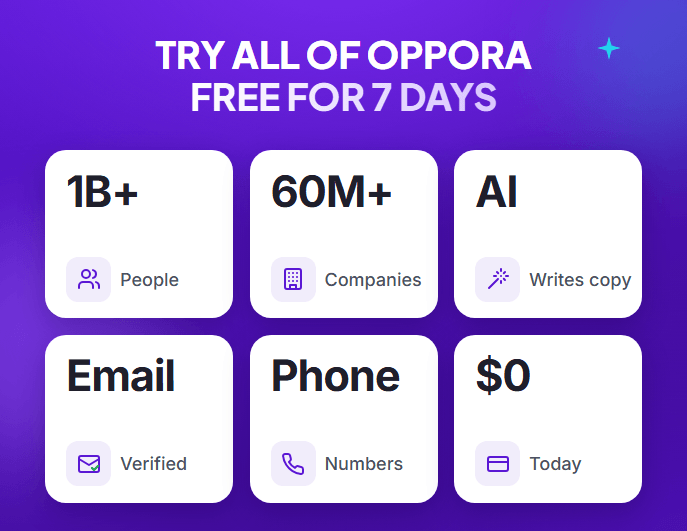
AI agents find and enrich prospects, personalize emails, follow up, and handle replies with your meeting link.
Start Your 7-Day Free Trial
Ever sent a hundred outreach emails and gotten almost no replies? Usually the problem isn’t your message. It’s who you’re sending it to.
Many teams use “target market” and “ideal customer profile” as if they mean the same thing. They don’t.
A target market is the broader group you serve. An ICP narrows that group down to the companies most likely to buy and stay.
In this guide, you’ll learn:
- The difference between a target market and an ICP
- Building your ICP step by step
- Practical criteria and how to validate them well
- Applying your ICP to real-world prospecting
Ideal Customer Profile vs Target Market: What’s the Difference?
Before you build anything, separate two terms people mix up all the time. A target market is the broad group you can serve. An ICP is the set of companies inside that group most likely to buy, succeed, and stay.
Take a hypothetical sales software provider, Pipeline Co. Its target market is US B2B SaaS companies. Its ICP is the smaller group of those companies that run outbound teams and struggle with prospecting.
Target Audience vs ICP: Where Buyer Personas Fit
The ICP describes suitable companies. The target audience is who your campaigns reach, and buyer personas describe the individuals inside those companies.
Two people at the same qualifying company often need different messages. At Pipeline Co., the buying committee might include:
- A VP of Sales focused on pipeline growth and rep ramp-up
- A RevOps leader focused on clean data and stack compatibility
Salesforce’s 2024 State of Sales data found 59% of B2B buyers say reps don’t take time to understand their challenges. Speaking to each role’s priorities is how you avoid that gap.
From a Broad Market to a Best-Fit Company
“US B2B SaaS companies” is a useful starting point, but it’s still too wide. Pipeline Co. narrows it to firms with outbound teams that have a prospecting problem its software solves.
Belonging to the market doesn’t guarantee fit. A 2025 Gartner survey found 73% of B2B buyers actively avoid suppliers sending irrelevant outreach.
Ideal Customer Profile vs Target Market: Build Your B2B ICP Framework
Now that you know the difference, the next question is how to define your ICP. You can do it in three connected steps: set your market boundaries, research how customers actually perform, and turn those findings into qualification rules.
The result is a practical profile with four parts:
- Requirements: what a company must have to qualify
- Preferences: traits that make an account a stronger priority
- Exclusions: conditions that rule an account out
- Evidence sources: where each rule came from
Keeping these in one document helps sales and marketing qualify accounts the same way.
Step 1: Establish Your Target Market Boundaries
Start by defining the industries, locations, business models, and problems your solution can realistically serve. Be honest about the limits, since a broad boundary makes every later step harder.
A clear market statement looks like this: “We serve US B2B SaaS companies that use outbound sales to acquire customers.”
Step 2: Research Successful, Churned, and Lost Accounts
Compare adoption, retention, sales cycles, purchase triggers, and support demands across your customers. Then interview them and review why deals were lost, since losses often reveal fit problems that won wins hide.
Customer conversations also expose needs buyers rarely volunteer. Salesforce’s 2024 State of Sales data found 59% of buyers say reps don’t take time to understand their unique challenges, so discovery is where you learn what really matters.
Step 3: Define Requirements, Preferences, and Exclusions
Turn recurring evidence into rules and record the reasoning behind each one::
- Must-haves: conditions every qualifying account meets
- Preferences: traits that make an account worth prioritizing
- Exclusions: conditions that disqualify an account
Keep durable fit separate from timing. An essential integration determines eligibility, while recent funding or hiring signals help you decide who to contact first.
Ideal Customer Profile vs Target Market: Practical ICP Criteria Examples
The framework becomes useful once each rule is something you can check against an account. The thresholds below are illustrative, so validate them against your own customer evidence rather than adopting them as is.
Document Criteria in a Qualification Table
The table connects each criterion with a sample rule, an evidence source, and a decision. Mark anything you can’t confirm as “research needed.” Don’t count assumptions about a prospect’s problems or technical needs as matches.
Suggested Reading:
Technographic Data vs Firmographic Data: Key Differences ExplainedCompare a Qualified Account With a Poor-Fit Account
Take two hypothetical companies. Both sell B2B SaaS in the US, but only one passes the must-haves. The other has the right market profile yet needs an integration the product doesn’t support.
Work through each account in the same order:
- Confirm every must-have, and disqualify the account if one fails
- Investigate unknowns like the business problem before counting them
- Use preferences such as company size to rank the eligible accounts
Market fit alone isn’t enough. A 2025 Gartner survey found 73% of B2B buyers avoid suppliers sending irrelevant outreach, so qualifying carefully protects your reputation too.
Ideal Customer Profile vs Target Market: Validate Your Targeting Results
Writing a good ICP isn’t enough. You also need to confirm that ICP-selected accounts produce stronger commercial results than a broader group of eligible companies. A small pilot can show you whether your criteria hold up.
Before you launch, define the setup:
- Comparison groups: high-fit accounts versus a broader eligible group
- Qualified-opportunity criteria: what counts as a real opportunity
- Sample sizes and observation period: how many accounts, and for how long
Suggested Reading:
ABM Segmentation: How to Prioritize High-Value AccountsTest High-Fit Accounts Against a Broader Market Group
Keep the offer, channels, follow-ups, and measurement period the same for both groups. Both must also meet your essential product and service requirements, or the test compares unlike things.
Say 12 qualified opportunities come from 100 high-fit accounts, a 12% rate. Five come from 100 broader-market accounts, a 5% rate. That gap is promising, but it doesn’t prove the ICP caused it or that the difference is statistically significant.
Refine Your ICP Using Sales and Customer Outcomes
Start with qualified opportunities, then add win rate, sales cycle, retention, and service demands as enough data builds up. Assign one owner and set a review date so the ICP doesn’t drift.
Update your criteria when repeated evidence points to poor-fit accounts or a more valuable segment.
How to Apply Your B2B ICP With Oppora

Oppora is an AI platform for outbound sales and lead generation. It analyzes your business information, drafts a targeting profile, and helps you find companies that match it. Its ICP guide walks through that process.
That draft is a useful starting point, but it still needs your customer evidence behind it.
Generate and Review Your Targeting Profile
The workflow has three steps:
- Enter your website, LinkedIn company page, or a plain description of your business
- Run the AI analysis and review the generated profile
- Edit anything that’s off, then save
Next, check the profile against your qualification table. Confirm the industries, company sizes, locations, technologies, and buyer personas, and mark anything you can’t verify as “research needed.”
Find Matching Companies and Relevant Buying Roles
Use the reviewed profile to find companies. Oppora suggests search ideas based on your ICP, so inspect a small sample against your must-haves and exclusions before expanding the list.
Then look at the buyer personas and intent signals, such as funding, hiring, or growth activity.
Those signals help you decide which accounts to contact now, so keep them separate from your durable fit criteria.
Suggested Reading:
Find Company Email Addresses with Oppora (50 Free Verified Emails/Month)Conclusion: Turn Your Target Market Into a Testable ICP
You started with a broad market and ended with a profile you can test. Along the way, you set market boundaries, studied customer evidence, documented qualification rules, applied them to accounts, and checked the results against outcomes.
Your next step is simple: complete the qualification table and review an initial account sample before you scale outreach. If you’d rather not build that from scratch, Oppora can draft a starting profile you can test against the same rules.
Frequently Asked Questions (FAQs)
Can a B2B company have more than one ideal customer profile?
Yes. Separate ICPs can make sense when you serve segments with different problems, buying processes, or product requirements. Create distinct profiles only when those differences affect qualification or outreach. Avoid creating multiple ICPs for minor variations that do not change how you sell.
How can a startup define an ICP without existing customers?
Start with a provisional profile based on the problem your product solves, its capabilities, and interviews with potential buyers. Use competitor reviews and industry research to identify hypotheses. Refine the profile through discovery conversations and early customer outcomes rather than treating initial assumptions as established facts.
Is an ideal customer profile the same as a total addressable market?
No. Total addressable market estimates the overall revenue opportunity for a defined product or service. An ICP describes the characteristics of companies best suited to become customers. Your target market identifies the segment you choose to serve, while your ICP helps prioritize companies within it.
Should you reject inbound leads that fall outside your ICP?
Not automatically. An inbound lead outside your ICP may still have a suitable problem, budget, and technical requirements. Evaluate the opportunity before rejecting it. Record exceptions separately so an unusual deal does not immediately change your profile, but repeated successful exceptions can inform future revisions.
Who should own the ICP within a B2B company?
Assign one accountable owner, often in revenue operations, sales, or marketing, while involving customer success and product teams. Sales contributes deal evidence, marketing contributes audience insights, and customer success contributes retention and adoption findings. Shared input helps prevent the ICP from reflecting only one department’s priorities.
Summarize with AI
Share