What Is a Sales Qualified Lead and How Do You Identify One
Adam Hossain
Published October 4, 2026
8 min

Complete Agentic Email Outreach
AI agents find and enrich prospects, personalize emails, follow up, handle replies, and book meetings automatically.
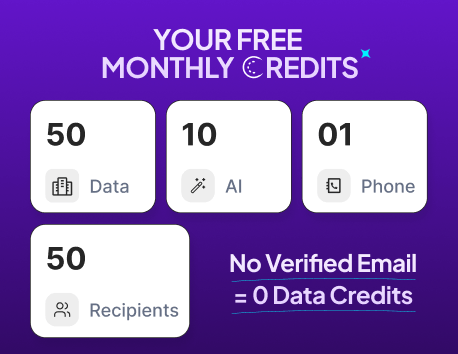
Claim Your FREE Credits
Your pipeline looks full, but most of those leads go nowhere.
An email open or ebook download feels like interest. It rarely means someone is ready to buy.
So what is a sales qualified lead? It's a prospect who fits your customer profile, shows real buying intent, and has enough evidence to justify a sales conversation.
Once you can spot an SQL sales qualified lead, you stop chasing every click.
Here's what this guide covers:
- How to define an SQL
- The Fit, Intent, and Timing check
- First-call qualifying questions
- Common mistakes and handoff rules
- Finding more leads with Oppora
What Is a Sales Qualified Lead (SQL)?
Clicks don't equal buyers. The rule: ICP Fit + Buying Intent + Sales Qualification = SQL
Fit or engagement alone isn't enough. An SQL sits late in the journey: Lead → MQL → SAL (optional) → SQL → Opportunity → Customer. Only about 13% of MQLs typically convert.
Suggested Reading:
How to Generate Inbound Sales Leads Your Team Can CloseSales Qualified Lead Definition
A sales qualified lead definition comes down to two checks:
- The prospect fits the type of customer you can serve
- Sales has evidence of a real problem, purchase interest, or active buying situation
Picture a VP of Sales at a 30-person SaaS company asking about pricing and implementation.
That's much closer to an SQL than someone who only downloaded an ebook.
What Is a Qualified Lead in Sales? SQL vs MQL, SAL, and Opportunity
Here's how each stage differs:
What an SQL Looks Like in Practice
A product lead at a target SaaS account visits your pricing page and replies to your email about integrations. After discovery, they confirm a real problem. That's a qualified sales lead.
Now take someone with a great company and title but no identified problem, vague interest, no timeline, and no real conversation. That's not an SQL yet.
How to Identify a Sales Qualified Lead: Fit, Intent, and Timing
So what are sales qualified leads in practice? They're prospects that pass three checks: Fit → Intent → Timing.
Salesforce's State of Sales report finds reps spend only about 30% of their week selling. A quick check before discovery keeps that time on leads worth chasing.
Fit: Does the Lead Match Your ICP?
Start with who they are, not what they clicked. A sales qualified lead should match your ICP on:
- Industry and company size
- Geography and use case
- Department, role, and seniority
Take two demo requests. One comes from an unsupported market. The other comes from a decision-maker at a target account actively solving the problem you fix.
The second gets your attention first.
Suggested Reading:
How to Use AI-Powered ICP Fit Scoring to Rank Your Lead ListIntent: Are They Taking Buying Actions?
Fit tells you who to watch. Behavior tells you who's ready.
Prioritize combinations of strong signals, not a single action. Oppora pulls email and LinkedIn replies into one place, so you spot stronger intent earlier.
Timing: Run a Quick BANT Check
Intent shows interest, but timing decides priority. BANT covers Budget, Authority, Need, and Timeline.
Use it to organize evidence, not as a pass-or-fail checklist. Compare the two ends:
- Ready: real need, access to decision-makers, an active project this quarter
- Not yet: general interest, unclear problem, no timeline
Prioritize the first group and nurture the second until their situation changes.
Questions to Qualify a Sales Lead on the First Call
Once a lead passes the Fit, Intent, and Timing checks, the first call confirms it.
Ask short, direct questions and listen for evidence of a problem, urgency, and buying process.
Good answers sound specific; vague ones signal an unready lead.
5 Qualifying Questions and What a Good Answer Sounds Like
- What problem are you trying to solve? Good: a specific, costly problem. Red flag: "just exploring."
- What are you doing today? Good: a manual process eating time. Red flag: nothing in place.
- Why does it matter now? Good: "It's costing us hours weekly." Red flag: "Just researching."
- What does the buying process look like? Good: named people and steps. Red flag: "No idea yet."
- When do you want a solution in place? Good: this quarter, budget set aside. Red flag: no date.
Budget and resources usually surface naturally in that last answer.
SQL vs Not an SQL: A Side-by-Side Example
Now compare two leads who both match your ICP.
Don't reject Lead A for lacking final authority. Gartner's B2B buying journey research shows a typical complex B2B buying group includes six to ten decision-makers. Ask who from finance, IT, or procurement needs to join.
That's how you separate qualified sales leads from polite interest.
Common Sales Qualified Lead Mistakes and What to Do After Qualification
Most SQL problems start at the qualification step, so let's fix those first. Three common mistakes quietly lower lead quality. After that, we'll cover what happens once a lead qualifies, from ownership to response time to the next pipeline stage.
3 Common SQL Qualification Mistakes
- Treating engagement as qualification. A click, webinar signup, or pricing-page visit signals interest. None proves fit, need, or readiness alone.
- Using vague criteria. One rep wants budget and timeline. Another marks every demo request as a sales qualified lead. Define the minimum evidence your team requires.
- Chasing volume over quality. Log why sales accepts or rejects leads: poor fit, no need, timing, duplicate account, or no decision path.
A Simple Sales Handoff Rule
A qualified lead still goes cold without a clean handoff. Pass the evidence, not just the contact record:
- Fit, source, and intent signals
- Pain point and stakeholder role
- Timing and previous conversations
- Next action
Then assign one owner and set a response-time rule. Harvard Business Review research found that contacting a lead within an hour made it nearly seven times likelier to qualify than waiting even an hour longer.
After discovery, move the lead to an opportunity or back into nurture.
How to Find More Qualified Sales Leads With Oppora

Once you know what to look for, the next question is where sales qualified leads come from. They arrive through inbound interest or outbound prospecting.
Oppora fits the outbound side of that workflow: find → enrich → verify → engage → spot meaningful replies → qualify. Your team still makes the qualification call.
Inbound Sources: Demo Requests, Pricing Pages, and Referrals
Some inbound activity deserves a faster review:
- Demo requests and product questions
- Referral introductions
- Active trials
- Repeated pricing or product page visits
A source alone doesn't make an SQL. Sales still confirms fit, problem, buying process, and timing first.
Outbound: Build ICP Lists and Run Multichannel Sequences
Outbound gives you control over who enters your pipeline. The workflow runs in order:
- Define your ICP
- Find matching prospects
- Enrich and verify contact details
- Run email and LinkedIn outreach
- Prioritize meaningful replies
- Qualify interested prospects
Oppora covers the middle steps. You can search 700M+ contacts, use waterfall enrichment and verified emails, and run email and LinkedIn sequences in one workflow.
Replies from all your inboxes land in one shared view, so responsive prospects move into qualification faster.
Suggested Reading:
How to Combine LinkedIn Outreach with Email CampaignsFinal Thoughts on Identifying Sales Qualified Leads
Spotting a sales qualified lead comes down to one decision path. Does the prospect fit? Are there meaningful buying signals? Is there a real need and realistic timing? Does discovery justify direct sales attention?
If every answer is yes, you have a lead worth your team's time.
Evidence qualifies a lead, not engagement alone.
But evidence needs the right people in front of you. If your team wants a more structured way to find ICP-matched prospects, enrich and verify contact data, and run email and LinkedIn outreach before qualification, you can start exploring that workflow with Oppora.
Frequently Asked Questions (FAQs)
What is the difference between an SQL and a product qualified lead (PQL)?
A PQL qualifies through meaningful product usage, usually during a free trial or on a freemium plan. An SQL qualifies through evidence from a sales conversation. Many SaaS teams treat a PQL as a strong signal, then confirm fit, need, and timing in discovery before calling it an SQL.
Can lead scoring replace manual SQL qualification?
No. Lead scoring ranks leads by fit and behavior, so reps know who to review first. It can't confirm a real problem, a buying process, or a timeline. Use scores to prioritize, then let the sales conversation provide the evidence that makes someone an SQL.
Who should decide when a lead becomes an SQL?
Sales should make the final call, since reps hear the problem, timeline, and stakeholders firsthand. Marketing can recommend leads, but a shared written definition keeps both teams aligned. Agree on the minimum evidence in advance, ideally in a service-level agreement between marketing and sales.
What should you do if an SQL stops responding?
Follow up across email and LinkedIn with something useful, like an answer to a question they asked earlier. If there's still no reply after several attempts, move them to nurture instead of deleting them. Record the reason so you can revisit when their timing changes.
How many qualified sales leads should become opportunities?
There's no universal number, because conversion varies by industry, deal size, and lead source. Track your own SQL-to-opportunity rate over time and compare it by source. A sudden drop usually points to loose criteria, slow follow-up, or poor handoff context.
Summarize with AI
Share