10 Best B2B Prospect Research Tools to Find Better Leads
Adam Hossain
Published October 11, 2026
20 min

Complete Agentic Email Outreach
AI agents find and enrich prospects, personalize emails, follow up, and handle replies with your meeting link.
Claim Your FREE Credits
You found the contact. Name, title, email, all there.
But that doesn't tell you if the account is a fit, or why they'd want to hear from you right now.
That's exactly the gap good prospect research tools help you fill.
Salesforce research found reps spend 70% of their time on non-selling tasks. Chasing poor-fit leads only adds to that.
In this guide, you'll get:
- A quick comparison of 10 B2B prospect research tools
- Practical reviews with pricing and use cases
- A simple framework to evaluate tools before you buy
- A step-by-step workflow to turn research into an outreach-ready list
What Prospect Research Tools Do for B2B Sales
So what do these tools do? Prospect research tools help you understand target companies, the people inside them, and what's changing in their business.
That context helps you decide who's worth a closer look, because a contact record alone doesn't prove there's a sales opportunity.
Contact Discovery vs. Prospect Research
Contact discovery gives you the basics: name, role, email, and phone number.
Prospect research adds the context that makes someone worth contacting now.
Here's the difference in practice:
- Contact record: Sales Director
- Research finding: Sales Director at a company hiring five new reps this quarter
The second gives you a real reason to reach out.
That matters: Gartner found 73% of B2B buyers steer clear of suppliers whose outreach feels irrelevant.
Suggested Reading:
How to Scale Contact Discovery for B2B Sales Without Breaking BudgetDifferent Tools Support Different Research Needs
Not every tool researches the same thing. Most fall into one of four categories:
- Company intelligence: funding, growth, hiring, and firmographics
- Stakeholder discovery: who influences the decision inside an account
- Contact enrichment: verified emails, phone numbers, and missing CRM fields
- Custom research: specific signals pulled from multiple sources
Many teams combine two or more tools. The comparison table below shows where each tool fits.
How to Evaluate Prospect Research Tools Before Buying
Now that you know the options, the next step is testing them. Run every shortlisted tool through the same sample, requirements, and checks.
That matters, since Salesforce found only 35% of sales professionals completely trust their organization's data. Vendor demos don't replace your own test.
Set Requirements and Test 100–200 Prospects
Before any trial, define what a usable record looks like for you:
- Target industries and countries
- Relevant roles and seniority
- Required fields, like verified email or direct phone
Then run the same 100–200 prospects through each tool.
Log missing fields, wrong matches, outdated roles, and claims without a source.
Measure Coverage and Research Quality
Score each tool with the same scorecard:
Check email status with an independent verifier, and keep catch-all results separate.
Treat the numbers as your own results. If 72 of 100 prospects have verified emails, that's 72% coverage in your sample, not a vendor-wide accuracy rate.
Check Total Cost and CRM Handoffs
Subscription price is only part of the cost. Add seats, credits, verification, and review time.
If you spend $120 and get 60 usable records, you're paying $2 per usable prospect.
Then test the CRM handoff: field mapping, duplicates, exports, and whether research evidence transfers.
Time how long each brief takes.
Prospect Research Tools — Quick Comparison Table
Now that you know the four research categories, here's how the ten tools compare.
Use this table to narrow your shortlist before you book demos or start trials.
The fit labels are editorial recommendations, not test results, so validate each one in your own trial.
10 Best Prospect Research Tools for B2B Teams
The table gives you a quick shortlist. Now let's look closer at each tool.
Every review covers the same four areas: key features, a practical use case, pricing and best fit, and pros and cons.
Vendor details are claims, so verify them in your trial.
1. Oppora

Oppora is an AI sales automation platform that connects prospect discovery, enrichment, verification, and outreach in one workflow.
For a small team, researched prospects become sequence-ready without exporting lists.
Key Features and Data Coverage
It lets you:
- Search 1B+ people and 60M+ companies with ICP and firmographic filters
- Spot buying signals like funding, hiring, and job changes
- Find decision-makers across your target accounts
- Research each lead with AI columns that cite their sources
- Find emails and phones through waterfall sourcing, then verify emails in real time
- Clean, deduplicate, and score imported records
- Capture prospects from LinkedIn with a Chrome extension
- Combine email and LinkedIn outreach in one sequence: connection requests, messages, profile visits, likes, and comments
- Sync contacts, replies, meetings, and deals to the built-in CRM, HubSpot, or Zoho
Oppora reports 98% email accuracy, so validate that in your own market.
Practical Use Case and Workflow
Say you're targeting RevOps leaders at UK companies with 11–50 employees.
- Describe them in plain English
- Add a hiring or job-change signal
- Score the list and check AI findings against sources
- Find and verify emails for shortlisted people only
- Add them to a multichannel sequence
AI agents then handle replies and book meetings.
Pricing and Best Fit
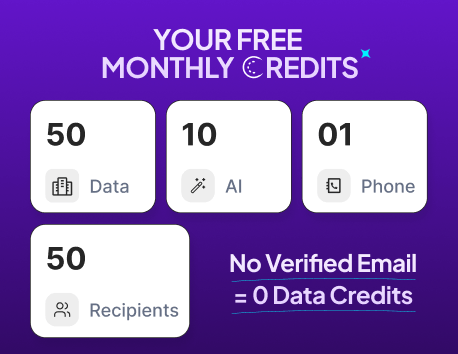
- Free: $0, with 50 data credits and 50 recipients
- Pro: $34/month, with 10,000 data credits and 5,000 recipients
- Max: $79/month, with 25,000 data credits, unlimited recipients, and one LinkedIn account
- Enterprise: from $499/month
Data, phone, and AI credits are separate, and lookups are charged only when found.
On other plans, LinkedIn steps cost $19/month per account.
It suits small and mid-size teams that want research, enrichment, and outreach in one platform.
Pros and Cons
Oppora holds a 4.5/5 rating on G2. Reviewers mention:
Pros:
- Research, contact discovery, and outreach in one place
- Accurate, verified data that keeps bounce rates low
- Quick setup with responsive support
Cons:
- Credits run out fast on free and entry plans
- Workflow setup can feel overwhelming at first
- Limited self-serve docs
2. LinkedIn Sales Navigator

Sales Navigator helps you find the right people inside an account and see how you're connected to them.
Its strength is stakeholder context and warm introduction paths, not contact data.
Key Features and Data Coverage
Core research tools include:
- 50+ lead and account filters, including seniority, function, and company headcount
- Profiles showing role, tenure, and career history
- TeamLink on Advanced, showing teammates connected to a prospect
- Saved searches with alerts for job changes and company news
- Buyer intent signals on Advanced, based on engagement with your company
Profile details help you map seniority and team structure across an account.
Practical Use Case and Workflow
Say you're selling IT security software to a 500-person logistics company.
- Find the account with industry and headcount filters
- Search inside it for an IT leader and an operations evaluator
- Review each person's role, tenure, and recent activity
- Check for a shared connection who can introduce you
- Save them as leads
It doesn't provide verified emails or phones, so enrich saved leads with a tool like Oppora's Chrome extension.
Pricing and Best Fit
- Core: $119.99/month, or $89.99/month billed annually
- Advanced: $159.99/month, or $149.99/month billed annually, adding collaboration and reporting tools
- Advanced Plus: custom quote, with native CRM sync
Every tier includes 50 InMail credits a month, and prices vary by region.
A 30-day free trial is usually available on Core and Advanced.
It's best for account mapping, relationship-led prospecting, and finding stakeholders in complex deals.
Pros and Cons
It holds a 4.4/5 rating on G2. Users often highlight:
Pros:
- Precise filters for finding decision-makers
- Real-time alerts on job changes and company updates
- Team connections that open warm introductions
Cons:
- Expensive for small teams and startups
- Limited direct contact information
- Profiles can lag after job changes
- Full CRM sync only on the top tier
Suggested Reading:
11 Best LinkedIn Sales Navigator Alternatives (Free + Paid Tools)3. Apollo

Apollo combines a large B2B contact database with built-in sequences.
It's strong at contact discovery, but you still need research to find a real reason to reach out.
Key Features and Data Coverage
You get:
- 200M+ contacts with people and company search
- Filters for industry, headcount, revenue, location, and technologies used
- Buying intent, job postings, and headcount growth signals
- CRM enrichment and verified email status
- Sequences with email, calls, and LinkedIn tasks
For account fit, focus on industry, headcount, and tech stack. For contacts, check title, seniority, and department.
Practical Use Case and Workflow
Say you're building a shortlist of operations leaders at regional manufacturing companies.
- Filter by industry, region, and headcount
- Review each account's fit before revealing contacts
- Reveal emails for VPs and directors of operations
- Confirm current roles and check email status
- Add approved contacts to an Apollo sequence
Reviewing fit first keeps you from spending credits on the wrong accounts.
Pricing and Best Fit
Prices are per user, per month:
- Free: $0, with 10 export credits a month
- Basic: $49 billed annually or $59 monthly, with 1,000 export credits
- Professional: $79 annually or $99 monthly, with 2,000 export credits
- Organization: $119 annually or $149 monthly, with 4,000 export credits
Email, mobile, and export credits are tracked separately, and they expire each billing cycle.
It's best for teams that want contact discovery and sales engagement in one platform.
Pros and Cons
It holds a 4.7/5 rating on G2. Users often highlight:
Pros:
- Prospecting, contact data, and outreach in one place
- Powerful search filters for narrowing audiences
- Time saved on manual list building and follow-ups
Cons:
- Data quality varies by region, especially phone numbers
- Credits feel restrictive for high-volume prospecting
- A learning curve due to the number of features
- Costs climb as seats and usage grow
Suggested Reading:
5 Best Apollo.io Alternatives for B2B Lead Generation4. ZoomInfo

ZoomInfo is built for researching complex accounts, where several departments shape one buying decision.
What you can see depends heavily on the package you buy, so confirm inclusions before signing.
Key Features and Data Coverage
Core sales packages include:
- Company profiles with firmographics, technographics, and org charts
- Contact search with emails and direct dials
- Business event alerts, like leadership changes and new projects
- CRM enrichment and integrations
Higher tiers or add-ons unlock:
- Buyer intent data
- Website visitor identification
- Advanced search filters and larger credit allowances
Marketing, recruiting, and email verification tools are sold as separate products.
Practical Use Case and Workflow
Say you're researching a 5,000-person retailer where IT, operations, and procurement all weigh in.
- Review the company profile, tech stack, and recent business events
- Map stakeholders across IT, operations, and procurement with the org chart
- Check intent signals for related topics
- Enrich the account and contacts in your CRM
- Assign each stakeholder an owner and next action
Step 3 only works if your package includes intent data.
Pricing and Best Fit
ZoomInfo doesn't publish prices. Reported 2026 figures look like this:
- Professional: around $15,000/year, with about 5,000 credits
- Advanced: around 25,000–30,000/year, with about 10,000 credits and intent data
- Elite: around 36,000–40,000+/year
Contracts are annual, often with a three-seat minimum, and unused credits don't roll over.
It's best for larger teams with structured account research and dedicated sales operations support.
Pros and Cons
Its core sales platform holds a 4.5/5 rating on G2.
Pros:
- Deep account data across firmographics and tech stacks
- Strong CRM and marketing automation integrations
- AI that cuts manual lead research
- Wide stakeholder visibility through org charts
Cons:
- High annual commitment with no monthly plan
- Package complexity makes costs hard to compare
- Company and technographic data can be inaccurate
- AI outputs can be inconsistent
5. Cognism

Cognism suits teams where calling is a core part of prospecting.
Its standout is phone-verified mobile data, especially across the UK and Europe.
Key Features and Data Coverage
You get:
- Company and contact search with role, seniority, and location filters
- Direct dials and mobile numbers
- Diamond Data, with mobiles verified by phone
- Bombora-powered intent data and technographics
- A Chrome extension that works on LinkedIn
- Data enrichment for CRM and event lists
Coverage varies by country. Test a sample of numbers in each target market, and track how many actually connect.
Practical Use Case and Workflow
Say you're calling CFOs and finance directors at mid-size German manufacturers.
- Filter accounts by country, industry, and headcount
- Confirm each person still holds the role
- Prioritize Diamond-verified mobiles over switchboard numbers
- Push approved contacts to your CRM
- Add account-specific notes before each call
Check local do-not-call rules before the campaign starts.
Pricing and Best Fit
Cognism sells custom annual quotes. Reported 2026 figures:
- Entry tier: around $15,000/year platform fee plus about $1,500 per user
- Higher tier: around $25,000/year plus about $2,500 per user, adding Diamond Data and intent
Tier names have changed over time, so confirm what's included in your quote.
Usage typically follows a fair-use cap, and contracts are often scoped by region.
It integrates with Salesforce, HubSpot, and major sales engagement tools.
It's best for calling-focused teams selling into the UK and Europe that can commit to an annual contract.
Pros and Cons
It holds a 4.5/5 rating on G2. Users often highlight:
Pros:
- Accurate, phone-verified mobile numbers
- Strong data quality across the UK and Europe
- Easy CRM and Chrome extension workflows
Cons:
- Coverage thins outside Europe, especially APAC
- Export limits slow large list building
- High cost, with Diamond credits running out fast
- Revenue data can be off in some markets
6. Clay

Clay works like a spreadsheet that pulls from dozens of data providers and AI research steps.
You build the research process yourself, so quality depends on your providers, prompts, and logic.
Key Features and Data Coverage
You get:
- Waterfall enrichment that tries providers in sequence until one matches
- Claygent, an AI agent that researches websites and public pages
- Custom signals like job changes, hiring, and web intent
- Conditional logic, formulas, and AI columns for qualification
Coverage depends on which providers you connect and how well your prompts are written.
Practical Use Case and Workflow
Say you sell a Snowflake add-on and want companies that recently adopted it.
- Import a target account list
- Use Claygent to find evidence like job posts or case studies
- Find the data or analytics leader at each account
- Run an email waterfall with fallback providers
- Send only approved records to your CRM or sequencer
Spot-check AI findings against their sources before step 5.
Pricing and Best Fit
Clay changed its pricing in March 2026:
- Free: limited credits and up to 200 rows per table
- Launch: $185/month, or $167 billed annually, with 2,500 Data Credits and 15,000 Actions
- Growth: $495/month, or $446 annually, with 6,000 Data Credits plus CRM sync
- Enterprise: custom
Data Credits pay for provider data. Actions cover platform steps, even when you bring your own API keys.
All plans include unlimited seats.
It's best for teams with custom research needs and someone to maintain workflows.
Pros and Cons
It holds a 4.6/5 rating on G2. Users often highlight:
Pros:
- Waterfall enrichment that lifts match rates
- Flexible workflows without a dev team
- Useful AI research for summaries and signals
Cons:
- A steep learning curve
- Credits disappear fast at scale
- AI research can be outdated in niche markets
- Slow runs on large tables
Suggested Reading:
10 Best Clay Alternative & Competitors for AI Outreach & Lead Enrichment7. Crunchbase

Crunchbase helps you find companies through funding rounds, investors, acquisitions, and growth signals.
Treat it as account research, not as a source of contact data or confirmed buying intent.
Key Features and Data Coverage
You get:
- Company profiles with funding history, investors, and key people
- Filters for funding stage, date, industry, location, and headcount
- Acquisition, leadership change, and hiring updates
- "Similar companies" suggestions for finding lookalike accounts
- Saved searches, alerts, and a Chrome extension
A funding round shows budget may exist. It doesn't confirm a need for your product.
Profiles for smaller or non-US companies also need extra checks.
Practical Use Case and Workflow
Say you sell recruiting software and want Series A companies likely to hire fast.
- Filter for Series A rounds in the last 90 days
- Review round size and lead investors
- Read the announcement for hiring or expansion plans
- Keep only companies where growth connects to your product
- Find stakeholders and verified contacts in a separate tool
Funding is a timing clue, so pair it with a second signal like open roles.
Pricing and Best Fit
- Free: limited search and profile access, no exports
- Pro: $49/month billed annually or $99 monthly, with 2,000 export rows a month
- Business: from $199/month billed annually, with 5,000 export rows, predictions, and Salesforce and HubSpot sync
- API: custom pricing
Pro relies on CSV exports, so CRM sync means budgeting for Business.
It's best for teams that choose accounts around funding and growth events.
Pros and Cons
It holds a 4.4/5 rating on G2. Users often highlight:
Pros:
- Detailed funding, investor, and acquisition history
- Fast, flexible filters for targeted list building
- Lookalike discovery through similar companies
Cons:
- Outdated profiles for smaller and non-US companies
- Weak people and contact data
- Pricey for small teams, with export caps
- Funding events still need qualification
8. Lusha

Lusha is a contact-enrichment tool, not a full research platform.
It fits best after you've picked an account and stakeholder and need a working email or phone number.
Key Features and Data Coverage
You get:
- A Chrome extension that reveals contacts on LinkedIn and company websites
- Business emails, direct dials, and mobile numbers
- Basic company data like industry, headcount, and revenue
- Intent topics and job-change alerts
- AI-generated prospect lists based on your ICP
- Sync to Salesforce, HubSpot, and Pipedrive
In your target market, check email validity, whether numbers are direct or mobile, and company fields like headcount.
Practical Use Case and Workflow
Say your research flagged a new VP of Finance at a target account.
- Confirm the role on their LinkedIn profile
- Reveal email and phone through the extension
- Check the email status and whether the number is direct
- Push the contact to your CRM with your research notes attached
Keeping those notes means the rep sees why the contact matters, not just how to reach them.
Pricing and Best Fit
Monthly prices, about 25% less yearly:
- Free: $0, with 40 credits
- Starter: $49.90, with 400 credits
- Pro: $69.90, with 600 credits
- Premium: $399.90, with 3,400 credits
- Scale: custom
An email costs 1 credit, while a phone number can cost up to 10.
Plan names and allowances change often, so check Lusha's pricing page before buying.
It's best for reps who need a fast, simple enrichment step inside an existing research process.
Pros and Cons
It holds a 4.3/5 rating on G2. Users often highlight:
Pros:
- One-click reveals inside LinkedIn
- Fast and easy to use
- Smooth CRM sync and fast support
Cons:
- Limited research depth beyond contact details
- Credits drain fast on phone reveals
- Phone accuracy is strongest in North America
- Credit pricing is tough for startups
9. HubSpot

HubSpot's built-in data enrichment fills gaps in CRM records so reps can assess accounts faster.
Formerly Clearbit and later Breeze Intelligence, it now runs on HubSpot Credits.
Key Features and Data Coverage
You get:
- Company fields like industry, headcount, revenue, location, and tech stack
- Contact fields like job title, seniority, and social profiles
- Automatic enrichment for new records, or on demand
- Buyer intent based on website visits
- Smart properties that use AI to fill custom fields
This is record enrichment, not deep research. It won't map buying committees or verify direct dials.
Practical Use Case and Workflow
Say a demo request arrives with only a name, email, and company domain.
- Review which fields are missing
- Enrich the company and contact records
- Check enriched values against what the lead submitted
- Segment by industry and company size
- Assign an owner through a workflow
- Flag high-fit accounts for deeper research
Check that enrichment won't overwrite values your team already verified.
Pricing and Best Fit
Enrichment needs a paid HubSpot subscription. Monthly included credits:
- Starter: 500 credits
- Professional: 3,000 credits
- Enterprise: 5,000 credits
Data Hub and Customer Platform plans include more. Each enriched record uses 10 credits, and extra credits cost $10 per 1,000.
So a Starter account covers about 50 enriched records a month.
Credits are shared with other AI features, so plan usage carefully.
It's best for teams already running prospect records and sales workflows in HubSpot.
Pros and Cons
Sales Hub holds a 4.4/5 rating on G2.
Pros:
- Enrichment happens inside the CRM, with no manual transfers
- Shared context for the whole team
- Easy, user-friendly workflows and automation tools
Cons:
- Only works inside the HubSpot ecosystem
- Requires a paid subscription, with credits that run out
- Limited contact-level and direct-dial data
- No deep stakeholder or signal research
10. Seamless.AI

Seamless.AI, now rebranded as Seamless, finds business emails and phone numbers through a real-time search engine.
It's built for list building, so you'll still need account context before outreach.
Key Features and Data Coverage
You get:
- Contact search by title, industry, location, and company size
- Emails, direct dials, and mobile numbers
- Company details, including revenue and org charts
- A Chrome extension for LinkedIn and company websites
- Autopilot, which builds lists from your ICP in the background
- CRM sync with HubSpot and Salesforce
Confirm each person's company, current title, and which fields came back.
Practical Use Case and Workflow
Say you're targeting operations leaders at logistics companies with 200–1,000 employees.
- Search by title, industry, and employee range
- Review each company for fit
- Check that roles are current on LinkedIn
- Verify emails with a separate checker
- Remove duplicates already in your CRM
- Export only approved records
Step 4 matters: one G2 reviewer reported bounce rates of 20–30%.
Pricing and Best Fit
Seamless publishes little pricing. Reported 2026 figures:
- Free: a small credit allowance
- Basic: around $147/month billed annually, with 250 credits a month
- Pro: quote-based, about 79–299 per user, with 1,000 daily credits for teams of 5+ seats
- Enterprise: custom
Daily credits reset at midnight UTC and don't carry over.
Buyer intent, job changes, and AI writing are add-ons.
Contracts are usually annual and auto-renew, so note the cancellation terms.
It's best for reps whose main need is finding contact details fast.
Pros and Cons
It holds a 4.4/5 rating on G2. Users often highlight:
Pros:
- Fast, easy contact discovery
- Quick list building by industry and location
- One-click sync with LinkedIn and HubSpot
Cons:
- Inconsistent accuracy, with bounces and dead numbers
- Credits spent on incorrect contacts
- Rigid contracts and auto-renewals
- Contacts aren't leads without extra research
How to Turn Prospect Research Into an Outreach-Ready List
Tools only help with a clear process. Let's walk through one example.
Say you sell sales onboarding software and want US SaaS companies with 11–50 employees that are hiring sales reps.
The goal is a sourced brief and a clear next action for each account.
Select Accounts That Match the ICP
Start with four filters:
- Industry: B2B SaaS
- Geography: United States
- Size: 11–50 employees
- Exclusions: current customers, competitors, and agencies
Then layer in the hiring signal: open SDR or AE roles posted recently.
Confirm each company fits before spending credits on contacts.
Identify Stakeholders and Verify Contact Details
Start with the sales leader, such as a VP of Sales or Head of Sales.
Then add the founder or RevOps lead, since Forrester found 13 people are involved in the average buying decision.
Confirm each person still works there on LinkedIn. Enrich missing fields and verify emails with a tool like Oppora.
Validate the Signal and Complete the Brief
Check the hiring signal against a dated job post or company announcement.
Review any AI-generated findings against their original sources.
Your brief should record:
- Account fit and stakeholder
- Verified contact details
- The event, its source, and date
- Possible relevance to onboarding
Prioritize Records and Prepare Outreach
Rank accounts by fit and by how well the signal is supported.
Assign an owner and move approved records into your CRM.
Then draft your angle. Something like "Saw you're hiring five AEs. How are you ramping new reps?" works better than claiming they have an onboarding problem.
Treat qualification as provisional. Confirm need, timing, and buying process in the conversation.
Conclusion
The best prospect research tool isn't the one with the biggest contact database.
It's the one that fits your research task and performs well in your target market.
Start with what you actually need: account intelligence, stakeholder mapping, contact data, or custom research.
Then run a short side-by-side trial on the same 100–200 prospects and compare cost per usable record. That number tells you more than any feature list or demo.
If you'd rather keep research, enrichment, and outreach in one workflow, Oppora is worth adding to that trial. You can start free and test it against your own prospect list.
Frequently Asked Questions (FAQs)
How often should you refresh prospect research data?
Contact data goes stale as people change jobs, get promoted, or leave companies. Refresh active target accounts before each new campaign, and recheck any record older than three to six months. For high-priority accounts, set job-change alerts so you catch role changes as they happen instead of after a bounce.
Is it legal to use prospect research tools for cold outreach?
Generally yes, but rules vary by region. In the EU and UK, GDPR requires a lawful basis, usually legitimate interest, plus an easy opt-out. In the US, CAN-SPAM covers email, while calling has separate do-not-call rules. Check each vendor's compliance documentation, and confirm requirements for each market with your legal team.
Are free prospect research tools enough for a small team?
Free plans work for testing data quality and handling a few lookups a week. They rarely cover consistent prospecting, because credits, exports, and filters are tightly capped. Use free tiers to run your trial, then upgrade only the tool that delivers the lowest cost per usable record in your market.
How much time should you spend researching each prospect?
For most outbound, aim for five to ten minutes per account: confirm fit, find one relevant signal, and verify the contact.Save deeper research, like mapping the buying group or reading earnings calls, for high-value accounts. Spending an hour on every low-fit prospect slows pipeline without improving your reply rates.
Can AI fully replace manual prospect research?
Not yet. AI can summarize company news, spot signals, and draft research briefs much faster than a rep could. But it can misread context, cite outdated pages, or invent details. Use AI for the first pass, then have a person check key findings against sources before anything reaches a prospect.
Summarize with AI
Share