11 Best Waterfall Enrichment Tools Compared (2026)
Adam Hossain
Published June 29, 2026
35 min

Complete Agentic Email Outreach
AI agents find and enrich prospects, personalize emails, follow up, handle replies, and book meetings automatically.
Claim Your FREE Credits
Your contact data is only as good as the provider behind it and no single provider gets it right every time.
That's the core problem waterfall enrichment solves. Instead of relying on one data source, it runs your leads through multiple providers in sequence, stopping the moment it finds a verified match.
The result? Higher match rates, cleaner data, and fewer bounced emails eating into your sender reputation.
But not every tool does this well. In this guide, we cover:
- How waterfall enrichment actually works
- The 11 best tools available right now
- How to choose the right one for your team
What Is Waterfall Enrichment and How Does It Work?
Most enrichment tools work by querying one data provider and returning whatever they find. If that provider doesn't have the contact, you get nothing and you've still spent a credit.
Waterfall enrichment works differently. It runs your lead through multiple data providers in a set sequence, moving to the next one only when the previous returns no result. The moment a verified match is found, the process stops.
The Waterfall Enrichment Process
Here's how a typical waterfall enrichment flow works:
- Your lead enters the enrichment pipeline
- Provider 1 is queried first if a verified email is found, the process stops
- If not, Provider 2 is queried next, then Provider 3, and so on
- The first verified match gets saved to your list
This cascading logic is what makes waterfall enrichment significantly more effective than single-source lookups.
Waterfall Enrichment vs Single-Source Enrichment
With single-source enrichment, your match rate is capped by what one provider covers. If they don't have the contact, you're stuck.
Waterfall enrichment removes that ceiling. Each additional provider in the sequence is another chance to find a verified result which is why teams using waterfall logic consistently see higher match rates across their ICP.
Sequential vs Parallel Waterfall Enrichment
Sequential enrichment queries providers one at a time, in order. It's slower but more credit-efficient you only move to the next provider when the previous one fails.
Parallel enrichment queries all providers simultaneously and picks the best result. It's faster but burns more credits, since every provider runs regardless of outcome.
For most B2B sales teams, sequential is the smarter default.
How We Evaluated the Best Waterfall Enrichment Tools
There are dozens of enrichment tools on the market, and most of them claim to have the best data. But coverage claims are easy to make and hard to verify without actually testing against your ICP.
To cut through the noise, we evaluated each tool across six criteria that actually matter when you're building a reliable enrichment pipeline.
Provider Coverage and Waterfall Logic
The first thing we looked at was how many data providers each tool pulls from and more importantly, whether they run true waterfall logic or just query a blended database and call it "waterfall."
A genuine waterfall enrichment tool queries providers sequentially, only moving forward when the previous one returns no result. Tools that blend data behind the scenes don't give you the same control or transparency over where your data is coming from.
Email and Phone Verification
Finding an email is only half the job. We assessed whether each tool verifies contacts in real time before delivering results or whether it hands you raw matches and leaves the verification to you.
We specifically looked at:
- Real-time vs. batch verification
- Syntax, domain, and mailbox-level checks
- Mobile and direct-dial phone verification accuracy
Tools that verify at the point of enrichment save you credits, protect your sender reputation, and reduce bounce rates downstream.
Suggested Reading:
Email Address Verification: Top Tools and Free Online Options for 2026Match Rates and Data Accuracy
Match rate tells you how often a tool successfully returns a result. But a high match rate means nothing if the data is stale or unverified.
We looked at both the percentage of contacts a tool could enrich, and how accurate those results were against known datasets. Tools with transparent accuracy reporting ranked higher than those making vague coverage claims.
Pricing and Credit Efficiency
Credit models vary significantly across tools. Some charge per lookup regardless of whether a result is found. Others only charge on successful matches.
We evaluated pricing based on cost per verified contact not just the headline plan price because that's the number that actually affects your budget at scale.
APIs, Integrations, and Workflow Automation
An enrichment tool is only as useful as it is compatible with your existing stack.
We looked at native CRM integrations, API flexibility, and webhook support. We also checked whether each tool could connect into workflow automation layers so your enrichment data flows directly into your outreach pipeline without manual exports or extra middleware.
Compliance and Data Privacy
Every tool on this list was assessed for GDPR and CCPA alignment, data sourcing transparency, and how each handles opt-outs and data deletion requests.
If you're doing outbound at any meaningful scale, a compliance gap isn't just a legal risk it's a pipeline risk. One complaint can get your domain flagged faster than a bad email ever could.
11 Best Waterfall Enrichment Tools at a Glance
Before diving into the full breakdowns, here's a quick snapshot to help you compare tools side by side.
Pricing and coverage details are based on publicly available information at the time of writing and may have changed.
Full breakdowns for each tool including pros, cons, and best-fit use cases are covered in the sections below.
11 Best Waterfall Enrichment Tools for B2B Sales Teams
The tools below were selected based on real evaluation criteria — not just feature lists or marketing copy.
Each one is broken down across enrichment coverage, verification quality, pricing, integrations, and who it actually makes sense for.
Whether you're a solo founder or running a full SDR team, there's a right fit here. Let's get into it.
1. Oppora — Best for AI-Powered Waterfall Enrichment and Outbound Automation

Oppora is an AI-powered outbound sales platform that handles your entire pipeline from finding and enriching leads to sending emails, managing replies, and booking meetings.
It's built for teams that don't want to stitch together five different tools to run a single outbound campaign. Enrichment, prospecting, outreach, and AI reply handling all live inside one platform and the waterfall logic runs underneath all of it automatically.
Key Enrichment Features
- Search across 700M+ leads and 42M+ companies with advanced filters
- Bulk email search and bulk email verification using shared data credits
- Phone number lookup available across all paid plans
- 24 intent signals to qualify and prioritize leads before enrichment
- Skip saved lists to avoid re-enriching contacts already in your pipeline
- Advanced email verification with deeper mailbox-level validation
Provider Coverage and Waterfall Logic
Oppora uses a multi-provider waterfall model by default. It pulls from 120M+ verified contacts across multiple enrichment sources and if you have a preferred data provider, you can plug in your own API directly through the integrations tab.
This means your enrichment coverage isn't capped by a single database. If one source misses a contact, the next one in the sequence picks it up without you having to configure anything manually.
Email and Phone Verification
Every email found through Oppora goes through real-time verification before it reaches your list. This includes syntax checks, domain validation, and mailbox-level verification with an advanced verify option available for deeper accuracy.
Phone data is available on all paid plans, with dedicated phone credits separate from your data credits so enrichment costs stay predictable.
Match Rates and Data Accuracy
Oppora's waterfall model is built to maximize the percentage of contacts that come back verified — not just found.
By pulling from multiple enrichment providers in sequence and applying real-time verification at the point of discovery, you're not sitting with a list of raw matches that still need cleaning.
What you get is a contact that has already passed through syntax, domain, and mailbox-level checks before it hits your outreach pipeline.
API, MCP, CRM, and Workflow Automation
Oppora connects natively with HubSpot, Salesforce, Pipedrive, Zoho, and its own built-in CRM syncing contacts, replies, deals, and meetings automatically.
For custom workflows, it supports Claude MCP and lets you plug in your own data provider API through the integrations tab.
The agentic workflow builder chains enrichment directly into your outbound sequence without any coding required.
Pricing and Credit Model
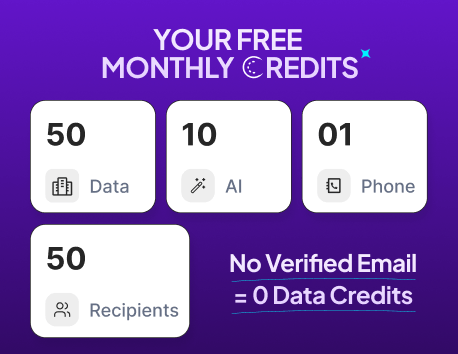
- Free plan — 50 data credits, 1 phone credit, 10 AI credits
- Pro — $34/month — 10,000 data credits, 200 phone credits, 500 AI credits
- Max — $79/month — 25,000 data credits, 600 phone credits, 1,000 AI credits
- Enterprise — from $499/month — custom limits, dedicated support
- Credit add-on packs available without upgrading your plan
Pros and Cons
Pros
- Full outbound automation in one platform
- Waterfall enrichment with real-time verification built in
- Native MCP support and custom data provider API
Cons
- Data provider API access available on Max and Enterprise only
- Phone credits are separate from data credits requires planning ahead
Best For
Founders, SDR teams, and agencies that want enrichment and outbound running inside a single automated system — without managing multiple tools or manually moving data between them.
2. Clay — Best for Custom Waterfall Enrichment Workflows

Clay is the go-to tool for RevOps teams and GTM engineers who want full control over how their enrichment pipeline is built. It functions as an orchestration layer not a data provider itself sitting on top of 75+ third-party sources and letting you decide exactly how data flows between them.
If you're comfortable with some technical setup, the flexibility it offers is hard to match.
Key Enrichment Features
- Visual workflow builder to design multi-step enrichment waterfalls with conditional routing logic
- AI web researcher (Claygent) that scans the internet for company domains, job titles, emails, and phone numbers when standard sources fall short
- Technographic, firmographic, and intent data enrichment across different provider types
- Skip-if-found logic to avoid duplicate credit spend across waterfall steps
Provider Coverage and Waterfall Logic
Clay connects to dozens of enrichment vendors, letting you design custom waterfall sequences based on your coverage needs and budget. You drag and drop enrichment steps, set conditional routing rules, and preview results before running workflows at scale.
You only pay for successful hits — achieving 90%+ coverage while significantly reducing cost per verified contact.
Email and Phone Verification
Clay doesn't own its data, which means verification quality depends entirely on the providers you choose to include in your waterfall sequence.
Email discovery performs well, with properly configured waterfalls achieving 80%+ match rates.
Phone number discovery is Clay's weakest area, with match rates typically falling between 40–60% for direct dials.
Match Rates and Data Accuracy
Email and phone accuracy depend on the providers you plug in, not on Clay itself. This means match rates vary significantly by how well your waterfall is configured — and requires ongoing tuning to maintain quality at scale.
For technical teams with the bandwidth to manage that, Clay delivers strong results. For teams that need reliable accuracy out of the box, the setup overhead is a real consideration.
API, MCP, CRM, and Workflow Automation
CRM integrations, HTTP APIs, and webhooks are available on the Growth plan at $495/month. Native CRM sync supports HubSpot and Salesforce.
There's no built-in email sequencing you'll need a separate outreach tool to actually send campaigns once enrichment is complete.
Pricing and Credit Model
Clay's self-serve plans in 2026 are Free, Launch ($185/month), and Growth ($495/month), with custom Enterprise pricing for larger teams.
- Free — 100 data credits/month, no CRM access
- Launch — $185/month — 2,500 data credits, 15,000 actions
- Growth — $495/month — 6,000 data credits, 40,000 actions, CRM sync, API access
- Enterprise — custom pricing
Failed enrichments are no longer charged data credits or actions.
Pros and Cons
Pros
- 75+ data providers with fully customizable waterfall logic
- Powerful conditional routing and AI research agent (Claygent)
- No per-seat pricing — unlimited users on all plans
Cons
- No built-in email outreach or deliverability features
- Steep learning curve — expect 2–4 weeks to build effective workflows
- CRM sync locked behind the $495/month Growth plan
Best For
Technical RevOps teams building custom enrichment logic who have the bandwidth to configure and maintain complex waterfall sequences — and a separate outreach tool already in their stack.
Suggested Reading:
10 Best Clay Alternative & Competitors for AI Outreach & Lead Enrichment3. Apollo.io — Best for Prospecting and Enrichment in One Platform

Apollo is where most B2B sales teams start and for good reason. It combines a 275M+ contact database with built-in sequencing, enrichment, and now native waterfall logic, all inside one platform.
You don't need a separate outreach tool, which makes it a strong default for teams that want to consolidate their stack quickly.
Key Enrichment Features
- Waterfall enrichment is now the default experience Apollo checks its own data first, then automatically queries selected trusted third-party sources to fill gaps
- Bulk contact and company enrichment directly from your list or CRM
- Job change detection with automatic re-enrichment of updated contacts
- Configurable waterfall order admins choose which data sources run and in what sequence
Provider Coverage and Waterfall Logic
Apollo's waterfall enrichment checks its own data and connected third-party sources in a defined order until it finds the requested email or phone information.
Admins control which providers are included and can toggle between three modes — maximize accuracy, maximize coverage, or cost-efficient single-source.
Teams using waterfall enrichment have seen roughly 5% more emails and 7% more phone numbers found, with 45% fewer bounces.
Email and Phone Verification
Waterfall enrichment validates emails and phone numbers across multiple providers, reducing bounces and helping every outreach land successfully.
Phone verification is available but carries a higher credit cost mobile credits cost significantly more than email credits, and accuracy is lower according to user feedback.
Match Rates and Data Accuracy
Email enrichment is solid, with most users reporting 70–80% success rates for finding business emails.
Accuracy does vary by segment — smaller companies and niche industries tend to have lower match rates than enterprise accounts. Running a sample test against your actual ICP before committing at scale is always the smarter move.
API, MCP, CRM, and Workflow Automation
Basic CRM integrations with Salesforce and HubSpot are included from the Basic plan. Advanced API access for custom integrations requires the Organization plan.
Webhooks and workflow automation are available on higher tiers, and Apollo connects natively with most major sales engagement tools through its integration marketplace.
There's no MCP support currently, and LinkedIn automation remains largely manual — a real limitation for teams running true multichannel outreach.
Pricing and Credit Model
- Free — 100 credits/month, 2 active sequences, no CRM integration
- Basic — $49/user/month — 30,000 credits per year, unlimited sequences, CRM integrations, waterfall enrichment
- Professional — $79/user/month — A/B testing, dialer, advanced automation
- Organization — $119/user/month (3-seat minimum) — SSO, custom reporting, full API access
Phone reveals cost 8 credits vs. 1 credit for emails — credit burn accelerates fast on call-heavy teams.
Pros and Cons
Pros
- All-in-one platform — prospecting, enrichment, sequencing, and dialer in one place
- Waterfall enrichment now enabled by default across all paid plans
- Strong email match rates for SMB and mid-market outreach
Cons
- Per-seat pricing compounds quickly as your team grows
- Phone accuracy lags behind dedicated phone enrichment tools
- Advanced API access locked behind the highest tier
Best For
Startups and SMBs that want an all-in-one prospecting and outreach platform at a transparent price particularly teams running email-led outbound who want enrichment and sequencing inside a single workflow.
Suggested Reading:
5 Best Apollo.io Alternatives for B2B Lead Generation4. FullEnrich — Best for Dedicated Multi-Provider Enrichment
If your only job is to find verified emails and phone numbers at the highest possible match rate, FullEnrich is built exactly for that. It doesn't do outreach, sequencing, or CRM management. It does one thing — waterfall enrichment — and does it exceptionally well.
Key Enrichment Features
- Aggregates 20+ data providers to find and verify work emails, personal emails, and mobile phone numbers charging credits only when valid data is actually returned
- Triple email verification covering syntax, domain validity, and mailbox existence
- Phone enrichment flags landlines at no credit cost and continues enriching until a verified mobile is found
- Unlimited users on all plans with 3-month credit rollover on monthly tiers
Provider Coverage and Waterfall Logic
FullEnrich's waterfall engine queries data providers in intelligent sequences optimized for speed, cost, and accuracy. Each data type — email, phone, LinkedIn profile — has its own dedicated waterfall sequence rather than running a single generic lookup across all fields.
FullEnrich specifically highlights its advantage for EMEA contacts, where US-centric providers can drop to 10–40% success rates depending on country, while the waterfall maintains more consistent coverage by drawing on European providers.
Email and Phone Verification
Every email returned goes through triple verification before hitting your list. FullEnrich uses advanced verification to determine which catch-all emails are actually deliverable achieving 80% verification accuracy on emails other tools flag as risky.
Match Rates and Data Accuracy
According to an independent survey of 24 email lookup tools, FullEnrich returned a 96% match rate significantly higher than competing platforms.
The triple verification layer keeps bounce rates under 3%, which directly protects sender reputation at scale.
API, MCP, CRM, and Workflow Automation
FullEnrich connects natively with HubSpot, Salesforce, and Pipedrive for automated CRM enrichment, plus Zapier, Make, n8n, and Clay for broader workflow automation.
An MCP server is available on Pro and above for teams building agent-led pipelines.
One notable gap: the LinkedIn Chrome extension was shut down in mid-2025, so browser-based enrichment is no longer an option.
Pricing and Credit Model
- Free — 50 credits on signup, no payment required
- Starter — $29/month — 500 credits; 1 credit per work email, 10 credits per mobile number
- Pro — $55/month — 1,000 credits; API access, CRM sync, MCP server
- Enterprise — custom pricing for high-volume teams
- Credits roll over for 3 months on monthly plans
- You're only charged when data is found and verified
Pros and Cons
Pros
- Pay-for-results model — no credits lost on failed lookups
- 96% match rate in independent benchmarks
- Unlimited users on all plans with shared credit pool
Cons
- Phone lookups cost 10 credits each — budget burns fast on call-heavy teams
- No outreach or sequencing built in — enrichment only
- LinkedIn Chrome extension discontinued in 2025
Best For
Agencies benefiting from unlimited seats, RevOps functions feeding verified data into a CRM, and teams building agent-driven workflows who want MCP access
5. BetterContact — Best for Affordable Waterfall Enrichment
BetterContact is what you reach for when you want serious waterfall enrichment coverage without a serious price tag. It does one job finding and verifying emails and phone numbers and it's built specifically to do that better than any single-provider tool can.
Key Enrichment Features
- Waterfall enrichment across 20+ data providers in one subscription, with AI-driven provider sequencing optimized by geography, industry, and company size
- Four-layer verification system — SMTP checks, catch-all validation, mailbox confirmation, and deliverability scoring
- Pay-per-result pricing — credits are only consumed when verified data is returned
- Access to 3 billion+ contact records across the provider network
Provider Coverage and Waterfall Logic
What makes BetterContact stand out is its BetterAI algorithm.
Rather than querying providers in a fixed order for every contact, it analyzes each contact record and determines the optimal provider sequence before the waterfall even begins — meaning a contact in Germany gets a different provider priority than one in the US.
This adaptive sequencing is what pushes match rates above what static waterfall tools typically deliver.
Email and Phone Verification
Every result goes through four verification layers before a credit is charged. If a provider returns invalid data, the next one in the sequence runs automatically — at no cost to you.
Match Rates and Data Accuracy
Email enrichment rates reach 87–95% and phone match rates hit 70–85% — meaningfully higher than any single-source provider.
Single-provider tools typically find 60–70% of emails. BetterContact pushes that ceiling significantly higher by cascading through multiple sources.
API, MCP, CRM, and Workflow Automation
BetterContact connects natively with Clay, HubSpot, and Google Sheets, and supports 20+ integrations including CRMs and outreach platforms.
For everything else Salesforce, Pipedrive, Attio you'll need to route through Make or the API.
There's no MCP support, no bidirectional CRM sync beyond HubSpot, and no automatic enrichment triggered by new CRM records. It's a batch enrichment tool, not an always-on pipeline layer.
Pricing and Credit Model
- Starter — $15/month — 200 credits; API access and basic integrations included
- Pro — $49/month — 1,000 to 50,000 credits; catch-all verification, all integrations, premium support
- Enterprise — from $799/month — custom credits, dedicated account manager, own API key support
- Phone lookups cost 10 credits each; email lookups cost 1 credit
- Unused credits roll over, capped at 2x your monthly allocation
Pros and Cons
Pros
- Lowest entry price among true waterfall enrichment tools
- AI-driven provider sequencing adapts per contact — not a fixed waterfall order
- Zero charges for unverified or catch-all results
Cons
- Enrichment can't be cancelled once started — accidentally uploading the wrong list burns credits with no way to stop it
- Native CRM integrations limited to HubSpot and Google Sheets
- No buying signals, intent data, or outreach features
Best For
Sales teams and outbound agencies that already have lead lists but need higher contact coverage and data quality particularly teams running batch enrichment at volume where find rate matters more than real-time lookup speed.
6. Persana AI — Best for AI-Powered Prospect Research and Enrichment
Most enrichment tools find the contact and stop there. Persana goes further it layers buying signal detection and AI-driven prospect research on top of the enrichment itself, so your team isn't just getting a verified email, they're getting context on why that contact is worth reaching out to right now.
One important note: as of May 2026, Persana AI announced it is joining forces with Rox and will sunset the standalone platform over the coming months. If you're evaluating it for long-term use, confirm the migration timeline directly with the vendor.
Key Enrichment Features
- Waterfall enrichment across 100+ data sources with a "Quantum" AI research agent that enriches, scores, and verifies contacts automatically
- AI Signals that surface real-time buying triggers hiring activity, funding events, website visits, and LinkedIn engagement
- AI-generated personalization using live enriched fields as variables in outreach copy
- Unlimited users with no per-seat fees across all plans
Provider Coverage and Waterfall Logic
Persana aggregates data from providers across contact info, firmographics, technographics, and intent signals — waterfalling across sources to fill gaps rather than being locked into one vendor's data quality.
Persana blends across 50+ databases for accurate email and phone contact information, with customers reporting results tripling after switching from single-provider enrichment.
Email and Phone Verification
Verified emails cost 1 credit each. Phone lookups cost 10 credits — the same structure as most dedicated enrichment tools. Verification runs through the waterfall sequence before any credit is consumed, so you only pay for confirmed results.
Match Rates and Data Accuracy
In practice, waterfalling across 100+ sources improves match rates on email and mobile phone coverage compared to relying on a single provider like Apollo or ZoomInfo alone.
The AI research layer adds an extra dimension — beyond match rate, Persana also surfaces the quality signals that tell you which matched contacts are actually worth prioritizing.
API, MCP, CRM, and Workflow Automation
Persana keeps a real-time, two-way connection with HubSpot and Salesforce — enriched contact information, updated records, and engagement signals automatically return to your CRM.
The REST API covers people search, company lookup, email and phone retrieval, and intent data, with webhooks available from the Growth plan upward. There's no MCP support currently. Teams on Pipedrive, Zoho, or Attio will need to bridge the gap through Zapier or CSV exports.
Pricing and Credit Model
- Free — 50 credits
- Starter — $85/month — entry-level credits, basic enrichment and signals
- Growth — $151/month — API access, webhooks, expanded signal detection
- Pro — $400/month — CRM integrations with HubSpot and Salesforce
- Unlimited — $600/month — full platform access
- 1 credit per verified email; 10 credits per phone number
Pros and Cons
Pros
- Buying signal detection built directly into the enrichment workflow
- AI research agent compresses manual prospect research to seconds
- Unlimited users with no per-seat fees on any plan
Cons
- CRM integration requires the Pro plan at $400/month — a feature most competitors include at far lower price points
- Platform transitioning to Rox — long-term stability unclear
- Phone credits burn fast at 10 credits per lookup
Best For
SDR teams, agencies, and GTM operations that require large-scale prospecting with AI-generated personalization — particularly teams that want enrichment and buying signal detection inside a single workflow rather than two separate tools.
7. Dropcontact — Best for Privacy-Focused Contact Enrichment
Dropcontact doesn't store any contact data at all. Instead of pulling from a purchased database, it generates and verifies emails in real time using proprietary algorithms — never retaining personal data after processing.
For European teams where GDPR compliance is a genuine operational concern rather than a checkbox exercise, that architectural difference matters more than any feature comparison.
Key Enrichment Features
- Real-time algorithmic email generation from first name, last name, and company domain
- Automatic duplicate detection and CRM deduplication with a smart merge engine that normalizes job titles
- Job change detection — when a contact switches employers, CRM records update automatically
- LinkedIn profile enrichment without requiring login
- B2B professional emails only — no personal addresses, no phone numbers
Provider Coverage and Waterfall Logic
Dropcontact doesn't use a traditional waterfall model. Rather than aggregating results from multiple email finders, it generates and verifies every email using proprietary algorithms and its own test servers in a single real-time pass.
All processing runs on EU-based servers, audited by France's CNIL data protection authority — making it the only enrichment tool compliant by architecture, not just by policy.
Email and Phone Verification
Every email returned is checked for 98% validity on standard corporate domains, or 85% for catch-alls, using Dropcontact's own algorithms with no third-party verification services involved.
Phone data is not available. Dropcontact deliberately limits its scope to professional B2B email addresses for GDPR compliance reasons.
Match Rates and Data Accuracy
Overall match rates sit around 60–70% — lower than database-backed waterfall tools. The algorithm cannot verify catch-all or non-standard email patterns, which is where most of that gap comes from.
The tradeoff is intentional. You get fewer matches, but every match carries significantly lower compliance risk and guaranteed data freshness since nothing is pulled from a stored database.
API, MCP, CRM, and Workflow Automation
Dropcontact connects natively with HubSpot, Salesforce, and Pipedrive — automatically enriching and deduplicating records as contacts enter your CRM. Zapier, Make, n8n, and a documented API cover broader workflow automation needs.
There's no MCP support. CRM integrations are priced separately from the core plan, so factor that into your total cost before committing.
Pricing and Credit Model
- Starter — ~€24/month — 1,000 credits, email finding and verification
- Business — ~€79/month — 5,000 credits, bulk enrichment, full CRM sync, priority processing
- Enterprise — custom pricing — high-volume credits, dedicated support
- One credit per email search or enrichment
- No credit rollover — unused credits expire at end of billing cycle
- CRM integrations billed separately on annual plans
Pros and Cons
Pros
- Only enrichment tool compliant by architecture — no stored personal data, audited by France's CNIL
- Native CRM integrations work without engineering help
- Automatic deduplication and job change detection included
Cons
- No phone data — email only
- Match rates of 60–70% are lower than database-backed waterfall tools
- Credits expire monthly with no rollover
- CRM integration costs are separate from the base plan
Best For
European B2B teams running HubSpot, Salesforce, or Pipedrive who need GDPR-compliant email enrichment that works automatically inside their existing CRM — without the compliance risk that comes with database-backed providers.
8. People Data Labs — Best for API-Based Enterprise Enrichment
People Data Labs isn't built for the SDR who wants to click a button and get a list. It's built for the engineering team that wants to plug a massive, structured dataset directly into their own product or data pipeline.
If your enrichment needs live at the infrastructure level — feeding AI models, powering internal tools, or building custom GTM workflows — PDL is worth understanding.
Key Enrichment Features
- Access to 2.5 billion+ unique B2B records across person and company profiles
- Person Enrichment API, Company Enrichment API, and SQL-like Search API with boolean filters
- Real-time data verification for email and profile accuracy
- Job history, social profiles, demographics, and technographic data all accessible via API
- Bulk data licensing available for enterprise teams embedding PDL into their own products
Provider Coverage and Waterfall Logic
PDL operates as a single proprietary dataset — not a waterfall model. It aggregates data from multiple sources into one unified database, refreshed on approximately a monthly cycle.
This means there's no sequential fallback logic. If PDL's dataset doesn't have a record, you get nothing.
For teams that need maximum coverage on every lookup, this is a meaningful limitation compared to true waterfall tools.
Email and Phone Verification
Real-time email and profile verification is available through the API.
However, email and phone data are treated as premium fields — meaning they cost additional credits beyond a standard enrichment call, which affects total cost at scale.
Match Rates and Data Accuracy
PDL's match rates are strong for established companies and well-documented professionals, but coverage thins out for smaller businesses, niche industries, and non-English-speaking markets.
The monthly refresh cycle also means data freshness lags behind real-time waterfall tools — a genuine consideration for teams doing job change detection or time-sensitive outreach.
API, MCP, CRM, and Workflow Automation
PDL is API-first by design. The documentation is thorough, with working code samples in Python, Node.js, Ruby, Go, and cURL. Authentication runs on a single API key, and response payloads return clean JSON with predictable field structures.
There are no native CRM integrations and no MCP support. PDL is a data layer, not a workflow tool — connecting it to HubSpot, Salesforce, or any outreach platform requires custom engineering work on your end.
Pricing and Credit Model
- Free — 100 person/company lookups per month, no payment required
- Pro — $98/month — 350 person enrichment credits, 1,000 company lookups, premium field access
- Enterprise — custom pricing, estimated from ~$2,500/month — bulk licensing, dedicated support, SSO
- Email and phone are premium fields — billed separately from standard enrichment credits
- Annual billing saves approximately 20%
Pros and Cons
Pros
- 2.5 billion+ records — one of the largest B2B datasets available via API
- Clean, well-documented API with consistent endpoint patterns
- Transparent published pricing — no sales call required to get a number
Cons
- No waterfall fallback — single dataset with no secondary source if a record is missing
- No native CRM integrations or MCP support
- Email and phone cost extra on top of base enrichment credits
- Monthly data refresh cycle means stale records have no real-time fallback
Best For
Engineering teams and data scientists building enrichment directly into their own products, AI models, or custom GTM infrastructure — where API flexibility and dataset scale matter more than out-of-the-box workflow automation.
9. Clearbit (Breeze Intelligence) — Best for HubSpot and Company Enrichment

Clearbit used to be the go-to standalone enrichment API for B2B teams. That changed in late 2023 when HubSpot acquired it and rebranded it as Breeze Intelligence. In 2026, it no longer exists as an independent product free standalone accounts were sunset in April 2025.
If you're already deep in HubSpot's ecosystem, it still makes sense. If you're not, it doesn't apply to you at all.
Key Enrichment Features
- Automatic enrichment of CRM records with firmographic and technographic data — company size, revenue, industry, tech stack, and funding stage
- Website visitor identification — reveals anonymous companies visiting your site
- Form shortening — auto-fills known fields so visitors submit shorter forms while you capture richer data behind the scenes
- Native HubSpot workflows trigger enrichment automatically as records enter the CRM
Provider Coverage and Waterfall Logic
Breeze Intelligence operates from a single proprietary dataset with no waterfall logic or multi-provider fallback. If the record isn't in HubSpot's database, you get nothing — there's no secondary source to catch the miss.
Coverage is strongest for US mid-market and enterprise companies and thins out noticeably for SMBs, international markets, and niche industries.
Email and Phone Verification
Phone number enrichment is not available. Firmographic and company-level data is reliably accurate — industry, revenue, tech stack, and headcount all come back clean for established US companies.
Person-level email accuracy is weaker than dedicated enrichment tools. Running a separate verification pass before loading contacts into any outreach sequence is worth the extra step.
Match Rates and Data Accuracy
Company-level enrichment is where Breeze Intelligence genuinely earns its place — industry, revenue band, tech stack, headcount, and funding stage all come back clean for established US companies.
Person-level contact data is where it falls short. Emails in particular lag behind dedicated waterfall tools that cross-reference multiple providers before returning a result, which is a real gap for teams running contact-led outbound.
API, MCP, CRM, and Workflow Automation
Breeze Intelligence is deeply embedded in HubSpot — enrichment triggers automatically through native HubSpot workflows, with no additional setup required. It's genuinely seamless if HubSpot is already your CRM.
Outside of HubSpot, there's very little flexibility. The standalone Clearbit API has been sunset for new customers, there's no MCP support, and connecting to Salesforce, Pipedrive, or any other CRM is not supported through Breeze Intelligence directly.
Pricing and Credit Model
- Starter — ~$45/month for 100 Breeze Intelligence credits, requires a paid HubSpot subscription on top
- Realistic all-in minimum — ~$65–75/month combining HubSpot Starter and credit pack
- Mid-market teams on HubSpot Professional can expect $1,000–5,000+/month at meaningful enrichment volumes
- Standard enrichment is free on paid HubSpot Core Seats post-INBOUND 2025 — Smart Property enrichment still consumes credits
- Credits reset monthly with no rollover
Pros and Cons
Pros
- Native HubSpot integration — zero engineering required for HubSpot users
- Strong firmographic and technographic data for US mid-market companies
- Form shortening and website visitor identification built in
Cons
- No standalone access — HubSpot subscription is mandatory
- No phone number enrichment
- Credits expire monthly with no rollover
- Total cost compounds quickly across HubSpot tiers and credit packs
Best For
HubSpot-committed marketing and revenue teams that want automatic CRM enrichment without any technical setup — and don't need phone data or CRM-agnostic flexibility.
10. Proxycurl — Best for Developer-Led Enrichment Workflows
Before diving in, one important update: Proxycurl permanently shut down on July 4, 2025, after LinkedIn sued its parent company Nubela over large-scale scraping of member data using fake accounts. The API is offline and sign-ups are closed.
That said, Proxycurl shaped how developer teams approached LinkedIn-based enrichment for years and understanding what it offered helps you evaluate the alternatives that have replaced it.
Key Enrichment Features
- LinkedIn profile enrichment via a clean REST API — person profiles, company data, job history, and education all returned as structured JSON
- People search and company search endpoints for bulk list building
- Employee count and headcount tracking at the company level
- Pay-per-lookup credit model with no platform subscription required
Provider Coverage and Waterfall Logic
Proxycurl operated as a single-source LinkedIn scraper — not a multi-provider waterfall. It pulled directly from LinkedIn profiles in real time, meaning data was fresh but coverage was entirely dependent on what LinkedIn publicly exposed.
There was no fallback logic. If a profile was private or restricted, the lookup returned nothing.
Email and Phone Verification
Email enrichment was available as a separate endpoint but was never Proxycurl's core strength. Phone data was limited and inconsistently available across profiles.
Most teams paired Proxycurl with a dedicated email finder like Hunter or FullEnrich to complete the contact record — making it one layer in a larger stack rather than a standalone enrichment solution.
Match Rates and Data Accuracy
For publicly available LinkedIn profiles, accuracy was high — data came directly from the source, structured and clean.
The ceiling was LinkedIn's own visibility rules. Private profiles and connection-walled accounts returned nothing, which capped match rates significantly for cold prospecting. Teams targeting large enterprise accounts with open profiles fared better than those working niche or privacy-conscious verticals.
API, MCP, CRM, and Workflow Automation
Proxycurl was API-first by design — clean REST endpoints, predictable JSON responses, and straightforward authentication made it easy to plug into custom pipelines and workflow tools like Clay and n8n.
There were no native CRM integrations and no MCP support. All downstream data movement required custom engineering work, making it a developer tool rather than a no-code sales ops solution.
Pricing and Credit Model
- Credit-based, pay-per-lookup with no platform subscription required
- Roughly $0.009–$0.02 per credit depending on volume
- Different endpoints consumed different credit amounts — profile lookups, email finding, and company data were priced separately
- No monthly commitment — credits purchased as needed
Pros and Cons
Pros
- Clean, well-documented REST API with fast response times
- Real-time LinkedIn data — not a cached or stale database
- Flexible pay-as-you-go model with no seat fees
Cons
- No longer operational — shut down July 2025
- Single-source LinkedIn scraper with no waterfall fallback
- No native CRM integrations or email verification built in
- Phone data was unreliable
Best For
Engineering teams that needed real-time LinkedIn profile data piped directly into custom applications — though teams should now evaluate active alternatives like Coresignal or People Data Labs for similar API-first workflows.
11. Datagma — Best for Affordable Email and Phone Enrichment
Datagma is a lean, real-time enrichment tool built for sales and marketing teams that need verified emails and mobile phone numbers without enterprise-level pricing. It's bootstrapped, purpose-built, and deliberately focused — no outreach features, no sequences, just contact data delivered fast.
What sets it apart from most tools on this list is its real-time approach. Rather than pulling from a stored database, it searches live sources at the moment of each enrichment request.
Key Enrichment Features
- Real-time enrichment returning 75+ data points per contact — verified emails, mobile numbers, job titles, company info, and technographics
- Job change detection with real-time alerts when a saved contact switches roles
- Chrome extension for one-click LinkedIn enrichment while browsing Sales Navigator
- CSV bulk upload and API access for programmatic enrichment at scale
- GDPR compliant across all plans
Provider Coverage and Waterfall Logic
Datagma operates from a single real-time data source there's no waterfall logic or multi-provider fallback. When its source doesn't have a record, the lookup returns nothing.
This is the key tradeoff. Real-time freshness is Datagma's strength. Multi-provider coverage is not. For teams that need maximum match rates, a dedicated waterfall tool will outperform it on volume.
Email and Phone Verification
Every email and phone returned is verified before delivery you're never charged for unverified results.
Mobile phone enrichment is Datagma's standout strength, with reviewers consistently praising accuracy and near-zero landline filtering, making it particularly useful for teams running cold call-heavy outreach alongside email campaigns.
Match Rates and Data Accuracy
Email match rates sit around 70–80% for US and Western European contacts. Phone accuracy runs at 50–60%, consistent with industry standards for mobile-first enrichment.
Coverage thins out for SMBs, catch-all domains, and contacts outside English-speaking markets. For those segments, a multi-provider waterfall tool will return meaningfully higher match rates than Datagma's single-source model can deliver.
API, MCP, CRM, and Workflow Automation
Datagma connects natively with HubSpot and Pipedrive, and supports Zapier, Make, n8n, PhantomBuster, and Captain Data for broader automation. The Chrome extension enriches contacts directly on LinkedIn without leaving the browser.
There's no MCP support. API access is available on all paid plans.
Pricing and Credit Model
- Free — 90 verified emails and 3 mobile numbers per year, forever
- Discover — $39/month — 1,000 credits
- Growth — $99/month — 5,000 credits
- Business — $249/month — 20,000 credits
- Credits are consumed only when verified data is returned
- Job change monitoring burns credits on every check — even when no change is detected
Pros and Cons
Pros
- Real-time enrichment from live sources — not a stale static database
- Strong mobile phone accuracy with near-zero landline returns
- Generous permanent free plan for low-volume teams
- GDPR compliant across all tiers
Cons
- Single-source model with no waterfall fallback — lower match rates than multi-provider tools
- Job change monitoring costs credits regardless of whether a change occurred
- Coverage thins out significantly for SMBs and non-Western markets
Best For
Small to mid-sized sales teams that need real-time verified contact data — particularly teams where mobile phone accuracy matters as much as email coverage, and where budget predictability is a priority over maximum match rates.
How Much Do Waterfall Enrichment Tools Cost?
Enrichment pricing looks straightforward on the surface — a monthly plan, a credit count, and a starting price.
But the actual cost per verified contact often looks very different from what the pricing page suggests. Here's what actually determines what you pay.
Credit-Based vs Pay-per-Verified-Contact Pricing
Most enrichment tools use one of two models.
Credit-based tools charge a credit for every lookup attempt — verified result or not. Pay-per-verified-contact tools only charge when enrichment succeeds and the data passes verification.
The difference compounds at scale. On a list of 1,000 contacts with a 70% match rate, a credit-based model costs you 1,000 credits.
A pay-per-verified model costs you 700. Tools like BetterContact, FullEnrich, and Datagma use the pay-for-results model — meaning your credit budget goes further on the same list size.
Are You Charged for Failed Lookups?
This is the single most important question to ask before choosing a tool. The answer varies significantly:
- BetterContact, FullEnrich, Datagma — no charge for failed or unverified lookups
- Clay — updated March 2026; failed enrichments no longer consume data credits or actions
- Apollo — credits consumed on successful reveals only; phone lookups cost 8x more than email
- People Data Labs — charges per API call regardless of result on some endpoint types
Always verify the current policy directly with the vendor before committing at volume.
Email vs Phone Enrichment Costs
Phone enrichment costs significantly more than email enrichment across every tool on this list.
The standard ratio across most platforms is 10 credits per mobile number versus 1 credit per email. If your outbound motion is phone-heavy, your effective monthly cost can be 5–10x higher than the headline plan price suggests.
Credit Expiration, Rollover, and Overage Costs
Unused credits and overage fees are where budgets quietly leak:
- FullEnrich — credits roll over for 3 months on monthly plans
- BetterContact — rollover capped at 2x monthly allocation
- Clay — data credits roll over capped at 2x; actions reset monthly with no rollover
- Apollo — credits expire at end of billing cycle, no rollover
- Clearbit/Breeze — credits reset monthly with no rollover
Overage credits typically carry a 30–50% markup above your plan rate across most platforms.
Which Tool Is Best for Your Use Case?
No single enrichment tool wins across every scenario. The right choice depends on what data you need, how you use it, and what the rest of your stack looks like. Here's how the tools on this list stack up by use case.
Best for Email Enrichment
FullEnrich is the strongest pick for pure email enrichment. Its 20+ provider waterfall, triple verification layer, and pay-for-results model consistently deliver among the highest verified match rates in the category.
BetterContact is a close second — its AI-driven provider sequencing adapts per contact rather than running a fixed waterfall order, which pushes accuracy further on harder-to-find segments.
If you're already on Apollo and don't want an additional tool, its native waterfall enrichment handles email well for most SMB and mid-market ICPs.
Best for Phone Number Enrichment
BetterContact leads on phone coverage, with match rates of 70–85% across mobile numbers — meaningfully higher than most alternatives.
FullEnrich is competitive here too, particularly for European contacts where its provider mix has stronger regional coverage.
One important note across all tools: phone enrichment costs 10x more credits than email enrichment. Factor that into your budget before committing to a phone-heavy outbound motion.
Best for CRM Data Enrichment
Dropcontact is the standout for teams whose primary need is keeping CRM records clean, deduplicated, and automatically updated. Its native HubSpot, Salesforce, and Pipedrive integrations enrich records automatically as contacts enter the CRM — with job change detection running in the background.
For HubSpot-specific teams, Clearbit (Breeze Intelligence) delivers seamless native enrichment with zero engineering required, though the total cost compounds quickly once you factor in the required HubSpot subscription.
Best for AI-Powered Outbound
Oppora is the clear choice here. It's the only tool on this list that combines waterfall enrichment with a full AI-powered outbound system — lead finding, enrichment, email writing, LinkedIn outreach, AI reply handling, and CRM sync all running inside one automated workflow.
You don't enrich a list and then figure out what to do with it. The enrichment feeds directly into the outreach pipeline automatically.
Persana AI is worth considering if buying signal detection matters as much as enrichment though its platform transition to Rox adds uncertainty for long-term commitments.
Best for RevOps and Custom Workflows
Clay is built for this. Its visual workflow builder, 75+ provider integrations, and conditional routing logic give RevOps teams complete control over how enrichment data flows through their stack. The tradeoff is complexity — expect a meaningful setup investment before seeing results.
For teams that want waterfall enrichment plugged into an existing automation layer without building from scratch, FullEnrich's API and n8n compatibility make it a strong lightweight alternative.
Best for Startups and Small Sales Teams
BetterContact at $15/month and Datagma's permanent free plan are the most accessible entry points for lean teams. Both deliver verified contact data without requiring a significant budget commitment upfront.
Oppora's free plan also deserves a mention here — 50 data credits, built-in email verification, and access to the full workflow builder make it one of the most generous free tiers among tools that include outbound automation alongside enrichment.
Best for Enterprise Data Enrichment
People Data Labs is the enterprise default for teams that need to embed enrichment at the infrastructure level — feeding AI models, building internal data products, or running bulk enrichment across millions of records via API.
For enterprises that want waterfall coverage at scale rather than a single-source dataset, Clay's Enterprise tier or FullEnrich's custom Scale plan both support the volume and compliance requirements that larger organizations typically need.
APIs, Integrations, and MCP for Waterfall Enrichment
How enrichment data moves into your pipeline matters as much as the quality of the data itself.
The connection layer — whether native integration, API, or MCP — determines how much engineering work stands between enrichment and action.
Native Integrations vs Waterfall Enrichment APIs
Native integrations push enriched data directly into your CRM without custom code — the right choice when your stack is standard and you want enrichment running automatically.
API access gives you full control over field mapping, conditional logic, and custom workflows. The tradeoff is engineering time.
Most tools offer both. The deciding factor is which one your team can realistically maintain.
When to Use MCP for Waterfall Enrichment
MCP is worth considering when enrichment needs to happen inside an AI-driven workflow — not just as a data fetch, but as a step that an agent can trigger, interpret, and act on contextually.
Currently, Oppora and FullEnrich both support MCP — making them the strongest options for teams building agent-led outbound pipelines where enrichment is one node in a larger automated sequence rather than a standalone task.
How to Choose the Right Waterfall Enrichment Tool
The comparison tables and feature lists will only get you so far. What actually matters is whether a tool delivers verified, usable contact data for your specific ICP — at a cost that makes sense for your volume. Here's how to evaluate that properly before committing.
Start With the Data You Need to Enrich
Before comparing tools, get clear on what you actually need verified emails, mobile numbers, firmographics, or buying signals.
Different tools specialize in different data types, and the wrong fit underperforms regardless of feature count. Dropcontact excels at GDPR-compliant email enrichment but has no phone data. Datagma leads on mobile accuracy.
Persana layers buying signals on top. Start here before evaluating anything else.
Test Provider Coverage Against a Sample of Your ICP
Every tool publishes match rate claims. None of those numbers reflect your specific ICP.
Pull 200–300 contacts from your actual target market — the industries, company sizes, and geographies you prospect into — and run them through any tool's free tier or trial. The match rate on your own list is the only number that matters for your buying decision.
Measure Verified Match Rate, Not Just Raw Matches
A raw match means the tool found something. A verified match means what it found will actually deliver to an inbox.
Always measure verified match rate — the percentage of contacts that return a result AND pass email verification.
A tool that finds 80% of your list but bounces 20% of those results is delivering a 64% verified match rate, not 80%. That gap directly affects your sender reputation at scale.
Calculate the Cost per Usable Contact
Divide your monthly plan cost by the number of verified, deliverable contacts you actually receive not the number of credits in the plan.
Factor in your real match rate, the credit cost per lookup type, and any phone enrichment you'll need on top.
This single calculation lets you compare tools fairly regardless of how differently they package their pricing.
Check Compatibility With Your Existing Sales Stack
Enrichment data that can't flow automatically into your CRM or outreach tool creates manual work that compounds over time. Before committing to any tool, confirm:
- Native integration with your CRM HubSpot, Salesforce, Pipedrive, or Zoho
- Compatibility with your outreach platform
- API or webhook support if you run custom workflows
- Whether MCP is available if you're building agent-led pipelines
Validate Data Freshness and Compliance
Data freshness matters more than most teams realize. Monthly database refreshes are common, but real-time tools like Datagma pull live data at the point of lookup a meaningful difference for time-sensitive prospecting.
On compliance, confirm GDPR and CCPA alignment before enriching European contacts. Dropcontact is the only tool on this list compliant by architecture rather than policy.
Conclusion
Waterfall enrichment isn't a nice-to-have anymore — it's the baseline for any outbound team serious about contact data quality. Single-provider tools leave too many gaps, and those gaps compound directly into missed pipeline.
The right tool depends on your ICP, your stack, and whether you need enrichment as a standalone layer or as part of a larger outbound system.
If you want enrichment that feeds directly into automated outreach without stitching together multiple tools Oppora handles the full cycle in one place, from finding and verifying contacts to sending emails, handling replies, and booking meetings automatically.
Frequently Asked Questions (FAQs)
Can Waterfall Enrichment Find Data That a Single Provider Misses?
Yes — that's precisely the point. Each data provider has different coverage strengths. When your primary provider returns no result, the next one in the sequence picks it up. Teams consistently see 20–40% more verified contacts from waterfall enrichment compared to relying on any single source alone.
Does Waterfall Enrichment Use More Credits Than Single-Source Enrichment?
Not necessarily. Most waterfall tools stop the moment a verified result is found — so you only pay for the providers that actually ran before a match was returned. Sequential waterfall logic is specifically designed to maximize coverage while minimizing unnecessary credit spend across providers.
Can You Use Different Providers for Email and Phone Enrichment?
Yes. Many waterfall tools run separate sequences for email and phone data, since different providers specialize in each. Tools like FullEnrich and BetterContact maintain dedicated waterfalls per data type — meaning your email providers and phone providers can be entirely different sequences running independently.
How Often Should Enriched B2B Contact Data Be Refreshed?
Every six months is a reasonable baseline — B2B contact data decays at roughly 25–30% annually due to job changes and company moves. For high-value accounts or active sequences, quarterly re-enrichment is worth the credit spend to avoid bounces and outdated decision-maker information reaching your pipeline.
Can Waterfall Enrichment Be Automated Inside a CRM?
Yes. Most tools on this list offer native CRM integrations that trigger enrichment automatically when new contacts enter your pipeline. Dropcontact, FullEnrich, and Oppora all support automatic CRM enrichment — meaning your database stays current without manually exporting and re-uploading lists between tools.
Summarize with AI
Share