15 Prospecting Tools for Recruitment Agencies to Win More Clients
Adam Hossain
Published June 8, 2026
19 min

Complete Agentic Email Outreach
AI agents find and enrich prospects, personalize emails, follow up, and handle replies with your meeting link.
Start Your 7-Day Free Trial
Winning new clients is the hardest part of running a recruitment agency.
You spend hours digging for hiring companies, chasing the right decision-makers, and sending outreach that often goes nowhere.
The leads feel random, and the results feel even more unpredictable.
So how do top agencies stay booked with clients while you're still hunting?
The answer is the right prospecting tools for recruitment agencies. These tools help you find hiring companies, reach decision-makers, and automate outreach without burning out your team.
In this guide, you'll learn:
- What prospecting tools are and how they differ from sourcing tools
- The main types of tools agencies use to win clients
- The 15 best prospecting tools worth your budget
- How to choose the right stack and avoid common mistakes
Key Features to Look for in Prospecting Tools
Picking a prospecting tool can feel overwhelming when every option claims to do everything.
But not all tools deliver equal value, and the wrong choice quietly drains your budget.
So before you commit, it helps to evaluate features carefully against what actually moves placements forward.
The right features improve ROI, keep your data accurate, and let your outreach scale without breaking.
Hiring Intent & Buying Signals
Now that you know features matter, the first one to weigh is timing.
You want tools that detect hiring intent signals, so you reach companies right when they need help.
The strongest signals usually include:
- New job postings or active recruitment patterns
- Recent funding announcements
- Steady headcount growth
Spotting these buying signals early means you talk to companies already leaning toward hiring.
That timing alone can lift your conversion rates and make every outreach hour count.
Accurate Decision-Maker Data
Reaching the right company means little if you never reach the right person inside it.
This is where accurate decision-maker data becomes essential for any prospecting tool.
You need verified contact details for HR leaders, founders, and hiring managers.
Clean, verified data keeps bounce rates low and your sender reputation healthy.
More importantly, it ensures your campaigns land with the people who actually approve the hire.
Suggested Reading:
How to Find CEO Email Address in 2026 (28 Real Tactics)Candidate Sourcing & Talent Database
Finding the right client is only half your job. A recruiting agency sells placements, not just conversations, so the talent side matters just as much.
This is why dual-purpose data should sit high on your checklist. The best prospecting tools cover both hiring companies and candidate pools in one place.
That overlap lets you source candidates and target clients from a single platform.
You reduce tool sprawl, save time, and stop paying for separate databases that barely talk to each other.
Automation for Outreach Campaigns
Having the right data is great, but manually working it rarely scales. Sooner or later, the volume outgrows what you can handle by hand.
Automation solves this by running your email and LinkedIn campaigns for you. It removes repetitive manual effort and keeps your follow-ups consistent across every lead.
That consistency is where deals are quietly won. With automated sequences in place, no warm opportunity slips through the cracks because someone forgot to reply on time.
Suggested Reading:
Top 5 AI Email Campaign Tools in 2025CRM & ATS Integration
Automated outreach generates activity fast, and that activity needs a home. Without it, conversations scatter and candidates fall out of view.
A strong CRM and ATS integration keeps everything connected in one workspace.
You can track conversations, manage candidates, and monitor deal progress without switching tabs.
Syncing with your applicant tracking system also keeps records clean and current.
The payoff is clearer visibility and a smoother workflow from first touch to final placement.
Multi-Channel Prospecting Support
Even organized outreach falls flat when it lives on a single channel. People respond differently depending on where you reach them.
Modern prospecting tools combine email, LinkedIn, and calling into one unified system.
This lifts engagement across both candidate and client outreach, opening up more conversion opportunities along the way.
Suggested Reading:
9 Best AI Prospecting Agent to Automate Lead Discovery15 Best Prospecting Tools for Recruitment Agencies
Now that you know what to look for, let's put it into practice.
The tools below cover everything you need to build a complete client acquisition system.
You'll find AI prospecting platforms, B2B databases, contact finders, and outreach automation tools.
Some specialize in one job, while others handle the full workflow from lead to conversion.
Here are the 15 best prospecting tools for recruitment agencies.
1. Oppora.ai – AI Prospecting & Recruitment Client Acquisition Platform
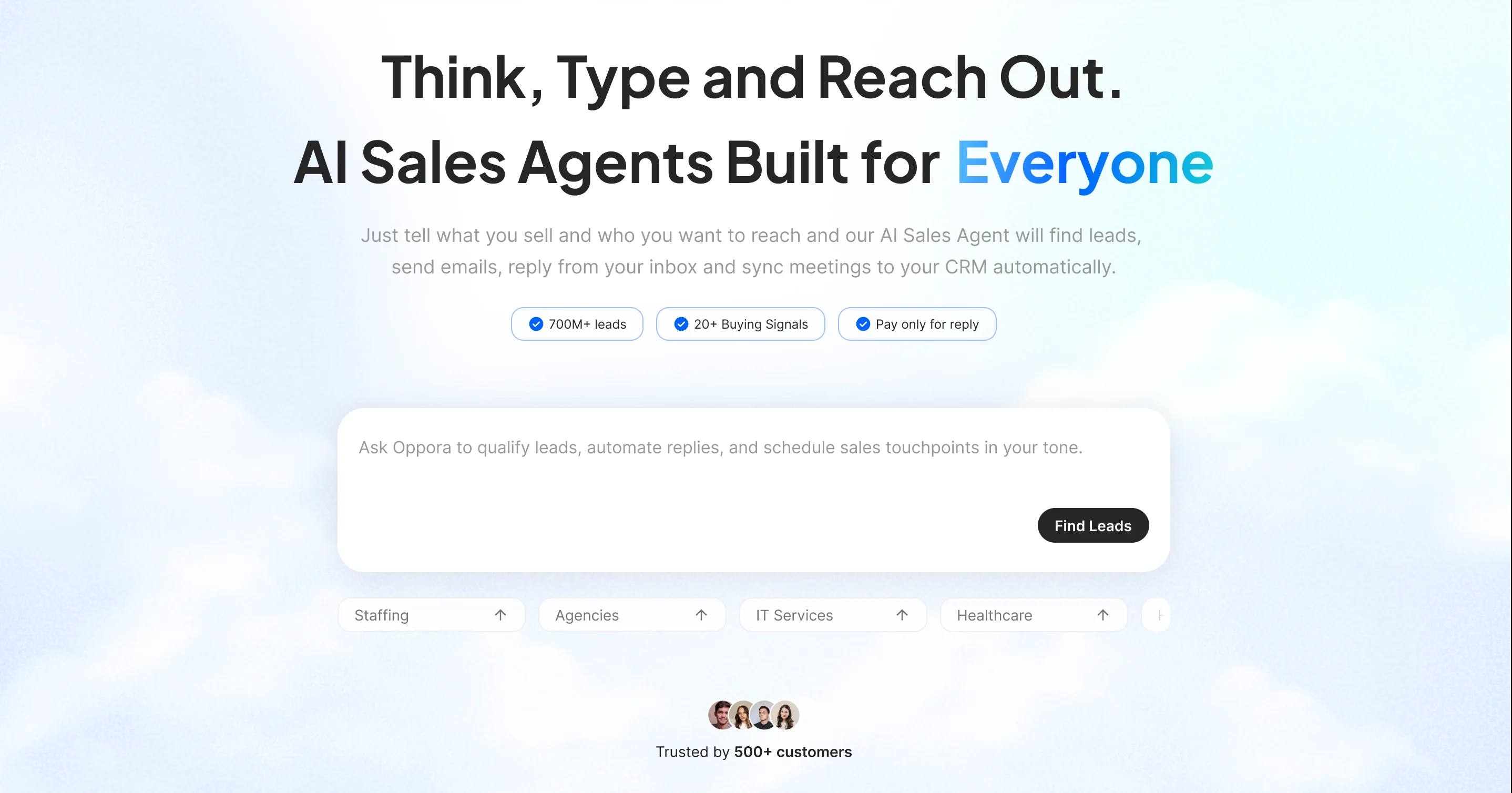
If you want one tool that runs your entire client acquisition process, Oppora.ai is built for exactly that.
Instead of giving you features you have to operate yourself, Oppora gives you 8 AI sales agents that work together.
Oppora is an AI Outbound Sales Agent that automates your entire outreach based on buying signals like new job postings, funding, and hiring activity.
For example, you can build a workflow where Oppora finds companies that posted a job on LinkedIn each day, identifies the decision-makers inside them, pulls their verified email and phone, and launches an outreach campaign automatically.
They find companies, identify decision-makers, write outreach, reply from your inbox, and book meetings, all on their own.
Standout Features
- 1B+ leads and 60M+ company database with verified emails and phone number details
- Smart filtering to find high-intent, actively hiring companies
- Real Time LinkedIn and Public Database Lead Search
- Waterfall enrichment with real-time email verification
- AI-generated cold emails and follow-ups
- AI Replies to emails
- Unified Inbox with auto lead status tagging
- LinkedIn + email multichannel outreach
- 25+ Buying signal filters and AI lead scoring
- CRM sync with HubSpot, Salesforce, and Pipedrive
- Mailbox rotation and automated warm-up
- Agentic Workflows to automate entire outreach
How It Helps Recruitment Agencies
Oppora replaces manual client hunting with workflows that run on their own, so you're not spending billable hours chasing companies that may not even be hiring.
Just tell it which roles you specialize in, whether that's tech, healthcare, or finance, and the kind of clients you want.
Oppora spots companies posting relevant jobs, finds the hiring managers and founders behind those roles, and books meetings for you.
That means a steadier flow of clients to fill, while your team focuses on placements and relationships instead of cold prospecting.
Pricing
- Free Plan available (50 data credits, 10 AI credits, 1 phone credit)
- Pro: $34/month (10,000 data credits, 500 AI credits, 200 phone credits)
- Max: $79/month (25,000 data credits, 1,000 AI credits, 600 phone credits)
- Enterprise: Custom pricing (for needs above 50,000 contacts per month)
2. LinkedIn Sales Navigator
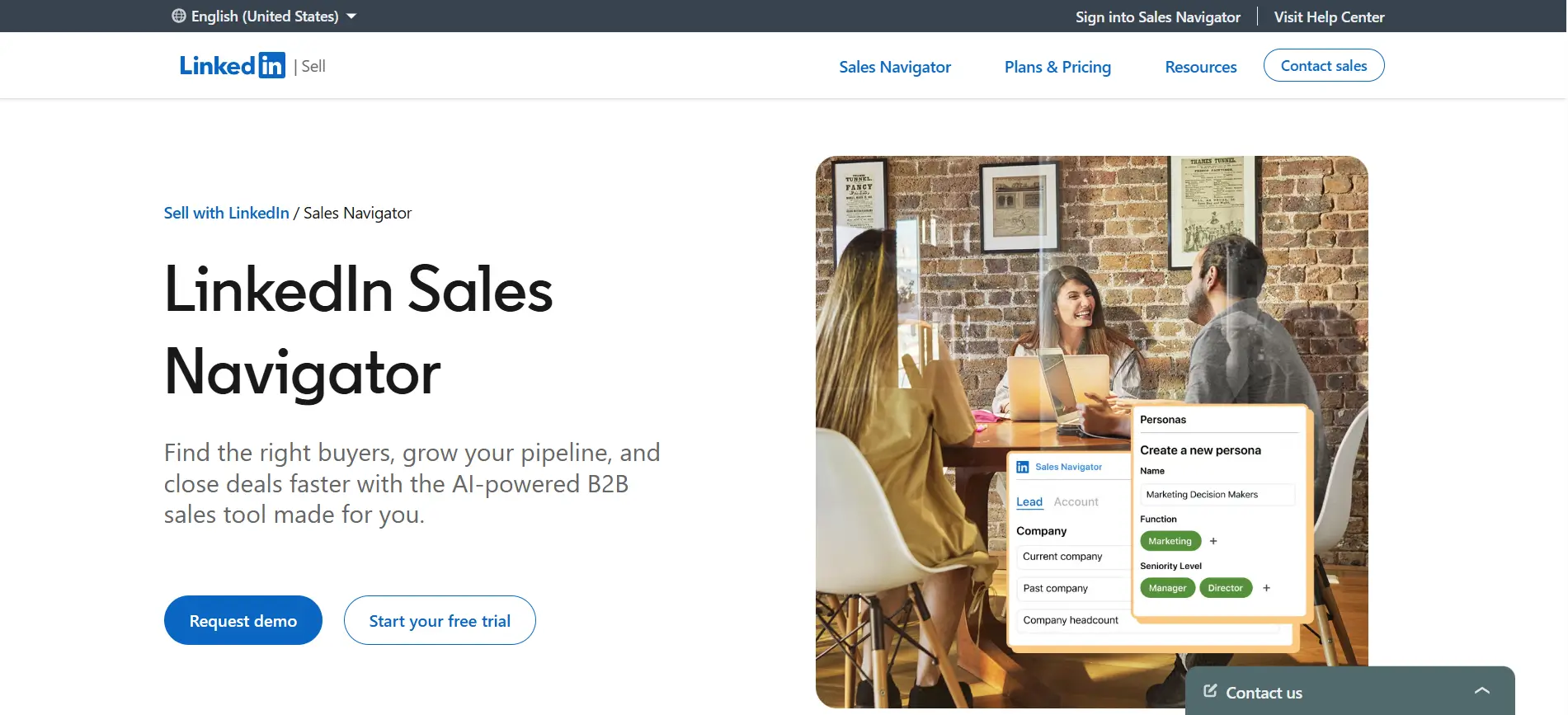
If your clients live on LinkedIn, this is the tool that helps you reach them directly.
LinkedIn Sales Navigator lets you search beyond the basic platform with advanced filters.
You can narrow prospects by job title, industry, company size, and location to build lists that actually match your target market.
That precision is what makes it a favorite for B2B client acquisition.
Standout Features
- Advanced LinkedIn search filters for sharper targeting
- Lead and account tracking to monitor key companies
- Real-time updates on job changes and company activity
How It Helps Recruitment Agencies
Sales Navigator helps you find the exact decision-makers worth pursuing, like HR leaders, founders, and hiring managers.
You can spot companies that are growing or shifting roles, then reach out while the timing is right.
This keeps your outreach focused on prospects who are far more likely to need your services.
Price
Paid subscription with tier-based plans.
Suggested Reading:
11 Best LinkedIn Sales Navigator Alternatives (Free + Paid Tools)3. Apollo.io
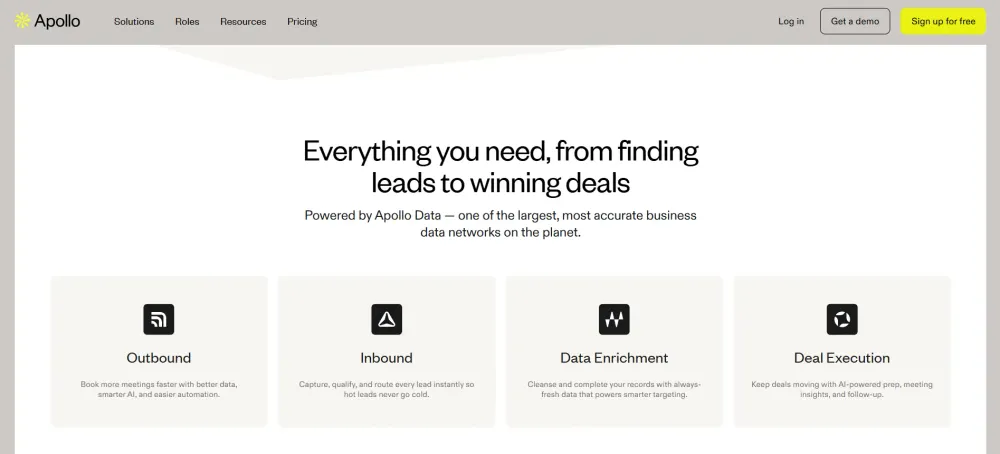
Apollo.io is an all-in-one prospecting platform that combines a large B2B contact database with built-in email outreach tools.
It's designed for teams that want to find leads and reach them in the same place, instead of paying for separate tools.
You can search for verified contacts, build targeted prospect lists, and launch automated campaigns from a single dashboard.
Standout Features
- Large B2B contact database to source new prospects
- Email sequencing to automate outreach and follow-ups
- Chrome extension to capture leads while browsing LinkedIn or websites
How It Helps Recruitment Agencies
Apollo.io helps you find potential client companies and run outreach without switching between platforms.
You can filter for businesses that match your target market, pull verified decision-maker contacts, and start an email sequence in minutes.
For agencies that want a simple, connected workflow, it covers both lead discovery and outreach in one tool, keeping your client acquisition process efficient.
Price
Freemium plan available, with paid plans for higher outreach volume and advanced features.
4. ZoomInfo
ZoomInfo is an enterprise-grade prospecting platform built around detailed company intelligence and verified contact data.
It's known for depth rather than simplicity, giving agencies rich insight into companies and the people who run them.
The standout advantage is hiring signals, which help you spot businesses that are likely to need recruitment support soon.
Standout Features
- Enterprise-level company data with deep firmographic detail
- Hiring signal insights to flag companies with active growth
- Decision-maker mapping to find the right contacts inside an organization
How It Helps Recruitment Agencies
ZoomInfo helps you target companies that are actively hiring or scaling fast.
Instead of cold-listing every business in an industry, you can focus on organizations showing real growth signals. From there, decision-maker mapping shows you exactly who to approach, whether that's an HR head or a founder.
For agencies chasing larger or higher-value clients, this kind of intelligence sharpens your targeting considerably.
Price
Enterprise pricing, typically suited to larger agencies with bigger budgets.
Suggested Reading:
12 Free + Affordable Zoominfo Competitors & Alternatives5. Lusha
Lusha is a contact-finding tool built for speed, helping you pull verified emails and phone numbers in seconds.
It's designed for recruiters who want quick access to decision-maker details without running complex searches or managing a heavy platform.
The main draw is its simplicity, working right inside LinkedIn and company profiles where you're already prospecting.
Standout Features
- Chrome extension that surfaces contact data as you browse
- Verified emails and phone numbers for decision-makers
- Simple lead export to move contacts into your workflow
How It Helps Recruitment Agencies
Lusha speeds up the slowest part of outbound, which is finding the right contact details.
When you spot a hiring manager or founder on LinkedIn, you can grab their verified email or number in a click. There's no waiting and no manual digging across the web.
For agencies that prospect heavily on LinkedIn, it removes friction and keeps your outreach moving quickly.
Price
Freemium plan available, with paid plans for higher contact volume.
6. Kaspr
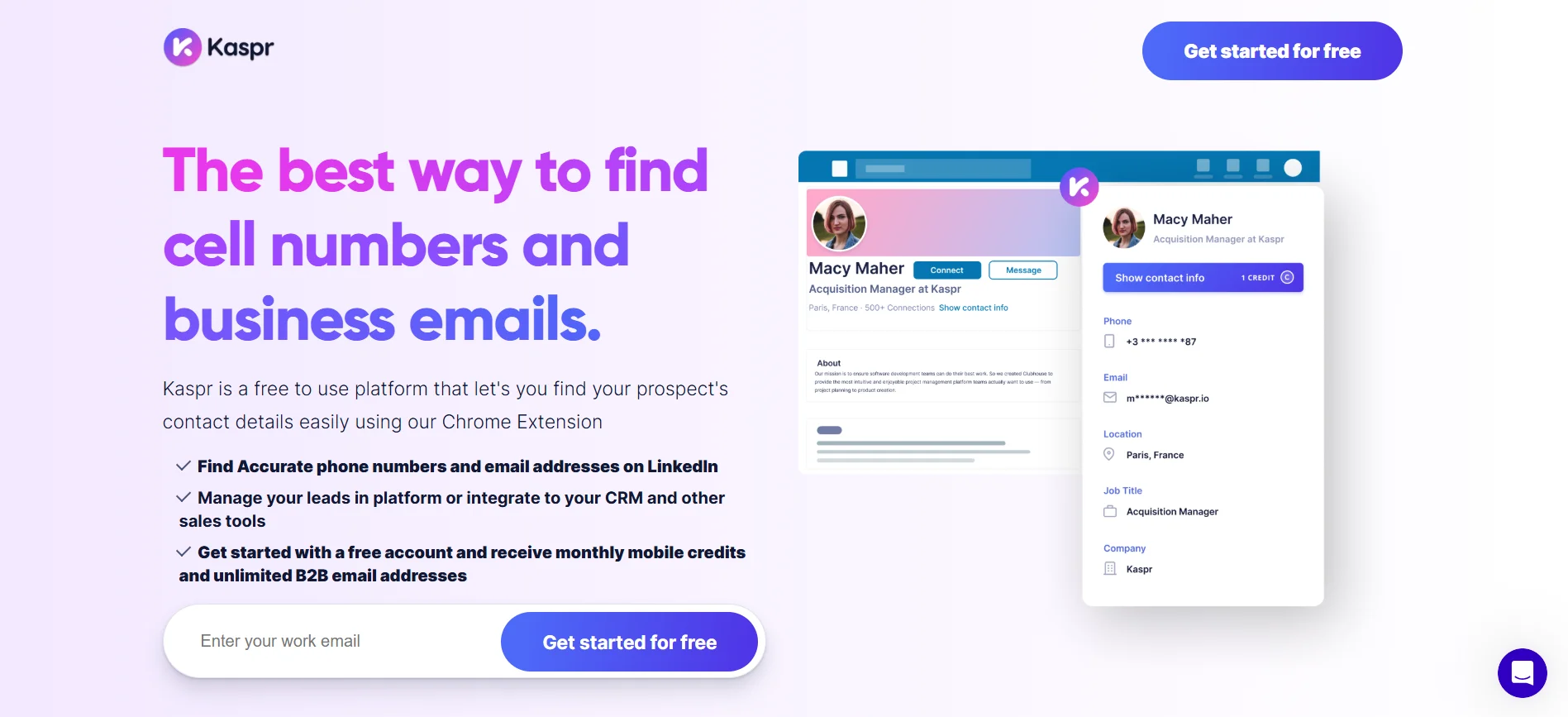
Kaspr is a LinkedIn-focused contact extraction tool that pulls decision-maker details straight from profiles.
It's built for recruiters who do most of their prospecting on LinkedIn and want lead collection to happen in real time, without breaking their workflow.
The main appeal is instant access, surfacing emails and phone numbers the moment you view a profile.
Standout Features
- LinkedIn contact extraction directly from profiles
- Email and phone number lookup in one click
- CRM integration to push leads into your pipeline
How It Helps Recruitment Agencies
Kaspr lets you capture leads instantly while you browse LinkedIn.
When you land on a promising hiring manager or founder, you can grab their verified details and send them straight to your CRM. There's no copy-pasting and no switching between tools.
For agencies that source clients through LinkedIn every day, this keeps prospecting fast and your contact data organized from the start.
Price
Paid tool, with plans based on the number of contact credits you need.
7. RocketReach
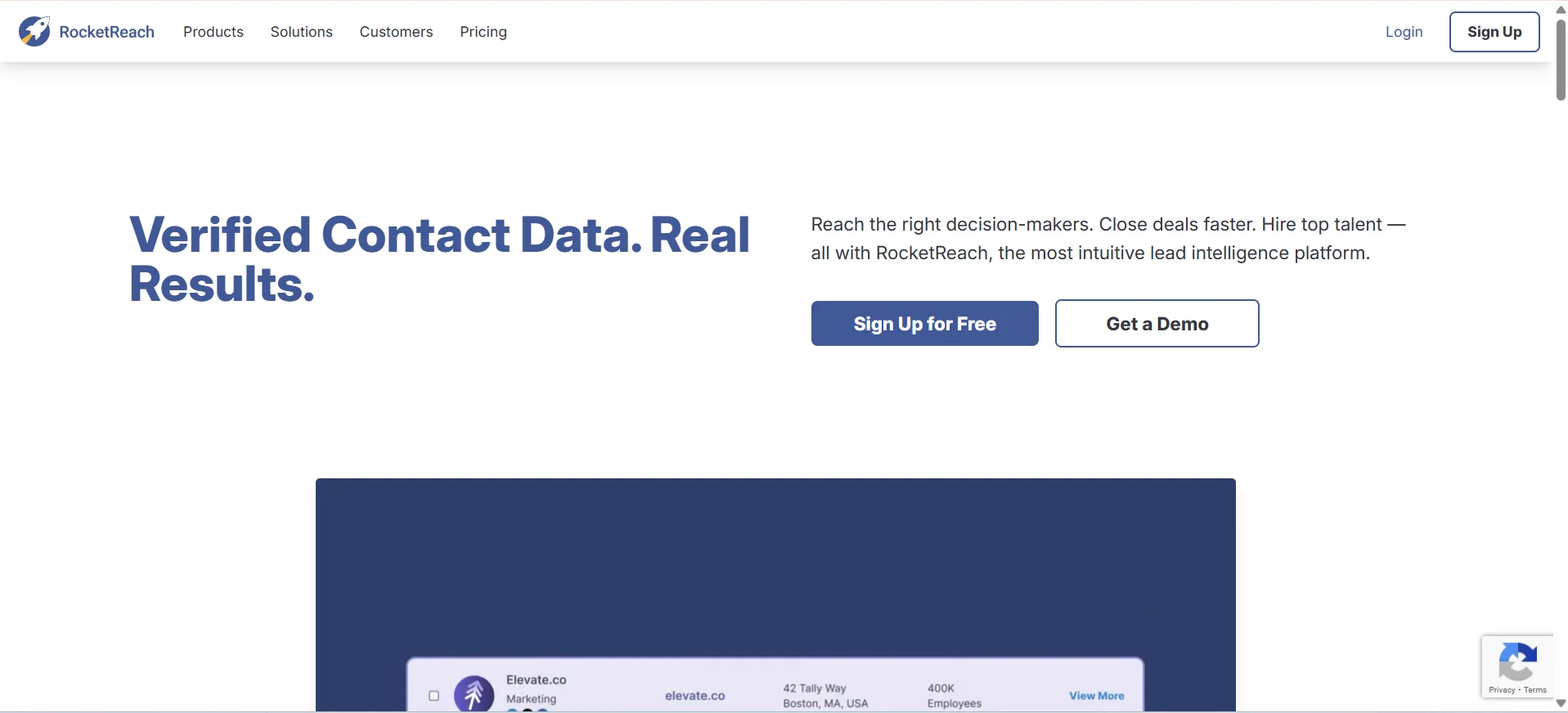
RocketReach is a contact-finding tool that helps you track down verified emails and professional profiles across many industries.
It's built for recruiters who need to reach decision-makers in different sectors and want one reliable source for accurate contact details.
The strength here is breadth, pulling data from multiple sources to improve the odds of finding a working email.
Standout Features
- Multi-source contact search across industries
- Built-in email verification to cut bounce rates
- Social profile data for added context on each lead
How It Helps Recruitment Agencies
RocketReach helps you reach the right people with greater accuracy.
When you find a target company, you can locate verified contacts for HR leaders, founders, or hiring managers, even in niche industries.
The built-in verification means fewer bounced emails and a healthier sender reputation.
For agencies running outreach across varied markets, this improves both deliverability and response rates.
Price
Freemium plan available, with paid plans for higher search volume and team use.
8. Hunter.io
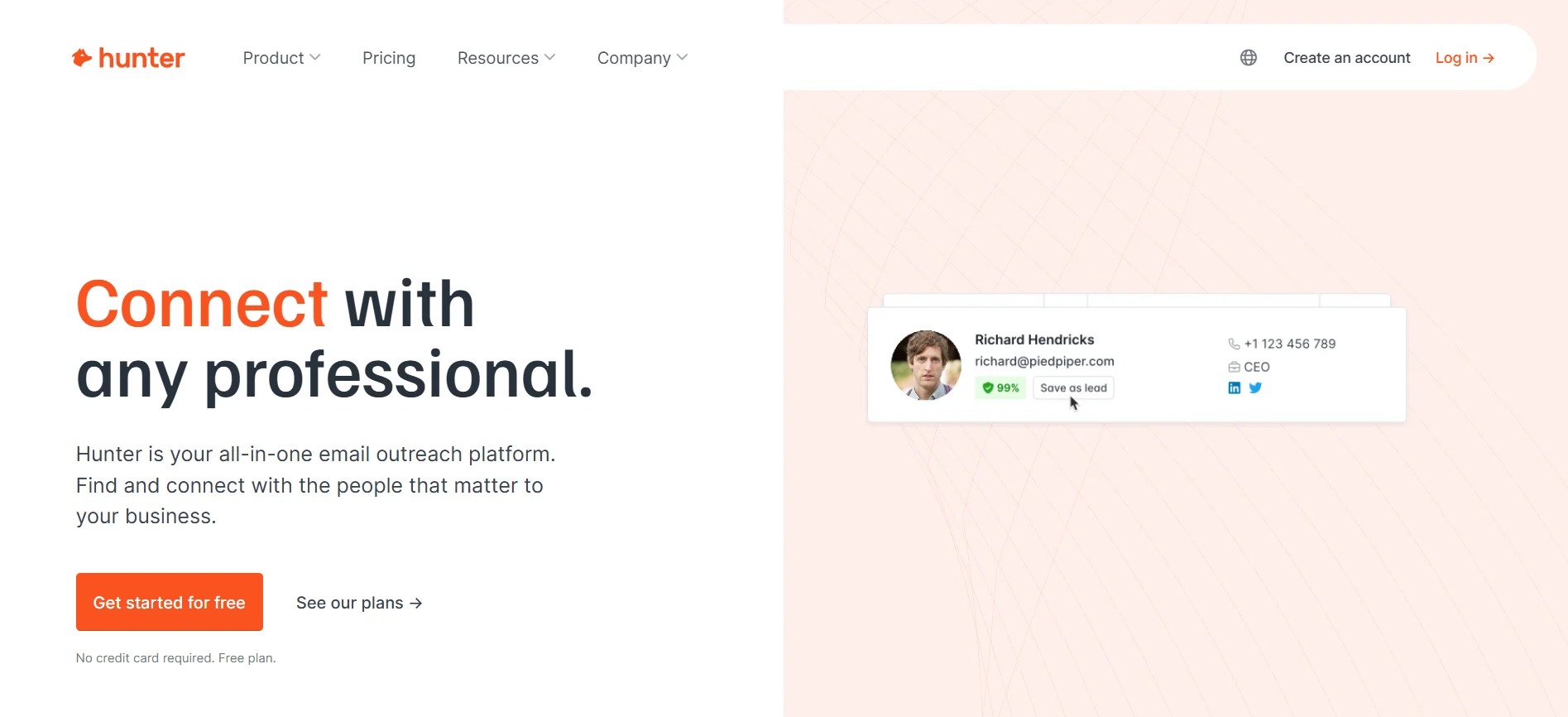
Hunter.io is an email discovery tool that finds and verifies professional email addresses based on company domains.
It's built for recruiters who already know which companies they want to target and just need reliable contact details to start outreach.
The main strength is its domain search, which surfaces the email patterns and contacts tied to any business.
Standout Features
- Domain-based email search to find contacts at a company
- Email verification to confirm addresses before you send
- Bulk email finder for working through larger prospect lists
How It Helps Recruitment Agencies
Hunter.io supports clean cold email campaigns with verified contact data.
When you've spotted a hiring company, you can pull the right email addresses straight from its domain and confirm they're valid first.
That keeps your bounce rates low and protects your sender reputation.
For agencies that lean on cold email to win clients, it's a simple, dependable way to build accurate outreach lists.
Price
Freemium plan available, with paid plans for higher search and verification volume.
Suggested Reading:
13 Hunter.io Alternatives That Find More Verified Emails9. Snov.io
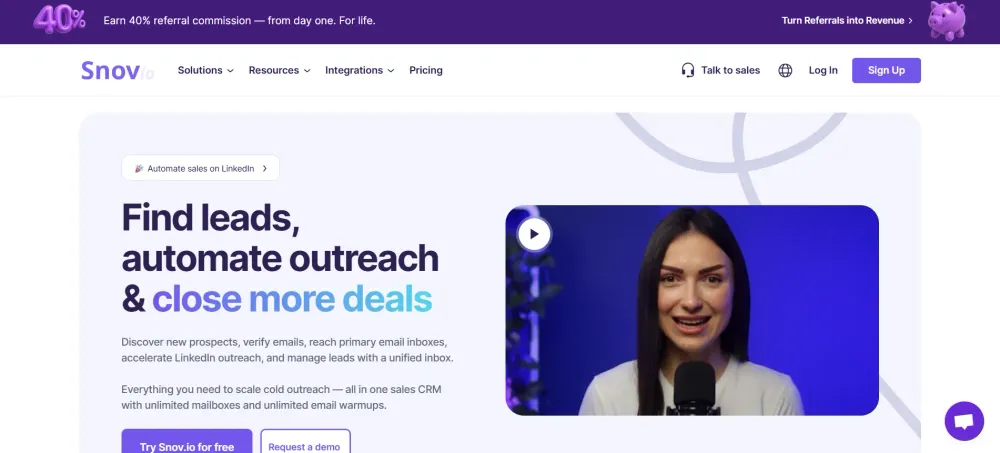
Snov.io is an all-in-one outreach platform that combines email finding, verification, and campaign automation in one place.
It's built for recruiters who want to run the full cold email process, from sourcing contacts to sending follow-ups, without stitching together separate tools.
The main appeal is its end-to-end coverage of the outbound workflow.
Standout Features
- Email finder and verifier to build clean contact lists
- Automated drip campaigns with scheduled follow-ups
- Lead tracking to monitor where each prospect stands
How It Helps Recruitment Agencies
Snov.io lets you manage your entire cold outreach workflow in a single platform.
You can find verified emails for hiring companies, load them into an automated sequence, and let the follow-ups run on schedule.
The built-in tracking shows you who's opening, clicking, and replying.
For agencies that want a connected outreach system without juggling multiple subscriptions, it keeps client acquisition organized and consistent.
Price
Freemium plan available, with paid plans based on contacts and email volume.
10. Seamless.ai
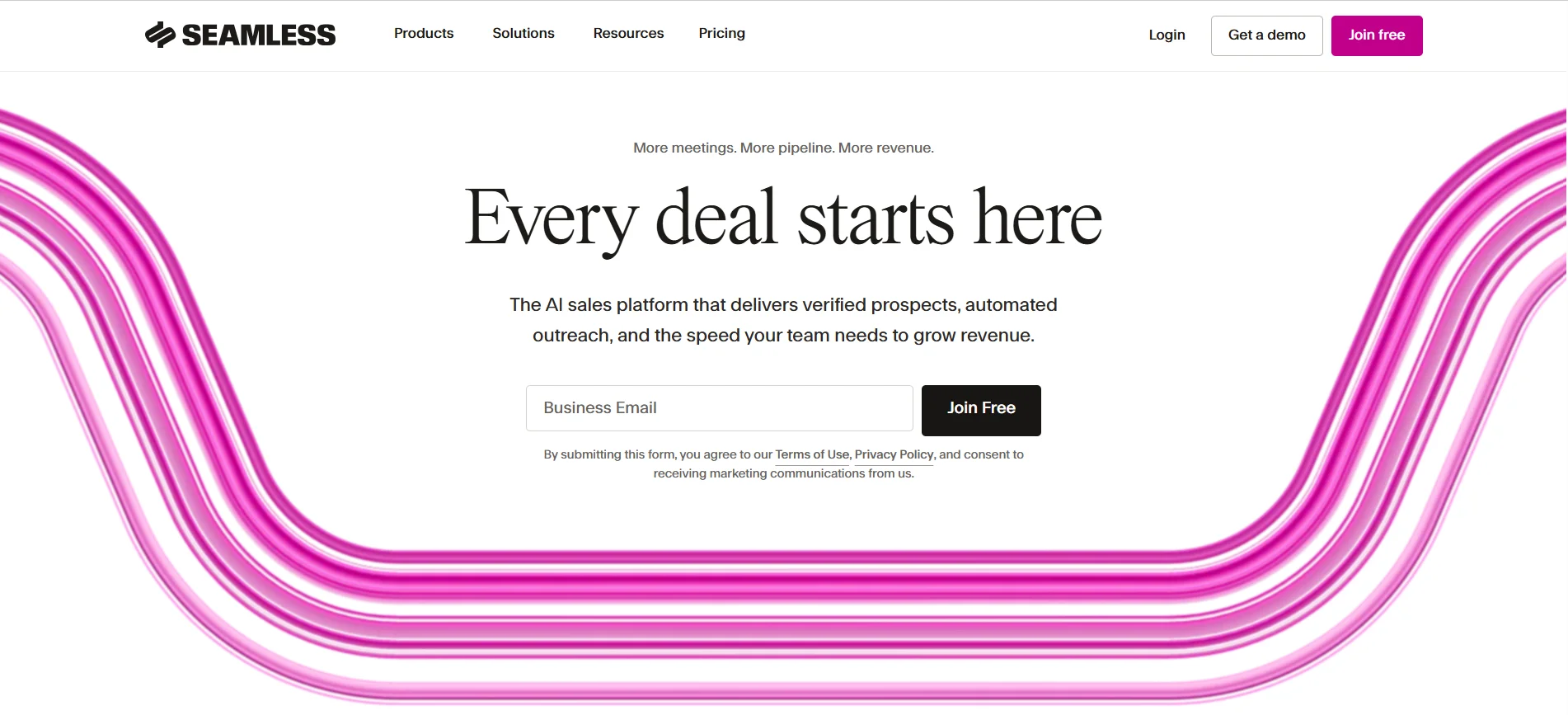
Seamless.ai is an AI-powered prospecting tool that finds verified B2B contact data in real time.
It's built for recruiters who want fresh, up-to-date details and are tired of chasing leads only to hit outdated or dead contacts.
The main strength is its live search engine, which pulls current data rather than relying on a static database.
Standout Features
- AI-powered search engine for finding contacts
- Real-time data updates to keep details current
- CRM integrations to sync leads automatically
How It Helps Recruitment Agencies
Seamless.ai helps you reach decision-makers with contact data that's actually current.
When you target a hiring company, the AI surfaces verified emails and numbers in real time, so you're not working from stale records.
That means fewer bounces and less wasted outreach.
For agencies where outdated contact data has been a recurring problem, this keeps your lists fresh and your campaigns landing where they should.
Price
Paid plans, with pricing based on usage and team size.
11. Clearbit
Clearbit is a data enrichment tool that fills in missing details about your leads and the companies behind them.
It's built for recruiters who already have contacts but need more context, like company size, industry, and decision-maker insights, before reaching out.
The main strength is real-time enrichment, which turns thin lead records into complete, usable profiles.
Standout Features
- Real-time data enrichment for leads and accounts
- Company profiling with firmographic detail
- API integrations to feed enriched data into your tools
How It Helps Recruitment Agencies
Clearbit helps you sharpen your targeting by understanding who you're actually reaching.
When you import a list of contacts, it layers in company size, industry, and other signals that tell you whether a prospect fits your ideal client.
That context lets you prioritize the right accounts instead of treating every lead the same.
For agencies focused on precise, well-targeted outreach, it improves both relevance and conversion rates.
Price
Enterprise pricing, generally suited to larger teams with custom data needs.
12. PhantomBuster
PhantomBuster is an automation tool that extracts data from LinkedIn and other platforms for large-scale prospecting.
It's built for recruiters who need to build big prospect lists fast and want to skip the slow, manual work of collecting leads one by one.
The main strength is its cloud-based automation, which runs in the background while you focus on outreach.
Standout Features
- LinkedIn automation for connections and data collection
- Lead scraping workflows to pull contacts in bulk
- Cloud-based automation that runs without your machine on
How It Helps Recruitment Agencies
PhantomBuster helps you build large prospect lists quickly without manual effort.
You can set up a workflow to extract leads from LinkedIn searches or other sources, then let it run on its own.
The result is a steady supply of contacts ready for enrichment and outreach.
For agencies that need volume to keep their pipeline full, it removes hours of repetitive data gathering.
Price
Paid plans, priced by automation slots and execution time.
13. Cognism
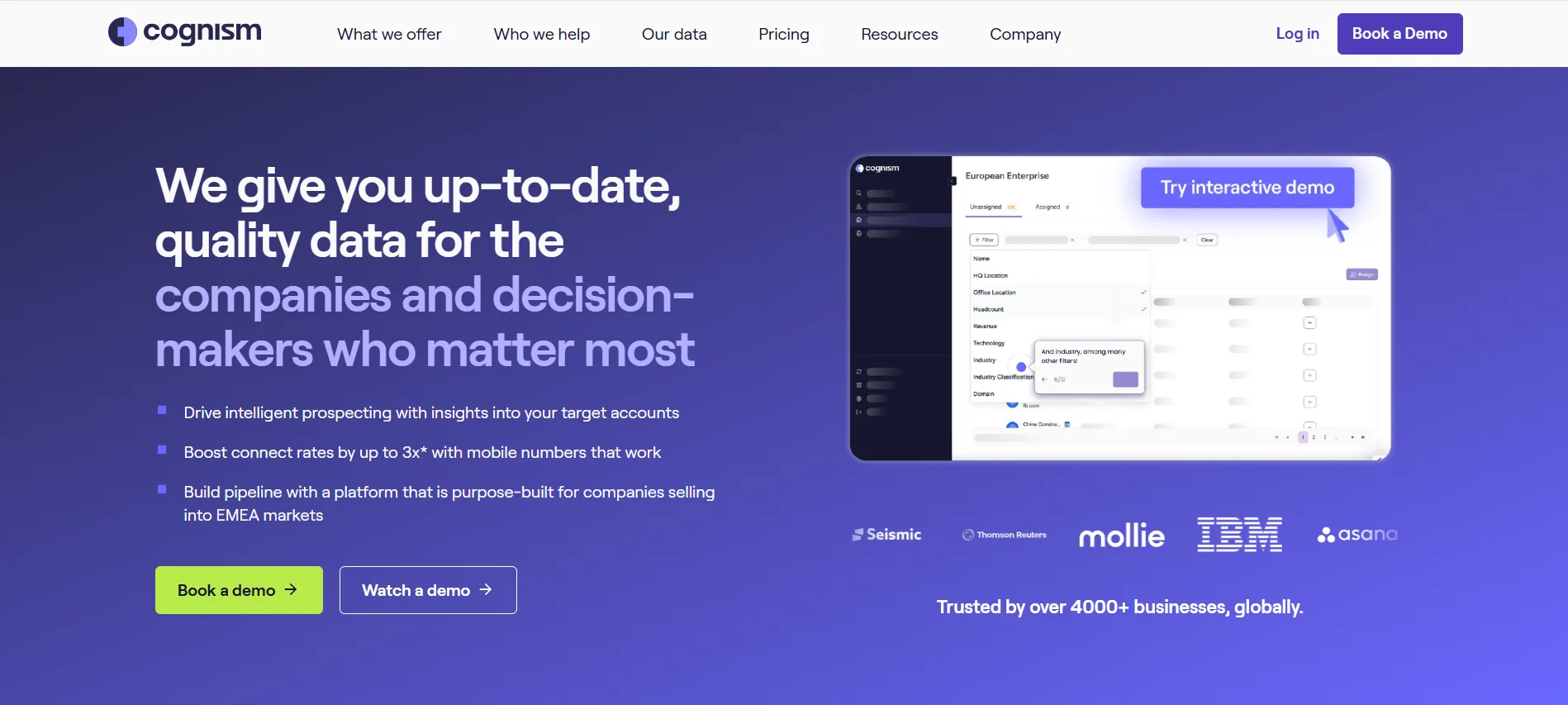
Cognism is a B2B data platform known for GDPR-compliant contact data with strong accuracy.
It's built for recruiters who run outreach in regulated markets and need contact details they can trust, especially across Europe and other compliance-sensitive regions.
The main strength is its mobile-verified data, which improves both deliverability and reachability.
Standout Features
- Compliance-ready data built around GDPR standards
- Mobile-verified contacts for higher connection rates
- Global database covering multiple regions and industries
How It Helps Recruitment Agencies
Cognism helps you run outreach with cleaner data and fewer wasted sends.
When you target decision-makers, you get verified emails and phone numbers that are accurate and compliant, which keeps bounce rates low and protects your sender reputation.
The global coverage also helps if your clients span several countries.
For agencies operating in enterprise or regulated markets, it offers both reliable data and peace of mind on compliance.
Price
Enterprise pricing, generally suited to larger agencies with bigger outreach needs.
14. Clay
Clay is a data enrichment and workflow automation tool that pulls multiple data sources into one system.
It's built for recruiters who want flexible, high-quality lead lists and aren't satisfied with what a single provider can offer.
The main strength is its multi-source approach, which combines many databases to fill gaps a single tool would miss.
Standout Features
- Multi-source data enrichment from many providers at once
- Workflow automation to build and run custom lead processes
- AI-powered research to gather deeper context on prospects
How It Helps Recruitment Agencies
Clay helps you build enriched, high-quality lead lists for sharper targeting.
When you load in contacts, it draws from multiple data sources to complete each record, so you get more accurate emails, firmographics, and insights than any one tool provides.
You can then automate how those leads flow into your outreach.
For agencies that care about data depth and want control over their enrichment, it offers serious flexibility.
Price
Paid plans, with pricing based on credits and enrichment volume.
Suggested Reading:
10 Best Clay Alternative & Competitors for AI Outreach & Lead Enrichment15. LeadIQ
LeadIQ is a prospecting tool that captures contact data from LinkedIn and syncs it straight into your CRM.
It's built for recruiters who prospect on LinkedIn and want to cut out the manual data entry that slows outbound work down.
The main strength is its CRM syncing, which keeps your pipeline updated automatically as you capture leads.
Standout Features
- LinkedIn lead capture directly from profiles and searches
- CRM syncing to push contacts in without manual entry
- Real-time prospect tracking to monitor your outreach
How It Helps Recruitment Agencies
LeadIQ speeds up outbound prospecting and removes the tedious copy-paste step.
When you find a hiring manager or founder on LinkedIn, you can capture their verified details and send them to your CRM in one click.
Your records stay clean and your reps spend their time reaching out, not typing.
For agencies that run high-volume LinkedIn prospecting, it keeps the workflow fast and the data consistent.
Price
Freemium plan available, with paid plans for larger teams and higher volume.
How to Choose the Right Prospecting Tools
With fifteen options on the table, it's easy to feel overwhelmed and end up buying more tools than you actually use.
The goal isn't to collect software. It's to build a focused stack that fits how your agency works.
A few simple questions will help you choose well and avoid tool overload.
Define Your Target Market
Before you look at any tool, get clear on who you're trying to win as clients.
Are you chasing fast-growing startups, large enterprises, or a specific niche industry?
The answer changes everything, because a tool built for enterprise data won't serve you well if your clients are small local businesses.
When you know your target, you can pick prospecting tools that surface the right leads instead of flooding you with irrelevant ones.
Focus on Data Accuracy
A massive database sounds impressive, but accuracy matters far more than size.
Outdated or unverified contacts lead to bounced emails, wasted hours, and a damaged sender reputation.
A smaller list of verified decision-makers will always outperform a huge list full of dead ends.
So when comparing tools, look closely at how they verify data and how fresh it stays over time.
Evaluate Automation Capabilities
Manual prospecting only takes you so far before your own time becomes the bottleneck.
Strong automation lets you run campaigns, schedule follow-ups, and manage outreach without doing each step by hand.
This is what allows a small team to reach the kind of volume that fills a pipeline.
The more your tools handle on autopilot, the more time you free up for closing clients and filling roles.
Balance Cost and ROI
It's tempting to chase the cheapest option, but price tells only half the story.
A low-cost tool that delivers poor data or weak automation often costs you more in lost deals than you saved.
Instead, weigh each tool against the long-term return it brings to your client acquisition.
The right stack pays for itself by keeping your pipeline consistent and your outreach efficient.
Conclusion – Building a Strong Prospecting System for Recruitment Agencies
Winning clients shouldn't feel like guesswork.
The right prospecting tools for recruitment agencies help you find hiring companies, reach decision-makers, and automate outreach so your pipeline stays full without burning out your team.
But tools alone aren't enough. What matters is building a system, with clear targeting, accurate data, and consistent follow-ups working together.
That's exactly where Oppora fits. Instead of stitching tools together, it runs your entire client acquisition in one AI-driven workflow, from finding leads to booking meetings.
If you're ready to make prospecting run itself, it's worth seeing what Oppora can do.
Frequently Asked Questions (FAQs)
How many prospecting tools does a recruitment agency actually need?
Most agencies do well with two or three: one for finding leads, one for outreach, and a CRM. An all-in-one platform can replace several at once. Start lean and add tools only when a clear gap appears in your workflow.
Are free prospecting tools good enough for a small recruitment agency?
Free plans are fine for testing and low-volume outreach, but they often cap contacts, credits, and automation. As your client acquisition grows, those limits slow you down. Treat free tiers as a trial, then upgrade once you see real results.
How long does it take to see results from prospecting tools?
Expect a few weeks before patterns emerge. Early campaigns help you refine targeting, messaging, and follow-ups. Tools speed up the process, but consistent outreach over time is what turns prospects into booked meetings and signed clients.
Is cold email prospecting legal for recruitment agencies?
Generally yes, but rules vary by region. Laws like GDPR and CAN-SPAM require honest sender details, a clear opt-out, and legitimate reasons for contact. Use compliant data sources and respect unsubscribe requests to keep your outreach both legal and trustworthy.
Can prospecting tools replace a dedicated sales team?
Not entirely. Tools automate the repetitive work of finding, reaching, and qualifying leads, which lets a small team punch above its weight. But human judgment still closes deals. Think of tools as multiplying your team's capacity, not removing the need for people.
Summarize with AI
Share