Best AI Lead Scoring Tools and Platforms in 2026
Stephen Parker
Published September 19, 2026
17 min

Complete Agentic Email Outreach
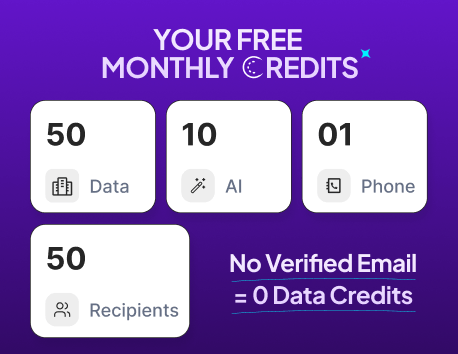
AI agents find and enrich prospects, personalize emails, follow up, handle replies, and book meetings automatically.
Claim Your FREE Credits
You may have hundreds or thousands of leads in your CRM, but the hardest question often stays the same: who should your sales team contact first?
Traditional scoring systems rely on fixed rules such as page visits, job titles, or form submissions. But those signals alone rarely show whether someone actually fits your ICP or is ready to buy.
That is where AI lead scoring tools become useful. They combine fit, intent, engagement, enrichment, CRM history, and behavioral signals to identify stronger opportunities.
In this guide, you will compare:
- The best AI lead scoring tools in 2026
- Their scoring methods and data signals
- Pricing, integrations, and ideal use cases
- How platforms like Oppora connect scoring with outbound execution
Best AI Lead Scoring Tools in 2026 at a Glance
Not all AI-powered lead scoring tools solve the same sales problem.
Some are built for inbound CRM leads, while others focus on predictive conversion, outbound prospecting, ABM, product-led sales, or real-time website intent.
So, the right platform depends on where your leads come from and what you need to do once a strong prospect is identified.
The table shows which platforms fit different sales motions. But before comparing these AI lead scoring tools individually, it helps to understand what actually makes an AI-generated score useful to your sales team.
What Makes an AI Lead Scoring Tool Actually Useful?
A lead score is only useful if it helps you decide who deserves attention and why.
When you compare AI lead scoring tools, look beyond the score itself. The real value comes from the data behind it and what your team can do next.
Fit tells you whether the prospect belongs in your ICP
A strong scoring model should first tell you whether a prospect actually looks like a customer you want.
That usually means evaluating factors such as industry, company size, revenue, geography, seniority, role, department, technology stack, company type, and similarities to your existing customers.
This matters because engagement can be misleading. Someone may visit your website several times, but if they sit far outside your ICP, they may still be a weak sales opportunity.
Intent tells you whether the timing is right
Fit answers “Is this the right company?” Intent answers “Is this the right time?”
Useful intent signals can include pricing-page visits, demo requests, repeat website sessions, email engagement, product usage, hiring activity, funding events, job changes, technology adoption, account research, and third-party intent data.
A company can match your ICP perfectly and still have no immediate reason to buy.
Predictive AI finds patterns manual rules can miss
Traditional scoring depends on rules you define manually, such as assigning 10 points for an ebook download.
Predictive scoring looks at past leads and conversions to identify patterns that are associated with better outcomes.
Hybrid models go further by combining ICP criteria, behavior, enrichment, external intent, and predictive analytics into one scoring process.
A useful score should trigger action
A score sitting inside your CRM does not create pipeline by itself.
The stronger AI lead scoring solutions connect prioritization with actions such as lead routing, SDR alerts, enrichment, sequence enrollment, AI-generated outreach, CRM updates, and automated qualification.
That is the difference between knowing a lead looks promising and actually doing something with that information.
With those criteria in mind, here is how the leading AI lead scoring platforms compare in 2026.
9 Best AI Lead Scoring Tools and Platforms in 2026
Now that you know what makes a lead score useful, the next question is which platform fits the way your team actually sells.
These AI lead scoring tools approach prioritization differently. Some start with your CRM history, while others combine enrichment, intent, product activity, or external buying signals before deciding who deserves attention.
1. Oppora.ai Best Overall for AI Lead Scoring and Automated Outbound
Oppora.ai is an AI outbound sales platform that connects lead discovery, qualification, enrichment, prioritization, and outreach in one workflow.
Instead of leaving a score inside your CRM, you can move through ICP definition → prospect discovery → enrichment → scoring → contact verification → outreach → reply handling → CRM sync.
It is particularly useful for SDRs, BDRs, founders, agencies, and RevOps teams that want prospect prioritization connected directly to outbound execution.
Key features:
- 1B+ contact database: Access a large B2B contact database to find relevant companies, decision-makers, and prospects for outbound campaigns.
- ICP-based lead scoring: Smart Finder automatically ranks prospects against your ICP and surfaces stronger matches first.
- Signal-based qualification: See why leads match through signals such as title fit, experience, recent role changes, and hiring activity.
- Multi-source enrichment: Combine prospect and company information instead of relying on a single data source.
- Verified contact discovery: Find and verify prospect emails before adding them to campaigns.
- AI sales workflows: Connect prospecting, enrichment, scoring, outreach, replies, and CRM updates without rebuilding each step manually.
- Multi-channel outreach: Run email and LinkedIn activities and continue qualified conversations through AI-assisted replies with its AI reply agent and meeting booking.
Pros:
- Combines lead data, scoring, enrichment, and outreach.
- Provides access to a 1B+ contact database for prospect discovery.
- Reduces manual prospect research.
- Strong fit for outbound-heavy sales teams.
- Separate task credits and credit rollover on paid plans.
Cons:
- May be broader than necessary if you only need basic inbound lead scoring.
- Teams deeply invested in native CRM scoring may prefer starting with their existing ecosystem.
Pricing:
- Free: $0/month
- Pro: $34/month
- Max: $79/month
- Enterprise: Starts at $499/month for larger requirements
G2:
- Rating: 4.5/5
2. HubSpot Best for CRM-Native AI Lead Scoring
HubSpot is a strong choice if most of your lead activity already happens inside its CRM.
You can score contacts and companies using fit, engagement, or combined scoring models, then use those scores to trigger workflows, routing, and sales follow-up. HubSpot can evaluate CRM properties alongside actions such as form submissions, page visits, and marketing engagement.
For larger teams, HubSpot also provides predictive lead scoring. Its machine-learning model estimates the probability that an open contact will become a customer within the next 90 days.
Key features:
- Fit scoring: Score leads based on company, contact, and ICP attributes.
- Engagement scoring: Use website visits, forms, emails, and behavioral events.
- Combined scoring: Bring fit and engagement signals into the same model.
- AI scoring insights: Identify events that show stronger relationships with conversion.
- Predictive scoring: Estimate customer conversion likelihood using historical CRM data.
- CRM workflows: Route or update qualified leads automatically.
Pros:
- Lead scoring works directly with existing HubSpot CRM data.
- Combines marketing and sales activity in one system.
- Easy to connect scores with automated workflows.
Cons:
- Predictive scoring requires Enterprise editions.
- Less focused on discovering and enriching new outbound prospects.
Pricing:
- Marketing Hub Professional: Starts at $800/month with annual commitment.
- Marketing Hub Enterprise: Starts at $3,600/month.
- Professional and Enterprise plans also require onboarding fees.
G2:
- Rating: 4.⅘
3. Salesforce Einstein Best for Enterprise Salesforce Teams
Salesforce Einstein is a strong fit if your lead history, pipeline, and sales workflows already live inside Salesforce.
Einstein Lead Scoring uses machine learning to compare current leads with previously converted leads. It then prioritizes prospects based on the conversion patterns found in your own CRM data.
Key features:
- Predictive lead scoring: Identify leads that resemble prospects that converted successfully in the past.
- Historical conversion analysis: Use Salesforce lead fields, activities, and conversion history to build scoring models.
- Positive and negative factors: Show reps which lead attributes are increasing or decreasing a score.
- Lead segmentation: Build separate scoring models for different groups of leads.
- Automatic score updates: Lead scores can refresh at least every six hours, while models are reanalyzed periodically.
- Salesforce workflows: Use scores inside existing CRM views, reports, and sales processes.
Pros:
- Works directly with Salesforce CRM data.
- Gives reps visibility into why a lead received its score.
- Strong fit for enterprise sales teams with substantial historical data.
- Integrates naturally with Salesforce workflows and reporting.
Cons:
- Your custom predictive model generally needs at least 1,000 leads created within 200 days and 120 conversions.
- Less useful for teams that need external prospect discovery and enrichment.
Pricing:
- Performance: Sales Cloud Einstein is included.
- Unlimited: Sales Cloud Einstein is included.
- Enterprise: Available as an additional paid feature.
- Exact Einstein pricing: Salesforce recommends contacting its sales team for current pricing.
G2:
- Rating: 4.⅘
4. Clay Best for Custom AI and Enrichment-Based Lead Scoring
Clay is a strong option when you want to build your own scoring logic around data that may not already exist inside your CRM.
It combines multi-source enrichment, AI research, formulas, and workflow automation, making it useful for growth, outbound, and RevOps teams with more customized qualification requirements. Clay says its enrichment workflows can draw on 70+ data providers alongside AI research.
Key features:
- Custom lead scoring: Score prospects using company size, industry, role, revenue, technology stack, engagement, and other criteria.
- Score Row: Create up to 15 scoring criteria and generate a numerical score with reasoning.
- Claygent: Build AI agents that research accounts, evaluate ICP fit, and score leads from 1–100 with an explanation.
- Multi-source enrichment: Add firmographic, technographic, contact, and other prospect data before scoring.
- Custom formulas: Build number-based, grade-based, or fit-based scoring models.
- Workflow automation: Send qualified leads into CRM or outbound workflows after scoring.
Pros:
- Highly customizable scoring models.
- Strong enrichment and AI research capabilities.
- Useful when CRM data alone is not enough.
- Supports both lead and account qualification.
Cons:
- Requires more setup than plug-and-play AI lead scoring tools.
- Complex workflows may require stronger RevOps knowledge.
Pricing:
- Free: $0
- Launch: Starts at $185/month
- Growth: Starts at $495/month
- Enterprise: Custom pricing
G2:
- Rating: 4.6/5
5. 6sense Best for Enterprise ABM and Account Scoring
6sense is designed for B2B teams that need to prioritize accounts and buying groups, not just individual leads.
Its 6AI engine combines ICP fit, intent, engagement, and historical buying behavior to identify which accounts are more likely to move toward an opportunity. This makes it especially useful for enterprise ABM teams selling into larger companies with multiple decision-makers.
Key features:
- Predictive buying stages: Classify accounts into Target, Awareness, Consideration, Decision, and Purchase stages based on buying activity.
- Account fit scoring: Evaluate firmographic, technographic, and historical opportunity data against your ICP.
- Intent scoring: Combine CRM, website, marketing automation, keyword research, and third-party intent data.
- Anonymous account identification: Identify companies researching your category before they complete a form.
- Buying-group intelligence: Help sales understand which stakeholders within an account are showing engagement.
- Daily intent updates: Intent scores run from 0–100 and update daily as new activity appears.
- ABM activation: Use scores and buying stages to trigger sales outreach, advertising, segmentation, and marketing workflows.
Pros:
- Strong account-level prioritization for enterprise B2B sales.
- Combines fit, intent, engagement, and buying-stage intelligence.
- Useful for complex deals involving several stakeholders.
- Predictive stages help teams understand timing, not just account fit.
Cons:
- More complex than simpler lead-level scoring platforms.
- May be excessive for small teams with short sales cycles.
- Pricing is not publicly transparent.
Pricing:
- 6sense Revenue Marketing: Custom pricing
- 6sense Sales Intelligence: Custom pricing
- Pricing varies based on AI and intent-data depth, credits, users, and orchestration requirements.
G2:
- Rating: 4.2/5 for 6sense Revenue Marketing
- Reviews: 1,518 reviews as of September 2026
6. MadKudu Best for SaaS and Product-Led Lead Scoring
MadKudu is well suited to SaaS and product-led growth teams where buying intent often appears inside the product, not just through form fills or website visits.
Its scoring combines customer fit with behavioral engagement, helping you identify prospects who both match your ICP and are actively showing signs of readiness. MadKudu’s Lead Grade combines fit and engagement into a single A–E grade, with A representing the most qualified and engaged prospects.
Key features:
- Customer fit scoring: Evaluate leads using firmographic, demographic, and technographic attributes.
- Product engagement scoring: Use in-app behavior alongside marketing and sales interactions to identify active prospects.
- Lead Grade: Combine fit and engagement into one prioritization metric.
- Real-time engagement scoring: Refresh behavioral scores after meaningful actions, with Salesforce writeback targeted within 10 minutes for supported early-adopter workflows.
- AI outbound scoring: Rank accounts using Fit, Need, and Intent across a database of more than 50 million companies.
- Sales playbooks: Turn signals such as pricing-page visits, product activity, or account changes into recommended sales actions.
Pros:
- Strong fit for SaaS and PLG sales motions.
- Combines product usage with firmographic and behavioral data.
- Helps sales understand why a lead or account is prioritized.
- Supports both inbound lead scoring and outbound account prioritization.
Cons:
- More useful when you already have meaningful behavioral or product data.
- Scoring models are not continuously self-learning and require manual updates when you want to retrain or adjust them.
Pricing:
- MadKudu: Custom pricing
- Public package pricing is not currently listed, so you need to contact the vendor for a quote.
G2:
- Rating: 4.5/5
7. Warmly Best for Real-Time Buyer Intent Scoring
Warmly is built for teams that want to identify and act on buying intent while prospects are still active on their website.
Instead of waiting for form submissions or reviewing yesterday’s lead list, Warmly can identify visitors, enrich them, score intent, and trigger outreach in real time. Its website visitor identification workflow processes more than 9 million website visits per month, according to Warmly.
Key features:
- Person-level visitor identification: Identify visitors by name, work email, role, company, and LinkedIn profile.
- Real-time intent scoring: Combine page activity, firmographic fit, and multiple active signals into an intent score.
- Website behavior tracking: Monitor pages viewed, repeat visits, time on site, and other engagement signals.
- ICP filtering: Prioritize website visitors that match your target customer profile.
- Buying committee visibility: See when multiple stakeholders from the same company are engaging.
- Real-time alerts: Notify sales through Slack and route high-intent visitors immediately.
- Automated activation: High-scoring visitors can be moved into email sequences, AI chat, or other follow-up workflows.
Pros:
- Strong fit for teams where speed-to-lead matters.
- Combines website intent with firmographic and CRM context.
- Supports both person- and company-level identification.
- Can move directly from scoring to automated engagement.
Cons:
- Most valuable for companies already generating meaningful B2B website traffic.
- Pricing may be high for smaller teams that only need basic lead scoring.
Pricing:
- AI Web-Deanonymization: Starts at $10,000/year
- Inbound Chat: Starts at $20,000/year
- AI Inbound Autopilot: Available on higher-priced plans
- GTM Signals Package: $10,000/year add-on
G2:
- Rating: 4.5/5
8. Factors.ai Best for ABM Account and Intent Scoring
Factors.ai is built for demand generation and ABM teams that need to understand which accounts are showing real buying activity across multiple channels.
Instead of relying on one signal, it combines website behavior, CRM activity, ad engagement, G2 intent, LinkedIn interactions, and third-party research intent into account-level scoring.
Key features:
- Account scoring: Rank companies based on fit, engagement, and buying activity.
- Engagement scoring: Score activity across website visits, forms, HubSpot, Salesforce, G2, and LinkedIn interactions.
- Dynamic score updates: Engagement scores refresh daily and apply decay so older activity carries less weight.
- Third-party intent: Track what target accounts are researching across the web and classify activity as Early, Active, or In-depth research.
- Account intelligence: Combine firmographics, website behavior, advertising interactions, and CRM data in one account view.
- Predictive account scoring: Available on Enterprise plans to help prioritize accounts more intelligently.
- ABM activation: Use high-intent account lists for workflows, alerts, CRM sync, and advertising audiences.
Pros:
- Strong for account-based marketing and demand generation teams.
- Combines first-, second-, and third-party intent signals.
- Daily scoring updates help teams respond to changing buyer behavior.
- Connects account scoring with alerts, workflows, and ABM activation.
Cons:
- More focused on account-level scoring than individual lead prioritization.
- Advanced predictive scoring requires the Enterprise tier.
Pricing:
- Lite: $199/month after trial
- Basic: $6,000/year
- Growth: $20,000/year
- Enterprise: Starts at $30,000/year
G2:
- Rating: 4.5/5
- Reviews: 220 reviews as of September 2026
9. Breadcrumbs Best for Flexible Lead Scoring Models
Breadcrumbs is built for RevOps and growth teams that want more control over how leads are scored without building a predictive model from scratch.
It combines fit, activity, recency, and frequency so you can evaluate both who a prospect is and how recently they have engaged. Breadcrumbs also supports separate models for acquisition, expansion, retention, and account-based scoring.
Key features:
- Fit scoring: Score leads using attributes such as job title, industry, company size, and other ICP criteria.
- Engagement scoring: Use website visits, email interactions, form submissions, product activity, and other behavioral data.
- Recency and frequency: Give more weight to recent or repeated actions instead of treating every interaction equally.
- ML-assisted model building: Breadcrumbs Reveal analyzes your data to identify attributes associated with better leads, while Copilot can suggest scoring models.
- Model testing: Create, compare, and test multiple scoring models without replacing your live model.
- Account-based scoring: Combine individual contact scores into an account-level score for more complex B2B sales motions.
- CRM integrations: Push updated scores back into tools such as HubSpot and use them for routing and sales workflows.
Pros:
- Flexible enough for different scoring strategies.
- Combines fit and behavior instead of relying on one dimension.
- Useful for testing which scoring model actually correlates with revenue.
- Gives sales teams visibility into why a lead received its score.
Cons:
- Requires clean input data to produce reliable scores.
- You may still need separate prospecting and outbound tools.
- Pricing is relatively high for smaller teams.
Pricing:
- Pro: Starts at $1,999/month for up to 2,000 leads per month
- Enterprise: Custom pricing with unlimited leads scored and unlimited active models
G2:
- Rating: 4.3/5
- Reviews: 23 reviews as of September 2026
Suggested Reading:
AI Lead Scoring: Models, Software, Benefits and ImplementationWhich AI Lead Scoring Tool Fits the Way Your Team Sells?
Once you understand how these platforms differ, the next step is matching the tool to your sales motion.
The best AI lead scoring platform is not necessarily the one with the most features. It is the one that uses the right signals and fits what your team needs to do after a prospect is prioritized.
Outbound SDR and BDR teams
Outbound teams should look for more than a score.
You typically need ICP matching, enrichment, verified contact data, external buying signals, prospect research, and automated outreach.
Oppora.ai and Clay both fit this workflow. Clay gives you more flexibility to build custom enrichment and scoring logic.
Oppora is stronger when you want prioritization connected directly to execution because it combines lead discovery, enrichment, scoring, verified contact data, and outreach within one workflow.
Inbound marketing and CRM-led sales teams
If most leads already enter through forms, email campaigns, website visits, and lifecycle stages, CRM-native scoring usually makes more sense.
HubSpot works well for teams using marketing and engagement data, while Salesforce Einstein is better suited to organizations with substantial Salesforce conversion history.
Enterprise ABM teams
ABM teams usually care more about the account than one individual lead.
Look for account intent, buying committees, multiple stakeholders, engagement trends, and third-party research signals.
6sense and Factors.ai are built around this type of account-level prioritization.
SaaS and product-led companies
For PLG teams, website engagement alone may not tell you enough.
You need signals such as trial activity, feature usage, user activation, product adoption, and company fit. MadKudu is particularly suited to this model.
Teams where speed-to-lead matters
If buying intent can disappear quickly, real-time signals matter.
Warmly focuses on active website visitors, high-intent page behavior, alerts, and immediate sales activation.
How to Choose an AI Lead Scoring Platform Without Paying for Features You Won't Use
Once you know which category fits your sales motion, the next step is avoiding features that sound useful but do not improve how you qualify or convert leads.
Use this checklist before choosing any AI lead scoring software.
What data does the scoring model actually use?
Check whether the platform can access:
- Firmographic data
- Contact data
- CRM history
- Email and marketing engagement
- Website activity
- Product usage
- Buying intent
- Technology data
- Funding activity
- Hiring signals
- Third-party enrichment
The quality of the score depends heavily on the quality of these inputs.
Better AI cannot compensate for consistently poor input data.
Does it score leads, companies, or buying groups?
Choose the scoring level based on your sales motion:
- Individual lead scoring: Works well when one person usually drives the buying decision.
- Account scoring: Better when you sell to companies rather than individual contacts.
- Buying-group scoring: Useful for enterprise deals involving several stakeholders.
For complex B2B sales, account and buying-group scoring can give you a more complete picture than scoring one contact in isolation.
Can sales understand why the lead was prioritized?
Look for scoring transparency such as:
- Visible scoring factors
- Fit criteria
- Signal explanations
- Behavioral reasons
- Positive attributes
- Negative attributes
- Recent activity behind the score
Sales reps are more likely to trust a score when they can understand why a prospect moved higher or lower.
How quickly does the score change?
Check how often the platform refreshes scores:
- In real time
- Hourly
- Daily
- After CRM updates
- After new intent or engagement activity
This matters most for intent data. A high-intent action loses value if your salesperson only sees it several days later.
What happens when the score crosses the threshold?
This should be one of your most important evaluation criteria.
Check whether the platform can automatically:
- Route the lead
- Notify an SDR
- Enrich the contact
- Find the decision-maker
- Add the prospect to a sequence
- Write a personalized message
- Trigger AI outreach
- Update the CRM
Oppora stands out here because lead scoring can connect directly with enrichment, outreach, reply handling, and CRM updates instead of stopping at prioritization.
How much historical data does the model need?
Predictive scoring usually works better when you have enough examples of:
- Converted leads
- Non-converted leads
- Won opportunities
- Lost opportunities
- Historical engagement
- CRM activity
If you have limited CRM history, ICP-based, enrichment-based, signal-based, or rules-based scoring may be more practical at the beginning.
How will you prove the score is working?
Track performance using metrics such as:
- Meeting rate by score
- SQL conversion rate
- Opportunity rate
- Win rate
- Response rate
- Sales acceptance rate
- Pipeline generated
- False-positive rate
A simple benchmark is to compare your top-scored 20% of leads against the remaining 80%.
If the high-score group does not consistently perform better, review your scoring inputs, weighting, data quality, and thresholds.
Conclusion
The best AI lead scoring tools help you do more than rank prospects. They help you understand who fits your ICP, who is showing buying intent, and what your sales team should do next.
The right platform depends on your sales motion. HubSpot and Salesforce Einstein fit CRM-led teams, 6sense and Factors.ai suit ABM, MadKudu works well for PLG, and Warmly focuses on real-time website intent.
For outbound teams, platforms such as Oppora.ai stand out by connecting scoring with prospect discovery, enrichment, verified contact data, outreach, and follow-up in one workflow.
Whichever platform you choose, measure whether your highest-scored leads actually convert better. If they do not, the scoring model needs refinement not more complexity.
FAQs
What are the best AI lead scoring tools in 2026?
The best AI lead scoring tools in 2026 include Oppora.ai for outbound scoring and automation, HubSpot for CRM-native scoring, Salesforce Einstein for predictive CRM scoring, Clay for custom enrichment-based scoring, 6sense for ABM, MadKudu for product-led sales, and Warmly for real-time website intent.
What is an AI lead scoring tool?
An AI lead scoring tool analyzes prospect and account data to estimate which leads are most likely to convert. It can use ICP fit, CRM history, engagement, buying intent, website behavior, enrichment, and other signals to help your sales team prioritize outreach.
How does AI lead scoring work?
AI lead scoring collects lead and account data, analyzes patterns and buying signals, assigns a score or priority level, and helps sales focus on stronger opportunities. Some platforms also trigger workflows, enrichment, routing, or outreach once a lead reaches a specific threshold.
What is the difference between traditional and AI lead scoring?
Traditional lead scoring relies on manually assigned rules, such as adding points for a form submission or pricing-page visit. AI lead scoring can analyze larger combinations of historical, behavioral, firmographic, and intent data to identify patterns that manual rules may miss.
Can AI SDR platforms score and contact leads automatically?
Yes. Some AI SDR platforms for lead scoring can connect qualification directly with outreach. Oppora.ai, for instance, can combine ICP-based scoring, enrichment, verified contact discovery, and buying signals with email and LinkedIn outreach, reply handling, and CRM updates in the same workflow.
Summarize with AI
Share