7 High-Converting B2B Cold Call Scripts for Sales Prospecting
Stephen Parker
Published September 24, 2026
12 min

Complete Agentic Email Outreach
AI agents find and enrich prospects, personalize emails, follow up, handle replies, and book meetings automatically.
Claim Your FREE Credits
Sales teams rarely struggle to find buying signals anymore. The real challenge is knowing which signals matter now and turning them into conversations before the opportunity goes cold.
The best signal based selling platforms help you connect intent, hiring, funding, job changes, website activity, and CRM data with the right decision-makers. But not all signal based selling tools make that process equally fast.
In this guide, you’ll compare platforms based on:
- Signal depth and recency
- Contact and enrichment data
- Scoring and activation
- CRM integrations
- Ease of setup and pricing
TL;DR
- Call the right decision-maker, not simply the contact who is easiest to reach.
- Verify phone numbers and contact information before you start dialing.
- Know why the prospect is relevant and why you’re calling them now.
- Don’t force the same B2B cold calling script on every prospect.
- Keep your opener short and establish relevance quickly.
- Ask a meaningful question early to turn the pitch into a conversation.
- Treat scripts as flexible frameworks, not speeches you memorize.
- Match your script to the prospect, trigger, and situation.
- Handle objections with questions instead of aggressive rebuttals.
- Track connects, conversations, meetings, and follow-through separately to see what actually works.
Before You Call, Make Sure You're Talking to the Right Person
A better B2B cold calling script cannot fix bad targeting. If you call someone who doesn’t own the problem, even a strong opener can lead nowhere.
So, before you think about what to say, make sure you know who should hear it.
Start With the Problem Your Product Solves
Work backward instead of starting with a list of job titles:
Problem → department → role → seniority → decision-maker
If you sell outbound sales software, your buyer might be a VP of Sales, Head of Sales Development, Revenue Operations leader, Sales Operations leader, or founder at a smaller company.
The title can change with company size and structure. What matters is whether that person owns, influences, or directly experiences the problem you solve.
Give Yourself a Real Reason to Call
Next, identify why your call could be relevant now.
Look for signals such as new funding, hiring growth, leadership changes, expansion, a new market or product, technology changes, previous interactions, or a known operational problem.
If a company is hiring several SDRs, for instance, an outbound sales solution may become more relevant as its prospecting workload grows.
That gives you a credible reason to call instead of manufacturing small talk.
Use a 60-Second Pre-Call Checklist
You don’t need 20 minutes of research before every call. You need enough context to start intelligently.
Ask yourself:
Who are they? → What do they own? → Why this company? → What might be changing? → What problem is relevant? → What will I ask?
That minute of preparation can make your script feel like a relevant conversation rather than a generic pitch.
Find and Verify the Right Phone Numbers Before You Start Calling With Oppora.ai
Even the best B2B cold calling script cannot help if your contact data doesn’t lead you to the prospect it was written for.
That’s why you should build and enrich a focused prospect list before worrying about which script to use.
Find the Decision-Makers You Actually Want to Call
With Oppora.ai Finder, you can narrow your search around your ICP rather than filling your list with loosely relevant contacts.
Follow a simple path:
Target company → relevant department → job title → seniority → individual prospect
Depending on your ICP, you can narrow your prospect search using criteria such as:
- Industry and company attributes
- Location
- Role and job title
- Department
- Seniority
- Other attributes relevant to your target audience
The objective isn’t to find the largest number of people. It’s to create a focused calling list of prospects who are actually relevant to your offer.
Suggested Reading:
How to Find the Decision Maker in a Company for OutreachFind and Enrich Contact Data Before Dialing
Once you identify the right prospects, enrich their profiles with available contact information.
Your workflow can look like this:
Find prospect → enrich profile → locate contact data → verify/enrich data → add to prospecting list
Doing this before outreach helps you:
- Reduce time spent manually searching for contact details.
- Avoid wasting calls on poor or incomplete prospect data.
- Keep prospecting lists cleaner and more organized.
- Build greater confidence that you’re contacting the intended prospect.
- Get more reliable data when measuring script performance.
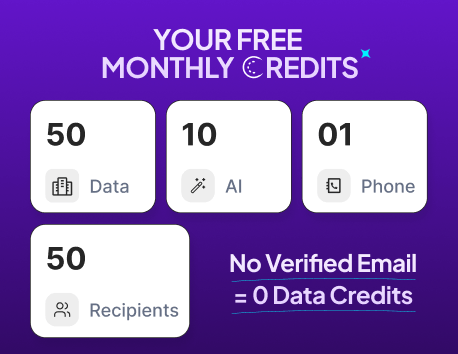
Oppora.ai supports prospecting and enrichment workflows, including phone-search credits for finding contact data.
Add Context Before You Start the Conversation
A phone number alone doesn’t tell you what to say.
Before calling, try to understand:
- The prospect’s role and seniority.
- Their company and industry.
- Relevant business context.
- Available buying signals.
- The pain point your solution could address.
Better data gives you a better reason for calling and a more relevant conversation.
Build the List First, Then Choose the Script
At this point, you have three things:
- Who you want to call.
- Why that prospect could be relevant.
- How you can reach them.
Now you can choose the B2B cold call script that matches the prospect’s actual situation instead of forcing the same opener on everyone.
7 B2B Cold Calling Scripts for Real Sales Prospecting Situations
Now that you know who you’re calling and why they’re relevant, the next step is choosing a script that matches the situation.
Most useful cold-call openings follow a simple flow:
Who you are → why you’re calling → why it may matter → one question → next step
Don’t memorize these scripts word for word. Replace the placeholders with your prospect, trigger, problem, proof, and next step until the conversation sounds natural.
Script #1: The Straightforward First-Touch Cold Call
Best for: A qualified prospect who has never interacted with your company.
Script:
“Hi [name], this is [your name] from [company]. I’m calling because we work with [role] teams that are trying to [business outcome] without [problem].
I wanted to see whether that’s something your team is working on right now, or if you’ve already got it covered?”
If they confirm the problem, use their answer to ask another question before explaining your solution.
Why it works: This B2B cold call script gets to the reason for your call quickly. You’re not pretending to know the prospect or spending the first minute describing your company.
What to personalize:
- Prospect’s role
- Relevant problem
- Desired business outcome
- Opening question
A good B2B sales cold call script gives you direction, but leaves enough room to listen and adapt.
Script #2: The Trigger-Based “Why Now” Cold Call
Best for: A prospect experiencing a recent change, such as funding, hiring, expansion, a leadership change, product launch, job change, or new market entry.
Script:
“Hi [name], this is [your name] from [company]. I noticed you’re hiring several new SDRs.
When sales teams grow quickly, [relevant problem] can become harder to manage. We help teams [business outcome], so I thought the timing might be relevant.
How are you handling [process/problem] as the team grows?”
The trigger needs to connect logically to what you sell. A funding announcement alone isn’t a reason to pitch an unrelated product.
Why it works: You immediately answer two questions the prospect is likely thinking: Why me? Why now?
What to personalize:
- Recent trigger
- Likely implication
- Related problem
- Question tied to the change
Script #3: The Problem-Led Cold Call
Best for: A strong ICP where you regularly see the same problem, but there isn’t an obvious buying trigger.
Script:
“Hi [name], [your name] from [company]. We speak with a lot of RevOps teams that struggle with [problem], especially when [situation].
It often leads to [business consequence].
I don’t know if that’s happening on your side, but I was curious is that something you’re dealing with, or have you already solved it?”
Notice the wording: you aren’t telling the prospect what their problem is.
You’re presenting a reasonable hypothesis and giving them space to confirm, reject, or explain it.
Why it works: The conversation starts around a recognizable business problem instead of your product features.
What to personalize:
- Role-specific observation
- Common problem
- Business consequence
- Discovery question
Script #4: The Call After an Email or LinkedIn Touch
Best for: A prospect you’ve already contacted through email or LinkedIn but haven’t spoken with yet.
Script:
“Hi [name], this is [your name] from [company]. I sent you a note yesterday about [specific problem].
I’m calling because we’ve been helping [similar role/company] with [outcome], and I thought it might be relevant given [context].
How are you currently handling [problem/process]?”
Avoid opening with, “Did you see my email?” The prospect may not remember it, and the question doesn’t create much reason to continue talking.
Why it works: Your previous message provides context, while the call moves the conversation forward rather than simply checking whether your email was opened.
What to personalize:
- Previous outreach topic
- Prospect context
- Relevant outcome
- Question
Think of email, LinkedIn, and calls as parts of one conversation not three separate pitches.
Script #5: The Referral or Mutual-Connection Call
Best for: Prospects connected through a customer, colleague, partner, employee, mutual connection, or another stakeholder.
For a direct referral, try:
“Hi [name], this is [your name] from [company]. [Connection] suggested I speak with you because you’re responsible for [area].
We were discussing [problem/outcome], and they thought this might be relevant to your team.
How are you approaching [problem] today?”
If there’s no direct introduction but you have relevant social proof:
“We’ve been working with several [similar companies/teams] on [problem], and I wanted to understand how you’re approaching it.”
Why it works: The connection gives your call context, but it doesn’t replace relevance. You still need a legitimate reason for the prospect to continue.
What to personalize:
- Connection
- Reason for referral
- Relevant problem
- Outcome or question
The connection earns attention; relevance keeps the conversation going.
Script #6: The Gatekeeper-to-Decision-Maker Call
Best for: Receptionists, assistants, switchboards, or anyone who isn’t responsible for the problem you’re trying to discuss.
Instead of trying to “beat” the gatekeeper, make your purpose easy to understand.
Script:
“Hi, this is [your name] from [company]. I’m trying to figure out who manages [process/area] on your side.
We work with companies on [brief problem/outcome], and I don’t want to bother the wrong person.
Could you point me toward whoever owns that?”
If they give you a name, you can also ask whether that person is the main decision-maker or whether another department is involved.
Why it works: You’re asking for help rather than disguising the purpose of your call.
What to personalize:
- Business area
- Problem you address
- Relevant department
- Routing question
A gatekeeper can actually improve your account mapping by showing you who owns the problem.
Script #7: The “Not Now” Re-Engagement Call
Best for: Prospects who previously said “call me next quarter,” showed interest, had a stalled deal, gave a timing objection, or were part of a closed-lost opportunity.
Script:
“Hi [name], it’s [your name] from [company]. When we spoke in May, you mentioned that [previous reason/timing issue] meant this wasn’t a priority yet.
You suggested reconnecting around [time/event], so I wanted to check in.
Has anything changed with [problem/priority] since we last spoke?”
If you have new information a product change, business trigger, relevant result, or updated requirement bring it in only when it adds to the conversation.
Why it works: You’re continuing an existing conversation instead of treating the prospect like a brand-new lead.
What to personalize:
- Previous conversation
- Original objection or timing
- Agreed follow-up point
- Changes since you last spoke
- Re-engagement question
The best cold calling script for B2B changes with context. Your words should reflect what you already know about the prospect rather than resetting every conversation to zero.
What to Say When the Prospect Pushes Back
Even with a relevant B2B cold calling script, you’ll hear objections. Your goal isn’t to “win” every objection it’s to understand what the prospect actually means.
A simple framework keeps you from jumping straight into another pitch:
Acknowledge → clarify → respond → ask
Sometimes that uncovers an opportunity. Other times, it confirms the prospect simply isn’t a fit.
“Just Send Me an Email”
Don’t fight the request. Accept it, then get enough context to make your email useful.
“Absolutely. So I send something relevant, are you more interested in [option A] or [option B]?”
Now your follow-up has a purpose instead of becoming another generic email.
“I’m Not Interested”
Avoid immediately defending your offer. Find out what “not interested” actually means.
“Understood. Is that mainly because it isn’t a priority right now, or have you already solved [problem]?”
You’re distinguishing between wrong timing, wrong problem, an existing solution, low priority, and genuine lack of fit.
“We Already Use Someone”
Don’t criticize their current vendor. Explore whether there’s an unresolved gap.
Ask:
- “What’s working well with your current setup?”
- “Is there anything you still wish worked better?”
If everything is working, you have your answer. If not, the gap gives you something useful to explore.
“We Don’t Have Budget”
“No budget” can mean two different things: there’s no budget today, or the problem isn’t important enough to fund.
Ask when budgets are normally reviewed and whether solving the problem is still a priority.
“I’m Not the Right Person”
Treat this as account intelligence, not rejection.
“Thanks for letting me know. Who normally owns this on your side?”
One simple question can turn a dead-end call into a route to the actual decision-maker.
What to Do After the Call So the Conversation Doesn't Die
A good call creates momentum, but what you do next determines whether that momentum turns into another conversation.
Your follow-up should reflect what actually happened on the call not restart the same sales pitch from the beginning.
If They Book a Meeting
Send a short confirmation while the conversation is still fresh. Include:
- What you discussed.
- What you’ll cover next.
- The agreed date and time.
This gives the prospect a reason to remember the meeting beyond another generic calendar invite.
If They Ask You to Send Information
Send the resource that answers what they asked about.
Avoid overwhelming them with a company deck, full case-study library, product brochure, and five unrelated links. One relevant resource is usually more useful than an information dump.
If They Don’t Answer
One missed call shouldn’t end your outreach.
Use a coordinated sequence such as:
Call → voicemail where appropriate → email or LinkedIn → another call attempt
Change the angle across channels instead of copying and pasting the exact same message.
If They Say “Not Now”
Capture the context before moving on:
- Why the timing isn’t right.
- When they suggested reconnecting.
- Important details from the conversation.
- Your follow-up date.
When that date arrives, you have a reason to reconnect.
Every follow-up should build on the previous interaction rather than restart the sales pitch.
How to Know Which B2B Cold Calling Script Is Actually Working
More calls don’t automatically mean a better B2B cold calling script. You need to see where prospects move forward and where they drop off.
Track each stage separately:
Compare Results by Persona and Situation
Don’t stop at Script A vs. Script B.
Compare:
Script + persona + industry + trigger + rep
A trigger-based script might perform well with SaaS sales leaders after a hiring push, for instance, but poorly when the trigger has little connection to what you sell.
Test One Part of the Script at a Time
Change one variable before measuring again:
- Opener
- Reason for calling
- Pain statement
- Question
- Proof point
- CTA
This helps you identify what actually changed performance instead of rewriting the entire script after a handful of calls.
Use External Benchmarks Carefully
Cognism’s 2026 cold-calling report, based on 200,000+ calls, puts the industry average cold-call success rate at 2.7%, up from 2.3%. (Cognism, 2026)
Use numbers like this for context not as your target.
Your own historical connect → conversation → meeting baseline tells you far more about whether your scripts are improving with your audience.
Conclusion
A successful B2B cold calling script isn’t only about finding the perfect words. Your results depend on everything that happens before and after you say them.
Think of it as:
Right prospect + accurate contact data + relevant reason to call + suitable script + natural conversation + disciplined follow-up
Your script gives you structure, but your prospect data and context determine whether that structure feels relevant.
If finding the right people and preparing clean prospect lists is slowing you down, Oppora.ai can help you identify relevant prospects, enrich contact data, and organize your outreach workflow in one place.
That leaves you with more time for what the script can’t automate: listening to the prospect and having a useful conversation.
Because the goal isn’t to sound perfectly scripted. It’s to reach the right person with enough context to start the right conversation.
Frequently Asked Questions
What should a B2B cold calling script include?
A B2B cold calling script should include a brief introduction, a clear reason for calling, a relevant problem or outcome, one useful question, and a logical next step. Keep it focused on starting a conversation rather than delivering a full sales pitch.
How long should a B2B cold call script be?
Keep your prepared opening short enough to establish relevance quickly. Your script should earn a conversation and create space for questions not turn into a long monologue about your company, product, or features.
What is the best opening line for a B2B cold call?
There’s no single opening line that works for every prospect. A strong opener quickly establishes who you are, why you’re calling this prospect, and why the conversation might matter, then moves naturally into a relevant question.
Should sales reps read B2B cold calling scripts word for word?
No. Use B2B cold calling scripts as frameworks for structure, relevance, questions, and next steps. You still need to listen carefully and adapt your conversation based on what the prospect actually says.
How do you make a cold call script for B2B sound natural?
Make your cold call script for B2B sound natural with short sentences, everyday language, relevant context, genuine questions, and natural pauses. Practice it aloud until you understand the flow without needing to read every line.
Summarize with AI
Share