10 Best Competitive Intelligence Software and Tools for B2B Teams
Adam Hossain
Published October 14, 2026
20 min

Complete Agentic Email Outreach
AI agents find and enrich prospects, personalize emails, follow up, and handle replies with your meeting link.
Claim Your FREE Credits
Your buyers are doing more homework without you.
A Gartner survey of 646 B2B buyers found 67% prefer a rep-free experience, and 45% used AI during a recent purchase.
So by the time they reply, they’ve likely compared you with competitors already.
That’s why sharp positioning and relevant outreach matter. Your competitive intelligence tool spots what changed, and Oppora helps you turn it into outreach for the right buyers.
In this guide, you’ll learn:
- 10 tools and a side-by-side comparison
- Practical use cases for each tool
- How to compare coverage, reliability, integrations, and cost
- How to test your shortlist on real competitors
What Competitive Intelligence Software Does for B2B Teams
Competitive intelligence software collects competitor data from websites, reviews, and job posts, then organizes it in one place.
So your sales, marketing, and strategy teams decide based on evidence, not guesses. But collecting data is only step one. You still need to interpret it and act.
Competitor Signals Worth Tracking
Not every change matters. Focus on signals that answer a real business question:
- Pricing: Are they moving upmarket or discounting to win deals?
- Product launches: Are they closing a gap you sell against?
- Positioning: Which buyers are they targeting now?
- Reviews: What do customers dislike that you solve?
- Hiring: Where are they investing next?
Say a competitor posts five sales roles in Germany. That may hint at expansion, so confirm it with other evidence before changing strategy.
Five Main Types of Competitive Intelligence Tools
Most tools fit one of five categories:
Start with the category that solves your most urgent problem, then add another only when needed.
Suggested Reading:
9 Best AI Sales Enablement Platforms That Improve WinA Practical Workflow From Insight to Action
Here’s how one insight turns into action after you confirm a competitor’s price increase:
- Update the battlecard with the new pricing
- Brief reps on how to handle it
- Identify accounts currently using that competitor
- Launch a targeted campaign
Assign an owner and log the source and date.
Reps already spend 70% of their time on non-selling tasks, according to Salesforce. Oppora cuts the list-building, helping you find and contact the right accounts in one place.
How We Evaluated Competitive Intelligence Software
Here’s how we compared these tools. We used official product pages, documentation, and vendor demos, noting hands-on testing only where it applies.
Each tool was judged within its own category: monitoring, sales enablement, market research, win-loss analysis, or outreach. A battlecard tool shouldn’t be scored like a research platform.
Competitor Coverage and Data Reliability
We checked which sources each tool tracks, how often it updates, and whether findings link back to the original evidence.
That last part matters. 67% of organizations don’t completely trust the data they use for decisions, according to Precisely and Drexel University’s LeBow College of Business.
We also flagged coverage gaps and separated observed facts from estimates or AI-generated summaries. A traffic estimate isn’t the same as a competitor’s real analytics.
Usability and Workflow Integration
A tool only helps if your team actually uses it. We looked at setup time, filtering, navigation, and how easily users share findings.
If reps need five clicks to find one battlecard, they’ll stop opening it.
We also reviewed CRM, sales enablement, and Slack or Teams integrations, noting which ones sit behind higher-priced plans.
Suggested Reading:
5 Best CRM With LinkedIn Integration + How To UsePricing Transparency and Product Limitations
Many competitive intelligence vendors hide pricing behind a demo. So we checked:
- Published prices and billing terms
- Usage limits on competitors, seats, or credits
- Trial or demo availability
- Add-on and implementation costs
That way, you compare total cost, not just the starting price.
Limitations come from vendor documentation and public user reviews, not guesswork.
Competitive Intelligence Tools Comparison at a Glance
Not every competitive intelligence tool solves the same problem. Some help you monitor competitors, while others focus on market research, sales enablement, or turning insights into outreach.
The table below compares 10 tools by their primary use case, starting price, and available trial or demo options, helping you narrow your choices.
Pricing is in USD, using monthly billing where published. Custom quotes depend on requirements. A demo is a guided product walkthrough, not a free trial. Unkover's older pricing page lists plans, but its current site indicates the platform is being reimagined.
Your best choice depends on whether you need to gather competitive information, help sales teams use it, or turn validated insights into relevant outreach.
10 Best Competitive Intelligence Tools for B2B Teams
Each tool below earned its spot based on five factors: B2B use case, data coverage, workflow fit, usability, and cost.
Our assessment draws on official product pages, documentation, and demos rather than hands-on testing. Here’s what each one does best and where it falls short.
1. Oppora — Best for Turning Competitive Insights Into Outreach

Most tools on this list help you find the insight. Oppora helps you act on it.
Oppora is an AI-powered B2B sales platform. It finds and enriches the right prospects, runs email and LinkedIn outreach, and turns replies into booked meetings.
It fits teams that have already validated a competitive angle and now need to reach the right decision-makers while it still matters.
Key Features and Data Coverage
Oppora covers prospecting, outreach, and follow-through in one place:
- ICP Builder: Paste your website, and Ora drafts your target industries, company sizes, titles, and buying signals
- Company and People Finder: Search 60M+ companies and 1B+ people using plain-English prompts or manual filters
- Intent and hiring signals: Filter by funding, headcount growth, tech stack, recent job changes, or live job posts
- Lead Scoring: AI ranks leads against your ICP, so you contact the best fits first
- Enrichment and verification: Find and verify emails and phone numbers before anything goes out
- AI Workflows: Chain search, scoring, enrichment, and campaign steps to run on a schedule
- Multichannel sequences: Combine email, LinkedIn steps, and call tasks, with branches based on what each lead does
- Email warmup: Build sender reputation and track mailbox health before campaigns go live
- Reply Ora and Unibox: Replies arrive tagged by intent, and AI drafts or sends responses aimed at booking a meeting
- Built-in CRM: Turn replies into opportunities automatically, with two-way HubSpot sync
When someone replies, automated outreach to that person stops.
Practical Use Case and Workflow
Say a competitor’s customers struggle with slow onboarding.
You use Oppora’s tech stack filter to find companies using that competitor, verify contacts, and launch a sequence around faster onboarding.
Because the message speaks to a problem they already feel, it lands as relevant, not generic.
Pricing and Best Fit
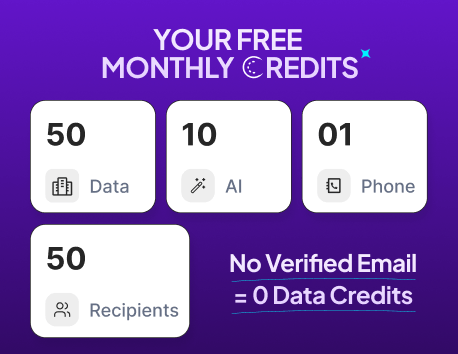
- Free: $0, 50 data credits and 50 recipients
- Pro: $34/month, 10,000 data credits and 5,000 recipients
- Max: $79/month, 25,000 data credits, unlimited recipients, one LinkedIn account
- Enterprise: From $499/month for 50,000+ contacts
Pro suits small teams running focused campaigns. Max fits agencies running multichannel volume.
Pros and Cons
Oppora holds a 4.5/5 rating on G2, and reviewers point to a few consistent strengths and gaps.
Pros
- Prospecting, enrichment, and outreach run in one workflow
- Easy to use, with accurate contact data
Cons
- Credits run out quickly on entry plans
- Competitor monitoring requires a separate tool
2. Klue — Best for Competitive Sales Enablement

Klue is a competitive intelligence and win-loss platform built around one goal: getting the right guidance to reps during live deals.
It fits teams that hear the same competitive objections repeatedly and have someone who owns keeping that guidance current.
Key Features and Data Coverage
- Compete Agent: Automatically collects and curates competitor intel, then shares it across teams
- Battlecards: Objection-ready cards, with AI helping keep them up to date
- Win-Loss Suite: Buyer interviews run by Klue analysts or an AI interviewer, plus deal stories built from CRM and call data
- Rep delivery: Guidance reaches sellers through Salesforce, HubSpot, Microsoft Teams, Gong, and enablement tools like Seismic and Showpad
Reps can also use Ask Klue to get cited answers to competitor questions mid-deal.
Practical Use Case and Workflow
Say you keep losing to two competitors on price and integrations.
Your curator reviews recent loss interviews, spots the recurring objections, and builds a battlecard for each one.
Before a call, a rep opens the right card inside Salesforce. Afterward, they log the outcome, and Klue’s usage analytics show which cards actually help win deals.
Pricing and Best Fit
Klue doesn’t publish pricing, so you’ll need a quote. Before signing, confirm:
- Seats: How many curators and reps need access
- Modules: Whether you need Compete, Win-Loss, or both
- Implementation: What support is included, since G2 reviewers report about two months to set up
Klue suits mid-market and enterprise teams with an established competitive program. If you only track two competitors informally, it’s likely more than you need.
Pros and Cons
Klue holds a 4.7/5 rating on G2, with reviewers highlighting these strengths and gaps.
Pros
- Battlecards are organized and easy for reps to use
- Strong win-loss capabilities and responsive customer support
Cons
- Alerts can get noisy without careful rule setup
- Needs a dedicated owner to keep content current and drive adoption
3. Crayon — Best for Competitor Monitoring and Sales Guidance

Where Klue centers on getting guidance to reps, Crayon starts one step earlier: watching what competitors change.
It tracks competitor moves across the web, flags what matters, and helps you turn selected findings into battlecards and updates for sales.
Key Features and Data Coverage
- Digital footprint monitoring: Tracks website changes, pricing updates, news, support docs, and customer reviews, with before-and-after page comparisons
- Crayon AI and daily digest: Flags the insights worth your attention and sends a morning recap of the most important changes
- Battlecards and newsletters: Built-in templates for turning intel into sales content
- Integrations: Salesforce, Slack, Gong, Chorus, Highspot, and Outreach, plus win-loss tools like Clozd
Reps can also ask competitor questions in Slack through AI Answers.
Practical Use Case and Workflow
Say you track five competitors, and Crayon flags that one moved a key feature into its premium tier.
You confirm the change on their pricing page, then update the battlecard with a new talk track.
Finally, you post a short summary in Slack for the reps working deals against that competitor.
Pricing and Best Fit
Crayon’s pricing is quote-based. Before signing, confirm:
- Competitor limits: How many companies you can track
- Users: Who needs curator versus viewer access
- Capabilities: Whether AI, deal insights, and win-loss features are included
G2 reviewers report about one month to implement. Crayon fits teams with a steady monitoring workload across several competitors.
Pros and Cons
Crayon holds a 4.6/5 rating on G2, with reviewers highlighting these strengths and gaps.
Pros
- Cuts down manual competitor checking
- Easy to use, with strong customer support
Cons
- Alerts still need someone to prioritize and interpret them
- Some reviewers want broader integrations and a mobile app
4. AlphaSense — Best for Strategic Market Research

Not every competitive question can be answered with an alert. Some need deeper research.
AlphaSense is an AI market intelligence platform that searches filings, earnings calls, and analyst research in one place. It fits strategy and research teams working through complex business questions.
Key Features and Data Coverage
- Content library: 500M+ documents, including SEC filings, earnings call transcripts, broker research from 1,000+ firms, news, and regulatory sources
- Expert transcripts: Interviews with industry operators that show how buyers and competitors think
- Source-linked AI search: Summaries cite the exact sentences behind each answer, so you can verify before you quote
- Monitoring and sharing: Alerts on companies and topics, plus Excel, PowerPoint, SharePoint, and Salesforce integrations
Practical Use Case and Workflow
Say leadership wants to know whether to enter the healthcare analytics market.
You pull competitor earnings calls to see who’s growing, then check expert transcripts for signs of customer demand.
Before writing your recommendation, you compare findings across sources and click through to the original filings to confirm key numbers.
Pricing and Best Fit
AlphaSense sells annual subscriptions through its sales team, with a free trial available. Before signing, confirm:
- Seats: Per-seat access versus an enterprise-wide package
- Content access: Market Intelligence alone, or Enterprise Intelligence to search your internal documents too
- Add-ons: Costs for expert calls or financial models
It pays off for teams running research every week, not those who need a quick monthly check.
Pros and Cons
AlphaSense holds a 4.6/5 rating on G2, with reviewers highlighting these strengths and gaps.
Pros
- Powerful AI search across a huge content library
- Citations make it easy to verify every insight
Cons
- Steep learning curve for new users
- More than you need for simple alerts or battlecards
5. Contify — Best for Shared Market Intelligence Feeds

When sales, marketing, and product each track competitors separately, everyone ends up with a different picture.
Contify is an AI market and competitive intelligence platform that curates one shared feed of competitor, customer, and industry updates. It fits teams that need a common source of truth.
Key Features and Data Coverage
- Broad source coverage: 1M+ sources, including news, company websites, and social, across 700,000+ companies
- Multilingual tracking: Content from 117+ languages, auto-translated into English
- Smart filters and Athena AI: Filter by company, event type, or location, and ask Athena questions in plain English
- Distribution: Newsletters, alerts, and dashboards delivered through email, Slack, Microsoft Teams, and Salesforce
Practical Use Case and Workflow
Say you set up a weekly digest covering four competitors and two industry trends.
Each update gets tagged by theme, like pricing, partnerships, or new offerings.
Then you route it. A partnership goes to sales, a product launch goes to product, and a messaging shift goes to marketing, each with one clear follow-up action.
Pricing and Best Fit
Contify’s pricing is quote-based, with a 7-day free trial. Before signing, confirm:
- Tracking scope: How many companies, topics, and custom sources you need
- Distribution: Which newsletters, dashboards, and integrations are included
- Setup: Contify cites about two weeks, while G2 reviewers report closer to two months
Unlimited user access makes it a strong fit for organizations sharing intel across several departments.
Pros and Cons
Contify holds a 4.5/5 rating on G2, with reviewers highlighting these strengths and gaps.
Pros
- Centralizes competitor and market updates for every team
- Responsive support and useful AI summaries
Cons
- Feeds need careful setup and refinement to stay relevant
- Learning curve for new users
6. Valona Intelligence — Best for Global Enterprise Intelligence

Some intelligence programs span dozens of markets, languages, and business units. That’s where Valona fits.
It’s an enterprise market and competitive intelligence platform that pairs AI monitoring with analyst support from industry specialists. It suits companies where a local news story can shape a global decision.
Key Features and Data Coverage
- Global source coverage: 200,000+ business sources monitored across 115+ languages, with translated summaries
- VAL AI Research Assistant: Ask questions and get structured analysis that combines your internal knowledge with Valona’s sources
- Competitor analysis and trend radars: Self-updating profiles, benchmarks, and battlecards, plus early signals on emerging shifts
- Analyst services: Research consultants who handle custom projects and strategic interpretation
Its deepest coverage sits in manufacturing-heavy industries like chemicals, automotive, and medical devices.
Practical Use Case and Workflow
Say you need to compare how a competitor is expanding across Germany, Brazil, and India.
Valona picks up local-language announcements, hiring news, and plant investments in all three markets.
An analyst then interprets the pattern and helps you shape a regional decision brief for leadership.
Pricing and Best Fit
Valona sells tailored packages through its sales team. Before signing, confirm:
- Platform scope: Which markets, languages, and source packs are included
- Analyst services: How many research hours or custom projects are covered
- Setup: Any one-time onboarding or configuration fee
It fits enterprises running intelligence across several regions or business units.
Pros and Cons
Valona holds a 4.3/5 rating on G2, though that’s based on only five reviews.
Pros
- Combines AI monitoring with human analyst support
- Strong multilingual, industry-specific coverage
Cons
- Reviewers mention occasional lag and slow loading
- Scope and commitment may exceed what smaller teams need
7. Clozd — Best for Understanding Why Deals Are Won or Lost

Monitoring tools show what competitors do in public. Clozd shows what buyers actually think when they choose.
It’s a win-loss platform that interviews your buyers after deals close. It fits teams whose CRM loss reasons, like “price” or “timing,” are too vague to act on.
Key Features and Data Coverage
- Buyer interviews: Choose human-led Live interviews or AI-assisted Flex interviews, with recordings and transcripts for each
- Decision-driver analysis: AI surfaces recurring themes like pricing, feature gaps, and competitor strengths
- Filterable dashboards: Compare feedback by competitor, segment, deal size, or outcome
- Integrations: Salesforce sync to trigger interviews automatically, plus an MCP connection for AI tools
Beyond win-loss, the same approach covers churn and onboarding feedback.
Practical Use Case and Workflow
Say you keep losing mid-market healthcare deals, and your CRM just says “went with competitor.”
Clozd interviews a dozen of those buyers. A clear pattern emerges: they doubted your compliance support.
You then add compliance proof to your pitch deck, flag the gap for product, and coach reps to raise it earlier in the deal.
Pricing and Best Fit
Clozd’s pricing is quote-based. Before signing, confirm:
- Interview volume: How many interviews per year you need
- Interview type: Premium Live interviews cost more than Flex or survey options
- Platform access: Which dashboards, AI features, and integrations are included
You’ll need a steady flow of closed deals each quarter for the patterns to hold up.
Pros and Cons
Clozd holds a 4.8/5 rating on G2, with reviewers highlighting these strengths and gaps.
Pros
- Candid buyer feedback through a neutral third party
- Strong customer support and easy-to-use dashboards
Cons
- Interviews and transcripts take time to come back
- Findings depend on participation rates and clean CRM data
8. Similarweb — Best for Competitor Traffic and Channel Analysis

Sometimes the question isn’t what competitors say. It’s where their buyers are coming from.
Similarweb is a digital intelligence platform that estimates website traffic, channels, and audience behavior for almost any site. Keep in mind that its figures are modeled estimates, not a competitor’s real analytics.
Key Features and Data Coverage
- Traffic and engagement: Visits, bounce rate, pages per visit, and country split for any website
- Channel breakdown: Search, social, referral, display, and AI traffic from tools like ChatGPT and Perplexity
- Benchmarking and audience overlap: Compare your site against competitors and see which audiences you share
- Data access: Exports, API, and MCP connections into your existing reporting stack
Accuracy drops for smaller sites and narrow markets, where data is sampled and scaled more heavily.
Practical Use Case and Workflow
Say you compare your channel mix with three competitors.
You notice one gets a large share of traffic from partner referrals, while you rely mostly on paid search.
That becomes a hypothesis, not a conclusion. You run a small partner campaign, then check your own analytics to see whether referral traffic and conversions actually rise.
Pricing and Best Fit
Similarweb offers a free trial and published entry pricing:
- AEO Intelligence: From $99/month for AI search visibility
- Competitive Intelligence: From $125/month for core traffic and competitor analysis
- Business packages: Custom quotes for premium features like conversion data, deeper country coverage, and API access
Entry plans work for occasional competitor checks. Teams needing segment-level analysis or data integrations will likely need a custom package.
Pros and Cons
Similarweb holds a 4.4/5 rating on G2, with reviewers highlighting these strengths and gaps.
Pros
- Fast, directional view of competitor traffic and channels
- Intuitive interface that’s easy to share across teams
Cons
- Estimates can be unreliable for smaller sites
- Many deeper insights sit behind higher-tier plans
9. Semrush — Best for Competitor SEO and Paid Search Research

Similarweb shows how competitors get traffic across every channel. Semrush goes deeper on one: search.
It’s an SEO and digital marketing platform that shows which keywords competitors rank for, who links to them, and what they bid on in paid search. It fits marketing teams that compete for the same buyers on Google.
Key Features and Data Coverage
- Keyword research and Keyword Gap: 27B+ keywords across 140+ countries, plus side-by-side gaps against competitors
- Position Tracking: Daily rankings for your keywords, with up to 20 competitors per campaign
- Backlink Analytics and Backlink Gap: See who links to competitors but not to you
- Advertising research: Competitor paid keywords, ad copy, and CPC data
Traffic Analytics, Market Explorer, and EyeOn competitor monitoring sit in the separate .Trends add-on, not the core plans.
Practical Use Case and Workflow
Say you run a Keyword Gap report against three competitors.
You find 40 high-intent terms like “best [category] software” where they rank and you don’t.
You filter for buyer relevance and lower difficulty, pick three, and build one comparison page. Position Tracking then shows whether it climbs over the next few weeks.
Pricing and Best Fit
Semrush publishes pricing on monthly billing, with a 7-day free trial:
- Pro: $139.95/month for 5 projects and 500 tracked keywords
- Guru: $249.95/month, adding historical data and content tools
- Business: $499.95/month, adding API access and Share of Voice
Annual billing saves about 17%. Extra users cost $45 to $100/month, and .Trends adds $289/month.
It fits teams with a recurring SEO and paid search workload, not one-off competitor checks.
Pros and Cons
Semrush holds a 4.4/5 rating on G2, with reviewers highlighting these strengths and gaps.
Pros
- Turns competitor search data into clear content and ad opportunities
- Broad toolset in one easy-to-use platform
Cons
- Key traffic and market data require paid add-ons
- Pricing climbs quickly for smaller teams
Suggested Reading:
17 Proven Ways to Find Clients for a Digital Marketing Agency10. Visualping — Best for Smaller SaaS Teams Monitoring Competitors

Not every team needs a full competitive intelligence platform. Sometimes you just need to know when a competitor changes its pricing page.
Visualping is a website change monitoring tool that watches the pages you choose and alerts you when something changes. It fits small teams starting a simple, focused monitoring routine.
Key Features and Data Coverage
- Page and element monitoring: Track full pages, or draw a box around one area like a pricing table
- AI change summaries: Every alert includes a short summary and an important-or-not flag
- “Alert me when” conditions: Describe the changes you care about, so AI filters out the noise
- Alerts and integrations: Email, webhooks, API, and MCP on every plan, plus Slack, Teams, and Google Sheets on Business plans
Keep in mind it only watches pages you add. It won’t surface news or competitors you haven’t listed.
Practical Use Case and Workflow
Say you monitor the pricing, features, and changelog pages of three SaaS competitors.
Each Friday, you review the week’s flagged changes and notice one competitor quietly dropped its free tier.
You confirm it on their site, then add a short note to your sales talk track and adjust your messaging for switchers.
Pricing and Best Fit
Visualping publishes all its pricing:
- Free: $0 for 150 checks/month across 5 pages
- Personal 1K: $14/month, or $10/month billed annually, for 1,000 checks
- Business 20K: $140/month, or $100/month billed annually, for 20,000 checks, 200 pages, and 5 users
Business is the realistic starting point for teams, since Slack and Teams alerts sit there.
Pros and Cons
Visualping holds a 4.6/5 rating on G2, with reviewers highlighting these strengths and gaps.
Pros
- Quick setup with clear before-and-after comparisons
- Affordable, transparent pricing
Cons
- Minor layout changes can trigger false alerts
- No built-in battlecards or competitor analysis
How to Choose Competitive Intelligence Software for Your Team
Now that you’ve seen the options, the right pick comes down to one question: which decision do you need to improve?
Start there, identify who will use the findings, then follow four steps: define the need, assess resources, run a pilot, and set success measures.
Define Your Main Goal and Assign an Owner
Pick one priority first, since it points you to the right category:
- Handling competitive objections: Sales enablement tools like Klue or Crayon
- Tracking market changes: Monitoring tools like Contify or Visualping
- Understanding lost deals: Win-loss tools like Clozd
- Acting on insights: Outreach tools like Oppora
Then assign one owner to validate findings, keep guidance current, and coordinate follow-ups. Without one, even good tools go stale.
Decide Whether You Need a Paid Platform
If you track two or three competitors, a weekly manual review may be enough. Google Alerts, review sites, competitor changelogs, and LinkedIn updates cover the basics for free.
A paid platform makes sense when tracking volume, research depth, or sharing across teams outgrows the time you have.
Pilot Your Shortlist on a Real Task
Skipping this step gets expensive. In Capterra’s 2025 Tech Trends Report, 59% of businesses regretted at least one software purchase from the past 18 months.
So test two tools on the same competitors and the same task, like preparing a competitive sales brief. Let the people who will actually use the tool run the pilot, then compare output quality, effort, and leftover manual work.
Set Success Measures Before Buying
Choose two or three measures tied to your goal, such as research time saved, battlecard adoption, or findings acted on.
Then set a review date, like 90 days in. Decide upfront which results justify keeping, changing, or cancelling the tool.
Final Verdict
The best competitive intelligence software is the one your team will actually use.
If reps need help in live deals, start with Klue or Crayon. For deeper research, AlphaSense or Contify fits better. On a tight budget, Visualping covers the basics.
Whatever you choose, start with one primary platform and one owner who keeps it current. Add more only when your workload demands it.
And remember, insight only pays off when it reaches the right buyers. When you’re ready to turn what you’ve learned into relevant outreach, Oppora helps you find and contact the accounts that matter most.
Frequently Asked Questions (FAQs)
Is competitive intelligence legal and ethical?
Yes, as long as you use public or properly shared information. Websites, pricing pages, reviews, job posts, filings, and buyer interviews are fair game. Avoid misrepresenting yourself, accessing confidential documents, or asking new hires to share a former employer’s secrets. When in doubt, check with your legal team.
Can AI tools like ChatGPT replace competitive intelligence software?
They help with quick research and summaries, but they don’t monitor competitors continuously or alert you to changes. Their answers can also be outdated or unsourced. Use general AI tools for one-off questions, and rely on dedicated software when you need ongoing tracking and verifiable evidence.
How many competitors should you track?
Start with the three to five direct competitors you meet most often in deals. Tracking too many spreads your attention thin and floods you with alerts. Once your routine is stable, add one or two emerging or indirect competitors that keep showing up in buyer conversations.
What’s the difference between competitive intelligence and market intelligence?
Competitive intelligence focuses on specific rivals, including their pricing, products, messaging, and deals. Market intelligence looks wider, covering industry trends, regulations, customer demand, and new entrants. Most teams need both, but your primary goal decides which comes first and which type of tool to buy.
How often should you update battlecards?
Review your top battlecards at least monthly, and update them right away after major changes like a pricing shift, product launch, or acquisition. Add the date and source to every update, so reps know the information is current and can trust it during live deals.
Summarize with AI
Share