10 RevOps AI Tools Every Revenue Team Should Know
Adam Hossain
Published August 25, 2026
23 min

Complete Agentic Email Outreach
AI agents find and enrich prospects, personalize emails, follow up, and handle replies with your meeting link.
Claim Your FREE Credits
Most revenue teams don't have a data problem. They have a coordination problem.
Your CRM is missing activity. Leads sit unrouted. Forecasts feel like guesses. And your reps are spending more time on manual updates than actual selling.
AI is changing that — but only if you're using the right tools. Not every RevOps AI tool does the same thing. Some handle forecasting. Some automate outbound. Some clean your data. Some connect your entire stack.
In this guide, you'll find:
- What RevOps AI tools actually do
- The 10 best tools broken down by use case
- How to pick the right one for your team
RevOps isn't a department. It's the connective tissue between your marketing, sales, and customer success teams. And when that tissue is weak — data is siloed, handoffs break down, and revenue leaks from places you can't even see.
AI tools plug directly into that gap.
What Are RevOps AI Tools and Where Do They Fit in the Revenue Stack?
The Role of AI in Revenue Operations
AI in RevOps isn't about replacing your team. It's about removing the work that slows them down capturing CRM data automatically, surfacing which deals are at risk, and routing leads before they go cold.
The result is a revenue operation that moves faster and makes better decisions with less manual effort.
RevOps Workflows AI Can Automate
Some workflows are too repetitive for a human to handle at scale. AI handles them without dropping the ball:
- CRM data capture and activity logging
- Lead scoring and prioritization based on intent signals
- Lead routing to the right rep or team
- Pipeline forecasting and deal risk alerts
- Outbound prospecting and follow-up sequences
- Conversation analysis and coaching recommendations
These aren't edge cases. They're tasks your team is likely doing manually right now.
AI Tools vs Traditional RevOps Automation
Traditional automation follows fixed rules. If this, then that. It works until something changes — and in revenue, things change constantly.
AI adapts. It learns from patterns, adjusts to new data, and handles exceptions that would break a rule-based workflow.
That's the core difference. Traditional automation executes. AI tools decide.
10 Best RevOps AI Tools for Revenue Teams
There's no single tool that does everything well. The best RevOps AI tools are built for specific jobs forecasting, prospecting, routing, enrichment, conversation intelligence and the right stack depends on where your revenue operation actually breaks down.
Below, you'll find 10 tools broken down by what they do best, who they're built for, and what you should know before adding them to your stack.
1. Oppora — Best for AI-Powered Outbound and Revenue Workflow Automation

Most outbound tools give you features. Oppora gives you agents.
Instead of manually finding leads, writing emails, and chasing replies, Oppora's 8 AI Sales Agents handle the entire outbound workflow end-to-end — from prospecting to CRM sync — without needing daily input from your team.
You build the workflow once. It runs itself from there.
Key RevOps Features
- Company Finder and People Finder agents to source prospects from a 700M+ lead database
- Waterfall enrichment across multiple data sources for cleaner, more accurate contact data
- AI lead scoring with numeric 0–100 scores to prioritize who's worth reaching out to
- AI Reply Agent that answers questions, handles objections, and books meetings directly from your inbox
- Drag-and-drop workflow builder that runs like an n8n sequence — fully automated
How It Helps Revenue Teams
For revenue teams, the biggest win is removal of manual coordination. Your SDRs aren't spending time on data entry, follow-up scheduling, or inbox management.
Oppora handles prospecting, outreach, replies, and CRM logging in a single connected workflow. That means less tool-switching, fewer dropped leads, and more time spent on conversations that actually close.
Integrations and Workflow Automation
Oppora connects natively with HubSpot, Salesforce, Pipedrive, and Zoho — automatically syncing contacts, replies, and deals without manual input.
It also supports LinkedIn outreach a inside the same workflow, inbox rotation across up to 50 mailboxes, domain warmup, and sender matching to protect deliverability at scale.
Pricing
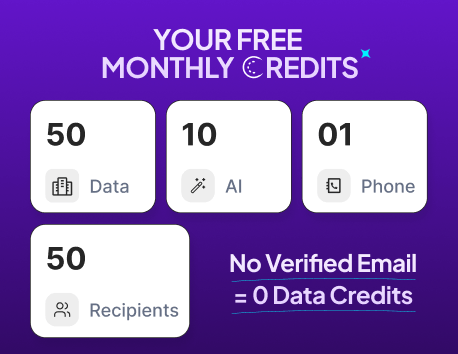
Oppora offers a free plan to get started, with paid tiers at $34/month (Pro) and $79/month (Max).
Enterprise plans start at $499/month for teams needing higher volume and dedicated support.
All plans include leads, enrichment, and outreach under one price — no separate tool costs.
Pros and Cons
Pros:
- Full outbound workflow in a single platform no stitching tools together
- 8 AI agents that work together without daily manual input
- Affordable entry point compared to building an equivalent stack separately
- Built-in deliverability controls including warmup, inbox rotation, and sender matching
Cons:
- Deeper CRM integrations (HubSpot, Salesforce) available on Max plan and above
- Best suited for outbound-heavy teams not built for inbound lead management
Best For
Oppora is best for founders, SDR teams, agencies, and B2B sales teams that need a self-running outbound system without hiring more headcount or managing five different tools.
If outbound is your primary pipeline source, Oppora is built around that exact workflow.
2. Clari — Best for Revenue Forecasting and Pipeline Intelligence

If your biggest RevOps pain is not knowing whether you'll hit your number, Clari is built for exactly that problem.
It sits on top of your CRM and turns raw pipeline data into a predictable, AI-driven forecast removing the guesswork that usually lives in spreadsheets and gut-feel calls.
Key RevOps Features
- AI-powered revenue forecasting with deal-level pipeline inspection
- Waterfall analytics showing pipeline movement new deals, slippage, pull-ins, and push-outs
- Clari Capture for automatic CRM activity logging without rep input
- Conversation intelligence via Clari Copilot for call summaries and deal signals
- Deal risk alerts and pipeline health scoring in real time
How It Helps Revenue Teams
Clari gives CROs and RevOps leaders a single view of revenue reality. Forecast calls stop being debates about numbers and start being conversations about action.
Reps spend less time updating the CRM manually. Leadership gets deal-level visibility they can actually trust.
Integrations and Workflow Automation
Clari integrates deeply with Salesforce, HubSpot, and Microsoft Dynamics. It pulls CRM data, enriches it with activity signals, and writes forecast intelligence back — keeping your existing workflows intact without requiring a separate data layer.
Pricing
Clari doesn't publish pricing publicly. Based on available buyer data, the Core forecasting module starts at around 100–120 per user per month, billed annually.
Add-ons like Clari Copilot push that to 200–310+ per user per month. Implementation costs can add 15,000–75,000 for enterprise deployments. All plans require a custom quote.
Pros and Cons
Pros:
- Industry-leading forecast accuracy with AI-driven pipeline intelligence
- Automatic CRM activity capture — no manual rep input required
- Deep Salesforce integration built into the core product
Cons:
- No transparent pricing or self-serve option
- Steep implementation timeline of 8–16 weeks
- Cost compounds quickly when adding modules
Best For
Clari is best for mid-market and enterprise B2B revenue teams with 50+ reps, complex pipeline structures, and a dedicated RevOps function.
If your primary challenge is forecast accuracy and deal visibility at scale, Clari is purpose-built for that job.
3. Gong — Best for Conversation Intelligence and Deal Insights

Your CRM tells you what reps log. Gong tells you what's actually happening inside your deals.
It records, transcribes, and analyzes every sales call, email, and meeting then turns those interactions into structured intelligence your revenue team can act on.
For RevOps, that's a fundamentally different data source than anything your CRM captures on its own.
Key RevOps Features
- Call recording and AI transcription trained on billions of real sales interactions
- Conversation analytics covering talk ratios, objections, competitor mentions, and sentiment shifts
- Deal health scoring based on actual conversation signals — not rep self-reporting
- AI-powered pipeline forecasting through Gong Forecast
- Rep performance tracking and sales coaching insights across the team
How It Helps Revenue Teams
Gong removes the gap between what reps say happened and what actually did. Pipeline reviews become more honest. Coaching becomes evidence-based. Deal risk surfaces before it's too late to act.
RevOps teams specifically use Gong to improve CRM data quality because conversation signals fill the gaps that manual entry never does.
Integrations and Workflow Automation
Gong connects natively with Salesforce, HubSpot, Microsoft 365, Google Workspace, and most major CRMs automatically logging calls, emails, and meetings directly onto deal timelines.
Pricing
Gong doesn't publish pricing publicly. Based on buyer data, the Foundations plan runs approximately 108–133 per user per month, billed annually.
A mandatory platform fee of 5,000–50,000 per year applies on top, regardless of team size.
Add-ons like Gong Forecast and Gong Engage push effective costs to 200–250+ per user per month. All contracts are annual with no monthly billing option.
Pros and Cons
Pros:
- Best-in-class conversation intelligence trained on billions of real sales interactions
- Deal health scoring grounded in actual call data, not rep self-reporting
- Strong native integrations with Salesforce and HubSpot
Cons:
- Opaque, modular pricing that compounds quickly with add-ons
- Mandatory platform fee makes it expensive for smaller teams
- Insights are retrospective no real-time in-call guidance
Best For
Gong is best for mid-market and enterprise revenue teams that need deep visibility into what's actually happening inside their deals and want coaching built on real conversation data.
4. 6sense — Best for Intent Data and Account Prioritization

Most revenue teams are chasing accounts that aren't ready to buy and ignoring the ones that are.
6sense fixes that problem. It tracks buying signals across billions of B2B interactions and tells your team exactly which accounts are in-market right now, what stage of the buying cycle they're in, and when to reach out.
Key RevOps Features
- Signalverse™ data network processing over one trillion daily intent, company, and contact signals
- 6AI predictive engine that scores accounts by buying stage and ICP fit
- Anonymous website visitor identification before any form is filled
- AI-driven Sales Copilot surfacing rep-facing account insights and prioritization
- Multi-channel orchestration across display ads, email, and outbound outreach
How It Helps Revenue Teams
6sense shifts your revenue team from reactive outreach to proactive pipeline building. SDRs stop cold-calling accounts that have no intent and start focusing on the ones already researching a solution like yours.
The result is less wasted effort and better-timed outreach — before your competitors even show up.
Integrations and Workflow Automation
6sense integrates deeply with Salesforce, HubSpot, Marketo, and Eloqua — pushing intent scores and buying stage data directly into CRM workflows and routing rules.
Pricing
6sense doesn't publish pricing publicly. Based on buyer data, paid plans start around 50,000–60,000 per year for smaller deployments.
Mid-market teams typically pay 60,000–120,000 annually, while enterprise packages can reach $200,000+. A limited free plan exists with 50 credits per month. All paid contracts are custom-quoted and require a direct sales conversation.
Pros and Cons
Pros:
- Industry-leading intent data powered by the Signalverse™ network
- Predictive AI that identifies in-market accounts months before they raise their hand
- Deep integration with CRM and marketing automation platforms
Cons:
- No transparent pricing — six-figure commitments with multi-year contracts
- Requires dedicated RevOps resources to configure and operationalize properly
- Value drops significantly if reps don't actively use intent signals in their workflow
Best For
6sense is best for mid-market and enterprise B2B revenue teams running account-based motions, with 25+ reps, a dedicated RevOps function, and average deal values that justify the investment.
5. Clay — Best for Data Enrichment and GTM Workflows

Bad data is one of the quietest revenue killers. You're building sequences, routing leads, and scoring accounts all on top of contact information that's incomplete, outdated, or just wrong.
Clay solves that at the source. Instead of relying on a single data provider, it pulls from 75+ providers in a waterfall sequence stopping the moment it finds a verified match so you get the best available data for every contact, every time.
Key RevOps Features
- Waterfall enrichment across 75+ data providers for maximum coverage and accuracy
- Claygent AI agent for automated multi-step research and personalization at scale
- Visual workflow builder for building custom GTM enrichment sequences without code
- Web intent signals and account-level triggers to time outreach precisely
- AI-assisted email and message drafting based on enriched contact data
How It Helps Revenue Teams
Clay sits between your data sources and your outreach tools. It cleans, enriches, and structures lead data before it ever reaches your CRM or sequencer meaning cleaner scoring, better routing, and more relevant outreach without manual research.
Integrations and Workflow Automation
Clay connects natively with Salesforce, HubSpot, Google Sheets, Slack, Notion, and most major sequencing tools — pushing enriched data directly into your existing workflows.
Pricing
Clay offers a free plan with 100 credits per month. Paid plans start at $134/month (Starter) with 2,000 credits, moving to $314/month (Explorer) and $720/month (Pro) with 50,000 credits, both billed annually.
Enterprise pricing is custom. Credit costs compound quickly with waterfall enrichment — actual spend often runs significantly higher than the base plan price.
Pros and Cons
Pros:
- Waterfall enrichment across 75+ data providers delivers higher coverage than any single tool
- Highly flexible workflow builder — customizable for almost any GTM use case
- Credits roll over, reducing waste on lighter usage months
Cons:
- Steep learning curve expect 2–4 weeks to build effective production workflows
- Credit burn is hard to predict, especially with complex waterfall sequences
- Requires dedicated RevOps or GTM engineering resources to get full value
Best For
Clay is best for RevOps teams and GTM engineers at B2B companies running high-volume, precision-targeted outbound who need custom enrichment logic across multiple data sources.
Suggested Reading:
10 Best Clay Alternative & Competitors for AI Outreach & Lead Enrichment6. People.ai — Best for CRM Activity Capture
Your CRM is only as useful as the data inside it. And in most revenue teams, that data is incomplete because reps don't log everything, and manual entry is the first thing that gets skipped under pressure.
People.ai fixes that problem silently in the background. It connects to your email and calendar, captures every interaction automatically, and maps it to the right account and opportunity in your CRM without anyone lifting a finger.
Key RevOps Features
- Automated activity capture from email, calendar, and calls directly into Salesforce
- Opportunity health scoring built on real engagement signals — not rep-reported data
- Relationship mapping across accounts showing who's engaged and who's gone quiet
- SalesAI generative assistant for deal insights, next steps, and forecast guidance
- PeopleGlass interface for fast bulk CRM updates without leaving a spreadsheet-style view
How It Helps Revenue Teams
People.ai eliminates the gap between what actually happens in deals and what your CRM reflects.
Forecasts become more accurate. Coaching becomes grounded in real activity data. And reps save hours every week on manual logging.
Integrations and Workflow Automation
People.ai integrates natively with Salesforce, HubSpot, Microsoft 365, Google Workspace, Zoom, and major BI tools syncing captured activity across your full revenue stack automatically.
Pricing
People.ai doesn't publish pricing publicly. Based on third-party procurement data, per-user pricing typically starts around $50 per user per month, with median annual contracts near $23,100.
Enterprise deals range from roughly $2,300 to $116,800 per year depending on team size, modules, and data volume. A free PeopleGlass tier is available for individual Salesforce users. All paid plans require a custom quote.
Pros and Cons
Pros:
- Automatic CRM activity capture eliminates manual data entry entirely
- Deep Salesforce integration built into the core product
- Reps save up to 27% of time previously spent on admin tasks
Cons:
- No transparent pricing — enterprise contracts required for full platform access
- Implementation closer to three months for customized Salesforce environments
- Activity capture from LinkedIn and Slack can be incomplete without extra configuration
Best For
People.ai is best for mid-market and enterprise Salesforce-centric revenue teams that need a reliable, automated activity capture layer to improve CRM data quality and forecast accuracy.
7. LeanData — Best for Lead Routing and Revenue Orchestration

A lead that goes to the wrong rep isn't just an inconvenience it's lost revenue. And in most Salesforce environments, native lead routing simply isn't built to handle the complexity of modern GTM motions.
That's exactly the gap LeanData fills. It sits inside Salesforce and orchestrates how leads, contacts, accounts, and opportunities get matched, routed, and actioned across every motion your revenue team runs.
Key RevOps Features
- AI-powered lead-to-account matching using company name, email domain, and IP signals
- Visual FlowBuilder for building complex routing logic without writing code
- Round-robin assignment, territory management, and SLA tracking with routing analytics
- BookIt meeting scheduling that routes prospects to the right rep instantly
- Buying Groups detection consolidating signals across multiple stakeholders into one shared view
How It Helps Revenue Teams
LeanData removes the manual triage that RevOps teams spend hours on every week. Leads reach the right rep faster, duplicate records stop cluttering your CRM, and territory rules enforce themselves automatically.
Speed-to-lead improves. Routing SLA violations drop. And reps stop working accounts that already belong to a colleague.
Integrations and Workflow Automation
LeanData is Salesforce-native and integrates with Outreach, Salesloft, 6sense, Demandbase, Crossbeam, and Microsoft Teams — triggering actions across your full GTM stack directly from routing workflows.
Pricing
LeanData doesn't publish pricing publicly. Based on buyer data, plans were last disclosed at 49–59 per user per month for core routing tiers, with enterprise contracts starting in the mid-five figures annually.
Most mid-market teams spend 25,000–100,000 per year. Add-ons like BookIt meeting scheduling and NotifyPlus push costs higher, with implementation fees typically adding 15–25% on top of the base subscription.
Pros and Cons
Pros:
- Category-leading lead-to-account matching accuracy inside Salesforce
- Visual FlowBuilder lets RevOps build complex routing logic without engineering support
- Scales well across multi-object, multi-territory enterprise GTM workflows
Cons:
- Salesforce-only — no support for HubSpot or other CRMs
- Routing logic can become complex and expensive to maintain at scale
- No self-serve trial and no pricing transparency upfront
Best For
LeanData is best for mid-market and enterprise B2B teams running Salesforce with high lead volumes, complex territory structures, and dedicated RevOps resources to configure and maintain routing workflows.
8. Chili Piper — Best for Inbound Lead Routing and Meeting Conversion

The first five minutes after a prospect submits your form are the highest-conversion window in B2B sales. Most teams waste it by dropping leads into a queue and sending a generic follow-up email.
Chili Piper eliminates that gap. The moment a prospect submits a form, it routes them to the right rep and surfaces a live booking calendar so they schedule a meeting instantly, while intent is still hot.
Key RevOps Features
- Concierge instant booking that embeds a live calendar directly on the Thank You page after form submission
- Distro lead routing engine assigning inbound leads based on territory, account ownership, or round-robin rules in real time
- Handoff automation that schedules the next meeting as deals move between SDR, AE, and CS stages
- AI website conversion agents that identify high-intent visitors and route them before they leave
- Slack and Salesforce alerts notifying reps the moment a meeting is booked
How It Helps Revenue Teams
Chili Piper directly reduces speed-to-lead time. Reps connect with prospects while interest is highest resulting in more meetings, better show rates, and faster deal progression between stages.
Integrations and Workflow Automation
Chili Piper connects natively with Salesforce, HubSpot, Marketo, Pardot, Zoom, and Google Calendar syncing meeting data and routing activity automatically across your full revenue stack.
Pricing
Chili Piper has moved to bundled annual tiers. Routing & Scheduling starts at $15,000/year including 15 seats, with additional seats at $45/user/month.
The Experiences plan starts at $42,000/year. All plans are billed annually with no monthly option and no free trial. Platform fees and AI credit overages add to the total cost as inbound volume and team size grow.
Pros and Cons
Pros:
- Fastest inbound-to-meeting conversion on the market — prospects book instantly after form submission
- Simple routing logic that's quick to set up without heavy RevOps configuration
- Strong native integrations with Salesforce, HubSpot, and marketing automation tools
Cons:
- Annual-only contracts with no free trial make it hard to evaluate before committing
- Costs compound quickly when combining multiple products and platform fees
- Not built for complex multi-object routing or deep Salesforce territory management
Best For
Chili Piper is best for B2B revenue teams with strong inbound demand who want to reduce speed-to-lead time and convert more form fills into booked meetings.
9. Salesforce Agentforce — Best for AI-Powered CRM Workflows

Most AI tools sit on top of your CRM and pull data out. Agentforce lives inside Salesforce and acts on that data directly — without needing a separate integration layer or API configuration.
Launched in 2025, Agentforce deploys autonomous AI agents that complete entire CRM workflows independently qualifying leads, routing cases, managing opportunities, and updating records using the same object model and permissions your human users already operate within.
Key RevOps Features
- Pre-built agent templates for sales development, service resolution, marketing engagement, and opportunity management
- Agentforce SDR agents that send intro emails, handle objections, follow up on cold leads, and schedule meetings autonomously
- Multi-agent orchestration across the full CRM lifecycle without human intervention
- Einstein AI integration for lead and opportunity scoring grounded in historical CRM activity
- Data Cloud as the intelligence layer connecting real-time signals to agent decision-making
How It Helps Revenue Teams
Agentforce removes the manual execution work that slows revenue teams down inside Salesforce. Routine workflows run themselves freeing reps to focus on high-value conversations while the CRM stays updated automatically.
Integrations and Workflow Automation
Agentforce runs natively within Salesforce and connects across Slack, Marketing Cloud, Service Cloud, and Data Cloud — with no external API configuration required.
Pricing
Agentforce pricing has evolved rapidly. Current models include $2 per conversation for standard agents, Flex Credits at 0.10peraction(500 per 100,000 credits), and per-user licenses starting at $125/user/month.
Enterprise Edition customers receive 200,000 Flex Credits free through Salesforce Foundations.
Real Year 1 costs for mid-market deployments typically run 50,000–250,000 when implementation and prerequisite platforms are factored in.
Pros and Cons
Pros:
- Fully native to Salesforce no integration overhead or external API configuration required
- Pre-built agent templates reduce time to first deployment significantly
- Scales across sales, service, marketing, and operations within one platform
Cons:
- Genuinely complex pricing three models running simultaneously makes cost forecasting difficult
- Requires strong CRM data hygiene before agents can perform reliably
- Not plug-and-play meaningful configuration and Salesforce expertise needed upfront
Best For
Agentforce is best for mid-market and enterprise organizations already standardized on Salesforce that want to automate CRM workflows end-to-end without adding tools outside their existing ecosystem.
10. Zapier — Best for Connecting and Automating RevOps Apps

Every RevOps team runs multiple tools. The problem isn't the tools — it's the gaps between them. Data gets stuck.
Handoffs break. And someone ends up manually copying information from one platform to another.
Zapier is built to close those gaps. It connects 8,000+ apps and lets your team build automated workflows called Zaps without writing a single line of code. When something happens in one tool, Zapier automatically triggers an action in another.
Key RevOps Features
- 8,000+ native app integrations covering CRM, marketing automation, sales engagement, and data tools
- Multi-step Zaps with filters, branching paths, and conditional logic for complex workflow automation
- Zapier Copilot AI builder that generates and troubleshoots automations from plain-language prompts
- Zapier Tables for storing, transforming, and acting on workflow data without a separate database
- AI agents and MCP server connecting LLM-based tools to 8,000+ apps via Zapier Actions
How It Helps Revenue Teams
Zapier removes the manual handoffs that slow RevOps down syncing lead data between tools, triggering CRM updates from form fills, routing alerts to Slack, and keeping your entire stack moving without human intervention between steps.
Integrations and Workflow Automation
Zapier connects natively with Salesforce, HubSpot, Pipedrive, Marketo, Slack, Google Sheets, and virtually every tool in a modern RevOps stack acting as the connective layer across your entire workflow.
Pricing
Zapier offers a free plan with 100 tasks per month and two-step Zaps only. Paid plans start at $19.99/month (Professional, billed annually) for 750 tasks, scaling to $69/month for the Team plan with shared workspaces and role-based access.
Enterprise pricing is custom. Real costs grow quickly with multi-step Zaps — a 5-step workflow running 150 times per month consumes your full 750-task allocation instantly.
Pros and Cons
Pros:
- Largest integration ecosystem available 8,000+ apps covering virtually every RevOps tool
- No-code builder accessible to any team member without technical skills
- Free plan available for testing before committing to a paid tier
Cons:
- Task-based pricing becomes expensive fast at scale with complex multi-step workflows
- Not built for highly technical or deeply custom automation logic
- Costs can be unpredictable until you understand how tasks accumulate per workflow
Best For
Zapier is best for RevOps teams that need to connect multiple tools quickly, automate repetitive handoffs between apps, and keep their stack synchronized without engineering support.
How AI Tools for RevOps Solve Different Revenue Problems
Not every RevOps problem looks the same. A team struggling with bad CRM data has a different problem than one losing leads in handoffs and the tool that solves one rarely solves the other.
Here's how AI tools map to the most common revenue problems teams face.
CRM Data Enrichment and Data Quality
Bad data corrupts your scoring models, skews forecasts, and sends reps chasing the wrong accounts quietly.
Clay fixes this at the source, running waterfall enrichment across 75+ providers before data enters your CRM.
People.ai tackles it from the other direction, automatically capturing email and calendar activity and matching it to the right records without relying on reps to log anything manually.
Lead Scoring, Intent Signals, and Prioritization
Knowing a lead exists isn't enough. You need to know which leads are worth acting on right now.
6sense identifies accounts actively researching your category months before they request a demo letting your team engage at the right moment, not after the window has closed.
Oppora's AI scoring layer assigns numeric scores from 0 to 100 across your lead database, giving SDRs a clear priority order without manual analysis.
Suggested Reading:
AI Lead Scoring: Models, Software, Benefits and ImplementationLead Routing and Revenue Handoffs
A qualified lead that reaches the wrong rep — or no rep at all — is wasted pipeline. LeanData handles complex Salesforce-native routing across territories, account ownership, and buying groups.
Chili Piper solves the inbound version of this problem, converting form fills into booked meetings before prospects lose interest.
AI Prospecting and Outbound Automation
Outbound at scale breaks down the moment your team has to manually coordinate every step.
Oppora's 8 AI Sales Agents run the entire workflow end-to-end — finding leads, enriching data, sending emails, handling replies, and booking meetings automatically.
You build the workflow once and it keeps running without anyone needing to log in and push it forward daily.
Suggested Reading:
How to Set Up Outbound Email Automation That Books MeetingsPipeline Forecasting and Deal Risk Detection
Gut-feel forecasting costs revenue teams credibility every quarter. Clari replaces spreadsheet-based guesswork with AI-driven pipeline inspection — showing exactly which deals are at risk, which are slipping, and whether you'll hit your number.
Gong adds another layer, grounding deal health scores in actual conversation signals rather than rep-reported CRM updates.
Conversation Intelligence and Sales Coaching
What happens inside your sales calls shapes deal outcomes more than anything else. Gong captures every interaction — analyzing talk ratios, objections, competitor mentions, and sentiment — then turns that data into coaching insights managers can act on.
The result is evidence-based coaching that improves rep performance without relying on memory or observation.
Cross-System Revenue Workflow Automation
No single tool covers your entire revenue stack. That's where Zapier earns its place — acting as the connective layer between your CRM, outreach tools, enrichment platforms, and reporting systems.
When data needs to move between apps automatically, Zapier handles it without engineering involvement:
- Syncing new leads from forms directly into your CRM
- Triggering Slack alerts when deal stages change
- Routing enriched contact data between tools automatically
Suggested Reading:
12 Best AI Sales Workflow Platforms Compared (2026 Guide)How to Choose the Right RevOps AI Tools
With ten tools on this list solving ten different problems, the real question isn't which tool is best it's which tool is right for where your revenue operation breaks down today.
Here's how to think through that decision.
Start With Your Biggest Revenue Bottleneck
Before evaluating any tool, identify the single point in your revenue cycle that costs you the most — whether that's inaccurate forecasts, slow lead response, poor CRM data, or outbound that requires too much manual effort.
The tool that solves your biggest bottleneck delivers more ROI than five tools solving problems you don't have yet. Map your pain first, then match the tool to it.
Check CRM Data and AI Readiness
AI tools amplify whatever data they're built on. If your CRM data is incomplete, duplicated, or outdated, adding an AI forecasting or scoring layer won't fix it — it will make bad decisions faster.
Before investing in any AI RevOps tool, audit your data quality. Check for:
- Missing contact fields and incomplete account records
- Duplicate leads and contacts creating routing errors
- Stale data that hasn't been enriched or verified recently
- Low CRM adoption meaning activity isn't being logged at all
Fix the foundation before adding the intelligence layer on top.
Evaluate Integrations and CRM Write-Back
A tool that surfaces insights but doesn't write data back to your CRM creates more work, not less. Your team ends up manually transferring information between systems — which defeats the purpose of automation entirely.
Prioritize tools that integrate natively with your CRM and push data back automatically. Bi-directional sync is the standard to look for, not just one-way data pulls.
Compare Automation With Manual Work Required
Every tool claims to save time. The real question is how much manual setup, maintenance, and oversight each tool actually requires after implementation.
Some platforms automate the outcome but still need daily human input to run. Others — like Oppora's agentic workflow model are built to execute continuously once configured. Know the difference before you commit.
Consider Human Oversight and Workflow Control
Automation without visibility creates risk. The best RevOps AI tools give your team clear controls — the ability to set rules, review decisions, pause workflows, and audit what the system did and why.
If a tool operates as a black box, that's a problem — especially in forecasting, routing, and outreach where errors compound quickly.
Calculate Cost, Tool Overlap, and Expected ROI
Before adding any new tool, map what you're already paying for. RevOps stacks often have significant overlap — two tools enriching the same data, or three tools each doing partial routing. Consolidating overlap frequently delivers more value than adding something new.
When calculating ROI, focus on concrete metrics: reduction in manual hours, improvement in speed-to-lead, increase in forecast accuracy, or pipeline generated per rep. Vague efficiency gains don't justify six-figure contracts.
Conclusion
The right RevOps AI tool depends entirely on where your revenue operation leaks. Some teams need better forecasting.
Others need cleaner data, smarter routing, or outbound that actually scales without adding headcount.
Start with the problem, not the tool.
If outbound pipeline is your primary gap — finding the right leads, reaching them at the right time, and following up without manual effort — that's exactly what Oppora's AI Sales Agents are built for.
The entire workflow runs automatically, from prospecting to booked meetings, without your team needing to coordinate every step.
Your pipeline shouldn't depend on how much your team manually executes each day.
Frequently Asked Questions (FAQs)
Can small businesses benefit from RevOps AI tools or are they only built for enterprise teams?
Most RevOps AI tools are designed for enterprise, but options like Oppora and Zapier work well for smaller teams. Oppora's free plan lets you start without upfront investment, while Zapier's no-code builder requires no technical resources — making both accessible for leaner revenue operations.
How long does it typically take to see ROI after implementing a RevOps AI tool?
It depends on the tool and your data readiness. Outbound-focused tools like Oppora can generate pipeline within the first week. Forecasting and intelligence platforms like Clari or Gong typically require 8–12 weeks of implementation before delivering measurable forecast accuracy improvements and coaching impact.
Do RevOps AI tools replace SDRs or support them?
They support them. AI tools remove repetitive execution — data entry, follow-ups, routing — so SDRs focus on conversations that require human judgment. The exception is fully agentic platforms like Oppora, where AI handles prospecting end-to-end, allowing smaller teams to run outbound without a dedicated SDR headcount.
How many RevOps AI tools does a typical revenue team actually need?
Most teams need three to five tools covering distinct functions — enrichment, routing, forecasting, outreach, and automation. The risk is overlap, where multiple tools solve the same problem at compounding cost. Audit your existing stack before adding anything new and prioritize tools that consolidate multiple functions under one platform.
What's the difference between RevOps AI tools and traditional CRM automation?
Traditional CRM automation follows fixed if-then rules and breaks when conditions change. RevOps AI tools adapt — learning from patterns, handling exceptions, and making decisions based on real-time signals. The core difference is that automation executes instructions while AI tools make judgment calls based on data.
Summarize with AI
Share