7 Common Staffing Agency Challenges and How to Overcome Them
Stephen Parker
Published October 8, 2026
12 min

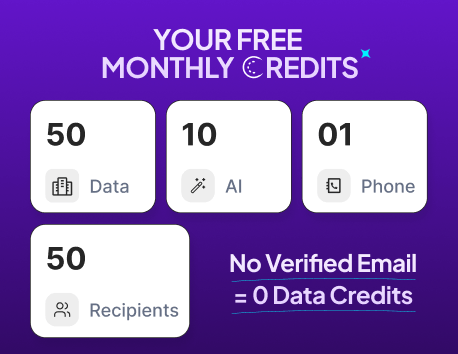
Complete Agentic Email Outreach
AI agents find and enrich prospects, personalize emails, follow up, and handle replies with your meeting link.
Claim Your FREE Credits
Staffing agencies are under pressure from both sides of the hiring market. Clients want faster results, better candidates, and lower costs, while recruiters are dealing with talent shortages, high application volumes, candidate ghosting, and growing technology demands.
These staffing agency challenges make it harder to maintain service quality while protecting margins and recruiter productivity.
At the same time, AI-generated applications, candidate fraud, and changing employer expectations are adding new layers of complexity.
In this guide, you’ll learn:
- The seven most common staffing challenges agencies face in 2026
- Why these problems are becoming harder to manage
- Practical ways to improve recruiting delivery, client acquisition, and profitability
What Are the Biggest Staffing Agency Challenges in 2026?
The biggest staffing agency challenges in 2026 go far beyond finding enough candidates. You now have to deal with higher application volumes, harder-to-verify talent, rising client expectations, tighter margins, and rapid technology adoption at the same time.
These pressures are changing both how you recruit and how you grow your agency.
Candidate Quality Is Getting Harder to Judge
Recruiters are receiving more applications, but more volume does not always mean more qualified talent.
Some of the biggest issues include:
- Harder-to-find skilled candidates
- AI-generated résumés and cover letters
- Inflated experience or credentials
- Candidate fraud and identity concerns
- Greater dependence on job boards
Gartner reported that 39% of candidates had used AI during the application process, with many using it to create or improve application materials. That can make résumés look stronger while making real ability harder to assess.
Checkr also found that 61% of staffing organizations had encountered hiring fraud, showing why verification and screening are becoming more important.
Clients Expect More From Staffing Partners
At the same time, your clients have more hiring options than before.
They can use:
- Internal recruiting teams
- LinkedIn sourcing
- Direct sourcing programs
- AI recruiting tools
- Competing staffing agencies
This means agencies are expected to deliver faster, submit better candidates, communicate more clearly, and often do it at tighter margins.
Technology Is Becoming a Competitive Requirement
Another major part of staffing industry challenges in 2026 is technology adoption.
You are increasingly expected to use automation and AI for sourcing, outreach, screening, CRM updates, and reporting. But adding more tools without improving the underlying process can simply increase costs and complexity.
That is why the challenges facing staffing agencies affect two areas at once: recruiting delivery and agency growth. The agencies that manage both sides effectively will be better positioned to compete.
7 Common Staffing Agency Challenges and How to Overcome Them
The pressures shaping staffing in 2026 show up differently inside every agency. You may have plenty of candidates but too few clients, or enough job orders but not enough qualified talent to fill them.
The important part is identifying where your process is breaking and fixing that bottleneck instead of adding more tools around it.
1. Finding Qualified Candidates Remains a Major Staffing Challenge
One of the most persistent staffing challenges is not simply finding applicants. It is finding people who genuinely match the skills, experience, availability, and expectations of the role.
High application volume can actually make this harder. Recruiters may spend more time screening résumés while finding fewer candidates they feel confident submitting.
The problem is becoming more complicated because of:
- Persistent skills gaps in specialist roles
- Large numbers of poorly matched applicants
- AI-assisted or AI-generated résumés
- Exaggerated skills and work history
- Candidate fraud and identity concerns
- Difficulty reaching passive candidates
- Heavy reliance on the same job boards
RefAssured's 2026 research found that 74% of jobseekers had used generative AI to write or edit a résumé. It also found that 76% of staffing recruiters believed candidate fraud was more common than three years earlier.
Checkr similarly reports that 61% of staffing organizations encountered hiring fraud, while résumé or credential fabrication affected 36%.
That means résumé quality alone is becoming a weaker indicator of candidate quality.
How you can overcome it
Start by reducing your dependence on inbound applications alone.
Build sourcing channels around:
- Existing candidate relationships
- Referral programs
- Specialist communities
- LinkedIn and direct sourcing
- Previously qualified candidates
- Role-specific talent pools
Then strengthen qualification before submission.
Use structured screening questions, verify important credentials earlier, and evaluate evidence of skills rather than relying only on polished résumé language.
The objective is simple: build an owned talent pool you understand instead of repeatedly starting from zero on a job board.
2. Client Acquisition Is One of the Biggest Staffing Agency Challenges
Even an agency with excellent recruiters cannot grow without enough job orders.
Client acquisition has become one of the biggest staffing agency challenges because employers now have more ways to recruit without immediately contacting an agency.
Your potential clients may already have:
- Internal talent acquisition teams
- LinkedIn Recruiter
- Direct sourcing programs
- AI recruiting tools
- Preferred staffing suppliers
- Relationships with competing agencies
SHRM reported in its 2025 recruiting benchmark that 55% of organizations had dedicated in-house recruiters.
That does not eliminate the need for staffing firms. It does mean your agency needs a clearer reason to be involved.
The other problem is consistency.
Many agencies treat business development as something recruiters do when job orders slow down. A recruiter sends a few messages, makes calls for several days, gets busy with delivery again, and stops prospecting.
Your pipeline then rises and falls with recruiter availability.
How you can overcome it
Create a repeatable client acquisition workflow:
ICP → account targeting → hiring signals → decision-makers → outreach → follow-up → meetings
Start with your ideal customer profile. Define industries, company size, location, hiring patterns, roles you specialize in, and the decision-makers most likely to buy staffing services.
Then use hiring signals to prioritize accounts showing potential demand rather than contacting companies randomly.
This is where Oppora.ai can support the agency business-development side.
You can define your ICP and use Finder to search companies and decision-makers. Oppora also supports intent signals such as hiring activity, headcount growth, funding, and job changes, helping you focus outreach on accounts where timing may be stronger.
You can then organize prospects into Lists and use AI Workflows to connect steps such as company discovery, people discovery, enrichment, and lead scoring.
From there, campaigns can run personalized email and LinkedIn sequences with follow-ups. Reply Ora can classify incoming replies and draft or send responses toward a goal such as booking a meeting.
The goal is not to replace relationship-based selling. It is to stop client acquisition from depending on whether someone remembered to prospect that day.
3. Speed and Candidate Quality Are Growing Staffing Recruiting Challenges
Your clients usually want candidates quickly.
They also expect those candidates to be relevant.
That creates one of the hardest staffing recruiting industry challenges: moving fast without lowering submission quality.
Speed often breaks down before sourcing even begins. A weak intake call can leave recruiters unclear about required skills, salary flexibility, interview stages, location requirements, or what the hiring manager actually values.
That confusion produces:
- Irrelevant candidate submissions
- Repeated clarification with clients
- Slow sourcing
- Poor candidate communication
- More rework for recruiters
- Lower interview rates
Simply submitting more candidates rarely solves the problem.
How you can overcome it
Improve the intake process first.
Before working on a role, make sure you understand:
- Must-have versus preferred skills
- Compensation range
- Location and work arrangement
- Reasons previous candidates were rejected
- Interview process and expected timeline
- What success looks like after hiring
Then measure the quality of your workflow rather than only counting submissions.
Useful metrics include:
Time-to-qualified-submission: How quickly can you present someone who genuinely fits?
Interview rate: What percentage of submitted candidates receive interviews?
Submission-to-hire rate: How often does a submission eventually become a placement?
If speed increases while these metrics decline, you are moving faster in the wrong direction.
4. Candidate Engagement and Ghosting Create Major Staffing Challenges
Finding the right candidate is only useful if you can keep that person engaged through the hiring process.
Candidates often speak with several employers and recruiters simultaneously. If communication slows down, another opportunity can quickly become more attractive.
Staffing firms also have limited control over client feedback speed, making this one of the harder staffing challenges to solve.
Common causes include:
- Slow recruiter responses
- Long client feedback loops
- Competing job offers
- Unclear hiring timelines
- Generic communication
- Too much silence between interview stages
Candidate expectations are also rising. The 2025 State of Staffing report found that 66% of staffing professionals said candidates were expecting more from recruiters.
How you can overcome it
Build communication into every stage of the process:
Screening → submission → interview → feedback → offer → onboarding
Tell candidates what happens next and when they should expect an update.
Even when the client has not responded, saying, "I don't have feedback yet, but I'll update you tomorrow," is better than disappearing for four days.
Automation can handle repetitive reminders, scheduling confirmations, and status updates.
Recruiters should stay personally involved when conversations involve offers, concerns, career decisions, negotiation, or trust.
That balance gives candidates speed without making the experience feel automated.
5. Margin Pressure Is One of the Most Common Staffing Agency Challenges
Revenue can grow while profitability gets worse.
That happens when each placement requires more recruiter time, more sourcing spend, more technology, and a longer hiring cycle while clients continue negotiating fees.
Margin pressure is therefore one of the most important staffing agency common challenges to monitor.
You may be absorbing:
- Higher recruiter costs
- More software subscriptions
- Increased sourcing costs
- Longer time-to-fill
- Repeated candidate replacement work
- Client fee pressure
Competing only on price makes the situation worse.
Lowering your fee may help you win an account, but it can create a client relationship that becomes difficult to serve profitably.
How you can overcome it
Start measuring profitability at the client and role level.
Look beyond revenue and track:
- Cost per placement
- Recruiter hours per placement
- Sourcing costs
- Time-to-fill
- Repeat business
- Fill rate by client
Specialization can also protect margins.
When you become known for a specific industry, role type, or talent market, you can build reusable candidate knowledge instead of rebuilding expertise with every requisition.
The goal is not simply to cut expenses. It is to spend recruiter time where it creates the greatest placement and client value.
6. AI Adoption Is Reshaping Staffing Industry Challenges in 2026
AI is becoming part of recruiting operations, but adopting more AI does not automatically make an agency more productive.
The more useful question is:
Where should AI handle repetitive work, and where should a recruiter remain involved?
The American Staffing Association reported that recruiters used an average of 1.36 AI tools in Q1 2026, up from one tool in Q1 2024. During the same period, recruiter call time reached 286 minutes per week, roughly double the Q1 2024 level.
That is an important signal. Technology can create more room for human interaction rather than eliminating it.
AI can assist with:
- Candidate sourcing
- Initial matching
- Prospect research
- Outreach preparation
- Scheduling
- Data entry
- ATS and CRM updates
Recruiters should continue leading:
- Candidate evaluation
- Client consulting
- Negotiation
- Relationship building
- Judgment-heavy decisions
- Sensitive conversations
You also need governance.
Checkr found that only 25% of staffing organizations had documented and actively enforced AI governance policies, despite growing AI usage.
So your AI strategy should cover not only productivity but also data quality, accountability, and human review.
A useful principle is:
Automate tasks. Augment decisions. Keep relationships human.
7. Recruiter Productivity and Burnout Are Growing Staffing Agency Challenges
Recruiters rarely spend their entire day recruiting.
A full-desk recruiter may move constantly between:
- Candidate sourcing
- ATS updates
- Scheduling
- Candidate follow-ups
- Client development
- Reporting
- Administrative work
Atlas found that 41.1% of agency recruiters still work in full-desk roles, meaning one person may carry responsibilities across business development, recruiting, and placement.
When every activity is treated as equally important, high-value recruiter work gets buried under administration.
The better question is:
Which tasks actually require a recruiter?
Use the Automate → Standardize → Human-owned framework
Automate: repetitive activities such as reminders, routine data updates, scheduling, and predefined follow-ups.
Standardize: recurring processes that still require oversight, such as intake forms, candidate screening questions, submission formats, and client reporting.
Human-owned: work where judgment and trust matter, including candidate evaluation, client discovery, negotiation, coaching, and relationship building.
This framework does more than reduce workload.
It gives recruiters more time for the activities clients and candidates actually remember: understanding a difficult requirement, giving useful advice, resolving a concern, or helping someone make a career decision.
That is where technology and recruiter productivity should ultimately meet.
How to Overcome Staffing Agency Challenges in 2026
You do not need to fix every staffing problem at once. In fact, trying to improve sourcing, sales, candidate engagement, recruiter productivity, and technology at the same time can make it harder to see what is actually working.
A better approach is to identify the bottleneck creating the biggest impact on placements, revenue, or recruiter capacity.
Start With the Problem That Is Costing You the Most
Use a simple diagnostic like this:
This matters because the same solution will not work for every agency.
If your recruiters have strong talent pools but not enough active clients, adding another sourcing platform will not solve the real issue. Your priority should be building a more consistent business development process.
If you have plenty of job orders but struggle to submit qualified candidates quickly, the problem may sit in intake, sourcing, screening, or recruiter workload instead.
Use a Bottleneck-First Improvement Process
A practical way to overcome staffing agency challenges is to follow this sequence:
Identify bottleneck → measure baseline → fix workflow → measure improvement → scale
Start with one measurable problem.
If candidate drop-off is high, track where people disengage. If submissions are slow, measure your current time-to-qualified-submission. If profitability is falling, review cost per placement and recruiter time by client.
Then change the workflow and compare the result against your baseline.
This prevents you from investing in new tools or automation without knowing whether they improve the actual outcome.
The agencies that handle staffing challenges most effectively are usually not the ones doing everything at once. They are the ones that know their biggest constraint, fix it systematically, and only then move to the next one.
How Staffing Agencies Can Prepare for Staffing Industry Challenges in 2026
Preparing for staffing industry challenges in 2026 is less about reacting faster and more about building systems before demand appears.
The agencies that stand out will not wait for a new requisition to start looking for candidates or for revenue to slow before starting business development.
Move From Reactive to Proactive Staffing
A reactive agency usually works like this:
- Wait for a client to send a job order
- Post the role on job boards
- Search for available candidates
- Start outreach only when pipeline slows
A modern agency works differently.
You build specialized talent pools, maintain employer relationships, track hiring activity, and keep qualified candidates engaged before a role becomes urgent.
That means focusing on:
- Specialized recruiting in industries or roles you understand deeply
- Owned candidate pools instead of relying only on job boards
- Better screening and candidate verification
- Faster and more standardized recruiting workflows
- Consistent candidate communication
- Accurate agency data and performance tracking
- Automation for repetitive administrative work
- Human interaction for trust, negotiation, and important decisions
Build Client Demand Before You Need It
Proactive client acquisition should follow the same principle.
Instead of asking recruiters to prospect only when they have spare time, you can build an ongoing system for identifying target companies, monitoring hiring signals, finding decision-makers, and starting relevant conversations.
Oppora.ai supports this type of workflow by letting you define your ICP, find companies and decision-makers through Finder, organize prospects into Lists, and connect prospecting, enrichment, scoring, and outreach through AI Workflows.
Its campaigns can also support personalized email and LinkedIn sequences, while Reply Ora can classify responses and help move interested prospects toward meetings.
The bigger shift is simple:
Reactive agency: waits for job orders and applicants.
Modern agency: builds talent pipelines and employer relationships before demand appears.
Conclusion
The biggest staffing agency challenges do not have one universal fix. What matters is identifying the constraint that is hurting your agency most right now.
For some agencies, that may be finding qualified candidates. For others, it may be winning clients, improving submission speed, reducing candidate drop-off, protecting margins, adopting technology effectively, or giving recruiters more capacity.
Once you know the main bottleneck, focus on the workflow behind it. Measure the current result, improve the process, and track whether the change actually helps before moving on to the next problem.
That approach is more effective than adding tools without a clear reason.
If your biggest challenge is generating and nurturing new employer opportunities, Oppora.ai can help you build a more consistent outbound process around target accounts, decision-makers, personalized outreach, follow-ups, reply handling, and meeting generation.
The goal is not to automate everything. It is to make your agency more focused, responsive, and easier to scale.
FAQs
What are the biggest staffing agency challenges in 2026?
The biggest staffing agency challenges in 2026 include finding qualified candidates, dealing with AI-generated applications and candidate fraud, winning new clients, protecting margins, improving recruiter productivity, and adopting technology without losing the human side of recruiting. Agencies are also under pressure to move faster while maintaining candidate quality and stronger communication.
What are the most common staffing challenges?
The most common staffing challenges usually fall into seven areas: candidate sourcing, client acquisition, submission speed, candidate engagement, profitability, technology adoption, and recruiter workload. The exact priority depends on where your agency is losing the most time, revenue, or placements.
How can staffing agencies overcome recruiting challenges?
You can overcome recruiting challenges by improving sourcing, building owned talent pools, strengthening candidate qualification, standardizing intake calls, and automating repetitive work. It also helps to track metrics such as time-to-qualified-submission, interview rate, submission-to-hire rate, candidate drop-off, and cost per placement.
Why are staffing agencies struggling to find qualified candidates?
Agencies are facing skills shortages, large volumes of poorly matched applications, passive candidates, AI-assisted résumés, candidate fraud, and heavy dependence on job boards. This makes it harder to judge candidate quality quickly, so stronger verification, direct sourcing, and better qualification have become more important.
How is AI affecting staffing industry challenges in 2026?
AI is helping agencies automate sourcing, research, outreach, scheduling, data entry, and CRM updates. At the same time, it is creating new challenges around application quality, fraud, governance, and candidate trust. The most effective approach is to automate tasks, augment decisions, and keep relationships human.
Summarize with AI
Share