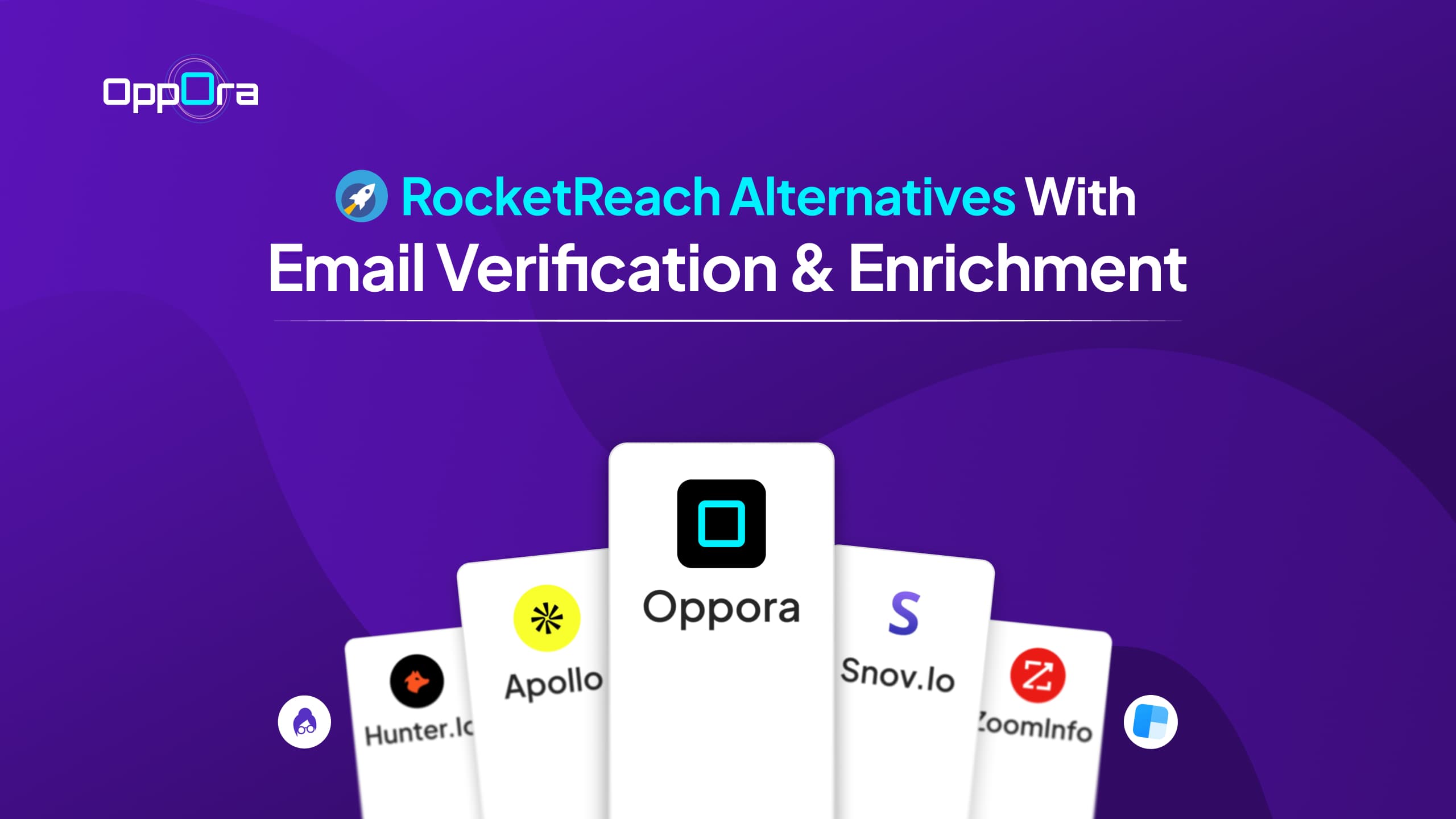
10 Best AI Lead Finders that Gives Most Qualified Leads
Stephen Parker
Published May 16, 2026
15 min

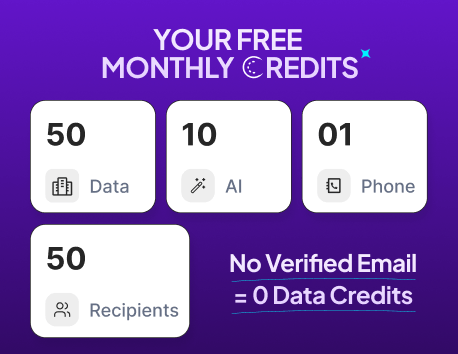
Complete Agentic Email Outreach
AI agents find and enrich prospects, personalize emails, follow up, handle replies, and book meetings automatically.
Claim Your FREE Credits
Finding leads is easy now. Finding qualified leads is where most teams still struggle.
You can pull thousands of contacts from a database, LinkedIn search, or company directory. But if those contacts are outdated, poorly matched, or missing context, your outreach still depends on guesswork.
That is why an ai lead finder should do more than collect names and emails. It should help you identify the right people, enrich their details, verify contact data, understand buying signals, and prepare leads for personalized outreach.
The right tool can save hours of manual prospecting and help your team focus on conversations that actually have potential.
In this guide, we’ll cover:
- How to evaluate AI lead finder tools
- The 10 best options to consider
- Which tool fits your business best
How We Evaluated These AI Lead Finders
Not every ai lead finder is built for the same job.
Some tools focus on contact data. Others are stronger at enrichment, outreach, automation, or sales intelligence. So we evaluated each tool based on real prospecting use, not just feature count.
Lead accuracy and enrichment quality
We checked whether each tool helps you:
- Find accurate B2B contacts
- Access verified email addresses
- Get updated job titles and company details
- Enrich leads with useful context
- Identify buying signals or intent data
Bad data leads to bounced emails, wasted time, and weak outreach, so accuracy mattered most.
Automation and workflow capabilities
We looked at whether each platform can:
- Automate lead search
- Enrich and verify contacts
- Score or prioritize leads
- Trigger outreach workflows
- Sync data with your CRM
The stronger tools reduce manual work between finding a lead and starting a real sales conversation.
Outreach and personalization features
We reviewed whether each tool supports:
- AI-written email copy
- Personalized messaging
- Email sequences and follow-ups
- LinkedIn outreach
- A/B testing and reply tracking
Qualified leads still need relevant outreach to turn into replies and meetings.
Pricing, scalability, and usability
We also considered whether each tool offers:
- Simple setup
- Flexible pricing
- Useful free plans or trials
- Scalable usage limits
- Easy workflows for growing teams
The best tool helps you find qualified leads faster, saves manual work, and fits your sales process.
List of 10 Best AI Lead Finders
Once you know what to evaluate, the next step is choosing the tool that matches your sales motion.
Some platforms are simple lead databases. Some are enrichment engines. Some help with outreach. And a few try to connect the whole process from finding leads to booking meetings.
Here are 10 ai lead finder tools worth considering.
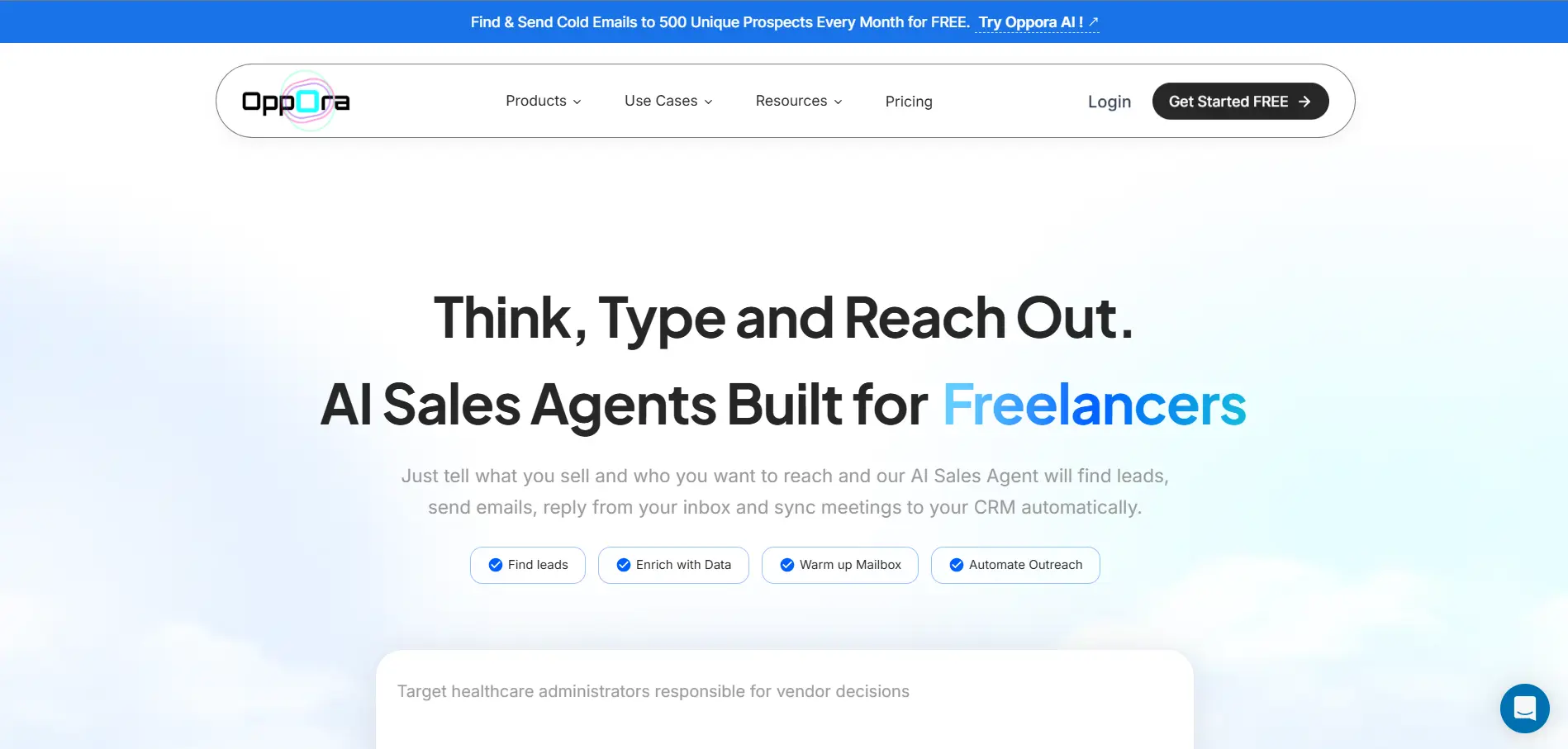
Oppora.ai
Oppora.ai is a good choice if you do not want your lead finder to stop at giving you a list of names.
Most lead finder tools help you search contacts, enrich data, or export emails. Oppora.ai goes further by helping you find qualified leads first, then move them into outreach workflows.
It gives you access to a 1B+ contact database, so you can search across a large pool of potential buyers and narrow them down using better lead criteria.
For lead finding, Oppora helps you:
- Search companies using filters like industry, location, company size, and target market. You can also use lead finder chrome extension
- Identify decision-makers inside those companies
- Find verified email addresses and phone numbers
- Use multisource data and waterfall sourcing for better coverage
- Enrich leads with company, role, and contact-level details
- Spot buying signals to prioritize better-fit prospects
- Verify contact details before outreach
Once your lead list is ready, Oppora also helps you:
- Write and send personalized emails
- Add LinkedIn outreach into email workflows
- Warm up domains and rotate mailboxes
- Match sender identity for better deliverability
- Reply from your inbox using AI reply agent
- Qualify interested leads automatically
- Book meetings and sync activity to your CRM
So if you want an ai lead finder that also supports the next steps after lead discovery, Oppora is one of the strongest options on this list.
Apollo.io
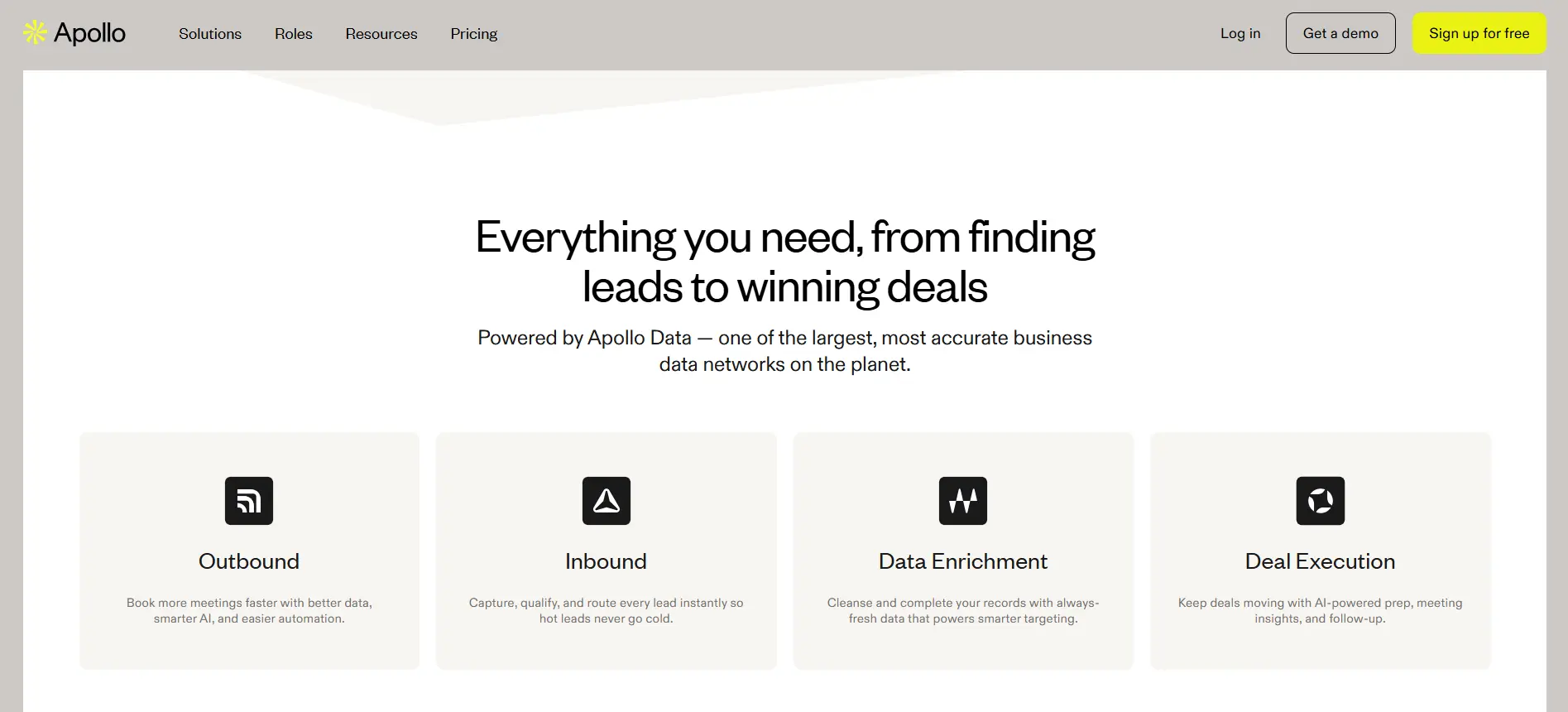
Apollo.io is a popular ai lead finder for teams that want lead data, enrichment, and outbound tools in one place.
It gives you access to a large B2B contact database, with Apollo listing 230M+ contacts for prospecting and enrichment. That makes it useful when you need to build targeted lead lists by role, company, industry, location, and other filters.
Apollo is especially helpful if your sales team wants to:
- Search for B2B leads and accounts
- Enrich existing CRM records
- Use AI for prospect research
- Score leads based on fit and signals
- Build email sequences
- Connect with tools like Salesforce, HubSpot, Outreach, and Salesloft
Its AI features can support research, scoring, outreach, and automation, which helps reps spend less time jumping between tools.
Apollo also offers pricing plans with a free option, which makes it approachable for startups and smaller sales teams.
The main thing to watch is that Apollo can feel broad. It covers many parts of the sales process, but some teams may still need extra tools for deeper enrichment, advanced deliverability, or more complex workflow automation.
If you want a familiar all-in-one prospecting platform, Apollo.io is a strong option to consider.
Suggested Reading:
5 Best Apollo.io Alternatives for B2B Lead Generation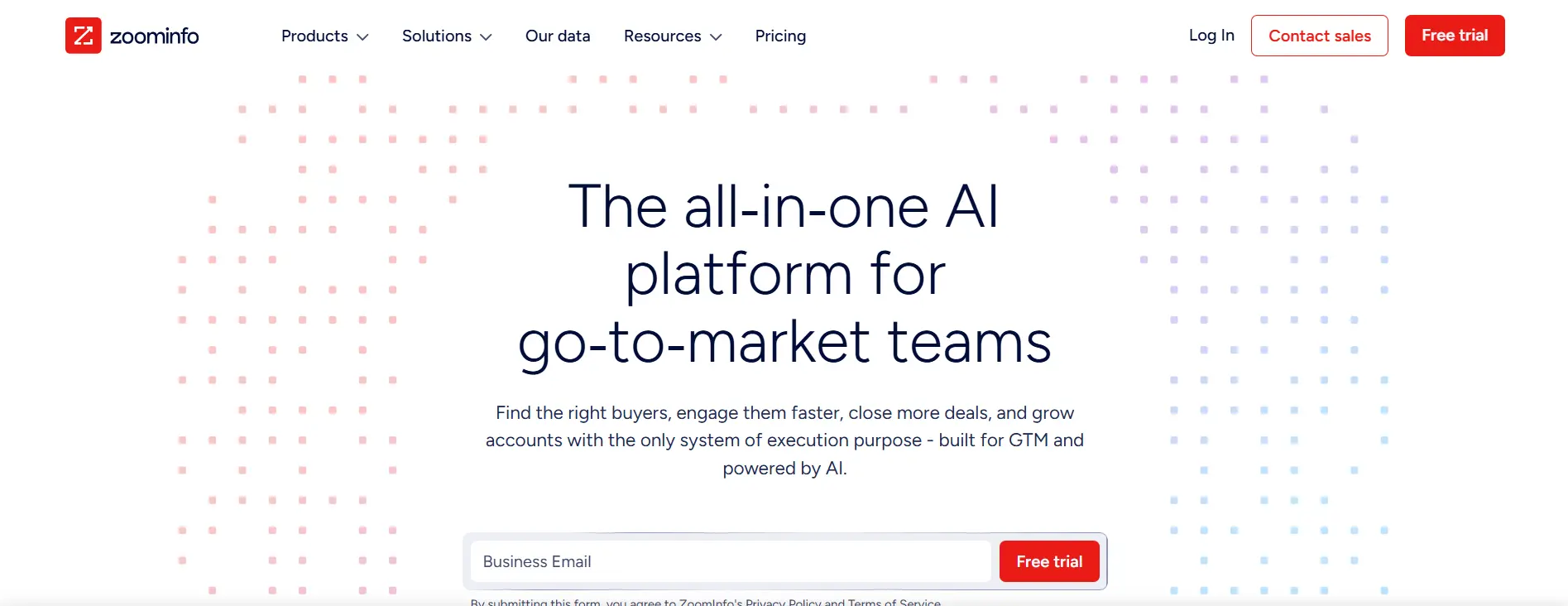
ZoomInfo
ZoomInfo is a better fit when your team needs deeper company intelligence, not just a basic contact list.
It is built for B2B sales, marketing, recruiting, and RevOps teams that want to identify the right companies, understand buyer intent, and reach decision-makers with more context. ZoomInfo describes itself as an AI-powered go-to-market platform that combines company data, contact data, buying intent signals, and workflow automation.
With ZoomInfo, you can:
- Search for companies and decision-makers
- Access firmographic and technographic data
- Use intent signals to spot in-market accounts
- Enrich CRM records with updated data
- Prioritize accounts based on buying activity
- Support sales and marketing prospecting workflows
This makes it useful for enterprise teams and larger outbound operations where lead quality depends on timing, account fit, and deeper research.
ZoomInfo’s intent data can also help reps focus on accounts already researching relevant topics, instead of reaching out to every company that matches a broad filter.
The main limitation is that ZoomInfo can be expensive and may feel too heavy for very small teams.
But if you need an ai lead finder with strong account intelligence and buying signals, ZoomInfo is one of the most established options.
Clay
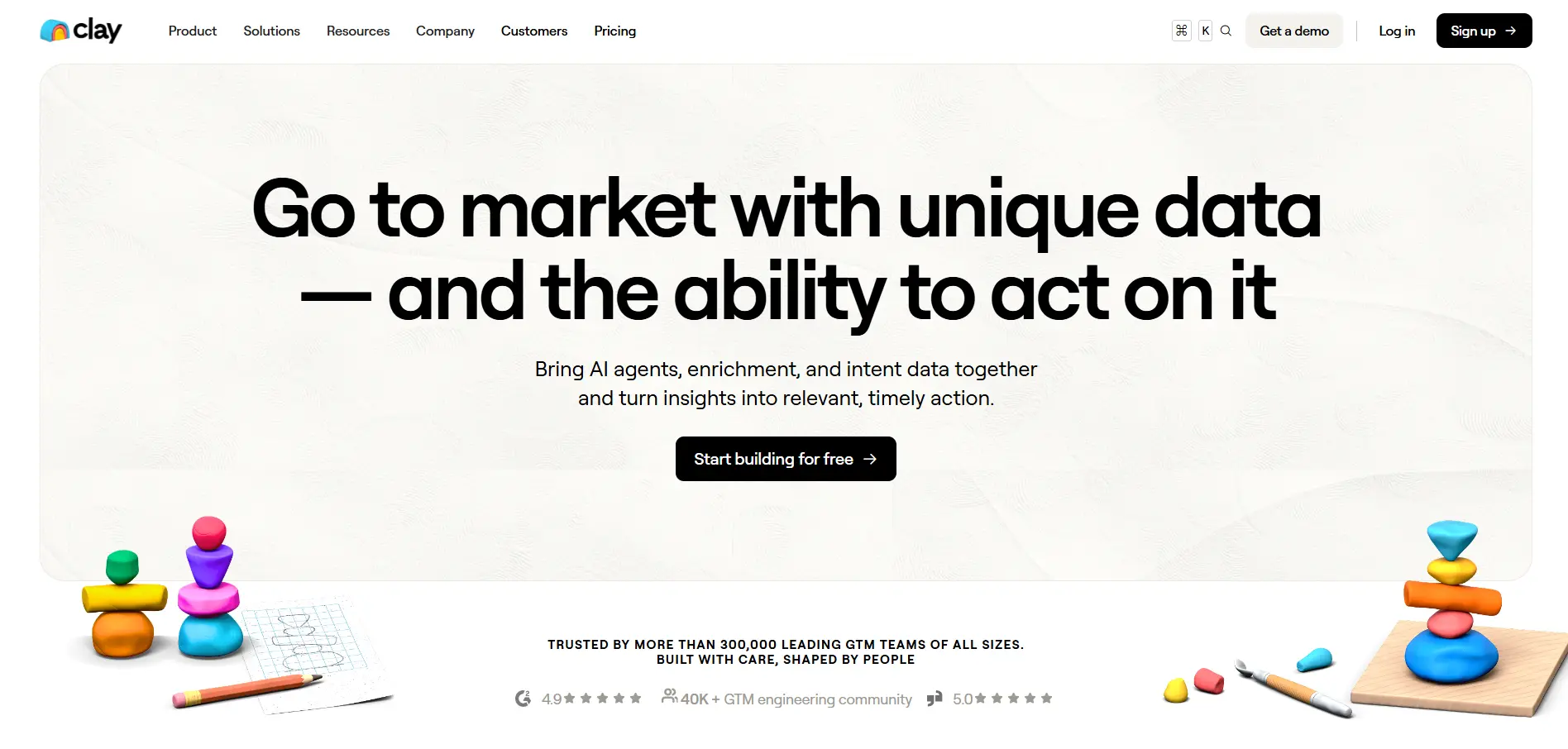
Clay is a strong ai lead finder for teams that want more control over how leads are sourced, enriched, scored, and prepared for outreach.
Instead of working like a simple contact database, Clay acts more like a flexible GTM workflow builder. It gives you access to 150+ premium data sources, AI research agents, enrichment tools, and intent data in one platform.
With Clay, you can:
- Build highly specific lead lists
- Enrich contacts from multiple data providers
- Research companies using AI agents
- Score accounts and contacts based on custom rules
- Find intent signals like job changes or website visits
- Personalize outbound campaigns with richer context
- Push qualified leads into your CRM or outreach tool
This makes Clay especially useful for growth teams, RevOps teams, agencies, and outbound teams that want to create custom prospecting systems.
The biggest strength of Clay is flexibility.
You can design your own workflow instead of depending on a fixed lead search process. That is helpful when your ICP is very specific or when you need deeper research before outreach.
The tradeoff is that Clay can feel complex for beginners.
If you want a simple plug-and-play tool, it may take more setup. But if you want a customizable ai lead finder for enrichment-heavy prospecting, Clay is one of the best options.
Instantly AI
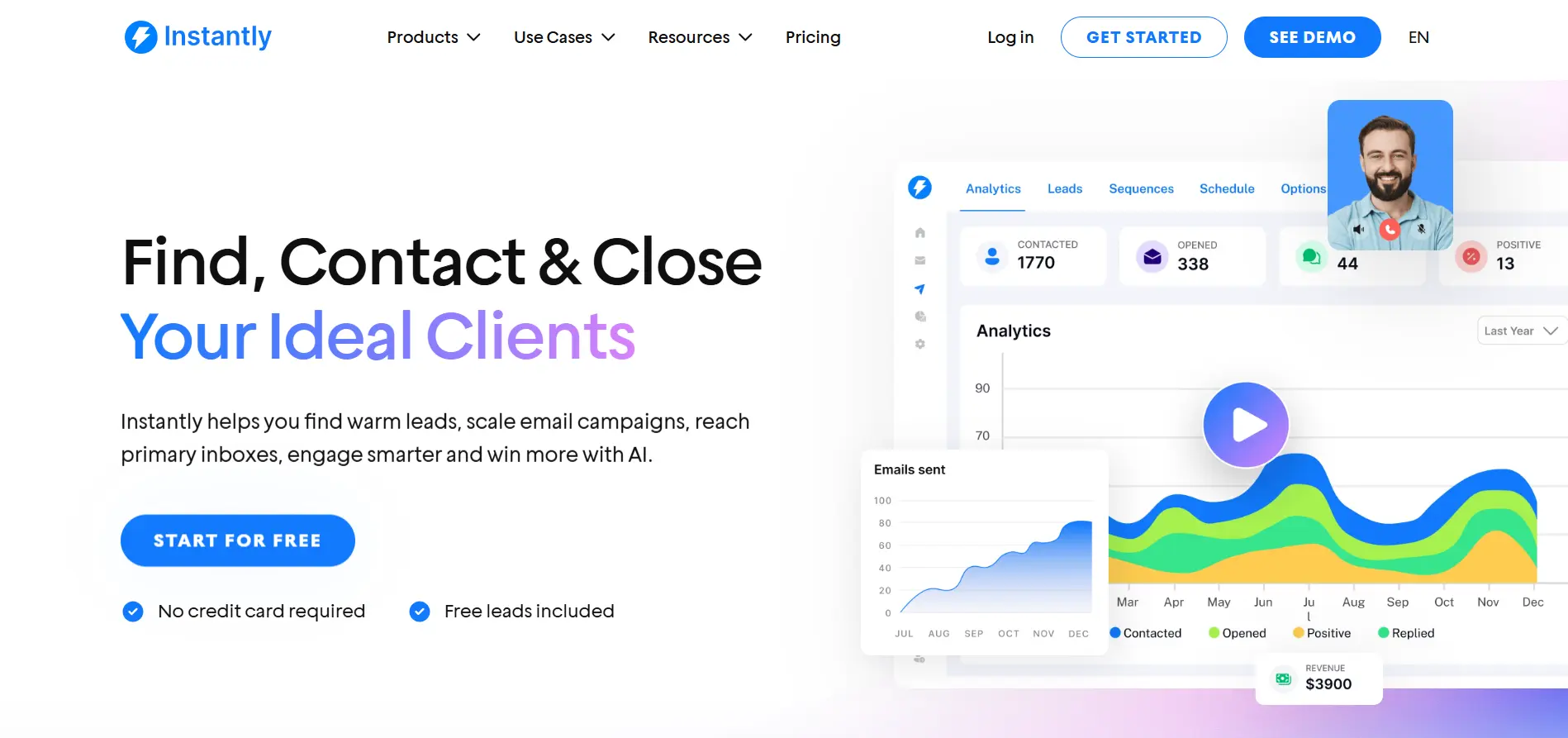
Instantly AI is a good ai lead finder if your main goal is to find leads and move them into cold email campaigns quickly.
It combines lead discovery, email outreach, email verification, warmup, deliverability tools, and CRM features in one platform. So instead of building a lead list in one tool and sending emails from another, you can manage more of the outbound process in one place.
With Instantly AI, you can:
- Search for B2B leads
- Build targeted prospect lists
- Verify email addresses
- Launch cold email campaigns
- Connect and rotate multiple inboxes
- Use email warmup to protect deliverability
- Run A/B tests on outreach campaigns
- Track replies and campaign performance
This makes Instantly useful for agencies, freelancers, SDR teams, and outbound-heavy businesses that care about speed and sending volume.
Its biggest strength is cold email execution.
If you already know your target audience and want to start outreach fast, Instantly can help you go from lead search to campaign launch without too much friction.
The main limitation is that it is more outreach-focused than research-focused.
So, if you need deep account intelligence, advanced enrichment, or complex lead scoring, you may need another tool alongside it. But for fast prospecting and email outreach, Instantly AI is a practical option.
Lemlist
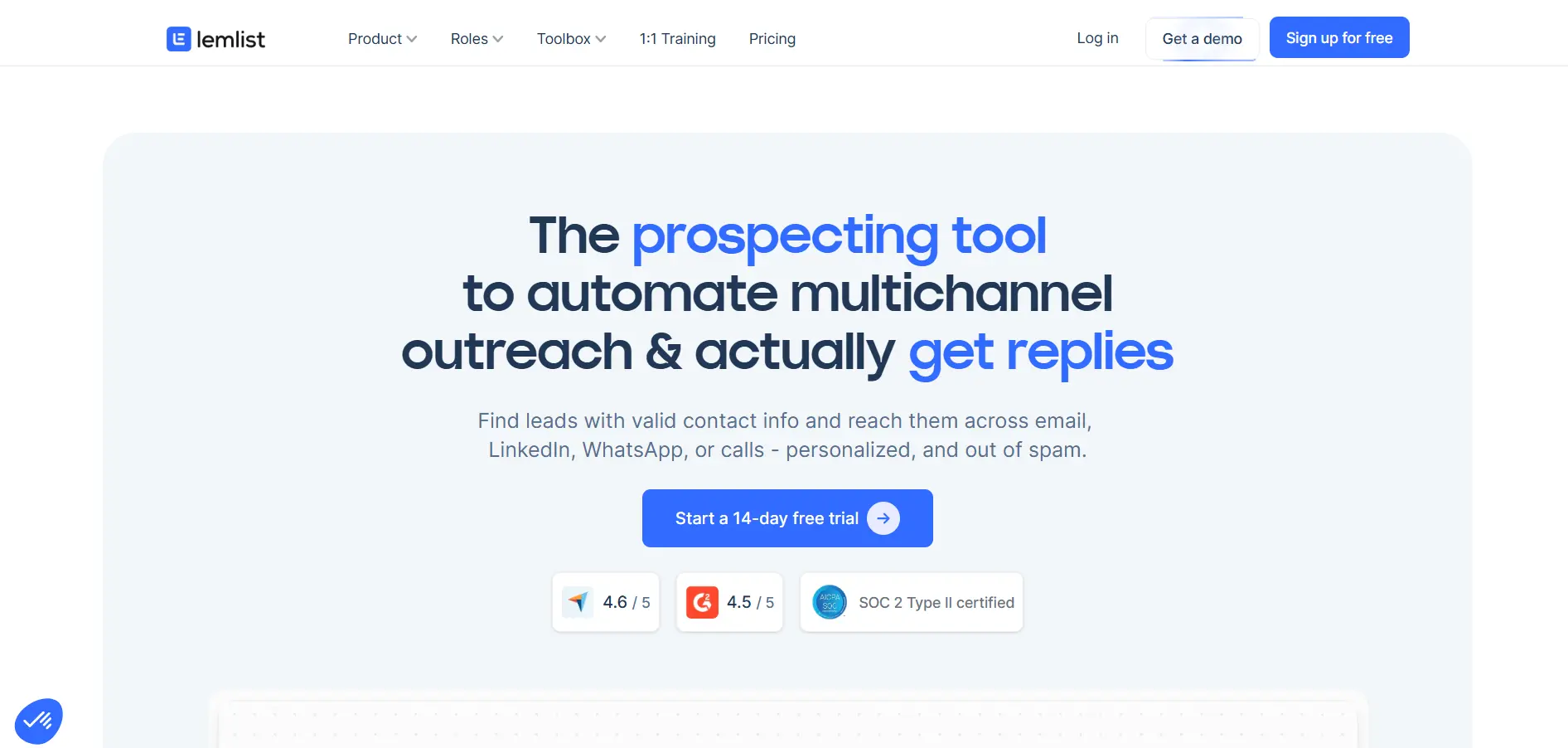
Lemlist is a strong ai lead finder for teams that care about personalized, multi-channel outreach.
It helps you find leads, enrich contact data, detect buying signals, and turn those leads into email, LinkedIn, WhatsApp, and phone campaigns. Lemlist says its built-in database includes 600M+ B2B contacts, which gives teams a large pool of prospects to search from.
With Lemlist, you can:
- Build lead lists from its B2B database
- Find verified emails and phone numbers
- Use filters like company, role, funding, revenue, and tech stack
- Detect buying signals and intent
- Create personalized cold email sequences
- Add LinkedIn steps into your campaigns
- Use AI to clean data and personalize messages
- Protect deliverability with Lemwarm
Its biggest strength is outreach personalization.
Lemlist’s AI can help segment leads, clean messy data, identify pain points, craft intros, and create more relevant messages at scale.
This makes it useful for agencies, founders, SDRs, and sales teams that want their outreach to feel less generic.
The main limitation is that Lemlist is more focused on engagement than deep enterprise sales intelligence.
So, if you want an ai lead finder that combines lead discovery with personalized multi-channel outreach, Lemlist is a solid option.
Cognism
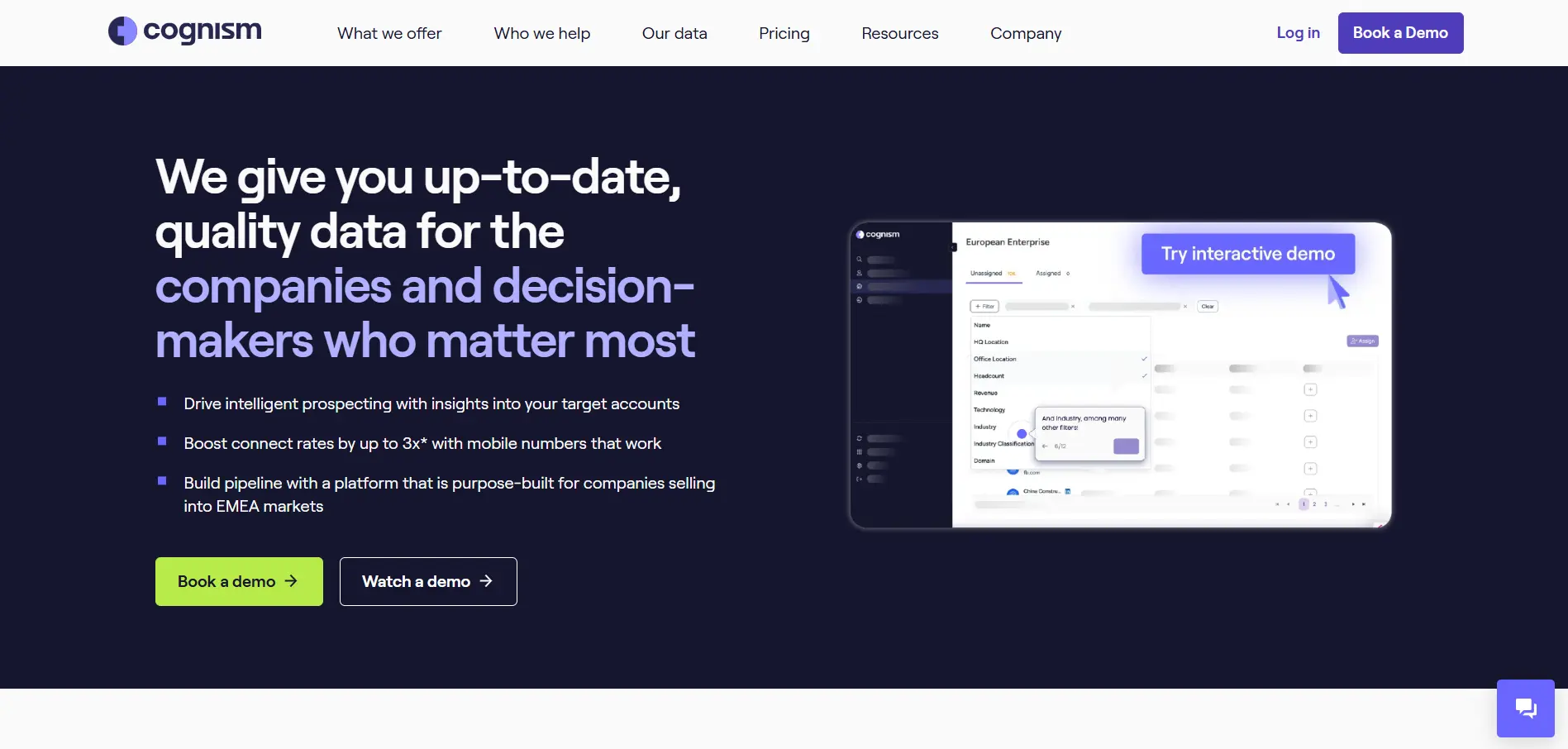
Cognism is a strong ai lead finder for B2B teams that care about data quality, compliance, and accurate decision-maker information.
It is built for sales, marketing, and RevOps teams that need reliable company and contact data before starting outreach. Cognism is especially useful for teams selling into Europe because it puts a strong focus on compliant prospecting and trusted B2B data.
With Cognism, you can:
- Find B2B contacts and target accounts
- Access phone-verified decision-maker data
- Use company and contact enrichment
- Identify buying signals like hiring, funding, and job changes
- Segment accounts by firmographic filters
- Enrich CRM records with cleaner data
- Support sales and marketing prospecting workflows
Its biggest strength is data reliability.
Cognism uses verification layers to create high-quality company and contact records, and it says director-level and above data is refreshed on a 30-day basis.
It also provides intent data through Bombora, helping teams find companies that may already be researching relevant solutions.
The main limitation is that Cognism is more of a sales intelligence platform than a full outbound automation system.
So, if you want compliant data, strong enrichment, and better-fit accounts, Cognism is a good option to consider.
Seamless.ai
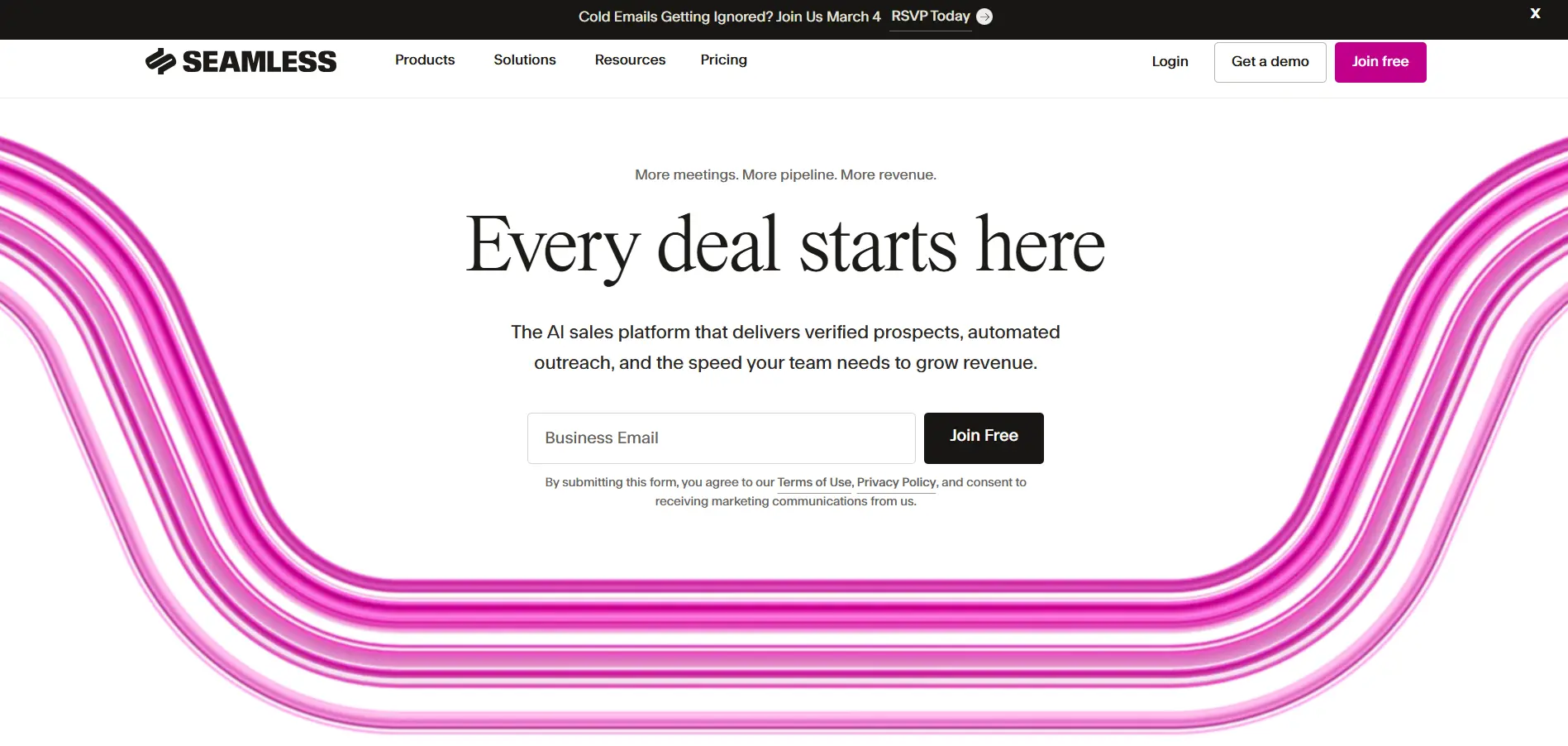
Seamless.ai is a useful ai lead finder for teams that want to find verified B2B contacts quickly and keep prospecting moving fast.
It positions itself as an AI sales platform that delivers verified prospects, automated outreach, and speed for revenue teams. Seamless.ai also says it is trusted by 1M+ sales leaders worldwide, which makes it one of the more recognized tools in this category.
With Seamless.ai, you can:
- Search for B2B contacts and companies
- Find verified business emails and phone numbers
- Build prospect lists in less time
- Enrich lead and company records
- Use AI support for research and outreach
- Connect prospecting data with CRM workflows
- Move faster from lead search to outreach
Its biggest strength is speed.
Seamless.ai focuses on real-time prospecting and verified data, helping sales teams reduce the manual work involved in finding contact information. Its platform overview says it combines real-time verified data with intelligent automation to help teams sell smarter and grow faster.
The main thing to watch is data review.
Like any lead database, you should still verify key contacts before launching important campaigns, especially if you are sending at scale.
If your team wants a fast prospecting engine with contact discovery, enrichment, and automation support, Seamless.ai is a strong option to consider.
Lusha
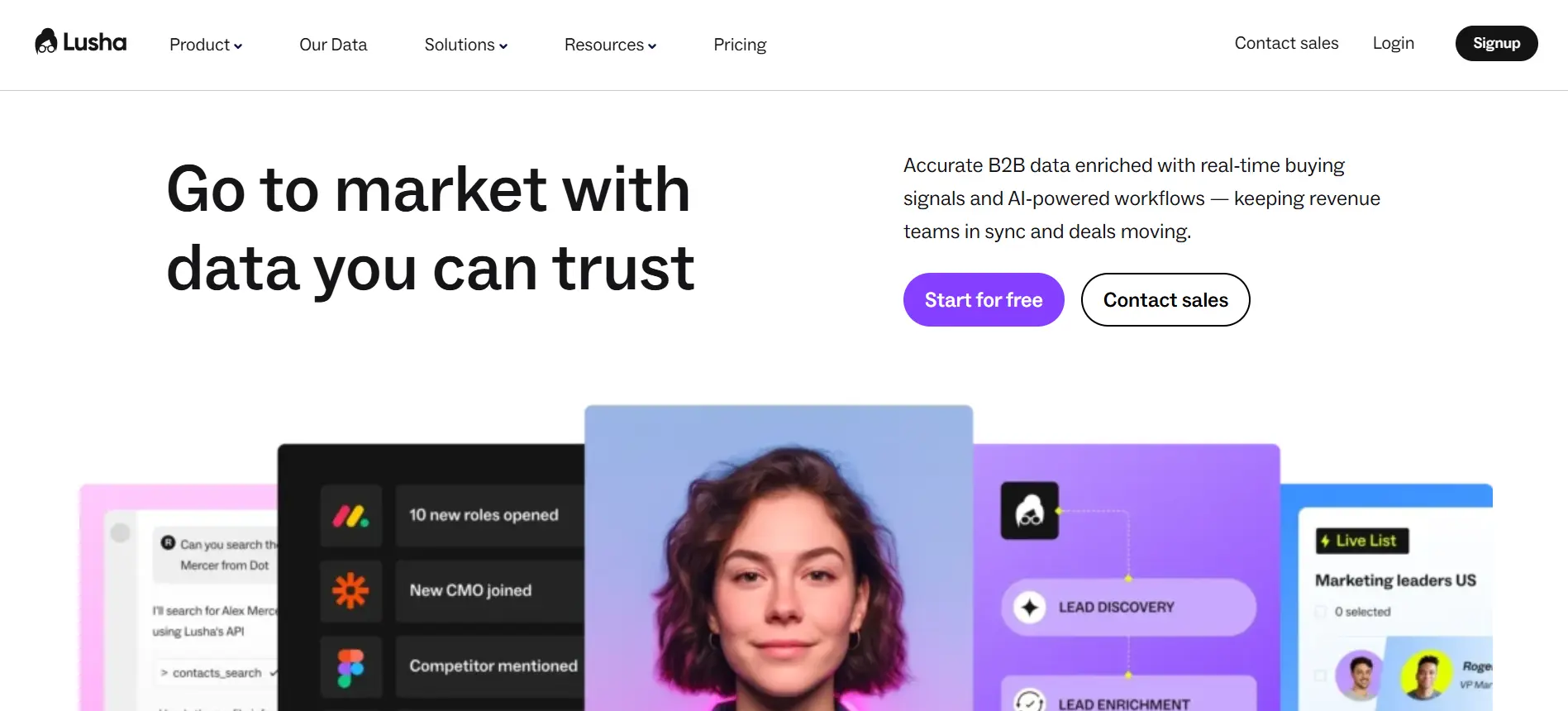
Lusha is a practical ai lead finder for teams that want accurate B2B contact data without a heavy setup process.
It helps sales, marketing, RevOps, and recruiting teams find verified contacts, enrich company records, and prioritize accounts using real-time buying signals. Lusha says its database includes 280M+ verified B2B contacts and tens of millions of company profiles across major regions and industries.
With Lusha, you can:
- Search for verified B2B contacts
- Find business emails and direct dials
- Enrich missing or outdated CRM records
- Use buying signals like funding, hiring, and job changes
- Reveal contact details through its Chrome extension
- Connect data with CRM and workflow tools
- Use API and webhooks for automated enrichment
Its biggest strength is simplicity.
Lusha is easier to use than many complex sales intelligence platforms, which makes it helpful for small sales teams, recruiters, agencies, and reps who need fast access to reliable contact data.
The main limitation is that Lusha is more focused on prospecting data than full outbound automation.
So, if you need advanced email sequencing, AI replies, mailbox rotation, or end-to-end sales workflows, you may need another tool with it. But for clean contact discovery and enrichment, Lusha is a solid option.
Suggested Reading:
11 Lusha Alternatives for 2026: Better Data, Pricing & Accuracy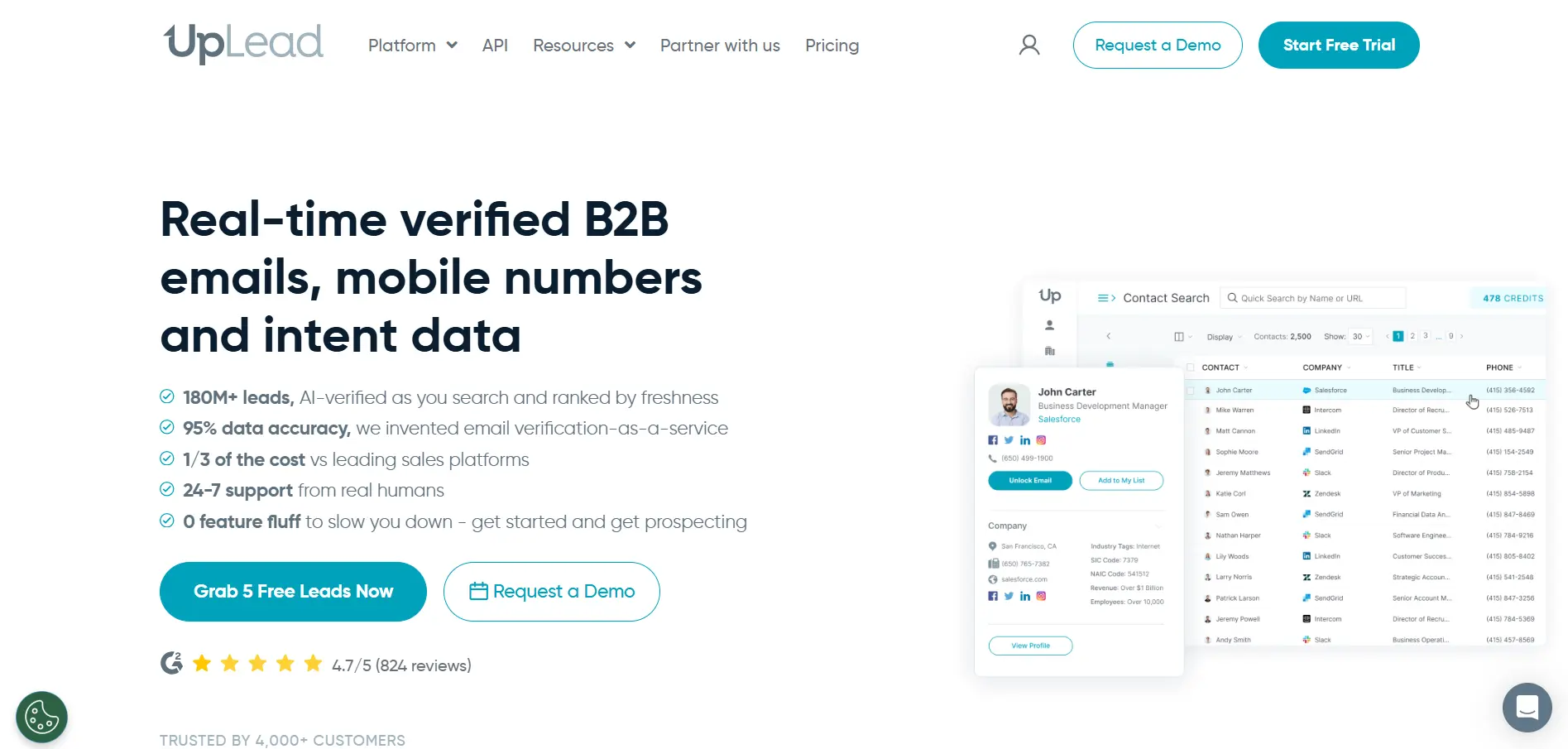
10. UpLead
UpLead is a solid ai lead finder for teams that want verified B2B contacts without adding too much complexity to their prospecting process.
Its biggest focus is data accuracy. UpLead gives you access to 180M+ leads, with real-time verified B2B emails, mobile numbers, and intent data. It also claims 95% data accuracy, which makes it useful for teams that want fewer bounced emails and cleaner outreach lists.
With UpLead, you can:
- Search for B2B contacts and companies
- Find verified emails and mobile numbers
- Use intent data to spot better-fit prospects
- Filter leads by role, industry, company size, and location
- Build targeted prospect lists
- Enrich existing contact and company records
- Use real-time email verification before exporting
Its biggest strength is simplicity.
You can define your target audience, find matching contacts, verify them, and send them into your CRM or outreach tool without building a complex workflow.
The main limitation is that UpLead is more focused on contact discovery than full outbound automation.
So, if you need AI replies, mailbox rotation, LinkedIn steps, or end-to-end sales workflows, you may need another tool with it. But for clean lead data and verified contacts, UpLead is a reliable option.
Which AI Lead Finder is Best for Your Business?
The best ai lead finder depends on what your team is trying to fix first.
Some teams need cleaner contact data. Some need faster list building. Others need outreach automation, better deliverability, or a full system that can run prospecting without daily manual work.
So instead of choosing the tool with the longest feature list, choose the one that fits your current sales motion.
Best option for startups and solo founders
If you are a startup founder or solo operator, you probably need two things: speed and simplicity.
You do not want to spend weeks setting up complicated workflows. You need a tool that can help you find relevant leads, verify contact details, and start outreach without hiring a full SDR team.
Good options include:
- Oppora, if you want AI agents to help with lead finding, outreach, replies, and meeting booking
- Apollo.io, if you want a familiar all-in-one database and sales engagement tool
- UpLead, if you mainly need verified contacts and simple prospecting
For most early-stage teams, Oppora is especially useful because it reduces the number of manual steps between finding leads and starting conversations.
Best option for agencies and SDR teams
Agencies and SDR teams usually need more volume, more structure, and better campaign control.
You may be managing multiple client campaigns, different ICPs, several inboxes, or multiple outreach channels. In that case, your lead finder should support list building, enrichment, personalization, campaign testing, and deliverability.
Good options include:
- Oppora, if you want AI-powered workflows across lead finding, email, LinkedIn, replies, and CRM syncing
- Instantly AI, if cold email volume and inbox rotation are your main priorities
- Lemlist, if personalized multi-channel outreach is central to your strategy
- Clay, if your team wants custom enrichment workflows and advanced prospecting logic
For SDR teams and agencies, the best choice depends on whether you need simple campaign execution or a more automated prospecting system.
Best option for enterprises and large outbound operations
Enterprise teams usually need more than email addresses.
They need reliable account data, buying signals, territory planning, enrichment, compliance, reporting, and integrations with existing CRM workflows.
Good options include:
- ZoomInfo, if you need deep account intelligence, intent data, and enterprise GTM visibility
- Cognism, if compliant B2B data and high-quality decision-maker information matter most
- Clay, if your RevOps team wants to build custom workflows using multiple data sources
- Apollo.io, if you want a broad sales platform that combines data and engagement
For larger teams, the right ai lead finder is usually the one that fits your existing sales process and keeps CRM data clean across teams.
Best option for teams wanting full AI sales automation
If your goal is not just to find leads, but to automate the whole outbound process, you need more than a database.
You need a system that can search, enrich, verify, personalize, send, reply, qualify, book meetings, and sync everything back to your CRM.
For this use case, Oppora.ai is the strongest fit.
It is built around AI sales agents that work together across the full outbound workflow. That means your team can move from prospecting to conversations without manually stitching together multiple tools.
This is especially useful if you want to:
- Find qualified leads automatically
- Build workflows once and keep them running
- Personalize outreach without using generic templates
- Protect deliverability with warmup and mailbox rotation
- Handle replies and meeting booking with AI
- Sync contacts, replies, and meetings to your CRM
If you want an ai lead finder that acts more like an AI sales system, Oppora is the best option to consider.
Suggested Reading:
Best Sales Automation Tools with AI: Ora ChatConclusion
Choosing the right ai lead finder comes down to how much of your sales process you want to improve.
If you only need contact data, tools like UpLead, Lusha, or Seamless.ai can help you build cleaner lists. If you need deeper company intelligence, ZoomInfo, Cognism, and Clay give you more context before outreach. And if your focus is cold email execution, Apollo, Instantly AI, and Lemlist can help you move faster.
But qualified leads are not just about finding names and emails.
You still need to enrich, verify, personalize, send, follow up, handle replies, and book meetings. That is where a more connected system becomes useful.
If you want an AI lead finder that helps you move from lead discovery to real conversations, Oppora.ai is worth exploring.
It gives you AI sales agents that can support the full outbound workflow, so your team can spend less time managing tools and more time talking to qualified buyers.
Frequently Asked Questions (FAQs)
What is an AI lead finder?
An AI lead finder helps you find potential customers based on your target audience, industry, role, company size, and other filters.
How does an AI lead finder work?
An AI lead finder searches databases and online sources, then enriches leads with emails, job titles, company data, and buying signals.
What makes a lead qualified?
A qualified lead matches your ideal customer profile and has a higher chance of needing your product or service.
Can AI lead finders help with cold email outreach?
Yes, some AI lead finders also help write emails, personalize messages, automate follow-ups, and track replies.
How do I choose the right AI lead finder?
Choose based on your main need: contact data, enrichment, outreach automation, intent signals, or full AI sales workflow support.
Summarize with AI
Share