Best Platforms to Buy Targeted B2B Sales Leads in 2026
Adam Hossain
Published September 20, 2026
20 min

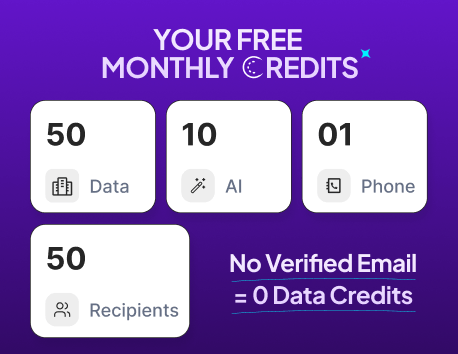
Complete Agentic Email Outreach
AI agents find and enrich prospects, personalize emails, follow up, handle replies, and book meetings automatically.
Claim Your FREE Credits
Finding qualified B2B prospects takes time. Inbound leads rarely arrive fast enough, while manual prospecting can leave your sales team spending hours searching instead of selling.
That is why many teams choose to buy sales leads. But buying contact data does not automatically mean you are buying qualified opportunities. The real value depends on targeting accuracy, fresh data, verification, pricing, and how easily those contacts move into outreach.
In this guide, you will learn:
- How to compare B2B lead platforms
- Which providers fit different sales teams
- How to test purchased leads
- How to scale the best-performing source
How We Evaluated B2B Lead Buying Platforms
A large database looks impressive, but it does not show whether your team can find the right people, reach them, and turn data into conversations. According to Salesforce’s 2026 State of Sales research, sales reps spend nearly one full workday each week on prospecting efforts.
That makes efficiency just as important as database size. We evaluated every platform using the same practical criteria below.
ICP Coverage and Targeting Depth
First, we checked whether you can narrow millions of records into prospects that actually match your ICP.
That includes industry, title, seniority, geography, company size, revenue, technology, funding, and relevant buying signals.
The useful path is total contacts → ICP matches → reachable decision-makers. This matters because HubSpot’s sales statistics show that 25% of sales professionals consider getting direct access to decision-makers one of their biggest challenges.
Data Accuracy, Freshness, and Contact Depth
Next, we checked whether each record gives you enough current information to confidently start outreach.
We reviewed:
- Current name, title, and company
- Verified email and phone availability
- LinkedIn and firmographic data
- Verification status, refresh practices, duplicates, and job changes
Data quality matters beyond deliverability. Salesforce’s State of Sales findings show that 79% of high-performing sales professionals prioritize data hygiene, compared with 54% of underperformers.
Pricing and Cost per Usable Lead
Finally, we compared what you actually receive for the price, including seats, credits, exports, rollover, trials, and feature-specific usage.
Instead of comparing subscription prices alone, calculate total spend ÷ verified ICP-fit contacts.
That gives you a more practical cost per usable lead and makes platforms with different credit systems easier to compare fairly.
Prospecting and Outreach Workflow
We evaluated how quickly you can move from finding a prospect to starting a relevant conversation. According to HubSpot’s 2025 State of Sales research, 84% of sales reps say AI helps save time and streamline prospecting.
We compared whether each platform supports:
- Search → filter → verify → qualify → personalize
- Email, calling, LinkedIn, follow-ups, and reply management
- CRM syncing without repeated CSV exports
Platforms requiring separate verification or outreach tools were treated as more fragmented workflows.
Data Transparency and Compliance
We also checked whether providers clearly explain their data sources and responsible-use practices.
That included GDPR/CCPA documentation, opt-out or deletion processes, suppression practices, security certifications, and verification policies. We gave more weight to independently documented policies than unsupported marketing claims.
Quick Comparison Table for B2B Lead Platforms
The right platform depends on more than database size. You also need to consider how precisely you can target prospects, what contact details you receive, and how much work remains before outreach begins.
Here is a quick comparison before we review each platform in detail.
Pricing reflects publicly available starting rates checked in September 2026 and may vary by billing cycle, region, seats, credits, or negotiated contracts.
Best Platforms to Buy Sales Leads for Different Sales Teams
Not every sales team needs the same type of lead platform. A startup may prioritize affordable prospecting and outreach, while an enterprise team may need deeper intent data, account intelligence, and compliance controls.
The platforms below differ in targeting depth, verification, pricing, and workflow. We’ll compare each one using the same criteria so you can see which options fit different sales motions and prospecting needs.
1. Oppora

Oppora is an AI-powered B2B prospecting and outreach platform built to help you move from finding leads to starting conversations in one workflow.
Instead of using separate tools for lead discovery, enrichment, verification, personalization, and outreach, you can manage these steps inside the same platform.
Lead Data, Targeting, and Verification
You can search for companies and decision-makers using ICP-based filters, then enrich records with business details, verified emails, phone data, LinkedIn information, and buying signals.
The practical focus is not simply database size. It is whether you can move from ICP match → verified contact → reachable prospect without manually checking every record.
Prospecting and Outreach Workflow
Oppora connects the main outbound steps:
- Define ICP → search → filter → verify
- Personalize → email/LinkedIn outreach → follow-up
- Manage replies → qualify interest → sync activity to CRM
Its AI agents and workflow builder are designed to reduce switching between prospecting, enrichment, sending, and reply-management tools.
Pros and Cons
G2 reviews of Oppora currently show a 4.5/5 rating. Reviewers frequently highlight its ease of use, accurate contact data, time savings, and ability to manage prospecting and outreach within one platform.
Pros
- Combines lead research, verification, personalization, and outreach
- Reduces manual tool switching
- Supports email and LinkedIn workflows
Cons
- New users may need time to learn advanced workflows
- Some reviewers mention limited free-plan credits and occasional slower data processing
- Specialist data providers may offer deeper coverage for highly specific markets
Pricing
Oppora offers four main plans:
- Free: $0/month
- Pro: $34/month
- Max: $79/month
- Enterprise: From $499/month
The Pro plan includes 5,000 email-search credits, 5,000 verification credits, 5,000 enrichment credits, and up to 25 mailboxes.
For a 1,000-prospect workflow, those allowances should generally cover search, verification, and enrichment without requiring extra credit packs, assuming roughly one credit from each category per prospect. Actual usage can vary depending on the workflow and data needed.
This is why cost per usable lead is more useful than comparing subscription prices alone.
Best For
Oppora fits:
- Startups, SMB sales teams, and agencies
- Teams wanting prospecting and outreach in one workflow
- Teams using AI-assisted email and LinkedIn outbound without stitching together several tools
2. Saleshandy

Saleshandy combines B2B lead discovery with cold email and multichannel outreach. You can use it to find ICP-fit contacts, reveal verified information, build prospect lists, and move those leads directly into sequences without exporting everything to another platform.
Lead Data, Targeting, and Verification
Saleshandy provides access to 852M+ contacts and 42M+ companies. Its Lead Finder supports filters such as job title, seniority, department, industry, geography, company size, revenue, technologies, funding, and hiring signals.
Rather than exporting broad lists, you can combine filters to create narrower ICP segments. Revealed work emails go through waterfall enrichment and real-time verification, while phone data is also available.
Prospecting and Outreach Workflow
The practical workflow is:
- Search ICP → apply filters → reveal contacts → verify
- Build list → add to sequence → personalize → follow up
- Manage email, calls, LinkedIn, WhatsApp, and manual tasks within multichannel sequences.
This reduces the handoff between lead generation and campaign execution.
Pros and Cons
Saleshandy’s G2 reviews show a 4.6/5 rating. Users commonly praise its ease of use, email automation, campaign management, and customer support, while some mention limitations around analytics, integrations, and verification-credit costs.
Pros
- Lead finding and outreach in one ecosystem
- Strong cold-email automation and sender rotation
- Built-in verification and multichannel sequences
Cons
- Some users find advanced settings and navigation confusing
- G2 reviewers mention verification-credit costs and limits
- Analytics and integrations receive some criticism
Pricing
Current annual pricing starts at $34/month for Starter, $76/month for Pro, and $149/month for Scale. Lead Finder credits are now included in these plans.
One verified work email costs 1 credit, while revealing email plus mobile phone costs 7 credits total, so phone-heavy prospecting can raise your cost per usable contact.
Best For
Saleshandy fits email-heavy SMB teams, agencies, founders, and outbound teams that want prospecting and cold outreach inside one connected workflow.
Suggested Reading:
14 Saleshandy Alternatives With Better Automation & Replies3. Apollo.io

Apollo.io is a B2B sales intelligence and engagement platform that combines prospect data, lead search, sequencing, calling, and CRM workflows. It is useful when you want to move from identifying decision-makers to contacting them without building a separate stack for every step.
Lead Data, Targeting, and Verification
Apollo provides access to 240M+ verified contacts and supports 65+ search filters. You can narrow prospects by job title, seniority, geography, company size, industry, revenue, technologies, funding, job changes, buying intent, and other signals.
You can also filter by verified email status and phone confidence. However, contact data should still be reviewed before high-volume outreach, especially when direct dials or regional records matter.
Suggested Reading:
Catch-All Email Verification: What is it & How It WorksProspecting and Outreach Workflow
A practical Apollo workflow might look like:
- US SaaS → 51–200 employees → VP Sales → verified email
- Save to list → add to sequence → call/LinkedIn task → CRM sync
Apollo lets you move contacts from search directly into sequences and connect workflows with CRMs such as Salesforce and HubSpot.
Pros and Cons
G2 feedback on Apollo.io frequently highlights its all-in-one approach, strong filtering, and time savings. Users also commonly mention data inconsistencies and a learning curve.
Pros
- Broad prospecting, sequencing, calling, and CRM capabilities
- Strong search filters and list building
- Reduces switching between separate sales tools
Cons
- Some users report outdated emails or phone numbers
- Large feature set can feel complex initially
- Credit limits and pricing can become restrictive at higher usage
Pricing
Apollo offers:
- Free: $0
- Basic: $49/user/month
- Professional: $79/user/month
Paid plans use credits for verified contacts and other data actions. As your team adds more users or increases prospecting volume, total monthly cost can rise quickly.
Best For
Apollo works well for startups and growing sales teams that want prospecting, engagement, calling, and CRM-connected workflows in one established platform.
Suggested Reading:
5 Best Apollo.io Alternatives for B2B Lead Generation4. Cognism

Cognism is a B2B sales intelligence platform focused strongly on European and EMEA prospecting. It helps you identify decision-makers, access business emails and mobile numbers, and move verified contact data into your CRM or outbound workflow.
Lead Data, Targeting, and Verification
Cognism lets you filter prospects by company size, revenue, geography, seniority, function, technology, and intent signals. Its Diamond Data focuses on phone-verified mobile numbers, which is particularly useful when calling is a major part of your outbound motion.
It also applies GDPR-focused processes and cross-references data against Do-Not-Call registries across multiple territories.
Prospecting and Outreach Workflow
A practical workflow could be:
- UK fintech → 200–1,000 employees → CFO
- Verified mobile/email → save/export → CRM
- Call first → follow with email → track outcome
Cognism fits especially well when your team prioritizes phone-led prospecting rather than relying mainly on cold email.
Pros and Cons
G2 feedback on Cognism commonly highlights ease of use, accurate contact data, and time savings. Reviewers also report occasional outdated records or incorrect phone details.
Pros
- Strong European and EMEA data coverage
- Phone-verified mobile numbers
- Compliance-focused prospecting processes
Cons
- Some contact records can still be outdated
- Less transparent pricing than self-serve platforms
- May be harder to justify for small teams with limited data needs
Pricing
- Standard: Custom annual pricing
- Pro: Custom annual pricing
- Typical SMB spend: Around $29,000/year
- Typical enterprise spend: Around $92,000/year
Final cost depends on seats, data access, credits, and add-ons, so annual contract value matters more than monthly price alone.
Best For
Cognism suits EMEA-focused mid-market and enterprise teams that prioritize mobile numbers, phone outreach, and compliance-conscious B2B prospecting.
Suggested Reading:
10 Best Cognism Alternatives (Compared by Pricing & Features)5. ZoomInfo

ZoomInfo is a B2B go-to-market intelligence platform built for teams that need more than contact lists.
It combines company and contact data with account intelligence, buying signals, engagement context, and CRM-connected workflows to help you prioritize accounts and decision-makers.
Lead Data, Targeting, and Verification
ZoomInfo provides contact and company intelligence alongside firmographics, technographics, organizational information, intent data, and company-level signals. Its current GTM Workspace brings CRM data, ZoomInfo intelligence, engagement history, and buying signals into one account view.
That makes it especially useful when you need to understand which account is active, who sits in the buying group, and when outreach may be relevant rather than simply exporting names.
Prospecting and Outreach Workflow
A typical enterprise workflow could look like:
- Enterprise account → intent topic → buying group
- Identify decision-makers → prioritize account → CRM
- Launch ABM, email, or sales outreach
ZoomInfo’s intent data can help surface companies researching relevant topics, while its account intelligence gives sellers more context before outreach.
Pros and Cons
G2 feedback on ZoomInfo shows a 4.5/5 average rating. Users commonly value centralized account intelligence, faster prospect research, and reduced tool switching.
Pros
- Deep company, contact, and account intelligence
- Strong intent and buying-signal capabilities
- Well suited to complex enterprise account targeting
Cons
- Can be more complex than a basic lead database
- Total cost can rise with seats, credits, and add-ons
- Smaller teams may not need its full account-intelligence depth
Pricing
ZoomInfo uses custom pricing:
- Typical starting price: Around $14,995/year
- Average SMB spend: About $48,524/year
- Average enterprise spend: About $166,802/year
Costs increase with seats, credits, intent data, and add-ons, so total annual spend can vary widely.
Best For
ZoomInfo fits enterprise sales, RevOps, and ABM teams targeting complex accounts, buying committees, and intent-led opportunities.
6. UpLead
UpLead is a B2B data platform focused on helping you build targeted prospect lists with verified contact information. It is more data-focused than outreach-focused, making it useful when you already have a CRM or sales engagement tool for campaign execution.
Lead Data, Targeting, and Verification
UpLead provides verified emails, mobile numbers, company data, intent signals, and more than 50 search filters. You can narrow prospects by industry, location, title, company size, and technologies used.
Its technographic search covers 16,000+ technologies, while emails are verified in real time when you unlock or export contacts. UpLead states a 95% data accuracy rate for verified emails.
Prospecting and Outreach Workflow
A typical workflow looks like:
- Industry → location → title → technology filters
- Verified contact → export → CRM
- Email or call through a separate outreach platform
UpLead integrates with tools such as Salesforce, HubSpot, Outreach, Salesloft, and other sales platforms, but it does not function as a complete native sequencing platform.
Pros and Cons
UpLead’s G2 profile shows a 4.7/5 rating. Users commonly highlight its simple interface, useful search filters, and verified contact information. Some reviewers also mention that contact freshness can vary.
Pros
- Real-time email verification
- Straightforward targeting and list building
- Strong CRM and outreach integrations
Cons
- Limited native sales-engagement automation
- Some contacts may still require freshness checks
- Niche-market coverage may be thinner than larger enterprise databases
Pricing
UpLead offers:
- Free trial: $0 for 7 days, 5 credits
- Essentials: $99/month, 170 credits
- Plus: $199/month, 400 credits
- Professional: Custom annual pricing
One credit unlocks one contact, including available email and mobile data. Unused monthly credits do not roll over.
Best For
UpLead fits SMB teams that prioritize verified list building and already use separate CRM or outreach software.
7. Lusha

Lusha is a B2B sales intelligence platform built for fast contact discovery. You can use it to find business emails, direct dials, company data, and buying signals while prospecting through LinkedIn, company websites, or Lusha’s own workspace.
Lead Data, Targeting, and Verification
Lusha provides access to verified professional contact data, including work emails and phone numbers. You can filter prospects by company, role, location, industry, and other firmographic criteria, while higher plans add buying signals and enrichment features.
Its Chrome extension is especially useful for quick prospecting because you can reveal contact details directly from LinkedIn or company pages without switching tabs.
Prospecting and Outreach Workflow
A typical Lusha workflow looks like:
- LinkedIn/Sales Navigator → prospect profile
- Reveal email/phone → save to list or CRM
- Contact through your existing email, calling, or outreach tool
Lusha is strongest as a fast research and enrichment layer rather than a complete end-to-end outbound automation platform.
Pros and Cons
Lusha’s G2 profile shows a 4.3/5 rating. Users commonly praise ease of use, the browser extension, CRM integrations, and quick access to contact information.
Pros
- Fast email and direct-dial lookup
- Convenient LinkedIn and browser workflow
- Useful CRM integrations and buying signals
Cons
- Credits can become expensive at higher volume
- Some users report outdated or missing contact data
- Coverage can vary across regions and niche markets
- Less complete outreach automation than all-in-one platforms
Pricing
Lusha offers:
- Free: $0, 40 credits/month
- Starter: $49.90/month, or about $37.45/month annually
- Professional: $69.90/month, or about $52.45/month annually
- Premium: $399.90/month, or about $299.95/month annually
- Scale: Custom pricing
A verified email costs 1 credit, while a phone number costs 5 credits, so phone-heavy prospecting uses credits much faster.
Best For
Lusha fits SDRs, founders, recruiters, and smaller sales teams that need quick email and phone lookups without building a complex prospecting workflow.
8. RocketReach

RocketReach is a B2B contact-discovery platform designed to help you find professional emails, phone numbers, and social profiles quickly. It works best when you already know the person or company you want to reach and need reliable contact details for outreach.
Lead Data, Targeting, and Verification
RocketReach covers 700M+ professionals across 60M+ companies and supports email lookup, phone lookup, bulk searches, enrichment, and browser extensions.
You can search by person, company, role, or other profile details, then use LinkedIn or the browser extension to speed up individual prospect research.
Prospecting and Outreach Workflow
A practical workflow looks like:
- Identify company/person → lookup contact
- Reveal email/phone → verify or export
- Push to CRM or separate outreach platform
RocketReach integrates with tools such as Salesforce, HubSpot, Outreach, and Salesloft, but its core strength remains contact discovery rather than full sales engagement.
Pros and Cons
RocketReach’s G2 reviews show a 4.4/5 rating. Users frequently praise ease of use, contact discovery, and LinkedIn-related workflows, while some report outdated or inaccurate contact information.
Pros
- Fast email and phone lookup
- Useful browser and LinkedIn workflows
- Bulk lookup and enrichment capabilities
- Connects with major CRMs and sales tools
Cons
- Some records can be outdated
- Phone-number accuracy can vary
- Less depth for large segmented account research
- Full outbound campaigns may require another engagement tool
Pricing
RocketReach pricing starts at:
- Essentials: From $69/month for 100 monthly lookups
- Higher plans increase lookup limits and add phone-data access, integrations, and team features
Your real cost depends on how many contacts you reveal and whether you also need separate outreach software.
Best For
RocketReach fits recruiters, founders, business development teams, and sales reps who need quick professional contact lookup or enrichment from LinkedIn and known target accounts.
9. Skrapp.io

Skrapp.io is a B2B email-finding and verification platform built for email-first prospecting. You can use it to find business emails from names, companies, LinkedIn profiles, or bulk prospect lists before moving those contacts into your outreach software.
Lead Data, Targeting, and Verification
Skrapp supports professional and company search, email finding, bulk lookup, verification, and Chrome extensions for LinkedIn, Sales Navigator, and Recruiter.
Its verifier runs multiple technical and quality checks, while the company database can help you narrow prospects before finding emails. Skrapp reports up to 97% verification accuracy, though this is a vendor-reported figure.
Prospecting and Outreach Workflow
A typical workflow looks like:
- LinkedIn/Sales Navigator → Skrapp
- Find email → verify → save/export
- Move contacts into CRM or outreach platform
This keeps email discovery simple, but campaign sending and multichannel engagement usually happen in another tool.
Pros and Cons
Skrapp.io’s G2 profile shows a 4.5/5 rating. Users commonly highlight ease of use, fast email discovery, and useful LinkedIn workflows. Some reviewers also mention limited credits and occasional outdated or inaccurate records.
Pros
- Simple business-email discovery
- Built-in email verification
- Useful LinkedIn and Sales Navigator extensions
- Supports bulk prospecting
Cons
- Limited phone-data depth
- Some records may still need manual checking
- Credits can run down quickly during bulk searches
- Requires separate outreach software for campaigns
Pricing
Skrapp offers:
- Free: $0, limited monthly credits
- Professional: $39/month for 2,000 credits
- Enterprise 5K: $99/month
- Enterprise 25K: $199/month
- Enterprise 50K: $349/month
Unused paid credits roll over, and invalid or unknown emails are not charged.
Best For
Skrapp works well for founders, recruiters, and email-first sales teams that mainly need business-email discovery and verification before outreach.
10. LinkedIn Sales Navigator

LinkedIn Sales Navigator is a prospecting and account-research platform built on LinkedIn’s professional network. It helps you identify current decision-makers, track account activity, and build targeted prospect lists before enriching contact details for outreach.
Lead Data, Targeting, and Verification
You can filter prospects by industry, geography, company size, seniority, title, function, and other account characteristics.
Saved searches, job-change alerts, lead recommendations, and activity signals help you spot relevant prospects and keep lists current.
However, Sales Navigator is not a bulk verified email and phone database. It identifies the right people, but you will usually need another enrichment tool to obtain verified contact details.
Prospecting and Outreach Workflow
A practical workflow looks like:
- Industry → geography → company size → seniority → title
- Save prospect → monitor job changes and activity
- Enrich email/phone → CRM → email, call, or LinkedIn outreach
This makes Sales Navigator particularly useful for research and account mapping before direct outreach begins.
Pros and Cons
LinkedIn Sales Navigator’s G2 reviews show a 4.4/5 rating. Users commonly value its advanced filters, real-time alerts, account research, and ability to identify relevant decision-makers.
Pros
- Detailed lead and account targeting
- Useful job-change and activity alerts
- Strong professional profile and relationship data
- Helpful CRM and enrichment integrations
Cons
- Pricing can feel high for smaller teams
- Verified email and phone data often require another tool
- Advanced filters have a learning curve
- Some users mention integration or data-accuracy issues
Pricing
LinkedIn Sales Navigator offers:
- Core: $119.99/month
- Advanced: $159.99/month
- Advanced Plus: Custom pricing
You should also include the cost of any email or phone enrichment tool when calculating your total prospecting-stack cost.
Best For
Sales Navigator fits LinkedIn-first SDRs, founders, recruiters, and account-based sales teams that need to identify current decision-makers before enriching and contacting them.
Suggested Reading:
11 Best LinkedIn Sales Navigator Alternatives (Free + Paid Tools)How to Test Purchased Leads Before Scaling Your Budget
Buying a large lead package before testing the data can lock you into poor targeting and weak contact quality. A small controlled test shows whether the provider actually delivers reachable prospects that convert.
Run the Same 100–200 Lead Test Across Providers
Shortlist two or three providers and pull 100–200 leads from each using the same ICP.
Keep these variables consistent:
- Geography and industry
- Company size
- Seniority and job title
- Technology or intent criteria
This makes the comparison about data quality rather than differences in audience selection.
Check ICP Fit and Data Quality First
Before sending outreach, audit the records themselves.
Measure:
- ICP match rate
- Current title and employer
- Valid email rate
- Phone coverage
- Duplicate rate
- Profile match and field completeness
Google’s email sender guidelines recommend monitoring address quality and sender reputation carefully. For Gmail recipients, Google advises keeping user-reported spam rates below 0.1% and avoiding 0.3% or higher.
Run Controlled Outreach Before Buying More Leads
Next, send each cleaned list through the same campaign.
Keep your sending infrastructure, copy angle, CTA, sequence length, and follow-up timing consistent. Then compare delivery, bounce, reply, positive reply, and meeting rates.
Compare Cost per Meeting, Not Just Cost per Lead
Suppose Platform A costs $500 for 1,000 leads and produces five meetings. Platform B costs $700 but produces ten.
- Platform A: $100 per meeting
- Platform B: $70 per meeting
The more expensive data source can therefore produce better economics.
Move Validated Leads Into a Repeatable Outreach Workflow
Once you identify the stronger source, turn the process into a repeatable system instead of rebuilding it manually.
A fragmented flow looks like database → verifier → CSV → CRM → email → LinkedIn → follow-up.
Platforms such as Oppora can reduce those handoffs by combining discovery, verification, personalization, multichannel outreach, follow-ups, and reply management in one workflow.
Conclusion
Buying B2B leads works best when you treat data as a starting point, not a shortcut to qualified opportunities.
The right platform should help you find ICP-fit prospects, verify contact details, control acquisition cost, and move leads into outreach without unnecessary friction. That is why testing a small sample before committing to larger contracts is usually the safer approach.
If you want to reduce the handoffs between lead discovery and execution, Oppora gives you one workflow for finding, verifying, personalizing, and contacting prospects through email and LinkedIn.
You can start small, test the process, and scale only when the results justify it.
Frequently Asked Questions (FAQs)
Is it legal to buy B2B sales leads?
Buying B2B leads can be legal, but how you collect, store, and use the data matters. You should review applicable privacy and marketing rules, confirm the provider’s compliance practices, respect opt-outs, and avoid using personal data in ways that conflict with regional regulations.
How often should purchased B2B lead data be refreshed?
Lead data should be refreshed regularly because job titles, employers, phone numbers, and email addresses change over time. High-priority lists should be rechecked before major campaigns, while longer-term databases may need scheduled enrichment to remove outdated contacts and keep targeting accurate.
Can purchased leads work for account-based marketing campaigns?
Yes, if the provider offers company-level data, buying signals, org charts, and accurate decision-maker information. For ABM, the goal is not just collecting contacts. You need enough account context to identify buying groups, personalize outreach, and coordinate engagement across multiple stakeholders.
Should you buy leads or build your own prospect list?
The better approach depends on your team’s time, budget, and targeting needs. Buying leads is faster, while manual research can offer more control. Many teams combine both by purchasing targeted data, then validating and enriching the highest-priority prospects before outreach.
What should you do if purchased leads produce high bounce rates?
Pause the campaign and check the underlying data before sending more emails. Reverify addresses, remove invalid or risky contacts, review the provider’s data source, and inspect whether the list is outdated. Continuing to send to poor-quality contacts can damage deliverability and sender reputation.
Summarize with AI
Share