B2B Lead Generation Pricing Models: The Complete Guide to Costs, CPL, ROI
Adam Hossain
Published October 21, 2026
9 min

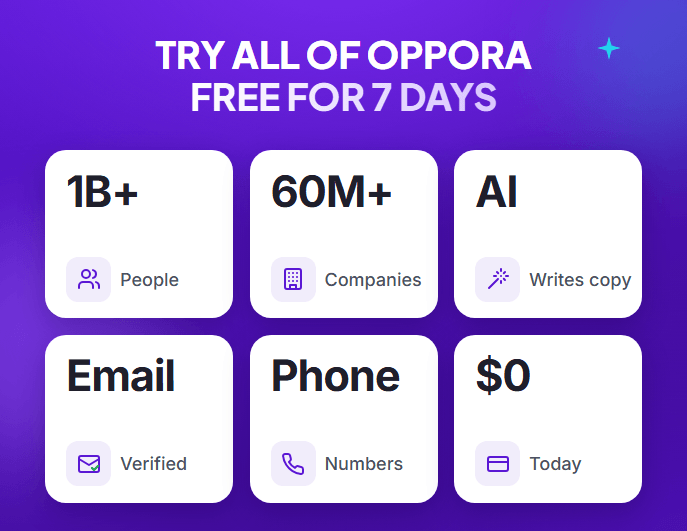
Complete Agentic Email Outreach
AI agents find and enrich prospects, personalize emails, follow up, and handle replies with your meeting link.
Start Your 7-Day Free Trial
Two lead generation quotes can look similar on paper but cost very different amounts. One provider charges per lead, another per meeting, and a third bills a monthly retainer. So how do you know which deal is actually cheaper?
B2B SaaS lead generation pricing models are the ways providers charge you for their work, whether that’s campaign services, accepted leads, qualified meetings, or software access.
This guide walks through the decision step by step. You’ll learn to:
- Understand what you’re really paying for
- Calculate the full campaign cost
- Test your conversion assumptions
- Choose a model your team can run
B2B SaaS Lead Generation Pricing Models Explained
Most lead generation quotes fall into three buckets. You can pay a provider to run campaigns for you, pay only when agreed outcomes happen, or buy software and run campaigns yourself.
A purchased contact is not automatically a qualified lead. Check what “qualified” means in the contract before you compare prices.
Suggested Reading:
Sales Qualified Lead vs Marketing Qualified Lead: Key Differences, Examples & StagesMonthly Retainers and Fixed Projects
Retainers pay for recurring campaign management. Fixed projects cover one-time work like list research or sending setup.
Retainers are the more common choice: in a Starr Conspiracy survey, 68% of outsourced programs used them. A $3,000 monthly retainer with a three-month minimum costs $9,000 before any extras.
Pay per Lead, Pay per Meeting, and Hybrid Fees
Outcome-based pricing depends on agreed ICP criteria, decision-maker relevance, and qualification. Typical 2026 quotes run 150–800 per qualified lead, or a 2K–4K monthly base plus 150–400 per meeting.
Price alone doesn’t settle it. $200 per accepted lead and $500 per held meeting buy different deliverables.
Software Subscriptions and Usage Credits
Software pricing varies by feature tier, seats, contact credits, enrichment, verification, and overages. With software, you still handle :
- List review
- Messaging and sequencing
- Reply handling
- Qualification
Oppora’s walkthrough comes in its own section below.
Suggested Reading:
9 Best Lead Generation Tools for B2B SaaS ComparedWhat Affects Costs Across B2B SaaS Lead Generation Pricing Models?
The quoted fee is only part of what you pay. Targeting difficulty, campaign scope, and who does the work all change the real cost.
So don’t compare proposals against a single “market price.” Compare them on the same work: the same geography, seniority, volume, and deliverables.
Targeting Difficulty and Campaign Scope
Some audiences cost more to reach. Geography, buyer seniority, how many accounts match, qualification depth, channels, and research time all add effort.
Reaching a small group of enterprise security leaders usually takes more research than targeting a broad SMB audience. If two providers quote the same per-lead price for those campaigns, they aren’t offering the same work.
Agency Delivery Versus an Internal Team
Ask who owns each step: targeting, research, outreach, reply handling, qualification, and reporting. An agency may cover some of these, while an internal team carries all of them.
Salary is only the start of internal cost. The Bridge Group’s 2025 survey of 351 B2B companies reported a median SDR on-target earnings of $80,000. On-target earnings cover pay only, so benefits, tools, and management add to the total.
Setup, Infrastructure, and Operating Costs
Many costs sit outside the headline fee. Check for:
- Setup fees and domains
- Sending inboxes, data, and verification credits
- CRM work and any ad spend
- Internal hours for review and follow-up
Use this formula to compare proposals:
Service or software fees + infrastructure + usage charges + internal labor + allocated setup costs
Count bundled services only once, or your comparison will overstate costs.
How to Evaluate B2B SaaS Lead Generation Pricing Models With CPL and ROI
The cheapest lead isn’t always the best deal. What matters is how many of those leads become qualified meetings and paying customers.
Track three metrics:
- CPL (cost per lead): campaign cost divided by accepted leads
- Cost per held meeting: campaign cost divided by held qualified meetings
- Campaign cost per customer: campaign cost divided by customers from the same cohort
These aren’t full CAC. They leave out other acquisition costs, and open pipeline isn’t a realized return until deals close.
Calculate Costs and Returns From One Campaign
Use one campaign cohort so every number traces back to the same spend. This example assumes $6,000 first-year revenue per customer and an 80% gross margin.
This return excludes other acquisition costs. It’s an illustration, not a benchmark or promise.
Test Break-Even and Conversion Risk
Results can shift quickly with fewer customers. If only one customer buys, first-year gross profit is $4,800, a −20% return on the same $6,000. Two customers push the campaign past break-even.
To set a target CPL, multiply your budget per customer by your lead-to-customer conversion rate. For example, $2,000 × 5% = $100, after reserving budget for other acquisition costs.
How to Choose B2B SaaS Lead Generation Pricing Models for Your Team
The right model depends on your team’s capacity, how confident you are in your targeting, the economics of each deal, and how much financial risk you can accept.
A model that suits a funded sales team may be wrong for a founder with no time to review lists.
Compare shortlisted proposals on the same terms. Use identical deliverable definitions, cost inclusions, and evaluation periods, or the prices won’t compare.
Match the Model to Available Capacity
A managed retainer suits teams that want execution handled but still have time for oversight.
Outcome-based pricing fits teams with clear qualification rules and enough volume to test them.
An internal platform works best when you already have people who can run outreach.
Before choosing, assign an owner to each task:
- List review
- Campaign execution
- Reply handling
- Qualification
- Reporting
If nobody on your team can own a task, the provider has to.
Check Qualification and Contract Terms
Many disputes come from vague definitions. Confirm how the contract handles:
- Duplicate and existing-customer exclusions
- Booked versus held meetings
- Rejection windows and replacement rules
- Data ownership
Review minimum commitments, cancellation terms, setup charges, and overages. Then request a sample deliverable before you sign.
Agree on a Pilot Budget and Success Criteria
Set a spending cap, a target audience, and a definition of an accepted outcome before launch.
A Starr Conspiracy survey of B2B marketing leaders reported an average sales cycle of 127 days for opportunities from outsourced programs.
Judge results over a window like that, not two weeks. Review delivery quality early, but wait for pipeline and customer data before deciding.
Suggested Reading:
How to Create a Sales Outreach Strategy That WorksPlan and Measure Your Outbound Budget With Oppora

Budgets fall apart when you can’t see where credits go. Oppora is an AI-powered B2B sales platform. It finds prospects, enriches and verifies their contact details, runs email and LinkedIn outreach, and tracks replies in a built-in pipeline.
That matters for budgeting because each step uses a different credit pool. Matching each cost to the framework above is easier when discovery, enrichment, verification, and outreach sit in one workspace.
This example uses the self-service Pro plan, listed at $34 per month.
Budget a Small SaaS Prospecting Campaign
Start with one ICP, such as UK SaaS companies with 11–50 employees. Then follow the workflow:
- Search companies and people in Finder. Every 100 results costs 1 data credit.
- Find emails for ICP-matched leads only. Each costs 1 data credit.
- Verify emails. Each costs 1 data credit, unless it was verified in the last 30 days.
- Review the list and approve messages before launch.
Estimate usage before you start. Roughly 400 email lookups and verifications would use 400 of Pro’s 10,000 data credits. Follow-ups are free, so you pay for unique recipients, not email volume.
Sending also has a time cost. Three warmed mailboxes at 30 emails per day give you 90 sends daily, and the mailboxes need at least 14 days of warmup first.
Compare Actual Spending With Qualified Outcomes
Record actual costs next to accepted leads, held meetings, opportunities, and customers from the same cohort. Oppora’s campaign reports show sends, replies, and reply intent, so you can see where the funnel leaks.
Check the results against your original budget. Fix targeting, execution, or conversion before you add volume.
Suggested Reading:
Cold Email Metrics: KPIs & Benchmarks You Should TrackConclusion: Choose Based on Total Cost and Qualified Outcomes
The cheapest quote rarely stays cheapest. Define the deliverable, compare complete costs, test your conversion assumptions, and pick a model your team can actually run.
Start with a small pilot. A capped budget and clear success criteria will show you more than any pricing page.
If you want to plan that pilot in one place, Oppora can help you map your outbound workflow and track spending against qualified outcomes.
Frequently Asked Questions (FAQs)
Should free-trial signups count as paid leads for a SaaS business?
Only if the agreement explicitly includes them. A signup alone does not establish buyer fit or purchase intent. Consider requiring company fit, a relevant business email, and meaningful product activity before accepting a trial user as a billable qualified lead.
How should you attribute customers who interact with multiple campaigns?
Choose an attribution method before evaluating results. Record the original acquisition source alongside later campaign interactions in your CRM. Apply the same method consistently, and avoid crediting the customer’s full revenue to multiple providers when comparing financial performance.
Should lead generation fees come from the sales or marketing budget?
Either can fund the work, depending on who owns the program. The key is consistent accounting: record campaign spending once and assign responsibility for reporting. Shared programs should agree on cost allocation before launch so departmental reports do not double-count expenses.
How should annual SaaS contracts paid monthly affect ROI calculations?
Distinguish contracted revenue from collected revenue. An annual agreement paid monthly does not provide the full contract value upfront. Track cash collection separately from projected gross profit, and account for cancellations or nonpayment when assessing whether campaign spending is financially sustainable.
Can one lead generation provider work with competing SaaS companies?
Ask whether the provider serves direct competitors and how it separates account lists, messaging, and confidential information. If exclusivity matters, define the product category, territory, duration, and additional fee in writing. Avoid paying an exclusivity premium without a clearly defined restriction.
Summarize with AI
Share