11 Best AI Sales Prospecting Tools in 2026: Compare Features, Data & Pricing
Adam Hossain
Published September 23, 2026
23 min

Complete Agentic Email Outreach
AI agents find and enrich prospects, personalize emails, follow up, handle replies, and book meetings automatically.
Claim Your FREE Credits
Finding the right prospects is no longer just about building contact lists. You need accurate data, buying signals, relevant research, and personalized outreach to reach potential customers at the right time.
AI sales prospecting tools can simplify these tasks, but not every platform works the same way. Some specialize in contact discovery and enrichment, while others focus on AI research, workflow automation, or multichannel outreach.
So, which tools actually fit your sales process?
In this guide, you’ll discover:
- 11 best AI sales prospecting tools in 2026.
- Their features, data capabilities, workflows, and pricing.
- How to choose and test the right platform.
Best AI Tools for Sales Prospecting: Quick Comparison
AI prospecting platforms differ in data coverage, AI research, buying signals, enrichment, automation, and outbound execution.
This comparison helps you shortlist tools based on your prospecting requirements, available features, and starting prices before exploring each platform in detail.
Pricing note: All prices are in USD, based on publicly available pricing as of September 2026 and your supplied Oppora pricing sheet. Annual-billing rates are identified separately.
For platforms with custom pricing, no verified public starting price is available. Free and entry-level plans may not include every AI or prospecting capability listed in the table.
11 Best AI Tools for Sales Prospecting in 2026
Each platform offers different AI capabilities, prospect data, enrichment, workflows, and integrations. Explore their strengths, limitations, pricing, and ideal use cases to find the right fit for your sales team.
1. Oppora

Oppora is an AI sales prospecting platform that connects lead discovery, enrichment, research, personalization, and outreach in one workflow. Instead of switching between multiple tools, you can automate prospecting tasks and move qualified leads directly into your outreach campaigns.
AI & Prospecting Capabilities
Oppora uses eight connected AI sales agents to automate prospecting activities based on your ideal customer profile (ICP).
Here’s how you can use its capabilities:
- Discover and prioritize prospects: Find companies and decision-makers using ICP filters, buying signals, and enrichment data to identify relevant prospects.
- Research and personalize: Use AI to research prospects, identify relevant business context, and generate personalized outreach messages.
- Automate prospecting workflows: Connect lead discovery, enrichment, email outreach, LinkedIn follow-ups, and CRM updates through its workflow builder.
Prospect Data, Enrichment & Accuracy
Oppora uses multiple data providers and waterfall enrichment to retrieve B2B company information and contact details.
You can search for prospects using company and contact filters, access available email and phone information, and verify email addresses before launching campaigns.
Its separate email search, verification, and enrichment credits help you control data usage while building outreach-ready prospect lists.
Practical Workflow & Integrations
Start by defining your ICP in Oppora’s workflow builder. Its AI agents then discover prospects, enrich contact records, identify buying signals, research accounts, and personalize messages.
You can launch email and LinkedIn campaigns, manage responses through a shared inbox, and sync activities with HubSpot, Salesforce, Pipedrive, or Oppora CRM.
Pros & Cons
Based on G2 user reviews, Oppora offers these practical advantages and limitations:
Pros:
- Combines lead discovery, enrichment, and personalized outreach, reducing tool switching.
- Users praise its straightforward interface, accurate contact data, and easy campaign setup.
Cons:
- Advanced workflow configuration can feel overwhelming for new users.
- Free-plan credits are limited, and some users report slower data processing.
Pricing & Best Fit
Oppora offers a free plan and paid options:
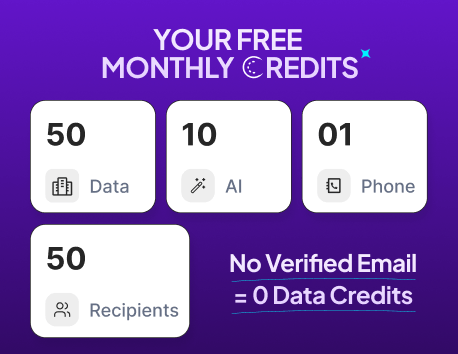
- Free: Limited prospecting credits and 50 monthly recipients.
- Pro ($34/month): 5,000 credits each for email search, verification, and enrichment.
- Max ($79/month): 10,000 credits for each of those tasks.
- Enterprise: Starts at $499/month, with expanded capacity.
- Add-ons: Email search credits start at $7 for 1,000 credits.
Oppora suits founders, agencies, and SDR teams managing prospecting and outreach together.
2. ZoomInfo

ZoomInfo is an enterprise GTM intelligence platform that helps you identify target accounts, discover decision-makers, monitor buying signals, and prioritize sales opportunities.
It combines company intelligence, contact data, and AI-powered insights to support account-based prospecting across larger sales organizations.
AI & Prospecting Capabilities
ZoomInfo uses AI to connect account research, buyer intent, and prospect prioritization.
You can use its capabilities to:
- Identify accounts showing buying intent through research activity and relevant business signals.
- Monitor company changes, hiring activity, and technology adoption to identify potential sales opportunities.
- Use account insights and AI recommendations to prioritize prospects before launching outreach.
Prospect Data, Enrichment & Accuracy
ZoomInfo provides B2B contact information, including business emails, direct dials, company details, firmographics, and technographics.
You can filter prospects by industry, location, company size, and technology usage.
Its enrichment capabilities help update existing CRM records, although you should verify contact accuracy and geographic coverage against your target market.
Practical Workflow & Integrations
Start by creating a target account list and monitoring relevant buying signals.
Next, identify stakeholders, retrieve contact information, enrich CRM records, and prioritize accounts showing stronger engagement.
You can then move qualified prospects into connected CRM and sales engagement workflows for outreach and follow-ups.
Pros & Cons
Based on G2 user reviews, alongside practical platform considerations:
Pros:
- Extensive company intelligence and buying signals support account prioritization.
- Centralized account information and CRM integrations reduce manual research.
Cons:
- Custom pricing and additional modules can increase overall costs.
- Smaller teams may find implementation and feature requirements excessive.
Pricing & Best Fit
- Starting price: ZoomInfo Sales Basic is listed on AWS Marketplace at $3,000 annually, including one user and 2,000 bulk credits.
- Custom pricing: Enterprise packages vary based on user seats, modules, credit allowances, and data usage.
It suits enterprise SDR, RevOps, and account-based sales teams requiring extensive prospect intelligence.
Suggested Reading:
12 Free + Affordable Zoominfo Competitors & Alternatives3. Apollo

Apollo is a B2B sales prospecting platform that combines contact discovery, enrichment, AI research, email sequencing, calling, and CRM synchronization.
You can use it to build targeted prospect lists and manage high-volume outreach without relying on separate databases and engagement tools.
AI & Prospecting Capabilities
Apollo uses AI to help you discover relevant prospects, prioritize accounts, and personalize outreach.
Its key capabilities include:
- AI prospecting: Generate targeted lists using ICP filters, account recommendations, and AI-assisted research.
- Lead scoring: Prioritize contacts using company characteristics, engagement activity, and buying intent.
- AI personalization: Generate prospect-specific emails, subject lines, and follow-ups for your outreach sequences.
Prospect Data, Enrichment & Accuracy
Apollo provides B2B contact information, including business emails, phone numbers, employment details, firmographics, and company information.
You can filter prospects by industry, job title, location, and company size before enriching records.
However, verify emails and phone numbers before launching campaigns, particularly when targeting different geographic markets.
Practical Workflow & Integrations
Start by searching for companies and decision-makers using your ICP filters.
Build prospect lists, enrich missing contact details, review AI-generated messages, and enroll qualified leads into email or calling sequences.
Apollo integrates with HubSpot, Salesforce, and other sales tools to synchronize prospect records and outreach activities.
Pros & Cons
According to G2 user reviews:
Pros:
- Combines prospecting, contact data, and outreach in one platform.
- Advanced filters simplify targeted lead discovery and list building.
Cons:
- Contact information can be outdated, particularly direct phone numbers and regional data.
- Credit limits and extensive features can complicate high-volume prospecting.
Pricing & Best Fit
Apollo offers these plans:
- Free: $0, with limited credits and sequences.
- Basic: $49/user/month, billed annually.
- Professional: $79/user/month, billed annually.
- Organization: $119/user/month, billed annually, with a three-user minimum.
Apollo suits SDR teams and growing businesses managing larger prospecting volumes.
Suggested Reading:
5 Best Apollo.io Alternatives for B2B Lead Generation4. Clay

Clay is a GTM orchestration and enrichment platform that helps you combine multiple data providers, AI research, and custom prospecting workflows.
Rather than relying on a single contact database, you can build workflows that retrieve missing information, qualify accounts, and prepare personalized outreach data.
AI & Prospecting Capabilities
Clay uses Claygent, its AI research agent, to investigate companies, extract buying signals, and generate custom prospect information.
You can use it to:
- Research company websites for hiring activity, funding announcements, or technology adoption.
- Create custom qualification rules using firmographic data and research findings.
- Generate personalized messaging fields using account-specific insights.
Prospect Data, Enrichment & Accuracy
Clay connects multiple enrichment providers to retrieve business emails, phone numbers, company details, and custom data fields.
Its waterfall enrichment checks additional providers when earlier searches return no results.
You can configure enrichment rules, select providers, and verify retrieved information before exporting prospect lists.
Practical Workflow & Integrations
Import your target accounts into Clay and configure enrichment waterfalls to retrieve missing contact information.
Next, use Claygent to research companies, apply qualification rules, and generate personalized fields.
Export qualified records into your CRM or connected outreach platform. Advanced CRM synchronization is available on supported plans.
Pros:
- Flexible enrichment workflows combine multiple data sources and reduce manual research.
- Custom automation supports complex prospect qualification and personalization.
Cons:
- Advanced workflows require time to learn and configure.
- Credits can deplete quickly during extensive enrichment and AI research.
Pricing & Best Fit
- Free: $0, including 100 monthly data credits and 500 actions.
- Launch: Starts at $60/month, with pricing varying by usage.
- Growth: Starts at $205/month, with advanced CRM integrations and automation.
Calculate your total workflow cost, including data credits, actions, and enrichment usage, before selecting a plan.
GTM and RevOps teams building customized prospecting and enrichment workflows.
Suggested Reading:
10 Best Clay Alternative & Competitors for AI Outreach & Lead Enrichment5. Cognism

Cognism is a B2B sales intelligence platform that helps you discover decision-makers, access verified contact information, and identify buying opportunities.
Its European-market focus, mobile verification, and compliance processes make it useful for sales teams prospecting across the UK and EMEA.
AI & Prospecting Capabilities
Cognism combines AI-assisted account research, prospect discovery, and buyer intent intelligence to help you prioritize relevant accounts.
You can use it to:
- Identify decision-makers using company, industry, location, and seniority filters.
- Monitor buying intent to identify companies researching relevant solutions.
- Prioritize accounts using company intelligence, technology adoption, and available buying signals.
Prospect Data, Enrichment & Accuracy
Cognism provides business emails, direct dials, mobile numbers, employment information, and company data.
Its Diamond Data includes phone-verified mobile numbers, while enrichment capabilities help you update existing prospect records.
Cognism also maintains GDPR-focused data processing practices and screens telephone records against applicable Do Not Call registries.
Practical Workflow & Integrations
Start by filtering target companies across your preferred European markets.
Identify decision-makers and buying committee members, retrieve their contact details, and use intent signals to prioritize accounts.
You can then export qualified prospects into Salesforce, HubSpot, Outreach, or Salesloft for outreach and CRM tracking.
Pros & Cons
According to G2 user reviews:
Pros:
- Users praise its European contact coverage and verified mobile numbers.
- CRM integrations simplify prospect enrichment and contact management.
Cons:
- Contact coverage and phone accuracy can vary across regions.
- Some users report restrictive export limits and high subscription costs.
Pricing & Best Fit
- Starting price: Approximately $15,000–$25,000 annually for entry-level team packages, based on third-party estimates. Cognism does not publish official prices.
- Standard: Includes five seats, contact discovery, AI research, and core prospecting features. Pricing requires a custom quote.
- Pro: Includes five seats, buying intent, premium mobile data, and on-demand verification. Pricing requires a custom quote.
B2B sales teams targeting European markets can use Cognism to find verified decision-makers, access mobile numbers, and prioritize accounts using buying intent signals.
6. LinkedIn Sales Navigator

LinkedIn Sales Navigator is a social prospecting platform that helps you identify decision-makers, research target accounts, and build professional relationships.
Unlike traditional B2B contact databases, it focuses on LinkedIn profile intelligence, stakeholder mapping, and relationship insights rather than verified emails or direct phone numbers.
AI & Prospecting Capabilities
Sales Navigator combines advanced search, AI-assisted research, and professional network intelligence to support targeted prospecting.
You can use it to:
- Discover relevant prospects through advanced filters, lead recommendations, and account suggestions.
- Monitor job changes, company updates, and buyer intent signals to identify outreach opportunities.
- Use Account IQ, Lead IQ, and relationship insights to research stakeholders and personalize conversations.
Prospect Data, Enrichment & Accuracy
Sales Navigator provides professional profiles, employment history, job titles, company information, and relationship data.
You can identify buying committee members and track employment changes across target accounts.
However, it does not function as a verified business email or direct-dial database. You may need separate enrichment software for email and phone outreach.
Practical Workflow & Integrations
Start by finding target accounts using industry, company size, and geographic filters.
Identify stakeholders, save relevant leads, and monitor job changes or company updates.
Use Relationship Map to identify potential introductions before contacting prospects through LinkedIn.
Advanced Plus supports CRM synchronization with platforms including Salesforce and HubSpot.
Pros & Cons
According to G2 user reviews:
Pros:
- Advanced filters and professional insights simplify decision-maker discovery.
- Relationship intelligence and alerts support timely, personalized outreach.
Cons:
- Limited direct contact information requires additional enrichment tools.
- Subscription costs and restricted InMail credits can limit smaller teams.
Pricing & Best Fit
- Core: $119.99/month or $89.99/month with annual billing.
- Advanced: $159.99/month or $149.99/month with annual billing.
- Advanced Plus: Custom pricing, including advanced CRM integration and enterprise features.
B2B sales professionals managing relationship-driven prospecting, stakeholder research, and LinkedIn outreach can use Sales Navigator alongside dedicated contact enrichment software.
7. Seamless.AI

Seamless.AI is a B2B contact discovery platform that helps you find business emails, phone numbers, and company information while researching potential customers.
Its real-time search engine and Chrome extension let you retrieve contact details, build prospect lists, and move records into your sales tools.
AI & Prospecting Capabilities
Seamless.AI uses AI-powered search to help you identify relevant prospects and retrieve contact information.
You can use it to:
- Find decision-makers using company, industry, job title, and location filters.
- Discover contact information while browsing LinkedIn profiles and company websites.
- Use Autopilot to build targeted prospect lists based on your ideal customer profile.
Prospect Data, Enrichment & Accuracy
Seamless.AI retrieves business emails, mobile numbers, direct dials, and company information through its real-time search engine.
You can enrich existing records with missing contact details and organize retrieved prospects into lists.
However, its contact verification does not guarantee accuracy. Check email validity, phone numbers, and employment information before launching large campaigns.
Practical Workflow & Integrations
Start by finding prospects through Seamless.AI search or its Chrome extension.
Retrieve contact information, review available details, and add relevant prospects to your list.
You can then transfer qualified records into Salesforce, HubSpot, Outreach, or Salesloft through supported integrations for outreach and CRM tracking.
Pros & Cons
According to G2 user reviews:
Pros:
- Fast contact discovery and LinkedIn integration simplify prospect research.
- CRM integrations reduce manual data entry and list management.
Cons:
- Some users report outdated emails, incorrect phone numbers, and inconsistent contact accuracy.
- Credit limitations and subscription costs can restrict high-volume prospecting.
Pricing & Best Fit
- Free: $0 for one user, including 50 nonrenewing credits.
- Pro: Custom pricing with annual credit packages and unlimited exports.
- Enterprise: Custom pricing based on users, credit requirements, and additional features.
SDRs and sales teams needing contact discovery, list building, and CRM enrichment can use Seamless.AI alongside their existing outreach software.
8. Outreach

Outreach is an AI-powered sales execution platform that helps you manage prospect engagement, automate follow-ups, and track sales activities.
Unlike traditional B2B contact databases, Outreach focuses on engaging existing prospects through multichannel sequences, conversation intelligence, and CRM-connected workflows.
AI & Prospecting Capabilities
Outreach uses AI to help sales teams prioritize activities, personalize communication, and manage prospect engagement.
You can use it to:
- Generate personalized emails and receive AI-assisted recommendations for prospect engagement.
- Prioritize follow-ups using previous interactions, engagement activity, and account insights.
- Analyze sales conversations, identify objections, and receive AI-powered coaching recommendations
Prospect Data, Enrichment & Accuracy
Outreach primarily relies on existing CRM records and connected data providers rather than offering a standalone B2B contact database.
You can import prospect information, access CRM context, and use available enrichment capabilities to improve existing records.
However, you may need separate prospect discovery and contact verification tools before launching outbound campaigns.
Practical Workflow & Integrations
Start by importing qualified prospects from your CRM or connected prospecting software.
Organize contacts into sales sequences, personalize messages, and schedule email, calling, and follow-up activities.
Use engagement insights and conversation intelligence to identify interested prospects and prioritize your next actions.
Outreach supports CRM-connected workflows for tracking prospect interactions, activities, and pipeline progress.
Pros & Cons
According to G2 user reviews:
Pros:
- Multichannel sequencing and automation simplify prospect engagement and follow-ups.
- AI email drafting and CRM activity tracking reduce repetitive sales tasks.
Cons:
- CRM integrations and AI recommendations may require additional configuration.
- Implementation complexity and subscription costs can challenge smaller teams.
Pricing & Best Fit
- Starting price: Custom quote; Outreach does not publish a fixed starting price.
- Pricing structure: Seat-based subscriptions and consumption-based AI credits, depending on the selected package.
- Additional costs: Advanced capabilities, credit packs, integrations, and implementation services may increase overall expenses.
Enterprise SDR and revenue teams can use Outreach to manage multichannel engagement, automate follow-ups, and coordinate sales execution across their existing CRM systems.
9. Salesloft

Salesloft is an AI-powered sales engagement platform that helps you manage prospect communication, automate follow-ups, and track buyer interactions.
Rather than focusing on contact discovery, it helps sales teams turn existing prospect records into structured outreach campaigns through cadences, AI recommendations, and CRM-connected workflows.
AI & Prospecting Capabilities
Salesloft uses AI to prioritize sales activities, recommend follow-ups, and analyze buyer engagement.
You can use it to:
- Prioritize prospects: Use Rhythm to identify accounts requiring attention based on engagement signals and recommended actions.
- Automate outreach: Create email and calling cadences with scheduled follow-ups and personalized messages.
- Analyze conversations: Review call recordings, identify buyer objections, and use AI-generated insights to plan your next interaction.
Prospect Data, Enrichment & Accuracy
Salesloft primarily relies on existing CRM records and connected data providers rather than offering a standalone B2B contact database.
You can access prospect information, engagement history, and account details through supported integrations.
However, you may need separate software to discover new contacts, verify email addresses, and enrich incomplete records before outreach.
Practical Workflow & Integrations
Import qualified prospects from your CRM and organize them into targeted sales cadences.
Use Rhythm to prioritize activities, then engage prospects through emails, calls, and scheduled follow-ups.
Track responses and conversation insights to adjust your outreach and synchronize activities with Salesforce or other supported CRM platforms.
Pros & Cons
According to G2 user reviews:
Pros:
- Automated cadences simplify multichannel outreach and follow-up management.
- CRM integration and engagement tracking improve visibility into sales activities.
Cons:
- Some users report calling issues, integration difficulties, and occasional interface slowdowns.
- Advanced configuration requires onboarding, while prospect discovery depends on external data providers.
Pricing & Best Fit
- Starting price: Custom quote; third-party estimates suggest approximately $100–$130/user/month for negotiated mid-market contracts.
- Advanced: Custom pricing with sales engagement, conversation intelligence, and opportunity management.
- Premier: Custom pricing with additional forecasting and revenue management capabilities.
Enterprise SDR and revenue teams can use Salesloft to coordinate multichannel outreach, prioritize follow-ups, and manage sales engagement within their existing CRM workflows.
10. HubSpot Sales Hub

HubSpot Sales Hub is an AI-powered sales platform that helps you manage prospect research, outreach, follow-ups, and pipeline activities within HubSpot CRM.
If your team already uses HubSpot, you can connect sales activities with existing customer records rather than managing prospecting through disconnected tools.
AI & Prospecting Capabilities
HubSpot combines Breeze AI, prospecting automation, and CRM intelligence to support your daily sales activities.
You can use it to:
- Research prospects using CRM information and AI-generated account insights.
- Draft personalized emails, summarize conversations, and prepare follow-ups.
- Use AI-assisted recommendations and lead scoring to prioritize prospects and identify relevant next actions.
Prospect Data, Enrichment & Accuracy
HubSpot uses existing CRM records, connected data sources, and enrichment capabilities to maintain prospect information.
You can update company details, enrich incomplete contact records, and organize prospects using CRM properties.
However, HubSpot is not primarily a standalone B2B contact database. You may need additional prospect discovery and verification tools for outbound list building.
Practical Workflow & Integrations
Start by importing or identifying prospects within HubSpot CRM.
Enrich their records, review available account information, and use Breeze AI to prepare personalized messages.
Enroll qualified contacts into sales sequences, schedule follow-ups, and track responses within your CRM.
You can also monitor deal progression and pipeline activities without manually transferring records between separate systems.
Pros & Cons
Based on G2 user reviews:
Pros:
- Centralized CRM and sales automation simplify prospect management.
- Email tracking, sequences, and pipeline visibility reduce repetitive work.
Cons:
- Advanced automation and sequencing require higher-priced plans.
- Extensive outbound prospect discovery may require additional data providers.
Pricing & Best Fit
- Free: $0, including basic CRM and sales tools.
- Starter: From $7/seat/month with annual billing.
- Professional: $90/seat/month annually, plus $1,500 onboarding.
- Enterprise: $150/seat/month, plus $3,500 onboarding.
Additional AI usage may require purchasing HubSpot Credits.
Sales teams already using HubSpot CRM can manage prospect engagement, automated follow-ups, and pipeline tracking within their existing workspace.
11. Reply.io

Reply.io is an AI-powered sales engagement platform that combines prospect discovery, personalized outreach, and automated follow-ups.
You can use its AI SDR, Jason AI, to research prospects, generate messages, manage multichannel sequences, and handle responses with configurable automation controls.
AI & Prospecting Capabilities
Reply.io combines AI-assisted prospecting with automated sales engagement to reduce repetitive SDR tasks.
You can use it to:
- Automate prospecting: Use Jason AI to identify prospects, research accounts, and generate personalized outreach messages.
- Create multichannel sequences: Combine email, LinkedIn, calls, and SMS with scheduled follow-ups.
- Manage AI responses: Automatically handle prospect replies or review generated messages through approval mode before sending.
Prospect Data, Enrichment & Accuracy
Reply.io provides access to B2B contact data, including business emails and company information, through Reply Data.
You can discover prospects, retrieve contact details, and enrich existing lists using connected data sources.
However, you should verify contact information before launching campaigns, especially when importing records from external providers.
Practical Workflow & Integrations
Start by identifying prospects through Reply Data or importing contacts from your existing CRM.
Enrich contact records, use AI to generate personalized messages, and organize prospects into multichannel sequences.
Configure follow-up conditions, review automated responses, and synchronize engagement activities with HubSpot, Salesforce, or supported integrations.
Pros & Cons
According to G2 user reviews:
Pros:
- Multichannel sequences and automated follow-ups reduce repetitive outreach tasks.
- AI personalization and reply automation simplify campaign management.
Cons:
- Advanced sequence configuration and AI SDR setup require initial training.
- Some users report LinkedIn automation limitations and inconsistent sequence behavior.
Pricing & Best Fit
- Email Volume: Starts at $59/month for email outreach and automated follow-ups.
- Multichannel: Starts at $99/user/month for email, LinkedIn, calls, and SMS.
- AI SDR: Starts at $500/month with annual billing. Higher usage and AI packages increase costs.
SDR teams and outbound agencies can use Reply.io to automate personalized multichannel campaigns while maintaining control over AI-generated communication.
How the Best AI Tools for Sales Prospecting Fit Into a Real Workflow
Buying prospecting software does not automatically improve your results. You need a repeatable process that connects targeting, buying signals, contact verification, research, personalization, outreach, and CRM updates.
Clear qualification criteria ensure your team spends time on prospects worth pursuing.
Define Your ICP Before Letting AI Search
Start by defining your ideal customer profile (ICP) using specific criteria:
- Company fit: Industry, geography, employee count, revenue, and technologies used.
- Buyer fit: Relevant departments, job functions, and seniority levels.
- Trigger conditions: Events that make an account worth researching now.
Without clear criteria, even sophisticated AI may recommend companies that will never become customers.
Suggested Reading:
How to Use AI-Powered ICP Fit Scoring to Rank Your Lead ListFind Accounts Using Fit and Buying Signals
Company filters tell you who matches your ICP. Buying signals help you decide when to approach them.
A target company may fit your criteria for months. New funding, departmental hiring, a leadership change, technology adoption, rapid growth, or relevant intent activity can give you a timely reason to investigate.
Treat these signals as research prompts, not proof that an account is ready to buy.
Identify and Verify the Buying Committee
Once you identify an account, move from company → department → relevant roles → decision-makers → influencers → verified contact data.
One contact rarely represents everyone involved in a significant purchase. Identify the people who will use, evaluate, approve, and fund your solution.
Before outreach, confirm each person’s current title, employer, email address, and available phone number.
Use AI Research Before Personalization
Ask AI to explain why an account fits your ICP, what recently changed, which business problem may matter, and what evidence supports that conclusion.
This research can save meaningful time: LinkedIn’s 2025 ROI of AI research found that 38% of sellers using AI for lead and company research saved over 1.5 hours weekly.
Review the sources yourself. Remove unsupported claims before turning research into personalized messaging.
Move Qualified Prospects Into Outreach and CRM
Your completed workflow should be:
Find → enrich → research → qualify → personalize → engage → track
Move qualified records directly into sequences, manage replies and follow-ups, and synchronize activities with your CRM. Avoid repeated exports that create duplicate records or outdated contact information.
How to Choose the Best AI Tools for Sales Prospecting for Your Team
No single AI sales prospecting tool works best for every team. Start with the bottleneck slowing your current workflow, then consider your target market, contact data requirements, preferred level of AI automation, existing sales stack, and total operating cost before comparing platforms.
Choose Based on Your Main Prospecting Bottleneck
Start by identifying where your reps lose time or opportunities. According to Salesforce’s 2026 State of Sales report, sellers spend just 40% of their time selling, making workflow efficiency a practical selection criterion.
Compare Usable Data Instead of Database Size
A billion records mean little if your reps cannot reach the people you actually sell to.
Test each provider against your ideal customer profile (ICP). Check geographic coverage, current job titles, verified emails, mobile availability, refresh frequency, and transparency about data sources. Measure how many records are usable, not merely returned.
Check AI Autonomy and Human Controls
Once you trust the data, decide how much work AI should perform without your intervention.
AI-assisted tools suggest research or messages. Semi-agentic tools complete selected steps with approval. Autonomous tools can execute broader workflows.
Check whether you can edit prompts, inspect sources, approve messages, prevent unsupported claims, set messaging guardrails, and override automated actions.
Evaluate Integrations and Total Cost
Even a low-priced subscription becomes expensive when you add the tools required to make it useful.
Calculate your operating cost as:
Subscription + seats + credits + enrichment + phone data + outreach + integrations + implementation
Confirm whether contacts, activities, and replies synchronize with your CRM without manual work.
Shortlist Two or Three Tools for Testing
Use your ICP coverage, main bottleneck, required integrations, AI controls, and budget to narrow the options.
Then give each shortlisted platform the same prospect sample. Compare usable contacts, research quality, setup effort, workflow completion, and actual cost before choosing.
How to Test AI Sales Prospecting Software Before You Buy
Product pages and demos cannot prove how well a platform will perform against your actual ideal customer profile (ICP). A controlled test gives you comparable evidence by using the same prospects, identical validation rules, and measurable outputs across every shortlisted tool.
Run the Same 100–200 Prospect Test
Build one representative sample of 100–200 prospects, then use it to test each platform. Keep the industry, geography, company size, job titles, and other ICP criteria identical.
Comparing SaaS CEOs in one tool with manufacturing managers in another tells you little about which platform meets your needs.
Measure Contact and Data Accuracy
Track three metrics for every tool:
- ICP match rate: Correct ICP prospects ÷ records tested.
- Verified email coverage: Usable, verified emails ÷ records tested.
- Phone coverage: Usable phone numbers ÷ records tested.
Manually check a subset of job titles, employers, locations, and buying signals. This reveals prospecting data accuracy beyond a vendor’s advertised database size.
Test AI Research and Personalization Quality
Select 20–30 prospects from your sample. Assess each AI-generated message for accuracy, relevance, specificity, supporting evidence, required edits, and unsupported claims.
This matters: Salesforce’s 2026 State of Sales report found that 46% of sales professionals using AI agents said data quality issues hurt their sales efforts.
Calculate Cost per Usable Prospect
Compare what each platform delivers, not just its subscription price.
Cost per usable prospect = Total test cost ÷ verified, outreach-ready prospects
Include credits and any enrichment costs. A higher-priced platform may cost less per usable contact if it returns fewer inaccurate records.
Test the Full Prospect-to-CRM Workflow
Time the same process in every tool:
Find → enrich → research → personalize → enroll → sync
Record manual steps, tool switching, exports, failed enrichments, and CRM errors. Choose based on the quality and speed of the completed workflow, not the demo.
Conclusion
Choosing an AI sales prospecting tool comes down to three questions: Which stage of your workflow needs improvement? How well does the platform match your actual ideal customer profile? And what does each usable prospect cost once you include data, credits, and outreach?
Shortlist tools around your workflow requirements, then run a controlled test using the same prospect sample and validation criteria. You’ll see which platform delivers contacts your team can actually reach.
If you need prospect discovery, enrichment, buying signals, AI research, and outreach in one workflow, you can test Oppora using that same framework before committing.
Frequently Asked Questions (FAQs)
How long should you test an AI sales prospecting tool before deciding?
A useful trial should run long enough to test real prospecting conditions, not just a few searches. Give your team enough time to evaluate data quality, workflow speed, AI output, integrations, and user adoption across multiple prospecting sessions before comparing results against your existing process.
Can AI sales prospecting tools replace SDRs completely?
Most teams still benefit from human involvement. AI can automate research, enrichment, prioritization, personalization, and follow-ups, but SDRs remain important for qualification, judgment, relationship building, handling complex replies, and reviewing messages where incorrect context or unsupported claims could damage prospect trust.
What security questions should you ask an AI prospecting vendor?
Ask how prospect and CRM data is stored, processed, retained, and shared with third parties. You should also review access controls, encryption, compliance certifications, data-processing agreements, AI training policies, and whether administrators can control which customer information employees or AI features can access.
Can you export your prospect data if you switch platforms?
That depends on the vendor and plan. Before purchasing, check export limits, supported file formats, API availability, CRM synchronization, credit restrictions, and ownership terms. You want to avoid building valuable prospect lists, notes, and enrichment history inside a platform that becomes difficult or expensive to leave.
How do AI sales prospecting tools affect email deliverability?
Prospecting software can improve targeting and personalization, but it cannot guarantee inbox placement. Deliverability still depends on verified addresses, sending volume, domain reputation, authentication, bounce rates, spam complaints, and message quality. Teams running outbound campaigns should evaluate deliverability controls alongside prospecting and automation features.
Summarize with AI
Share