7 Best AI Sales Automation Platforms in 2026 [Reviewed & Compared]
Adam Hossain
Published October 13, 2026
15 min

Complete Agentic Email Outreach
AI agents find and enrich prospects, personalize emails, follow up, and handle replies with your meeting link.
Claim Your FREE Credits
Your reps are busy all week.
But Salesforce found they spend only 28% of it actually selling. Data entry and deal updates eat the rest.
The best AI platform for automating sales depends on the work you want off your team’s plate. Oppora runs full outbound in one tool. Clay handles enrichment.
HubSpot and Salesforce add AI inside your CRM. Outreach suits enterprise revenue teams, Reply.io covers multichannel sequences, and 11x is an autonomous AI SDR.
Here’s what this guide covers:
- How to choose the right platform
- 7 platforms compared and reviewed
- A 30-day rollout plan
Pricing verified in October 2026.
How to Choose the Best AI Platform for Automating Sales
Before you compare tools, step back.
Most teams buy the longest feature list and use a fraction of it. Don’t pick on features.
Pick on the work you want gone and where your pipeline leaks. These three checks help you shortlist the right fit faster.
AI That Does the Work vs. AI That Only Suggests It
Some AI only drafts. Other AI finds the lead, sends the email and handles the reply.
Gartner predicts AI agents will outnumber sellers 10 to 1 by 2028. Yet fewer than 40% of sellers will say they improved productivity.
Before you buy, ask three questions:
- Does it act without a rep stepping in?
- Does it learn from replies?
- Can you approve messages before they send?
Match the Platform to Where Your Pipeline Leaks
A tool only fixes the leak it was built for. Find yours first.
Check the Hidden Costs, Including Too Many Tools
Sticker prices hide a lot.
HubSpot’s Breeze Prospecting Agent charges 100 credits per recommended lead. Professional’s roughly 3,000 monthly credits cover about 30 leads.
Price out data credits, seat fees, mailbox limits, warm-up add-ons and onboarding fees.
Tool count adds a cost too. Salesforce research shows sales teams use 10 tools on average to close deals, and 66% of reps feel overwhelmed by them.
All-in-one platforms like Oppora shrink that stack by bundling lead data, sending, warm-up and reply handling.
Best AI Platforms for Automating Sales Compared at a Glance
Now that you know what to look for, here’s how the seven platforms stack up.
Use this table to shortlist two or three tools in under a minute. Then jump to the full reviews below for features, pricing details and who each one fits.
7 Best AI Platforms for Automating Sales in 2026 (Reviewed)
The table gives you the quick view. Here’s the fuller picture.
We tested each platform hands-on and drew on our experience running demos with sales teams.
Each review starts with a quick take, then covers AI features, pricing, pros and cons, and best fit.
1. Oppora

Oppora is an all-in-one AI outbound platform. It finds leads, sends outreach, handles replies and books meetings from one workflow.
It automates the sales work that eats up your week, from prospect research and email finding to follow-ups and CRM updates. You set your ICP once, and its AI agents keep your pipeline moving.
Key AI Features
- AI Search: Describe your target in a sentence, then refine it with follow-up messages. It searches 60M+ companies and 1B+ people, filtered by buying signals like funding, hiring and job changes.
- AI Lead Scoring: Ranks every lead against your ICP, so you contact the best fits first.
- Waterfall email finding: Checks up to 12 sources and verifies each address. You only pay when it finds one.
- AI-personalized sequences: Email and LinkedIn steps with A/B tests and unique copy for each lead.
- Reply Ora: Tags each reply by intent and answers with your meeting link. Copilot mode lets you approve drafts first.
- AI Workflows with Oraflow: Chain steps from job search to campaign launch and run them daily or weekly. Describe the workflow to Oraflow, and it builds the canvas for you.
- Ask Ora and Ora’s Pulse: Ask Ora handles questions and tasks from any page. Ora’s Pulse gives you a daily brief on what happened and what needs fixing.
Pricing
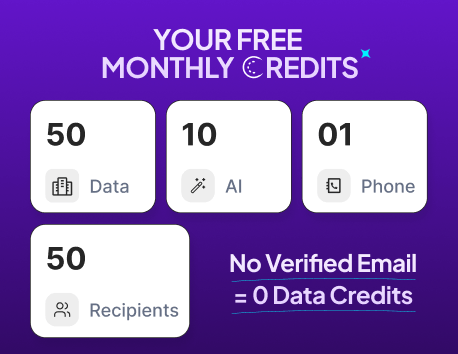
- Free: $0, with 50 data credits and 50 recipients
- Pro: $34/month, with 10,000 data credits and 5,000 recipients
- Max: $79/month, with 25,000 data credits, unlimited recipients and one LinkedIn account
- Enterprise: from $499/month
Data, phone and AI credits are separate, and lookups are only charged when something is found.
On other plans, LinkedIn steps cost $19/month per account.
Pros and Cons
Oppora is rated 4.5 on G2. Users highlight ease of use and accurate data.
Pros
- Prospecting, outreach, replies and the CRM share one login, so you can drop extra subscriptions.
- Deliverability is built in: warm-up, rotation across up to 50 mailboxes and Gmail-to-Gmail / Outlook-to-Outlook matching.
- Human support is responsive during setup.
Cons
- Free and entry-plan credits run out quickly at scale.
- New users face a learning curve, and self-serve docs are still thin.
- Native CRM sync covers only HubSpot and Zoho. Gmail accounts connected through Google sign-in need SMTP for warm-up.
Who Should Use It
Oppora fits founders, agencies, and SMB sales or staffing teams running outbound.
Ask it to find 50 Texas companies hiring Java developers. A daily workflow emails their hiring managers, and Reply Ora books the meetings.
2. Clay

The deepest enrichment and research tool on this list. It’s built for data, though, so most teams still pair it with a separate sending tool.
Clay works like a smart spreadsheet. Each column can pull data from a provider or run an AI step, so you build your own research workflow row by row.
Key AI Features
- Waterfall enrichment: Chains 100+ data providers in order. If one comes up empty, the next one tries, so your match rate climbs.
- Claygent: An AI research agent that browses the web to answer custom questions, like a prospect’s tech stack or latest funding round.
- AI personalization: Turns that research into tailored first lines and messages at scale.
Pricing
Clay repriced in March 2026. Credits are now split into Data Credits and Actions.
- Free: 100 data credits and 500 Actions a month
- Launch: 185/mo(167 billed annually), with 2,500 data credits and 15,000 Actions
- Growth: 495/mo(446 billed annually), with 6,000 data credits, 40,000 Actions and CRM sync
Every plan includes unlimited seats.
Pros and Cons
Clay is rated 4.6 on G2. Users praise its integrations and how much research time it saves.
Pros
- The deepest enrichment and research of any tool here.
- Waterfall enrichment raises match rates without adding more vendors to manage.
- Unlimited seats, so your whole team can use it.
Cons
- The learning curve is steep. Advanced workflows feel closer to light engineering than a spreadsheet.
- Credits can burn fast on large lists, which makes monthly costs hard to predict.
- CRM sync is locked to Growth, and you’ll likely need another tool for sending and replies.
Who Should Use It
Clay fits RevOps and GTM teams that already have a sending tool and someone comfortable building workflows.
Say you need funding data on 2,000 accounts before a campaign. Clay enriches the list, then you hand it to your outreach tool.
Suggested Reading:
10 Best Clay Alternative & Competitors for AI Outreach & Lead Enrichment3. HubSpot Sales Hub

AI inside the CRM many SMBs already use, though key automation is locked behind Professional.
Sales Hub sits on top of HubSpot’s free CRM. Your contacts, deals, emails and meetings live in one place, and Breeze AI works across all of them.
Key AI Features
- Breeze Prospecting Agent: Researches target companies, spots buying signals and drafts personalized outreach. It uses 100 credits ($1) for each lead it recommends.
- Breeze Assistant: Summarizes records and turns CRM data into focused outreach lists in seconds.
- Sales automation: Sequences, workflows and forecasting unlock on Professional. Enterprise adds predictive lead scoring.
Pricing
- Free CRM: $0
- Starter: 15/seat/mobilledannually(20 monthly)
- Professional: $100/seat/mo, with an annual commitment and a $1,500 onboarding fee
- Enterprise: $150/seat/mo, with an annual commitment and a $3,500 onboarding fee
Breeze agents draw from a shared credit pool. Extra credits cost about $10 per 1,000.
Pros and Cons
HubSpot Sales Hub is rated 4.4 on G2 . Users praise its ease of use and intuitive interface.
Pros
- There’s no new tool to learn if your team already works in HubSpot.
- Contacts, deals, emails and activity history sit together in one view.
- New reps pick it up quickly, even with high team turnover.
Cons
- Starter doesn’t include sequences, which is the jump that surprises most buyers.
- Costs climb fast as you add seats, and many useful features sit on higher tiers.
- Duplicate contacts and companies are hard to spot and merge.
Who Should Use It
HubSpot Sales Hub fits SMBs already running their CRM on HubSpot.
Say a demo request comes in from your website. A workflow routes it to the right rep, and a sequence follows up from the same contact record automatically.
4. Salesforce Agentforce Sales

AI agents built on your Salesforce data, best for enterprise teams with an admin.
Agentforce Sales is the new name for Sales Cloud. It adds AI agents on top of the world’s most-used CRM, so they work with the accounts, permissions and history you already have.
Key AI Features
- Prospecting Agent: Researches accounts using CRM data and third-party signals, then gives reps a prioritized list each day.
- Engagement Agent: Qualifies leads and contacts, follows up and books meetings, even with several stakeholders at once.
- Einstein AI: Lead scoring, forecasting and automatic activity capture keep the pipeline current without manual data entry.
Pricing
- Starter Suite: $25/user/mo
- Pro Suite: $100/user/mo
- Enterprise: $175/user/mo
- Agentforce 1 Sales: $550/user/mo, with 1M Flex Credits per org each year
Only Starter Suite offers monthly billing. The other plans need an annual contract.
Agent usage costs extra on most plans, at about $2 per conversation or roughly $0.10 per action with Flex Credits.
Pros and Cons
Agentforce Sales is rated 4.4 on G2.
Pros
- The AI sits directly on your CRM data and enterprise permissions.
- It scales with complex orgs, territories and custom processes.
- A huge app ecosystem connects it to almost any tool.
Cons
- Results depend on clean data, and setup needs an admin.
- The full agent features need Enterprise or higher, so costs rise fast.
- Agentforce pricing models have changed often, which makes budgeting harder.
Who Should Use It
Agentforce Sales fits enterprise sales teams with dedicated CRM admins.
Picture a 50-rep team that starts each Monday with a ranked account list in Slack. Each rep knows exactly who to call first, without opening a single spreadsheet.
5. Outreach

A full revenue platform from prospecting to forecasting, built for teams with sales ops.
Outreach started as a sequencing tool and grew into a complete revenue workspace. Reps run outreach, managers run pipeline reviews, and AI agents work across both.
Key AI Features
- Amplify AI agents: A Research Agent finds account signals, a Personalization Agent turns them into messages, and a Deal Agent suggests pipeline updates.
- Smart Email Assist: Reads the thread and prospect context, then drafts three reply options you can tune for tone and length.
- Kaia and forecasting: Kaia takes meeting notes and flags next steps, while AI forecasting helps leaders spot pipeline risk early.
Pricing
Outreach doesn’t publish pricing. In 2026, it replaced its six separate modules with three Amplify tiers, based on user reports:
- Amplify Core: about $100/user/mo
- Amplify Plus: about $130/user/mo
- Amplify Pro: $160+/user/mo, needed for forecasting
All plans require an annual contract, and AI agent usage runs on separate credits.
Pros and Cons
Outreach is rated 4.3 on G2. Users praise how consistent their outreach becomes once sequences are set up.
Pros
- Covers the full revenue cycle, from first touch to forecast, in one platform.
- Multichannel sequences mix email, calls and LinkedIn tasks in one cadence.
- Strong permissions and governance for large teams.
Cons
- There’s no public pricing, and it’s too much platform for small teams.
- New users face a steep learning curve, and setup takes about a month.
- AI deal-risk flags aren’t always accurate, so managers still double-check them.
Who Should Use It
Outreach fits mid-market and enterprise sales orgs with a dedicated sales ops team.
Picture a Friday pipeline review. Managers check deal risk, coach reps on recorded calls and adjust sequences, all inside the same tool reps use every day.
6. Reply.io

The widest channel mix in a single sequence, with an AI SDR add-on.
Reply.io is a sales engagement platform built around multichannel sequences. You can reach the same prospect by email, LinkedIn, phone and messaging apps without switching tools.
Key AI Features
- Jason AI SDR: Finds prospects, writes personalized outreach and handles replies, then books meetings into your calendar.
- Conditional sequences: Steps run across email, LinkedIn, calls, SMS and WhatsApp, and change based on how each prospect behaves.
- AI personalization: Tailors each email to the prospect, so sequences don’t read like templates.
Pricing
- Email Volume: from $49/user/mo billed annually, email only
- Multichannel: from 89/user/mobilledannually(99 monthly), with LinkedIn, calls, SMS and WhatsApp
- Jason AI SDR: from $500/mo
On Email Volume, LinkedIn automation costs $69 per account, and calls and SMS add about $29 per user.
Pros and Cons
Reply.io is rated 4.6 on G2. Users praise its ease of use and responsive support.
Pros
- One of the widest channel mixes available in a single sequence.
- Conditional logic lets each sequence adapt to opens, replies and clicks.
- Multiple mailboxes under one account make team outreach easy to manage.
Cons
- Add-ons push the cost up for multichannel teams.
- Complex sequences take time to set up, and the interface can feel cluttered.
- Stop-on-reply doesn’t always remove a contact, so some teams double-check manually.
Who Should Use It
Reply.io fits SDR teams and agencies running outreach across several channels.
Say you’re targeting a VP of Sales. Day one brings an email, day three a LinkedIn connection request, and day five a call task, all in one sequence aimed at the same decision-maker.
Suggested Reading:
11 Best Reply.io Alternatives for Smarter Outreach Automation7. 11x (Alice)

An autonomous AI SDR for teams replacing SDR headcount, with a high annual commitment.
11x sells AI “digital workers” instead of software seats. Alice runs outbound on her own, while Julian handles inbound leads, so the platform works more like a hire than a tool.
Key AI Features
- Alice (outbound): Researches each prospect in real time, writes messages grounded in company news and sends them across email and LinkedIn. She also follows up and books meetings.
- Live audience building: Combines 400M+ verified B2B contacts with live web data, so you can describe your audience in plain language.
- Julian (inbound): An optional AI agent that qualifies inbound leads over phone, chat and SMS.
Pricing
- Growth: from $3,750/mo billed annually, with up to 5 users and 2,000 new prospects a month
- Pro and Enterprise: custom quotes for 5,000 to 10,000+ prospects a month
Alice is priced per prospect, not per send. Data, mailboxes, warm-up and onboarding are all included. Julian is priced separately, starting at $2,417/mo for chat.
Pros and Cons
11x is rated 4.4 on G2. Users praise its hands-on account managers and human-sounding messages.
Pros
- True hands-off outbound once it’s set up.
- Built-in mailboxes and warm-up keep emails out of spam.
- An influenced-pipeline view ties meetings and revenue back to campaigns.
Cons
- A high annual commitment, with less control over each message.
- It sometimes misreads replies and sends a follow-up that no longer fits.
- Some cold-sourced contact data needs extra validation.
Who Should Use It
11x fits mid-market teams replacing or adding SDR headcount.
Say you’re expanding into the UK. Instead of hiring two SDRs, Alice researches the new market, runs outreach and hands warm leads to your AEs from week one.
How to Roll Out an AI Platform for Automating Sales in 30 Days
You’ve seen the tools. Now comes the part most teams rush.
Start with one workflow, test it on a small list, then scale what works. This four-week plan keeps your domain safe while you prove the platform books real meetings before you scale up.
Warm-up starts in week one for a reason. A new mailbox needs at least 14 days before it can handle real volume, so starting early means you launch on time.
Keep a close eye on spam complaints in week three. Google asks senders to stay below 0.1% and never reach 0.3%.
All-in-one platforms like Oppora run warm-up, verification and reply handling in one place. That way, all four weeks happen from a single dashboard.
Tip: Automate one workflow at a time. Gartner predicts that CSOs who overhaul data, automation and user experience will be five times more likely to see ROI from AI than those choosing quick fixes.
Suggested Reading:
Agentic AI for Sales Workflows: What to Automate FirstFinal Verdict: Which AI Platform for Automating Sales Fits Your Team?
The right pick depends on your team size, your budget, and whether you need a full outbound system or AI inside your existing CRM.
Already on HubSpot or Salesforce? Start with the AI inside your CRM. Need deep research, Clay leads. Running multichannel at scale, look at Reply.io or Outreach.
If two picks fit, choose the one with lower setup effort. You’ll see results weeks sooner.
Oppora fits that rule. Prospecting, outreach and replies live in one place, with no tools to stitch together. Start free and launch your first workflow this week.
Frequently Asked Questions (FAQs)
Can an AI platform fully replace human SDRs?
Not fully. AI handles research, list building, first touches and follow-ups well. Complex deals, objections and relationship building still need a person, though. Most teams get the best results by letting AI fill the pipeline and having reps step in once a prospect shows real interest.
Will AI-written cold emails land in spam?
Not because AI wrote them. Spam filters judge your sender reputation, authentication, list quality and sending volume, not who drafted the copy. Problems start when AI makes it easy to send too much, too fast. Keep daily volume modest, verify every list and warm up new mailboxes first.
Is AI sales outreach compliant with GDPR and CAN-SPAM?
It can be, but the tool alone doesn’t make you compliant. In the US, CAN-SPAM requires accurate sender details, a physical address and a working opt-out. In the EU, GDPR usually requires a legitimate business reason for contacting someone. Check with a legal expert for your market.
How do I measure ROI from an AI sales platform?
Compare the total cost, including seats, credits and add-ons, against the meetings booked and pipeline created. Then add the time saved. If each rep gets back several hours a week of research and follow-ups, that time has a dollar value too. Review the numbers after 90 days.
What should I check for data security before buying?
Ask where prospect data is stored, whether the vendor holds SOC 2 or ISO 27001 certification, and how it handles GDPR requests. Also check what the AI can do on its own, like sending emails or updating your CRM. Make sure you can require approval before it acts.
Summarize with AI
Share